Yeast Nutrient per Gallon of Sugar Wash Calculator
Estimate sugar wash nutrient by gallons, sugar pounds, target gravity or Brix, yeast strain, nutrient blend, temperature, pH, nitrogen need, and staggered addition timing for culinary fermentation planning.
🧪 Sugar Wash Presets
These presets are for nutrient planning in sugar-based culinary fermentations. They are not beer priming sugar math and they are not sugar-per-gallon mash calculations.
🫙 Wash Inputs
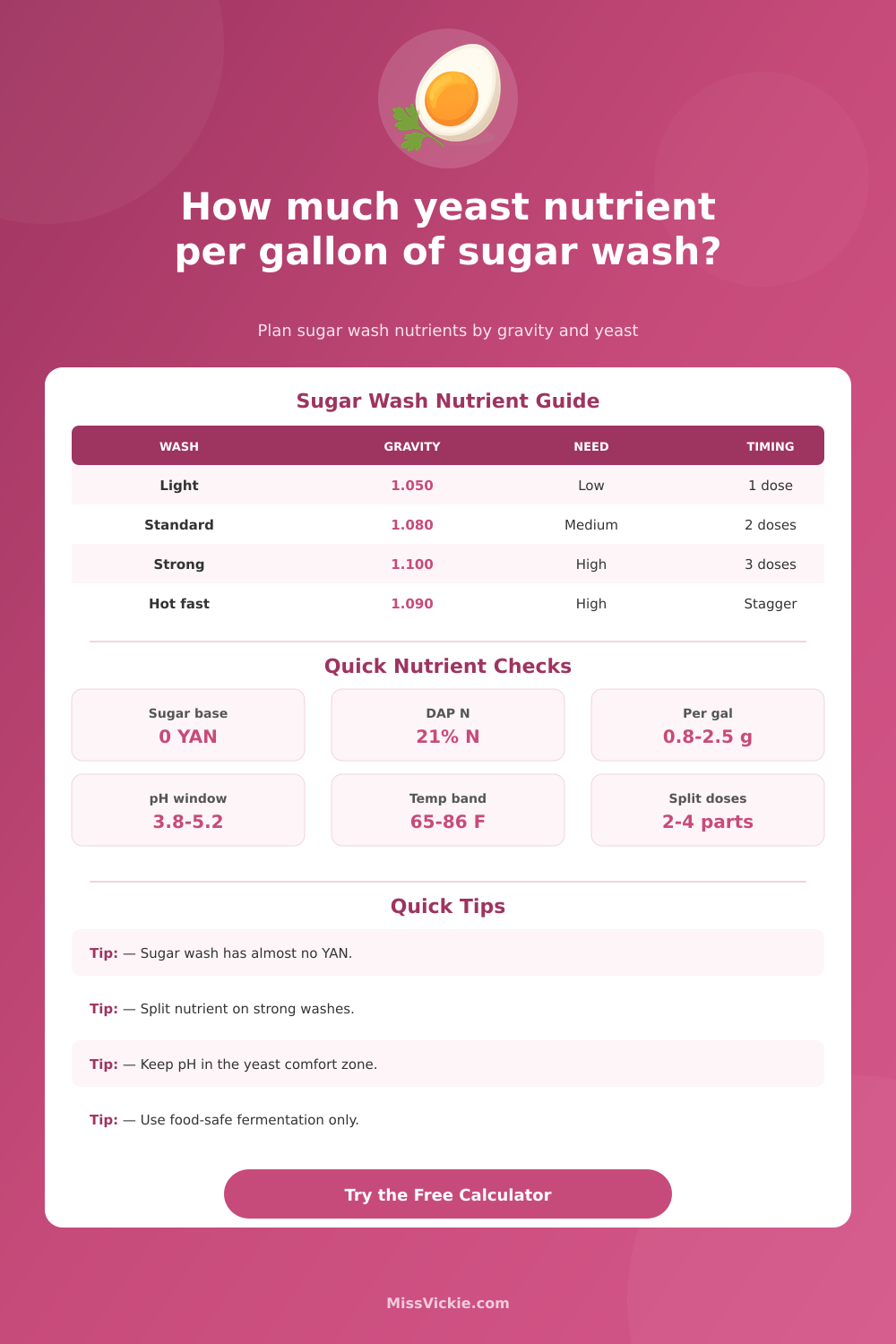
Sugar wash contains fermentable sugar but almost no natural yeast assimilable nitrogen. This calculator estimates nutrient additions from the nitrogen target, then adjusts for strain, temperature, pH, gravity, and the nutrient type selected.
Sugar Wash Nutrient Plan
Nutrient estimate updates as you change the wash size and fermentation details.
Fermentation Breakdown
Nutrient Schedule
📊 Nutrient Comparison Grid
Efficient inorganic nitrogen; pair with temperature and pH control for sugar-only bases.
Balanced organic nutrient estimate with yeast hulls and micronutrient support.
General culinary fermentation nutrient with minerals and vitamins included.
Follow the package first; the calculator flags whether your YAN target is mild or intense.
🧾 Planning Snapshot
📘 Reference Tables
| Wash Style | Typical SG | Brix Range | YAN Planning Target | Best Addition Pattern |
|---|---|---|---|---|
| Light culinary sugar ferment | 1.045 to 1.060 | 11 to 15 | 90 to 130 mg N/L | Single or two small additions |
| Standard sugar wash | 1.070 to 1.090 | 17 to 22 | 150 to 220 mg N/L | Two additions, pitch and 24 hours |
| High gravity sugar wash | 1.095 to 1.120 | 23 to 28 | 220 to 320 mg N/L | Three additions before one-third sugar break |
| Warm fast ferment | 1.075 to 1.100 | 18 to 25 | 220 to 340 mg N/L | Three or four small additions |
| Nutrient Type | Estimated Nitrogen | Typical Use | Strength | Caution |
|---|---|---|---|---|
| DAP only | 210 mg N per gram | Fast nitrogen correction | High nitrogen density | Does not add vitamins or minerals |
| Fermaid-style organic blend | 100 mg N per gram | Balanced sugar wash support | Medium nitrogen density | Use before late fermentation slows |
| Complete yeast nutrient | 80 mg N per gram | General kitchen fermentation | Lower nitrogen density | Check product label for exact rate |
| Turbo-style nutrient pack | Package dependent | Specialty high-speed ferment | Very concentrated plan | Package directions override calculator |
| Yeast Strain | Nutrient Demand | Comfort Temp | Gravity Behavior | Planning Note |
|---|---|---|---|---|
| EC-1118 / champagne | Medium | 59 to 86 F | Strong tolerance | Clean plan for neutral sugar wash |
| K1-V1116 | Medium-high | 59 to 86 F | Handles stress well | Useful when room temperature swings |
| D47 | High | 59 to 68 F | Prefers cooler control | Extra care if fermenting warm |
| Baker yeast | Medium-high | 68 to 82 F | Moderate tolerance | Keep gravity modest for cleaner results |
| Neutral ale yeast | Medium | 62 to 72 F | Lower tolerance | Better for mild culinary ferments |
| Condition | Low Risk | Watch Zone | Likely Adjustment | Why It Matters |
|---|---|---|---|---|
| Starting pH | 3.8 to 5.2 | Below 3.5 or above 5.6 | Check acid or buffer plan | Yeast stress increases outside range |
| Temperature | 65 to 78 F | Below 60 or above 86 F | Slow down or add support | Warm ferments demand more nutrition |
| Gravity | 1.055 to 1.085 | Above 1.100 | Split nutrients and monitor | Osmotic stress rises with sugar level |
| Ferment speed | 6 to 12 days | 2 to 4 days | Use staggered additions | Fast targets need more early support |
💡 Kitchen Fermentation Notes
Nutrient labels vary. The nitrogen percentages here are planning estimates, not a replacement for a product label, lab YAN testing, or professional food-safety advice.
Expecting good results, you dump in a gallon of water along with some sugar. What do you get? A smelly, rotten egg smell…a lazy mess. Halfway in, it quit working. Eventually this happens to many of us.
So what’s the issue? It is not typicaly the yeast. Typically the issue are hunger. While sugar provide calories, it does not provide nutrition. To survive extreme temperatures and high alcohol levels, yeast requires more than just calories.
How to Feed Yeast Properly
Using a yeast nutrient per gallon is no longer a guessing game. It’s a science. That’s where the calculator (above) do all of this math for you. And when you see how these numbers change, it makes you confident in what it tells you.
That’s because you’re feeding something alive that lives in unfriendly environment. Sugar gets turned into alcohol. Toxicity increase. Yeast cell walls gets compromised. Without vitamins and nitrogen, they stop reproducing and create funky stuff instead.
A big hit (1.100) requires much more nutrient support than a light wash (1.050). This is just basic physics. Osmotic pressure increases as sugar levels do which stresses out yeast cells until they pop if they aren’t supported.
Surprisingly, there’s another element to the math: temperature. Fermentation bubbles vigorously in warm environment and makes you feel productive. But metabolism speeds up along with the warmth, without any additional food. Your yeast will burn twice as many nutrients at an eighty-five degree ferment, compared to sixty-eight. When you enter your temperature into the calculator, it adjust upward to protect against common problem of the ferment dying too early. This happens when the yeast gobbles up all its reserves and dies before completing its task.
Efficiency isn’t always speedy. In fermentation, speedy is usually starving.
So what do they eat? And how much? Nitrogen-rich sources such as diammonium phosphate (DAP) will give you a fast burst of nitrogen but no other micronutrient. This means your yeast has nothing to hang onto except itself and won’t last long. A balanced mix of all the necessary nutrients, whether organic or not, is like a balanced diet, containing B vitamins and minerals like magnesium. Think of them as brewer’s multi-vitamin.
And while some strains are hardy enough to work on a sparse diet (think: champagne yeasts like EC-1118), others is fussy and need richer food if you want them to avoid making sulfur compounds that taint the flavor later. That said, check the chart on the page for the breakdown in how each strain responds to different nutrient mixes.
Most home fermenters don’t know about staggering additions. Why? Because if you dump everything in at once, you overwhelm the system with a big activity spike that’s followed by a crash. By splitting it into two or three doses, you maintain healthy population levels and keep things humming along for the duration. It should of been timed according to the desired gravity (the calculator provides suggestions). For example, if it’s a high-gravity wash, stagger the last dose to give the yeast one more burst as it starts to slow down. Otherwise, the ferment will stick, leaving behind some residual sweetness and other less-than-delicious flavors.
PH is another quiet assassin. Nutrient uptake decreases drasticly when your wash is too acidic. Low pH will starve your yeast regardless of how perfect your nitrogen are. To compensate for this you can enter your starting pH into the tool and it will alter its suggestions based off that. This may seem like a small thing but it makes all the difference in the world in making it reliable. Not only do you want comfort for your yeast, you don’t want it fighting with the chemistry to get by.
Yeast are not just ingredients. They’re living employees. Treat them as such. Give ’em what they need. Safe working conditions. Food. Sleep. Don’t feed ’em? Strike back: Stuck batch. Bad flavor. Dial-in the correct grams per gallon and your beer finishes clean every time.
Nutrient = Engine Oil. Sugar = Fuel. If the engine doesn’t have oil it won’t last to the end of the road, even if it starts quickly. Take care of them, and they’ll repay you in Purity, Speed and Clarity. The only brewing deal where both parties actualy get their money’s worth.