
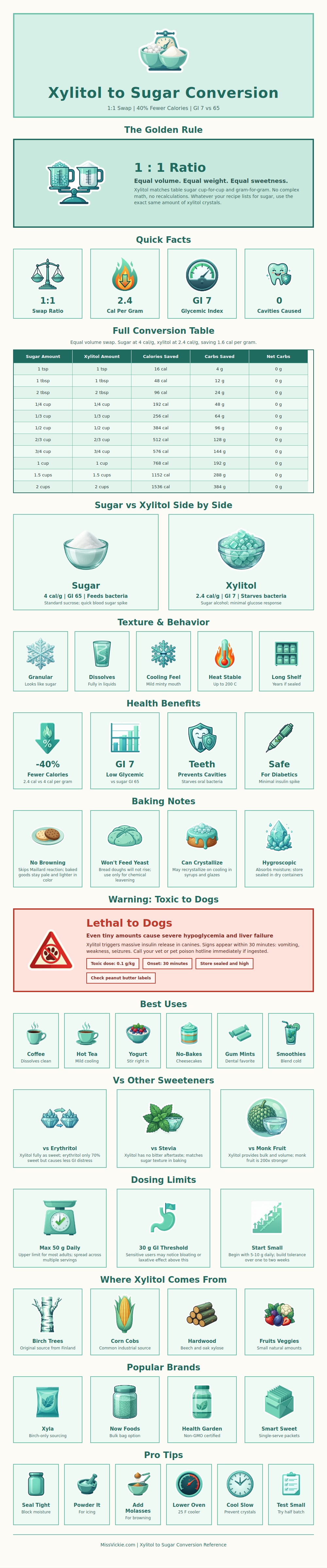
Xylitol is a sweetener that can be used as a replacement for sugar in many recipe. Xylitol can be used as a replacement for sugar in items like cakes and cookies because xylitol and sugar can be measured in the same volumes and weights. Since xylitol and sugar can be measured in the same amount, xylitol and sugar has a 1:1 substitution ratio.
This means that if a recipe calls for one cup of sugar, than it is possible to use one cup of xylitol in its place. Using a 1:1 ratio for replacing sugar with xylitol simplifies the process of replacing sugar with xylitol; there are no calculations involve in using xylitol as a sweetener. However, xylitol dont behave in the same way as sugar when baking goods.
Xylitol as a Sugar Substitute
Since sugar naturally produces browning reactions when heated in an oven, xylitol will not produce these same browning reaction. Therefore, baked goods made with xylitol will naturally be lighter in color then if sugar was the sweetener used. Additionally, xylitol naturally create a cooling sensation in the mouth.
This is a naturally occurring property of xylitol and will taste differently to the individual compared to sugar. Xylitol also has different health property compared to sugar. Since sugar products lead to blood sugar levels rising after consumption, xylitol does not raise blood sugar levels.
Therefore, xylitol is beneficial for those looking to control they blood sugar levels. Additionally, because xylitol does not feed the bacteria in the mouth that leads to cavities, it is often used in dental product. However, there are a few situation in which xylitol cannot be used to replace sugar.
For instance, xylitol cannot be used in place of sugar as a sweetener for bread products that rely on yeast to rise. Because xylitol does not provide the food necessary for the yeast to rise, using xylitol will prevent the bread products from rising. Additionally, xylitol will recrystallize when used in glazes or syrup.
These recrystallizations will result in the glazes or syrups having a gritty texture. Another important consideration is the storage requirement of xylitol. Xylitol can absorb moisture from the air.
This moisture will cause the xylitol to clump together. To prevent the xylitol from clumping, you should store it in a tightly sealed container. The property of xylitol to absorb moisture from the air actually has a benefit to baked goods prepared with xylitol, however; it will help to keep the baked goods moist for a longer period of time.
Xylitol is different from alternative sweetener like stevia and monk fruit. Both stevia and monk fruit are extremely sweet and strong sweeteners. To replace sugar with these sweeteners, other ingredient will need to be added to bulk them out to the amount of sweetness that sugar naturally provides.
Unlike xylitol, however, xylitol provides sweetness and volume to recipes, which allow the texture of the product to remain the same as that of the original recipe. One important consideration is the effect of xylitol on the bodys digestive system. In high amount, xylitol can lead to bloating and loose stools.
To avoid these health effect, it is best to start with small amounts of xylitol and to gradually increase the amount consumed throughout the day. Finally, you should take care to ensure that xylitol is store away from dogs. Xylitol is toxic to dogs.
When dogs ingest xylitol, xylitol can trigger the release of insulin. The rapid release of insulin drop the blood sugar of dogs to dangerous levels and can also cause liver issue in dogs. Due to this information, it is important to store xylitol in a secure location and to always read ingredient lists to ensure that it is not included in treats that may be consumed by dogs.