Xanthan Gum for Pie Crust Calculator
Estimate xanthan gum for gluten-free pie crust by flour blend weight, crust count, pie diameter, fat ratio, hydration, resting time, rolling thickness, top style, and texture goal.
Each preset loads a realistic crust structure so the calculator can estimate gum, hydration, fat balance, and resting guidance instantly.
Full Pie Crust Breakdown
Soft bite for custard pies and tender tart shells.
Flaky handling for most 9-inch gluten-free pies.
Cleaner slices, stronger crimp, slightly firmer chew.
Extra support for strips, cutouts, and hand pies.
| Crust Job | Typical Flour | Gum Range | Why It Changes |
|---|---|---|---|
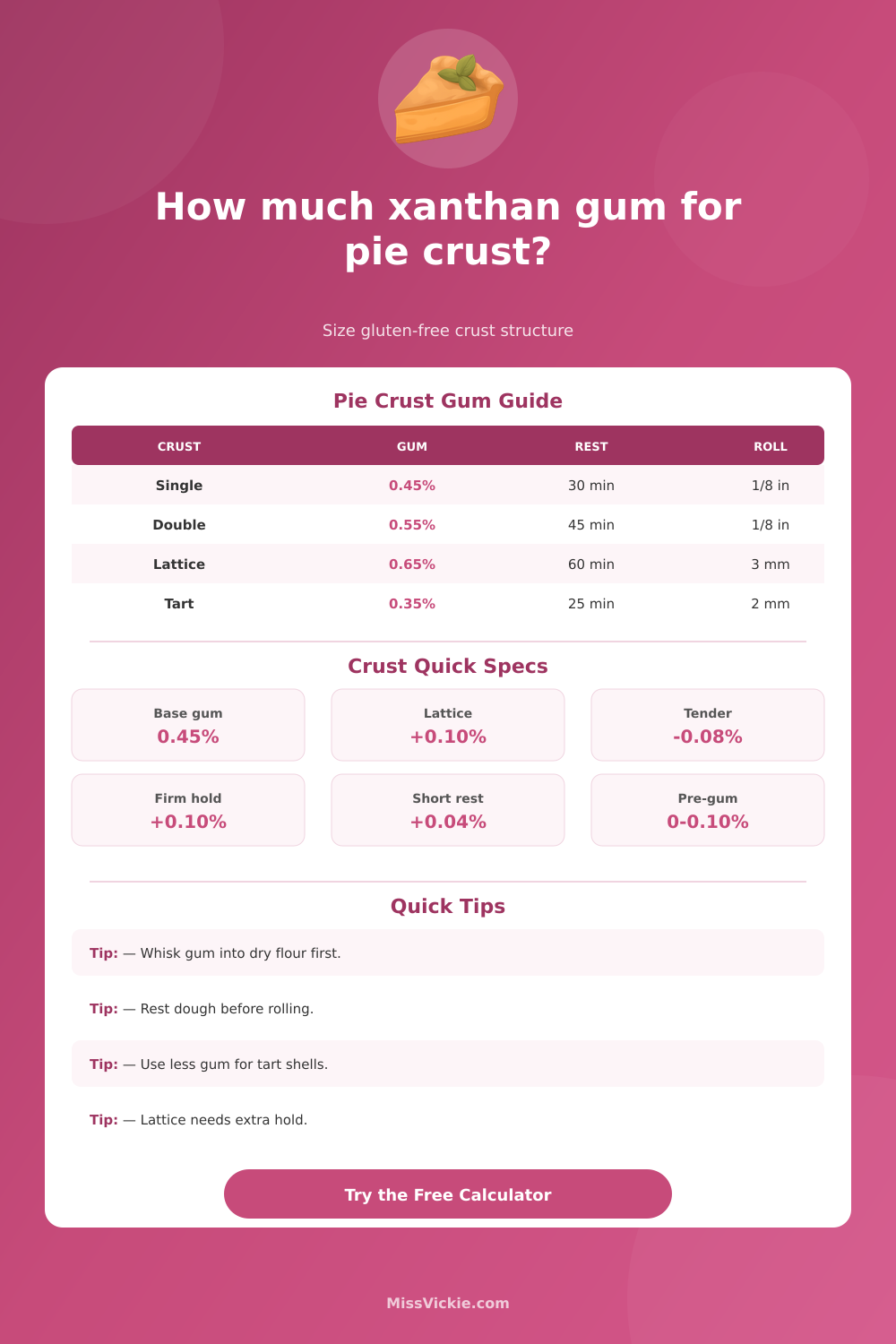
| 9-inch single bottom crust | 140 to 170 g | 0.40 to 0.50% | Short sheet, low top-crust stress. |
| 9-inch double crust pie | 280 to 340 g | 0.50 to 0.60% | Top sheet needs stretch and crimp support. |
| Lattice berry pie | 300 to 360 g | 0.60 to 0.70% | Strips must lift, weave, and hold fruit juices. |
| Blind-baked tart shell | 160 to 220 g | 0.30 to 0.42% | Too much gum can make thin shells chewy. |
| Hand pies or turnovers | 320 to 460 g | 0.62 to 0.75% | Folding and sealing need extra elasticity. |
| Blend Type | Base Gum | Hydration Bias | Crust Note |
|---|---|---|---|
| Rice, tapioca, potato starch | 0.48% | Medium | Neutral base for flaky pie dough. |
| Sorghum millet pastry blend | 0.52% | Medium-high | Whole grain flavor needs a little more binding. |
| Oat almond tender blend | 0.42% | Medium | Good tenderness, weaker crimp strength. |
| Buckwheat brown rice blend | 0.55% | High | Rustic dough benefits from longer rest. |
| Cassava flour pie blend | 0.40% | High | Can turn stretchy if over-gummed. |
| Pre-gummed cup-for-cup blend | 0.05% | Brand varies | Add only a small booster if dough tears. |
| Roll Target | Thickness | Best Rest | Handling Result |
|---|---|---|---|
| Thin tart shell | 2 to 2.5 mm | 25 to 35 min | Tender bite, low gum needed. |
| Standard pie shell | 3 mm | 35 to 50 min | Reliable lift from paper or mat. |
| Juicy fruit pie | 3 to 3.5 mm | 45 to 65 min | Better moisture buffer and stronger rim. |
| Hand pies | 3.5 to 4 mm | 60 to 90 min | Flexible folding with less cracking. |
| Fat Style | Texture | Gum Effect | Best Use |
|---|---|---|---|
| All butter | Flaky, crisp | Needs slight hold boost | Fruit pies, showy crimping |
| 75% butter, 25% shortening | Flaky but workable | Balanced baseline | Most double-crust pies |
| 50% butter, 50% shortening | Flexible, less brittle | Small gum reduction | Lattice and beginners |
| Mostly shortening | Tender, softer | Reduce to avoid chew | Custard pies and soft shells |
Pie crusts is fickle things, especially if you’re making them gluten free. They has to form into a ball of dough without falling apart; they need to be sturdy enough to stretch out and shape around a pan, yet tender enough for the teeth to break through with ease. Enter xanthan gum: it’s what ties everything together, but amount matters more then most recipes admit. Too much and you end up with something rubbery; too little and your edges will crack. To achieve the perfect consistency, keep an eye on a few factors that behave in a complex way.
Where does it begin? It begins with your flour blend selection. Starch and rice blends lack naturaly occurring protein structure; these require a moderate level of gum. Coarser whole grain such as buckwheat or sorghum have weak spots within the dough’s structure due to their coarse particle makeup, so they takes a bit more gum. Blends with high levels of almond will differ yet another way: tender but not a lot of binding. Once you’ve selected your blend, the math is done for you by the calculator (goodbye guesswork about how much each flour alters the requirement). Just keep in mind that even if two blends weigh the same, one will not roll or lift as easy as the other.
Why Xanthan Gum Amounts Change
It’s tempting to assume that the same amount of gum is required regardless of the type of crust or its number. But actualy, there’s an added factor: The top style changes this math. Because the top sheet stretch over the filling before being baked into place, it undergoes greater stress different than a single bottom crust. Adding lattice strips multiplies the challenge: Each narrow strip need to contain the juices and also support itself. And hand pies and turnovers demand even more flexibility; here, the dough is folded and then sealed.
Those factors aren’t dramatic on paper, but come into clear view when you put the crust in the oven. Will the edges slump, or do they remain intact? Dough is affected by both rest time and hydration, but they’re linked: A longer rest gives the gum plenty of time to soak up moisture, increasing elasticity without the need for more percent. Adding just a touch of extra gum helps when your rest is short (but results in a somewhat firmer bite).
Thickness also matter. Use less gum for thinner tart shell sheets because they needs less to hold them together, and use a little more gum for thicker hand-pie dough because there is more stress on the folded shape. All these factors are taken into account by the tool, so if you want to bump something up or down, you don’t throw the other balls out of whack.
It will also affect how much structure the gum contributes. In general: More butter means a flakier crust (naturaly), but a more brittle one after baking. A little shortening will soften the texture and occasionally allow a bit less gum. Mixed fats tends to be a good middle ground, and work well for most double-crust pie crusts. No rule here is ever absolute; it’s just altering the starting point for the gum.
But most people treat xanthan as a set number regardless of the dough instead of changing it to match the dough’s variables. They use what was used in the last recipe they made without fail and are surprised when their results differs. Or they don’t bother adding it at all. But when they finally do crack up and try to correct it by adding more gum, you end up with chewy dough.
Better to think of how much to add based off the crust type and flour weight, with hydration and resting time adjusting the total amount needed. You can often reduce in one area with small adjustments in another. Before mixing the dough up and running it through, you can run the numbers and make the tradeoffs visible. See that lattice would call for more gum, or that if you give it a longer rest, maybe you could of gone down on the gum just a bit for something more tender. That clarity means multiple trial batch are not just a hit-or-miss thing.
Now you know what’s what. Once your variables have been accounted for, the crust will behave according to plan instead of showing its weakness only after coming out of the oven.