
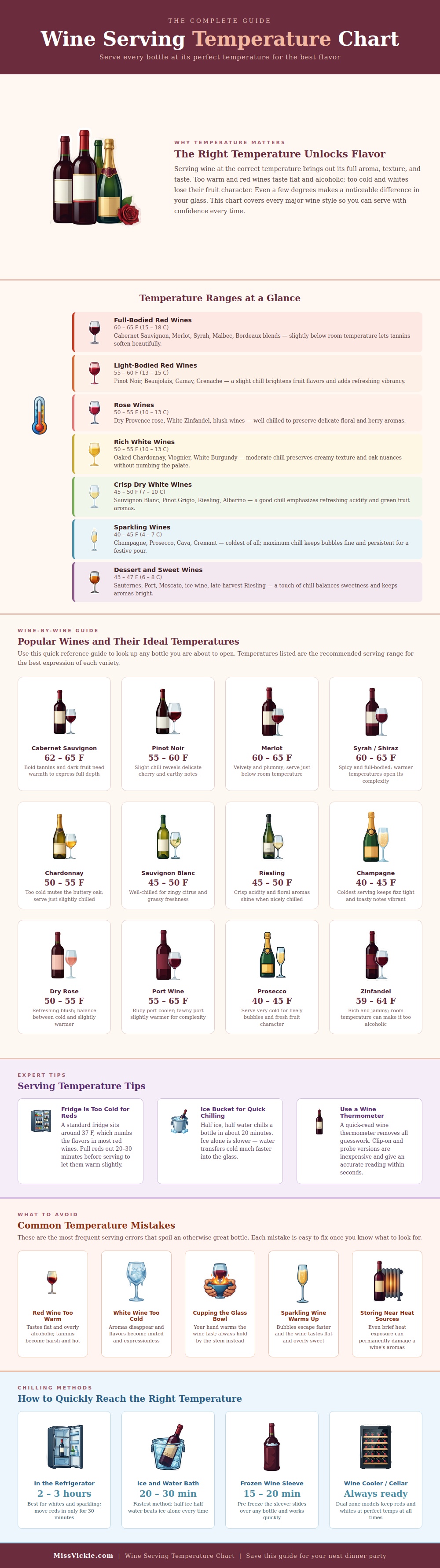
Have you ever opened an expensive bottle of wine, only to find it doesn’t taste very good? The problem is rarely the wine itself. But if you do not serve it at the right temperature, it hide the flavor of the wine. But by not serving it at the right temperature, it masks the flavor of the wines. This chart display the proper serving temperature for all types of wine.
By serving your wine at appropriate temperature, you’ll be able to enjoy its flavor. Your nose perceive aromas differently depending on the temperature. Cold stops aromas from escaping, whereas warmth allow aromas to come out in the air. Serving a bold red wine such as Cabernet Sauvignon too warm make the alcohol smell overpowering. Just enough warmth reveal the fruit without allowing the alcohol to take over. Conversely, serving a light white wine such as Riesling too warm makes it taste flat and sweet. It lack the acidity which provides structure.
The Right Temperature for Serving Wine
Red Wine: Most of us were taught that red wine must be served at room temperature. Wrong. Tannic reds such as merlot and syrahs is best just under room temp (in the low sixties). Why? It soften the tannins. On the other end of the spectrum, red wines like pinot noir actualy appreciate a bit of chill. The coolness illuminate the earthiness of these lighter reds. To avoid overly chilling a malbec and turning it into prune juice, the guide divide reds by weight. The same is true for whites and rosés, only reversed.
Dry, crisp whites (like a Sauvignon Blanc) should be served pretty cold; high 30s or even into the low 40s. This keep the citrus and grassy tones intact. Oaked Chardonnays and other richer whites are opposite. They benefit from warmth, they’re buttery and textured, you don’t want those details hidden by being too cold. It’s important to sense the wine’s body; it shouldn’t just taste fruity.
Sparkling wines is the coldest of them all. To maintain a tight bubble, champagne and prosecco must be served ice-cold. Once it gets warmer, the carbonation will escape and the wine will taste flat and sweet. Dessert wines are in the middle. Serve these cool enough to cut through any sweetness, yet not too cold as to lose the honeyed aromas.
If pressed for time, don’t count solely on your freezer. Your fridge is good enough for most things. However, it can be a little too cold for reds and will numb whites if they stays too long. Instead of just ice, use an ice bath with water, since water is more efficient at conducting coldness than air. Just twenty minutes in a half-ice, half-water bucket will bring any bottle down to serving speed.
If your reds have gone cold, remove them from the fridge half-an-hour before serving so they has time to gently warm up in their glasses. Don’t grasp the glass in the middle; the part that holds the bowl; because your hand will warm up the wine too quickly. Before you’ve even had a chance to down half the glass, the temperature is knocked out of best zone. Naturaly, you want to grab onto the bowl since it seems more stable, but it messes with the balance. Hold the stem only.
Make reds coolish; whites refreshing; and bubbles frosty. With time, you will get used to these rules and appreciate wines as they should of been enjoyed. You will also realize how different than they can taste.