
Tannin. There’s no question you immediately link the word to red wine. And it’s fair to assume so: bold red wines coats your teeth with a drying, gripping feeling. Who wouldn’t make the connection?
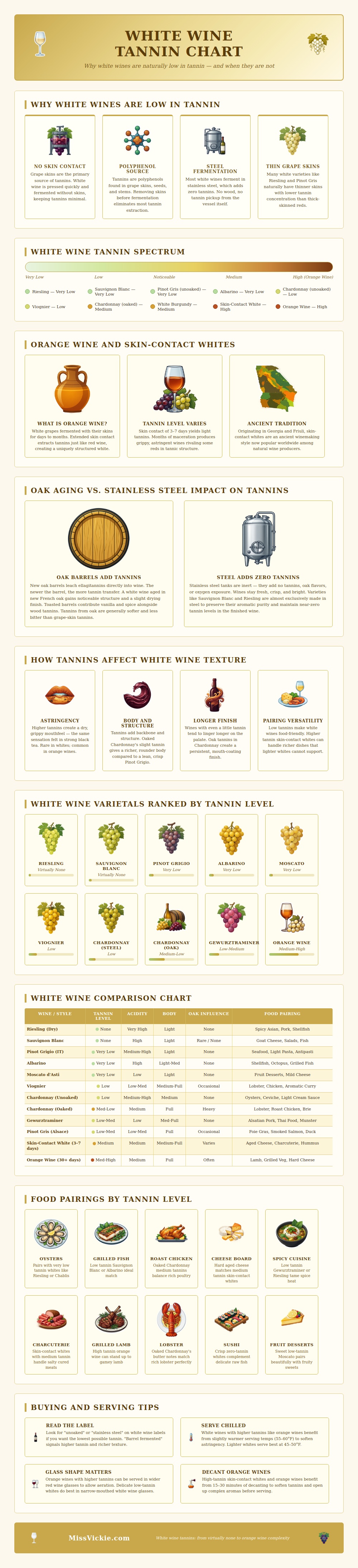
So what about white wine? Yes, it too has a tannin story to tell, though it’s a whisper compared to a shout. See where the tannins originate and learn why they’re nearly nonexistent in most whites in the infographic above. This range will alter how you think, drink, and pair any and all glasses you pour.
How White Wine Gets Tannins
Why don’t most white wines contain tannin? It’s as simple as some basic chemistry (and winemaking decisions). Tannins are polyphenols, which exists in grape stems, seeds, and skins. In red winemaking, all of these solid parts remain in the fermenting mixture, soaking up bitterness and structure as juice ferments.
How does white wine get made? Unlike red winemaking, white wine production involve quickly pressing grapes to separate juice from the skins well before fermentation starts. This eliminates the main source of tannins from the equation very early on. Additionally, most white varieties tend to have thinner skins different than their red counterparts, thus offering fewer tannin possibilities in the actual fruit to start with.
The end result is a wine that’s clean and crisp instead of heavy and textured. The stainless-steel fermentation vessel also goes a long way. Inert and adding no structure to the wine, these tanks keep aromatic purity and bright acidity while not contributing any wood-derived compounds. That’s why Riesling and Sauvignon Blanc tastes so fresh and sharp, it’s kept out of oak, which leeches ellagitannins into the wine. Steel = your friend if you’re looking for a white wine with zero tannin interference. It keeps the wine light on its feet and honest.
Not all white wines fit this simple pattern, however. Take Chardonnay aged in oak. Here is where we completely change the texture of the wine. If a winemaker ages their white wine in new oak barrels, they’re consciously adding structure. Tannins leach from the wood and soften over time, but impart a noticeable backbone to the wine. This create a rounder mouth feel and a longer finish. It also connects savory depth with crispness.
Although it’s a subtle shift, it changes how the wine plays off food. That tannic grip cuts through fat, so you can now serve it alongside more rich dishes such as roasted chicken or lobster.
And then we have orange wine, which turns things around entirely. Orange wines are made from white grapes, but instead of being kept off the skins during fermentation, they’re pressed along with them. Sometimes for days or even months. This skin-contact process pulls out same tannins as red wine production would, resulting in an amber-colored beverage with plenty of body and structure. Popularized in Italy, but originating all the way back in Georgia, it’s an old-style wine with enough tannins to rival some lighter reds.
It pays to be patient here. Decant your orange wines; the astringency will soften and the intricate aromas will come alive. Serving them a bit warmer then you would other whites also softens the grip on your tongue.
Knowing about tannins helps food pairing, too. Subtle dishes like spicy Asian food, sushi, or delicate seafood pair best with low-tannin whites that won’t compete with subtle flavors, nor magnify a dish’s spiciness. Grilled meats, hard cheeses, and charcuterie pair well with high-tannin wines (such as heavily-oaked Chardonnay or orange wine). These wines has the structure to hold their own against salty, fatty, or rich foods without being overwhelmed.
When you next pull out that white wine, ignore its color and read the label. Look for hints of skin or oak contact. Pay attention to something other than acidity: texture. What’s lingering on your palate at the end of your swig may not be sugar but tannin. It can transform an average glass into something deeper. The choices made by the winemaker will becomes clear; they shape your experience in more ways then just flavor. You should of looked for hints of skin or oak contact to know how it tastes. The furnitures used in cellars can also affect this process.