
How many times have you seen cream go from liquid to solid? It looks impossible until it fails, and then it just looks gross. In a few seconds, a lovely smooth batch of whipped cream can become grainy butter. And the thing is, those few seconds are marked with shifts in color that most home bakers completly miss.
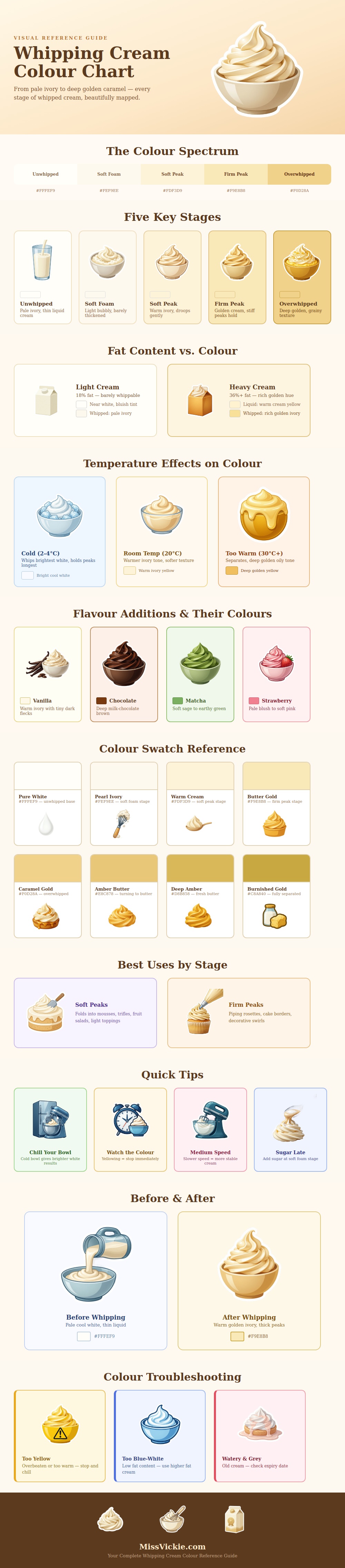
What you listen for (or feel) is less useful than what your eyes tell you, because it’s the visual cue that matters most. Knowing where to look on this color spectrum make whipping cream more of a skill different than a gamble. And there we go: The pure white liquid appear very bright. At first it turns a bit warmer as air gets introduced into the fat globules.
Use Color to Guide Whipping Cream
And here’s where chart comes in. You can see quite clearly the change of color in the transformation of structure (above). The color moves from cool ivory toward warm gold. It is not fluffiness, but structure. Because surface area created by all those bubbles expands, light reflects back differently. Even though you’ve only added air, the cream now appear more richly toned, deeper.
The last ingredient affects the color: Fat. The more fat in your heavy cream, the yellower it’s going to be (as in “golden ivory”). Creams that is lighter in color are lower in fat, so they’ll remain bluish-white. Why does this matter? The yellow color indicates richness. So if you’ve whipped your cream for several minutes and it remains stark white, chances are you began with a low-fat dairy. Or else the cream was to warm for its structure to hold properly.
Here’s where temperature becomes a behind-the-scenes variable: Whipped cream made from cold cream is not only quicker but also whiter. Because fat globules haven’t had time to congeal into butter, the cream traps the air easy. Hot cream fights back… Quickly becoming a deep yellow and oily well before your desired serving time.
The fear of overbeating, I believe, is what keeps most people in soft peak territory. This is where most go wrong. Soft peaks are lovely, great for stirring into a fruit salad or folding into mousse. But not piping. For defined swirls on top of cake, you’ll want to push yourself just beyond the soft peak’s slight slump. You’ll notice it start to take on more structure, firm enough to hold its shape upright. It will also deepen a bit in hue from ivory toward a richer buttery gold.
It all happens quickly, and it’s very easy to fall off the edge of this tiny sweet spot. Trust your eyes, not the clock. That’s when things go wrong. The cream breaks apart. Solid fat (butter) separate from liquid (buttermilk). Its color deepens to a characteristic caramel gold. The emulsion fails. Adding more sugar won’t help; neither will more whipping.
Tossing in some cold cream and hoping for the best is what some bakers do. If they catch it early enough, they may be able to salvage it. If not. If it’s already been broken up, turned yellow, suck it up: Strain out the butter and set it aside for later. Everybody does it sooner or later.
The other element is adding flavoring, which adds another level of visual detail to this palette. Vanilla contributes subtle spots and warm ivory tones. Adding chocolate will turn the base a deep rich brown, masking any textural imperfections quite nicely. Matcha brings in a soft sage green that’s simply understated. But it can be tricky to blend without streaking. Strawberry will make it all a pale blush pink. The natural mash may also include seeds, which mess up the smooth surface.
While these ingredients don’t alter the mechanics of whipping, they do modify your visual clues for when you’re close to being done. It’s tougher to perceive separation in a chocolate-tinged bowl. You’ll need to rely more heavily on the resistance from the beaters and the sound of the mixer. There’s no better answer than to go slowly.
Keep the cream cold by transferring it into a chilled metal bowl. That makes the peak time last longer. Wait until they start foaming to add your sugar, which will help stabilize bubbles without sinking them prematurely. Watch for that change from white to ivory to gold, then stop immediately before the gold becomes too pronounced. It sounds like nothing. But it makes all the difference. Not only will your desserts appear more delicious; they’ll also be able to retain their form when desired.
Next time you grab for the cream, don’t forget: its color isn’t just decoration. It’s a road map to where exactly you are along the way.