MissVickie stabilized whipped cream math
Gelatin for Whipped Cream Calculator
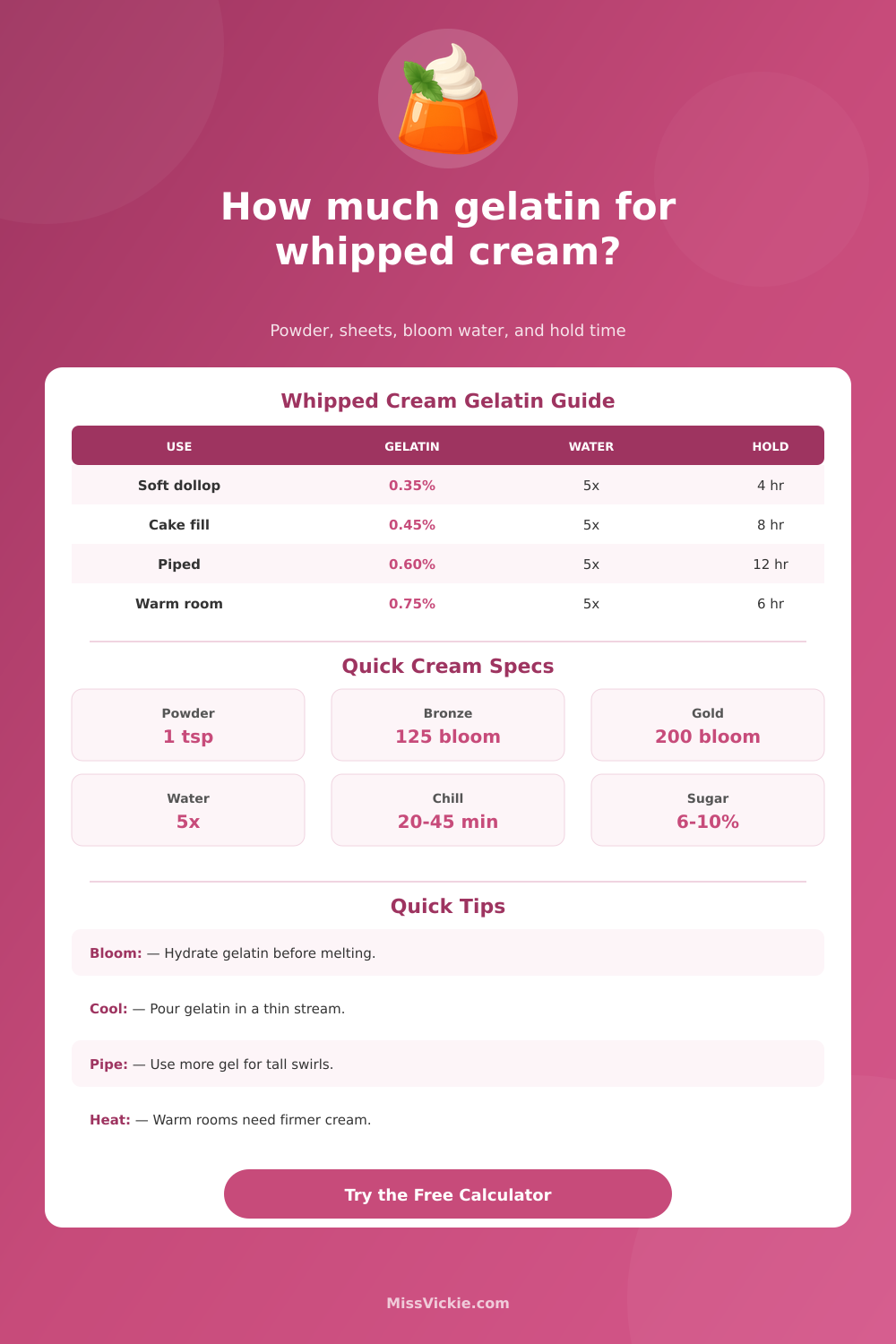
Estimate gelatin powder or sheets for stabilized whipped cream from cream volume, gelatin bloom strength, service hours, piping height, chill time, room temperature, sugar, and bloom water.
🍰Whipped cream presets
Choose a common whipped cream use, then adjust the cream amount, gelatin type, sheet grade, bloom water, chill time, piping detail, service hours, sweetness, and room temperature.
⚖Units and gelatin format
🥛Cream, gelatin, and service inputs
📊Stabilized cream reference cards
📘Gelatin strength and sheet guide
| Gelatin type | Approximate bloom | How calculator adjusts | Whipped cream note |
|---|---|---|---|
| Bronze sheets | About 125 bloom | Uses more dry gelatin than 200-bloom standard | Good texture, but sheet count may be higher. |
| Silver sheets | About 160 bloom | Moderate conversion from the standard target | Useful when sheets are the house gelatin. |
| Gold sheets | About 200 bloom | Matches the calculator base strength | Common pastry reference for stabilized cream. |
| Platinum sheets | About 230 bloom | Uses less dry gelatin for the same gel strength | Weigh sheets because small differences matter. |
| Powdered gelatin | Often near 200 to 250 bloom | Converts by chosen bloom strength | Sprinkle over cold water to avoid dry granules. |
🧁Use, piping, and hold-time guide
| Use case | Target gelatin range | Chill before service | Texture goal |
|---|---|---|---|
| Shortcake, cocoa, or fresh fruit dollops | 0.30% to 0.40% | 15 to 25 minutes | Soft spoon texture with light weep control. |
| Layer cake filling under cake weight | 0.40% to 0.55% | 25 to 45 minutes | Sliceable cream that still feels creamy. |
| Piped borders, rosettes, and pie topping | 0.52% to 0.70% | 30 to 60 minutes | Defined ridges without a rubbery bite. |
| Tall cupcake swirls or transported desserts | 0.62% to 0.82% | 45 to 90 minutes | Higher shape hold for travel and display. |
| Buffet, patio, or warm-room service | 0.70% to 0.90% | 60 minutes or more | Firmest practical whipped cream, still chilled. |
🍬Sweetness and volume guide
| Sweetness profile | Sugar percent | Powdered sugar per cup cream | Stability note |
|---|---|---|---|
| Barely sweet cream | 3% to 5% | About 1 to 2 tbsp | Delicate taste, but gelatin does most of the holding. |
| Classic dessert cream | 6% to 9% | About 2 to 3 tbsp | Good default for cakes, pies, and fruit desserts. |
| Sweet bakery-style cream | 10% to 14% | About 3 to 5 tbsp | Sweeter and slightly denser, especially with powdered sugar. |
| Firm peaks for piping | 6% to 10% | About 2 to 3 tbsp | Whip to medium-firm peaks after gelatin is streamed in. |
Safety note: stabilized whipped cream still needs refrigeration. Gelatin improves structure but does not make dairy safe for long warm holding.
💡Gelatin handling notes
Stabilized whipped cream is a mixture of whipped cream and gelatin. The stabilized whipped cream require a specific amount of gelatin to hold the shape of the whipped cream. Whipped cream by itself will not hold the necesary structure to remain in a specified shape for long periods.
However, stabilized whipped cream can hold its shape for many hour. The use of gelatin in the whipping of cream will help the whipped cream to maintain its structure, thus prevent it from collapsing. The amount of gelatin that you add to the whipped cream is the most important factor in determining the length of time the stabilized whipped cream will remain firm.
How to Stabilize Whipped Cream
The amount of gelatin that is required for the stabilized whipped cream to hold its structure is dependent upon several specific factor. These factors include the volume of the cream that is to be used, the use of the cream, the length of time that the cream will be served, and the temperature of the room in which the whipped cream will be served. If the length of time for which the whipped cream will be served is long, then more gelatin will be required to be added to the whipped cream.
Additionally, if the temperature of the room is high, then the cook will need to add more gelatin to the whipped cream. The other factor that will impact the amount of gelatin that is required for the whipped cream to hold its structure is the bloom strength of the gelatin. The bloom strength of the gelatin is a measurement of how firm the gelatin will be.
If the bloom strength is high, then less gelatin will be required to stabilize the whipped cream. If the bloom strength is low, then more gelatin will be required to perform the same function. The amount of fat that is contained within the cream that is to be used also affect the stability of the whipped cream.
Heavy cream have a high fat content. The higher the fat content of the cream, the more able the whipped cream is to hold its structure. If low fat cream is used, then more gelatin will have to be added to compensate for the lower fat content of the cream.
The type of sweetener that you use in the whipping of the whipped cream will also affect the stability of the whipped cream. Therefore, you’ll need to account for the type of sweetener in the calculation of the amount of gelatin that is required. To add the gelatin to the whipped cream, it is important that the added gelatin is bloomed in cold water prior to its addition to the whipped cream.
Furthermore, the bloomed gelatin must be melted until it become a liquid. The liquid made from the bloomed and melted gelatin must be poured into the whipped cream in a thin stream while the whipped cream is being mixed at medium speed. It is important to ensure that the gelatin isnt added to the whipped cream after the whipped cream has been whipped into a firm state.
Any addition of the gelatin to whipped cream that has reached this state will lead to the formation of streaks and elastic bit of gelatin within the whipped cream. Due to the effect of heat upon the stabilized whipped cream, it is essential to remember that the whipped cream will eventually soften. Even if the amount of gelatin is correct, if the temperature of the room is too high for the stabilized whipped cream, it will begin to soften.
For this reason, it is necessary to serve the stabilized whipped cream in a chill environment. By calculating the correct amount of gelatin to be used in the preparation of the stabilized whipped cream, it is certain that the whipped cream will possess the structure necessary to hold its shape during service and despite the temperature of the room in which the dessert is served. You should of used more gelatin if the rooms temperature is hot.