Water to Quinoa Ratio Calculator
Calculate quinoa water by grain style, rinse and drain loss, pot method, absorption ratio, cooked yield, altitude, and final texture.
🍚 Quinoa Cooking Presets
Choose a real quinoa scenario, then adjust the grain, water ratio, method, rinse loss, altitude, and texture target.
⚖ Quinoa and Water Details
Quinoa water plan
Enter quinoa details to calculate the water ratio.
Water Breakdown
Cooking Plan
Rinse well, drain until dripping slows, simmer gently, then rest covered before fluffing with a fork.
📏 Common Quinoa Amounts
📊 Quinoa Ratio Reference
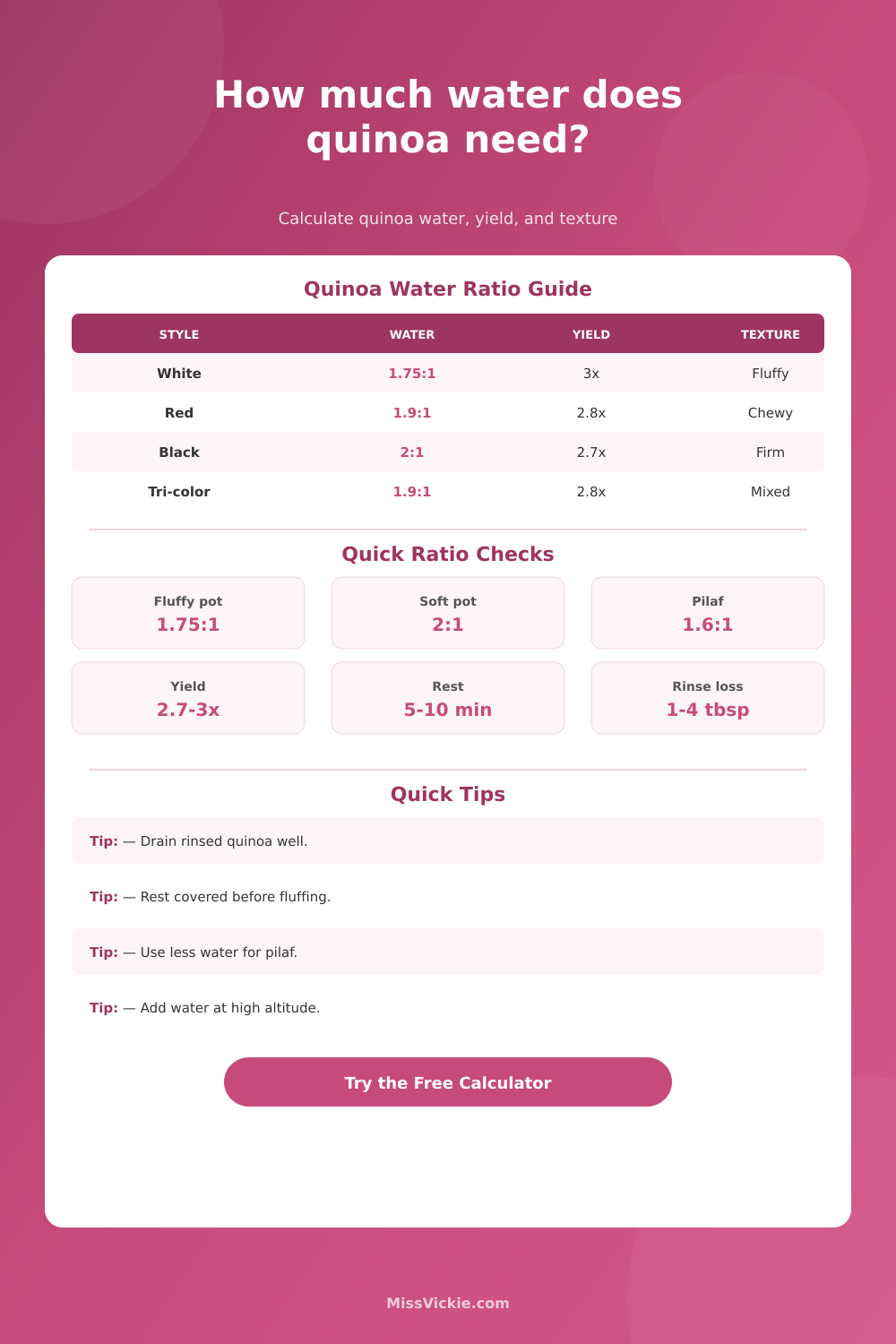
| Quinoa Style | Absorption Ratio | Cooked Yield | Typical Simmer | Best Texture Use |
|---|---|---|---|---|
| White quinoa | 1.65 to 1.85 cups water per 1 cup dry quinoa | About 3 cups cooked | 14 to 16 minutes | Fluffy side dishes, bowls, stuffed peppers, and quick salads. |
| Red quinoa | 1.8 to 2 cups water per 1 cup dry quinoa | About 2.8 cups cooked | 16 to 18 minutes | Meal salads where a slightly chewy grain holds shape. |
| Black quinoa | 1.9 to 2.05 cups water per 1 cup dry quinoa | About 2.7 cups cooked | 18 to 20 minutes | Firm grain bowls, mixed pilafs, and recipes needing bite. |
| Tri-color quinoa | 1.8 to 2 cups water per 1 cup dry quinoa | About 2.8 cups cooked | 17 to 19 minutes | Balanced texture when white, red, and black quinoa cook together. |
| Sprouted quinoa | 1.45 to 1.65 cups water per 1 cup dry quinoa | About 2.5 cups cooked | 10 to 13 minutes | Fast bowls and softer grains that already absorbed some moisture. |
| Quinoa flakes | 1.2 to 1.5 cups liquid per 1 cup flakes | About 2 cups cooked | 2 to 4 minutes | Hot cereal, binders, patties, and quick porridge textures. |
| Method | Ratio Change | Drain or Evaporation Note | Texture Result | Calculator Use |
|---|---|---|---|---|
| Covered saucepan absorption | Baseline | Tight lid keeps steam in the pot. | Reliable fluffy quinoa after a covered rest. | Best default for everyday quinoa cooking. |
| Toasted pot pilaf | Reduce about 0.1 cup water per cup dry | Toasting dries the surface and helps grains stay separate. | Nutty, separate grains with less softness. | Good when serving quinoa as a side dish. |
| Wide skillet absorption | Add 0.1 to 0.2 cup water per cup dry | More surface area drives off steam faster. | Fast cooking, but watch for dry edges. | Use for small batches that need quick cooling. |
| Rice cooker | Reduce about 0.05 cup water per cup dry | Cooker lids hold steam well and switch to warm. | Soft-fluffy, especially after resting on warm. | Use the calculated water, then fluff promptly. |
| Pressure cooker | Use roughly 1.1 to 1.25 cups liquid per cup dry | Very little evaporation happens under pressure. | Plump grains with short cook and natural release. | Best for larger meal prep batches. |
| Boil and drain | Use excess water, then drain well | Water is not fully absorbed; it is poured off. | Firm, pasta-like grains with less risk of mush. | Calculator estimates pot water and cooked yield separately. |
🥣 Serving and Yield Guide
Good beside protein, vegetables, soups, or mixed plates.
Common cooked serving when quinoa is the main starch.
Enough for grain bowls with toppings and dressing.
Hearty cooked portion for packed lunches or dinner bowls.
🧪 Batch Conversion Table
| Dry Quinoa | Fluffy Pot Water | Firm Salad Water | Cooked Yield | Standard Servings |
|---|---|---|---|---|
| 1/4 cup dry | About 7 tbsp water before rinse credit | About 6 1/2 tbsp water before rinse credit | About 3/4 cup cooked | 1 small serving |
| 1/2 cup dry | About 7/8 cup water before rinse credit | About 3/4 cup water before rinse credit | About 1 1/2 cups cooked | 2 side servings |
| 1 cup dry | About 1 3/4 cups water before rinse credit | About 1 5/8 cups water before rinse credit | About 3 cups cooked | 4 side servings |
| 1 1/2 cups dry | About 2 2/3 cups water before rinse credit | About 2 1/2 cups water before rinse credit | About 4 1/2 cups cooked | 6 side servings |
| 2 cups dry | About 3 1/2 cups water before rinse credit | About 3 1/4 cups water before rinse credit | About 6 cups cooked | 8 side servings |
💡 Quinoa Ratio Notes
The calculator estimates practical kitchen ratios for dry quinoa. Package age, pan width, lid fit, burner strength, and how thoroughly the quinoa is drained can shift the final texture.
Add too much liquid and quinoa turns into mush; not enough and it stays stubbornly crunchy. Advice like “use a 1 to 1.75 ratio” of liquid to grain is too simple. It fails to account for all the water clinging to rinsed quinoa and all the steam that escapes through a loose lid. And it overlooks the fact that different-colored quinoas, white, red, black, is not the same. Let a computer do the math, but help yourself understand why those variables matter.
We think of all quinoa as being equal, but in fact white quinoa cook faster and is delicate and can turn to mush if over-simmered. Black and red are coated with tougher outer hulls, which require a bit more water and longer cooking time. Cook black quinoa the way you would white quinoa, and what do you get? Underdone pebbles. To adjust for different types of grain, the device determine the base absorption ratio, depending on the type of grain chosen. It’s the tiniest tweak, but it eliminates any textural problems caused by mixing grains without accounting for amount of liquid.
Why You Need to Measure Water for Quinoa
Rinsing quinoa is essential; it’s coated with bitter-tasting saponin, and must be washed away for proper taste. But once you’ve done so, be aware that there’s a lot of water left on those grains even when you strain it off. One cup of rinsed quinoa may retain a quarter cup of water. When you add the 1.75 cups of water the package instructs you to use, you are actualy adding 1.5 cups of extra water plus however much moisture was already in the grains making them too soggy. Using the calculator allows you to specify how much moisture your quinoa is still holding onto. It will then deduct whatever leftover water were present from the total water required, leaving only enough for fluffy separate grain instead of a clumpy mess.
“Quinoa is cooked with a 2:1 ratio of water to dry grain; so if I make one cup of quinoa, I use two cups of water.” But altitude makes a difference: “Water boils at a lower temperature when we’re at higher altitudes, which results in different evaporation and longer cook time.” People who live in the Rockies or Denver, be warned: “The normal ratio at sea level will yield insufficient liquid before the quinoa is tender.” The device accounts for elevation to handle the cooler boil and whether your lid fits snugly or not. It adds slightly more water to counteract lower boiling point.
But that’s only half of it, the other half is how you cook it. When cooked on the stovetop, the go-to method is absorption cooking: simmering, covered, in a saucepan. In this setting, the water doesn’t really have anywhere to escape. This means you need less water for the same reason you can use less water in a sealed rice cooker. Drain it like pasta? Then there’s no point wasting time measuring, you’re throwing out all that excess water. Physical reality changes the math and the calculator takes note. It doesn’t just spit out a number, it spits out a plan that fits your kitchen set-up.
The last variable is texture preference. Soft porridge for your breakfast bowl? Firm grains so your salad doesn’t fall apart? The tool will take care of that by adjusting water content to match. Control. When you account for the steam lost in the air and the water already present on the grain, quinoa ceases to be a gamble. Every single time, you have the fluffy, neutral base you’re after. It’s something you should of planned for.