How Much Water to Drink a Day Calculator
Build a practical daily hydration plan from body weight, activity, climate, pregnancy or lactation status, water-rich food, caffeine, alcohol, and the bottle size you actually use.
Choose a starting preset
Your hydration plan
Use this as a flexible planning number, then adjust to thirst, meal timing, bathroom access, sweat, and clinician guidance if it applies.
Calculation breakdown
The calculator estimates total daily fluid first, then turns that into a plain-water plan. Water-rich food reduces the plain-water amount. Caffeinated drinks are counted partially toward fluids, while alcohol adds a practical matching-water buffer.
Reference tables
| Input | Planning range | How the calculator uses it |
|---|---|---|
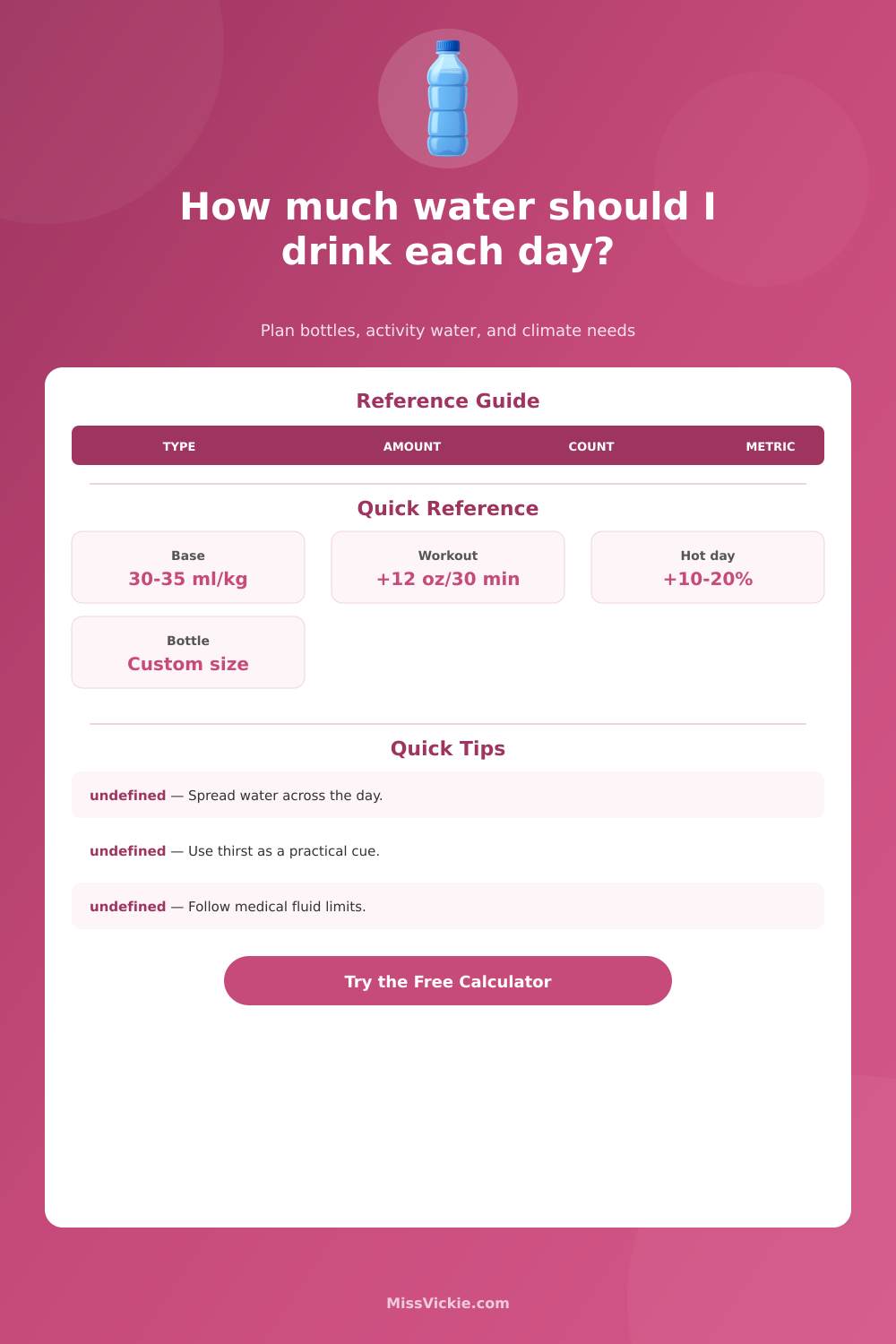
| Body weight | About 30 to 35 ml per kg | Creates a baseline before lifestyle adjustments. |
| Activity | About 6 to 16 oz per 30 minutes | Adds more for harder or longer effort. |
| Climate | 0 to 20 percent add-on | Warm, hot, humid, dry, or high-altitude days increase the plan. |
| Food water | Low to very high | Credits water from soups, fruit, salads, yogurt, vegetables, and saucy meals. |
| Bottle size | Ounces | Best fit |
|---|---|---|
| Small glass | 8 to 12 oz | Good for meals, medication routines, or bedtime sips. |
| Disposable bottle | 16.9 oz | Easy mental math for errands and travel days. |
| Gym bottle | 24 to 28 oz | Useful for workouts, outdoor walks, and commuting. |
| Large tumbler | 32 to 40 oz | Helpful for desk days when refills are easy to forget. |
| Drink or food | Calculator treatment | Practical note |
|---|---|---|
| Plain water | Counts fully | The cleanest number for the bottle plan. |
| Coffee or tea | Partial fluid credit | The tool counts most, but not all, as everyday fluid. |
| Alcohol | Matching-water buffer | Adds a simple replacement target for planning. |
| Water-rich meals | Plain-water credit | Soup, fruit, salads, and yogurt can reduce bottle pressure. |
| Timing | Simple habit | Why it helps |
|---|---|---|
| Morning | Start with 8 to 16 oz | Creates momentum before coffee or errands. |
| Meals | Add one glass per meal | Pairs water with routines you already have. |
| Workout | Bring a measured bottle | Makes activity add-ons easier to finish. |
| Evening | Taper if needed | Helps avoid forcing too much water right before bed. |
Lifestyle comparison grid
Two practical hydration tips
A daily water intake calculator is a tool that will allow a person to determine how much water a person should drinks in a day. It can be dificult for a person to know how much water they needs to consume due to a variety of factor that influence how much water a person needs for a day. These factors include a person’s body weight, the physical activity that they perform, the weather, and the foods that they consume.
The daily water intake calculator can account for each of these factors to ensure that a person doesnt have to guess at an amount of water that a person should consume in a day. One of the factors that the daily water intake calculator considers is the body weight of the individual. A person with a larger body weight will require more water than a person with a smaller body weight.
How to Find How Much Water You Need
A person can input their weight in either pounds or kilograms in the calculator; the calculator uses the number to establish a baseline amount of water that a person should drink each day. This baseline amount does not factor in any physical activity that a person may perform, body fluids lost through breathing, or water content from the foods that a person consumes. Thus, this baseline amount is just the starting point for a persons daily water intake.
The amount of physical activity that a person perform can increase the amount of water that a person needs to consume. A person can enter the number of minutes and the intensity of each activity in the daily water intake calculator. Activities like biking to work or riding in a garden for one hour will contribute to the amount of water that a person needs to consume to replace the fluids lost from physical activity.
The climates in which a person lives can also impact the amount of water that a person needs to consume. Warm climates, humid climates, and dry climates will cause a person to lose fluids at a greater rate than other climates. The calculator can program these climates so that the amount of water that a person should drink is increased according to the climate in which that person lives.
A person who is pregnant or lactating will require more water than a non-pregnant, non-lactating individual. The calculator can account for a lactating and pregnant individual so that it provide an additional amount of water to meet the increased demands of pregnancy and lactation. The amount of water is general and does not provide any medical prescription to a pregnant or lactating woman.
However, the calculator can help a person to understand how pregnancy and lactation may affect the amount of water that they should consume daily. The foods that a person consumes also contain fluids. The daily water intake calculator allows a person to account for the fluids from foods such as soups, fruits, vegetables, or yogurt.
By accounting for these fluids, the daily water intake calculator will provide a person with an estimate of the amount of plain water that a person should consume each day. The calculator is conservative in the amount of fluid provided for these foods, since it is difficult to measure the amount of water that is contain in each food that is consumed. A person that consumes beverages that contain caffeine will consume some fluids that contribute to the bodys water intake.
Thus, the daily water intake calculator will provide partial credit for beverages that contain caffeine. However, beverages such as alcohol do not contribute to the bodys water balance; the calculator will provide a buffer for the amount of fluid that a person should consume to replace the water lost through the consumption of alcohol. The calculator can turn the amount of water that is determined into the number of bottle of water that a person should consume each day.
The size of each water bottle can be entered into the daily water intake calculator. A person can also track the amount of water that a person has already consumed throughout the day with the calculator, allowing the calculator to determine the amount of water that a person still should consume throughout the day. A person should attempt to consume water throughout the day, especially when consuming meals or performing physical activity.
The body can indicate to a person when they are becoming dehydrated; however, other foods and vitamins can also alter the color of a persons urine. The calculator allows for a variety of settings and variables to be accounted for and adjusted according to a persons schedule. Thus, the calculator is beneficial in that it allows all of these different variables to be accounted for and made into one number that a person can easily follow throughout the day.