Water Bottles Per Gallon Calculator
Convert gallons into water bottles or plan gallons from guests, bottle size, event type, hydration target, ice and waste buffer, case size, and serving period.
💧Choose a water plan
Pick a common event setup, then adjust the bottle size, gallons, guests, hydration target, case pack, and buffer for your actual serving table.
⚖Enter bottle and guest details
Water bottle plan
Totals update as you adjust the fields.
Conversion Breakdown
Guest Service Breakdown
Practical serving note
📌Fast gallon conversion cards
📊Bottle size reference table
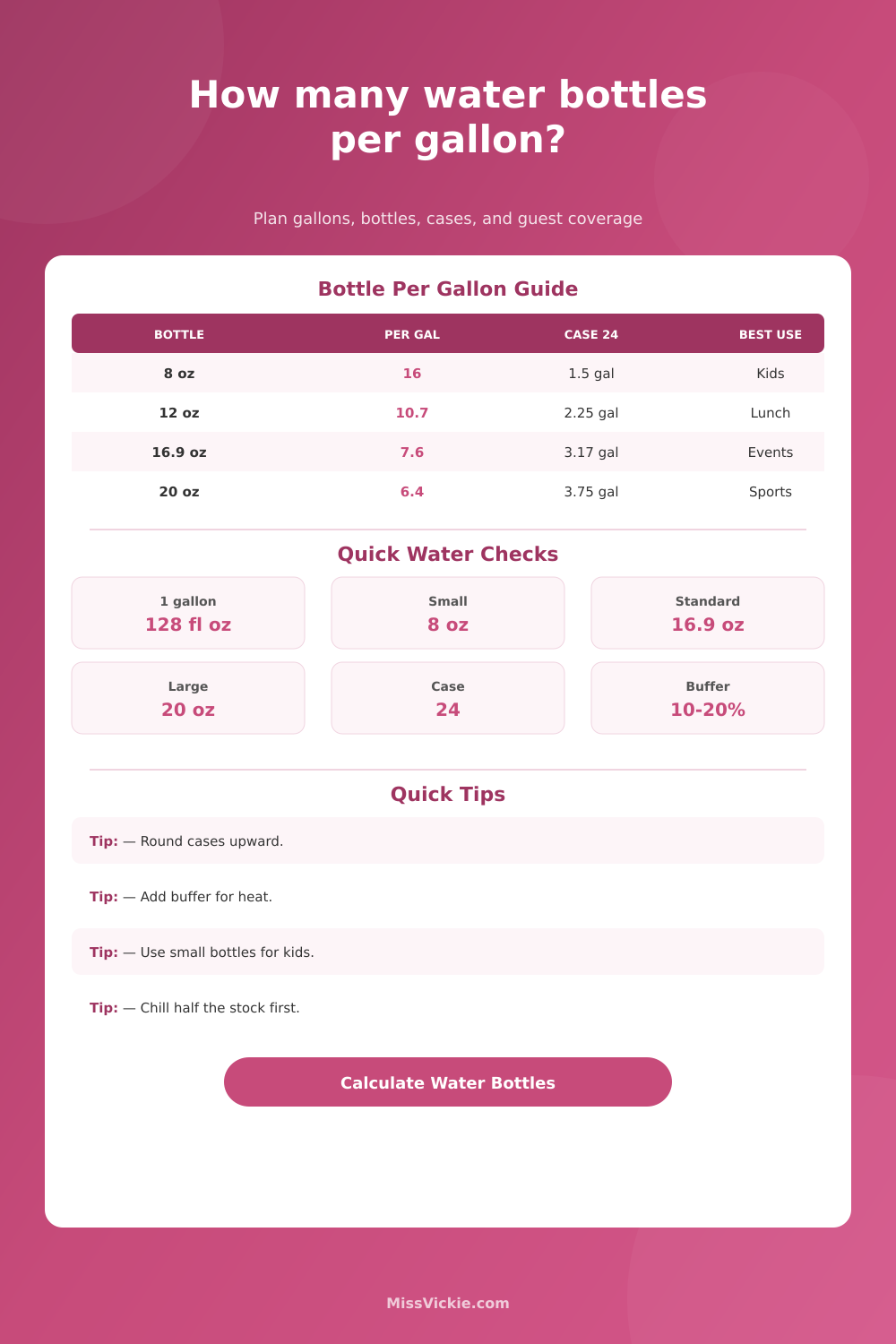
| Bottle Size | Bottles Per Gallon | Gallons Per 24-Pack | Best Kitchen Or Event Use |
|---|---|---|---|
| 8 fl oz mini | 16.0 | 1.50 gal | Kids parties, snack tables, short meetings |
| 10 fl oz small | 12.8 | 1.88 gal | Lunch boxes, school groups, tasting stations |
| 12 fl oz lunch | 10.7 | 2.25 gal | Box lunches, casual indoor meals, cooler trays |
| 16 fl oz reusable-style | 8.0 | 3.00 gal | Refill station matching common tumbler fills |
| 16.9 fl oz standard | 7.6 | 3.17 gal | General parties, receptions, meeting rooms |
| 20 fl oz sports | 6.4 | 3.75 gal | Outdoor service, crews, practices, warm days |
| 24 fl oz tall | 5.3 | 4.50 gal | Longer shifts, volunteer stations, high thirst |
Conversion uses US liquid gallons: 1 gallon equals 128 fluid ounces.
🍽Event hydration target table
| Event Type | Typical Target | Suggested Buffer | Planning Notes |
|---|---|---|---|
| Indoor meal or meeting | 8 to 16 fl oz per guest | 5% to 10% | Guests may drink coffee, tea, soda, or juice too. |
| Buffet or food service | 12 to 20 fl oz per guest | 10% to 15% | Saltier foods and longer lines raise demand. |
| Outdoor party | 20 to 32 fl oz per guest | 15% to 25% | Heat, sun, and ice tub loss push totals upward. |
| Sports or high movement | 24 to 48 fl oz per guest | 20% to 25% | Offer water before, during, and after activity. |
| Wedding or reception | 12 to 24 fl oz per guest | 10% to 15% | Place bottles near bars, tables, shuttle pickup, and exits. |
| Emergency storage | 1 gallon per person per day | 25% to 35% | Use the period field as days times 24 hours when planning reserve. |
📦Case planning table
| Case Pack | 16.9 oz Gallons | 20 oz Gallons | When It Helps |
|---|---|---|---|
| 12 bottles | 1.58 gal | 1.88 gal | Small family events, pantry reserve, light office use |
| 24 bottles | 3.17 gal | 3.75 gal | Standard party and catering purchase unit |
| 28 bottles | 3.70 gal | 4.38 gal | Warehouse packs with a small extra margin |
| 32 bottles | 4.23 gal | 5.00 gal | Sports teams, volunteer crews, outdoor lines |
| 40 bottles | 5.28 gal | 6.25 gal | High count cases for large gatherings |
📝Common group quantity table
| Guests | Light Indoor | Warm Outdoor | Active Or Sports |
|---|---|---|---|
| 10 guests | 10 to 12 standard bottles | 15 to 20 standard bottles | 20 to 30 standard bottles |
| 25 guests | 25 to 30 standard bottles | 38 to 50 standard bottles | 50 to 75 standard bottles |
| 50 guests | 50 to 60 standard bottles | 75 to 100 standard bottles | 100 to 150 standard bottles |
| 100 guests | 100 to 120 standard bottles | 150 to 200 standard bottles | 200 to 300 standard bottles |
🧮Bottle size comparison grid
Highest bottle count per gallon, useful when guests only need a small drink.
A tidy size for boxed meals, classroom coolers, or events with many other drinks.
The default case size for most parties, concessions, and reception water stations.
Fewer bottles per gallon, but better coverage for warm service and active guests.
💡Water bottle planning tips
You know that panic that hits when cooler is empty but there are still forty guests left? You’re about to go through one of those panicky moments where you need to remember that this isn’t a math problem, it’s a logistics disaster waiting to happen. Water planning seems easy, a gallon of liquid means a gallon of liquid! This change when you consider how liquids leak out of containers (spills), melt other things like ice, and do not fit inside those container as neatly as you would hope.
People get thirsty at weddings; they do not get nearly as thirsty during office meetings. There aren’t any neat conversions or coefficients here, unless you want to be stuck doing all the math yourself. That’s where the above calculator comes in. Plug in your bottle size, your number of guests, and let the calculator handle the rest.
How to Plan Enough Water for Your Party
But how did we get there? Knowing why those numbers matter is what keeps the line moving. Volume is the first variable to respect. There are 128 fluid ounces in a US gallon. Bottle has 16.9 ounces. That’s about 7.6 bottles per gallon. The trick is mostly understanding what is actualy being measured. You can’t buy zero point six of a container.
The decimal is the enemy of party planning, and most planners either don’t round up enough or round up too aggressive. Selecting a larger 20 ounce sports bottle will require fewer containers per gallon, which mean you get more actual water if you’re buying full cases. It also reduces the air volume in your cooler, which slows down temperature rise. This often make it better for hot outdoor events, even though the unit cost is slightly higher.
How guests behave makes all the difference. Because an outdoor party at your house is different than an indoor conference, the tool lets you account for that difference. When they’re seated at their desks, they drink slowly. When they stand in the sun waiting for some brisket, they chug it down. There is a big difference between a heavy 32 ounce pour and a light 8 ounce one, which can double your overall need overnight. Ignore the heat index (or the level of physical activity your guests are engaged in) and you’ll run out an hour too soon.
That’s what the buffer percentage field is for, it’s there for just this kind of chaos. Ten percent covers normal waste. Twenty-five percent covers kids dropping bottles on the ground and grown-ups forgetting to snap caps closed before replacing them in the ice. And then there’s the matter of case math. Depending on the brand and where you live, retail water arrives in packs of 36, 30 or 24 bottles. And no, you don’t buy gallons from the store. You buy cases.
So if you’ve calculated that you’ll need 115 bottles of water for a hundred guests at your wedding, now you’ve got to figure out which cases to bring. Three twenty-four packs? That gets you seventy-two bottles. Short by forty-three. Five full cases get you right there, with some breathing room. But since the calculator doesn’t want you coming back during cocktail hour for a mid-night run to the liquor store, it rounds up for you.
That is kind of the point. What you store matters just as much as how much. Don’t throw all bottles in the cooler at once. Half should be in your trunk or garage for when the party starts to heat up. That way you don’t melt through ice too quickly, and you won’t have those soggy, difficult-to-grab bottles flying out of people’s hands. And, it won’t turn into lukewarm slush; it will stay cold and watery. You will cool down the initial wave and leave the second one dry. When that third round hits, you’ll should of thanked yourself.
Who drinks more then they admit? These include summer wedding guests, sports teams, and outdoor volunteer crews. Coffee service for indoor meeting can get away with less. If you want to test your assumptions, just check the reference table on the page. This isn’t about saving money. It’s about preparing.
And last but not least: think about the exit strategy. You know, the unopened bottles are cool. The opened ones aren’t. A solid plan minimizes waste and guilt. Space is precious and water weighs a ton. The fewer times you have to run back to the car, the better. Get that number right so you can spend less time worrying about it and more time having fun at your own party.
Bring ’em in, keep ’em cold and let the math take care of the rest.