Vodka Sauce Pasta Calculator
How Much Vodka Sauce For Pasta?
Estimate creamy tomato vodka sauce by servings, dry pasta, shape, simmer loss, creaminess, proteins, add-ins, reserved pasta water, leftovers, and jar size.
1.Choose a pasta-night preset
Presets fill realistic starting points; adjust any field for your pot, jar, or homemade sauce.
2.Enter sauce and pasta details
Calculation breakdown
3.Vodka sauce serving references
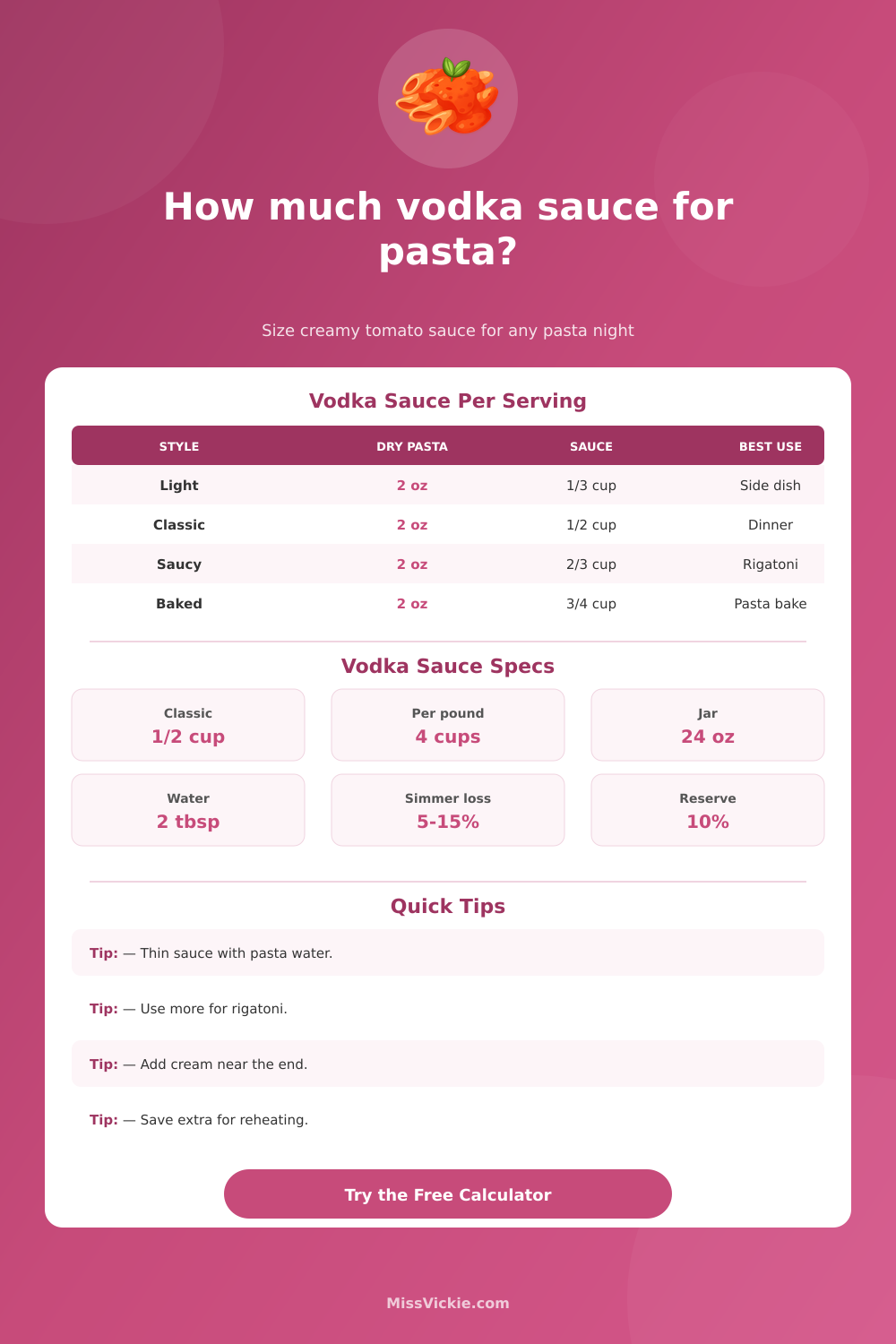
4.Serving-size table
| Coating | Sauce per 2 oz dry pasta | Best pasta | Use when |
|---|---|---|---|
| Light coating | 1/3 cup / 80 ml | Spaghetti, linguine | The sauce is rich, homemade, or served with a side. |
| Classic dinner | 1/2 cup / 120 ml | Penne, fusilli, farfalle | The pasta is the main dish and should look glossy. |
| Extra saucy | 2/3 cup / 160 ml | Rigatoni, shells, gnocchi | Big shapes or ridges need more sauce in the hollow spaces. |
| Baked pasta | 3/4 cup / 180 ml | Ziti, rigatoni, short tubes | Oven time thickens creamy tomato sauce and dries pasta edges. |
5.Jar and batch table
| Servings | Dry pasta | Classic sauce | 24 oz jars |
|---|---|---|---|
| 2 | 4 oz / 113 g | 1 cup / 8 oz | 1 jar leaves extra |
| 4 | 8 oz / 227 g | 2 cups / 16 oz | 1 jar with reserve |
| 6 | 12 oz / 340 g | 3 cups / 24 oz | 1 full jar |
| 8 | 1 lb / 454 g | 4 cups / 32 oz | 2 jars |
| 16 | 2 lb / 907 g | 8 cups / 64 oz | 3 jars |
6.Shape and add-in adjustment table
| Factor | Typical adjustment | Why it matters | Calculator treatment |
|---|---|---|---|
| Rigatoni or ziti | Add 10-18% | Tubes trap sauce inside and between pieces. | Shape multiplier raises the base sauce. |
| Spaghetti | Use 5% less | Long strands coat with less sauce than ridged pasta. | Shape multiplier trims the amount. |
| Vegetables | Add 2 tbsp per cup | Add-ins steal sauce and dilute creaminess. | Cups of add-ins add measured sauce. |
| Chicken or sausage | Add 1-2 tbsp per serving | Protein needs coverage and reheats drier. | Protein multiplier adds a small buffer. |
7.Vodka sauce style comparison
Ready-to-use sauce; warm gently and loosen with pasta water.
Plan for light reduction before pasta goes in.
Richer sauce covers well, so it can be slightly lighter.
Tomato pieces and onions need more total volume.
8.Practical sauce tips
To determine the correct amount of vodka sauce to use in making pasta, one must consider how the amount of vodka sauce that is used will impact the drying of the pasta. Using too little vodka sauce will make the pasta dry, while using too much vodka sauce will make the plate a liquid soups. The amount of vodka sauce that is necessary to use will change based on the number of individual that will eat the pasta.
Furthermore, the amount of vodka sauce that is needed will change based upon the shape of the pasta that is used, as well as whether the pasta is being baked or tossed in an skillet with the vodka sauce. Thus, a calculator can help a cook to determine the amount of vodka sauce that is necessary before beginning to cook the pasta. Vodka sauce has a texture that is different than both marinara sauce and Alfredo sauce.
How Much Vodka Sauce to Use for Pasta
Vodka sauce contain cream and butter, which allow the sauce to cling to the pasta in a way that marinara sauce does not. The texture of the vodka sauce can change the amount of vodka sauce that is needed for each portion of pasta. For instance, a light coating of vodka sauce may be sufficient for a dish that also contains garlic bread and a salad, but a larger amount of vodka sauce may be needed if the pasta is the main part of the meal and flavors is desired in every strand of pasta.
Thus, the calculator also allows for the sauce texture to be selected so that the amount of vodka sauce calculates to the right amount based off sauce texture. The shape of the pasta may change the amount of vodka sauce that is needed. For instance, pasta shapes like rigatoni or ziti are tube-shaped pasta that will trap some of the vodka sauce, while pasta shapes like spaghetti will not contain any tube that trap vodka sauce.
Similarly, pasta shapes like gnocchi or tortellini will absorb some of the liquid from the vodka sauce. Thus, the calculator makes adjustments to the amount of vodka sauce based on the selected pasta shape. Consequently, the different pasta shapes will change the total amount of vodka sauce that is needed.
For example, if the sauce is calculated for one type of pasta, another type of pasta will require a different amount of vodka sauce to properly coat the pasta in the recipe. Simmering the homemade vodka sauce will reduce the amount of vodka sauce that is prepared. Simmering for short periods will reduce the amount of sauce by five percent, while simmering for long periods may reduce the amount of sauce by fifteen percent.
Thus, the calculator allows for the simmer settings to be selected to calculate the proper amount of vodka sauce to prepare. Jarred vodka sauce dont need to simmer, but warming the jarred vodka sauce will enhance the taste of the sauce. Thus, the cook can select the type of vodka sauce in the calculator to calculate the proper amount.
In addition to the sauce, various add-ins to the pasta will alter the amount of vodka sauce needed. For instance, vegetables such as spinach or peas will take up some of the space in the sauce and pull some of the sauce to stick to the vegetables. Chicken or sausage also requires extra vodka sauce to ensure that the chicken or sausage is coated evenly and does not become dry when reheated.
The calculator includes buffers for these add-ins so that the number of jars of vodka sauce that are calculated for the recipe also include the vegetables and protein. Additionally, the calculator also allows for reserving a percentage of the vodka sauce for leftovers; creamy tomato sauces tend to thicken when cooled. Pasta water is the liquid that helps the vodka sauce to cling to the pasta.
Adding a few tablespoons of pasta water per serving will loosen the vodka sauce without changing its flavor and will help the sauce to adhere to the pasta. The calculator includes a field for reserved pasta water so that cooks can see how much pasta water to reserve. While pasta water does not replace vodka sauce, it does prevent the addition of cold tap water to the pasta and sauce mixture, which can lead to the breakdown of the emulsion of the vodka sauce.
The reference tables on this page allow cooks to quickly determine the amount of vodka sauce that will be needed if the recipe is adjusted to use a different serving size. While the standard portion size is two ounces of dry pasta, the amount of vodka sauce that is needed for that portion size can change based upon the type of pasta that is to be used and the degree of “coating” that the pasta is to receive. For example, a portion of rigatoni that is prepared with an extra coating of vodka sauce will require a different amount of sauce than a portion of pasta that is baked and served without any extra Coating.
The table can be used to determine the amount of vodka sauce that is required for a large group of individuals or for two individuals. Many cooks make mistakes when preparing a dish with vodka sauce; they may treat it like marinara sauce or like Alfredo sauce. Recipes that use marinara sauce tend to be too lean for those that also contains vodka sauce, and those that use Alfredo sauce can be too heavy with the addition of vodka and tomatoes to the pasta sauce.
These errors can be avoided with the use of the calculator, which uses the selected “coating” level for the pasta to determine the amount of vodka sauce that is needed. Additionally, the display of the number of jars of vodka sauce that are required for the preparation of the dish will also avoid the error of becoming out of sauce during the cooking process. When reheating pasta dishes, the amount of vodka sauce that is required can change due to the tendency of creamy sauces to thicken when the pasta dish is refrigerated.
To prevent the sauce from becoming too thick when reheating the pasta, a buffer of sauce can be accounted for in the preparation of the recipe; this buffer will ensure that the amount of sauce that is prepared will allow the reheated pasta to remain saucy. Furthermore, if the pasta that is reheated was baked prior to serving, some of the liquid in the sauce will have evaporated during the baking process. Thus, the buffer also accounts for this potential loss of sauce.
To use this calculator correctly, first select the number of servings that will be prepared and the weight of the pasta that is to be used. After selecting these factors, adjust the settings for the type of pasta that will be used and the amount of “coating” of vodka sauce that will be applied to the pasta. If preparing the vodka sauce from scratch, account for the amount of liquid that will be lost during simmering.
Finally, account for any additional amount of vodka sauce that may be required for the addition of vegetables or protein to the dish. The calculator will perform the mathematics for the user so that the total amount of vodka sauce that is required will account for all of these factors.