Vodka Sauce Per Pound Of Pasta Calculator
Scale creamy vodka sauce by dry pasta pounds, pasta shape, tomato base, cream ratio, vodka ounces, cook-off, cheese finish, pancetta, pasta water, simmer reduction, and sauciness.
Pick a real vodka pasta scenario, then fine-tune the cream, vodka cook-off, pancetta, cheese, pasta water, and reduction settings.
| Pasta shape | Multiplier | Best vodka sauce texture | Kitchen cue |
|---|---|---|---|
| Penne or ziti | 1.00x | Classic creamy tomato | Tubes hold sauce inside without needing a very heavy cream ratio. |
| Rigatoni or paccheri | 1.14x | Spicy or extra saucy | Large ridges need more sauce and a stronger pasta-water toss. |
| Medium shells | 1.10x | Rich creamy vodka | Shell cups catch cheese, pancetta, and tomato cream. |
| Fusilli or rotini | 1.08x | Meatless or mushroom vodka | Spirals carry a glossy emulsion especially well. |
| Linguine or spaghetti | 0.90x | Light rosy sauce | Long strands need less sauce but more pasta water for gloss. |
| Orecchiette | 1.12x | Pancetta or cheese finish | Small cups catch bits, so avoid making the sauce too thin. |
| Base choice | Typical role | Weight per cup | Vodka sauce note |
|---|---|---|---|
| Tomato paste plus crushed tomatoes | Classic restaurant-style base | About 8.7 oz | Concentrated enough for cream without tasting flat. |
| Tomato paste plus passata | Smooth silky sauce | About 8.9 oz | Great when you want no tomato chunks in the final sauce. |
| Canned crushed tomatoes | Weeknight base | About 8.4 oz | Needs a little more simmering before cream. |
| Whole peeled tomatoes, blended | Fresh tomato flavor | About 8.2 oz | Blend after simmering for a smoother vodka sauce. |
| Fresh Roma tomato puree | Summer batch | About 6.9 oz | Needs stronger reduction before adding dairy. |
| Extra tomato paste base | Deep tomato cream | About 9.3 oz | Use slightly more pasta water to avoid a heavy finish. |
| Finish style | Cream share | Cheese per lb pasta | Best use |
|---|---|---|---|
| Lean rosy | 16% of finished sauce | 0 to 1 oz | Lighter weeknight vodka pasta with long noodles. |
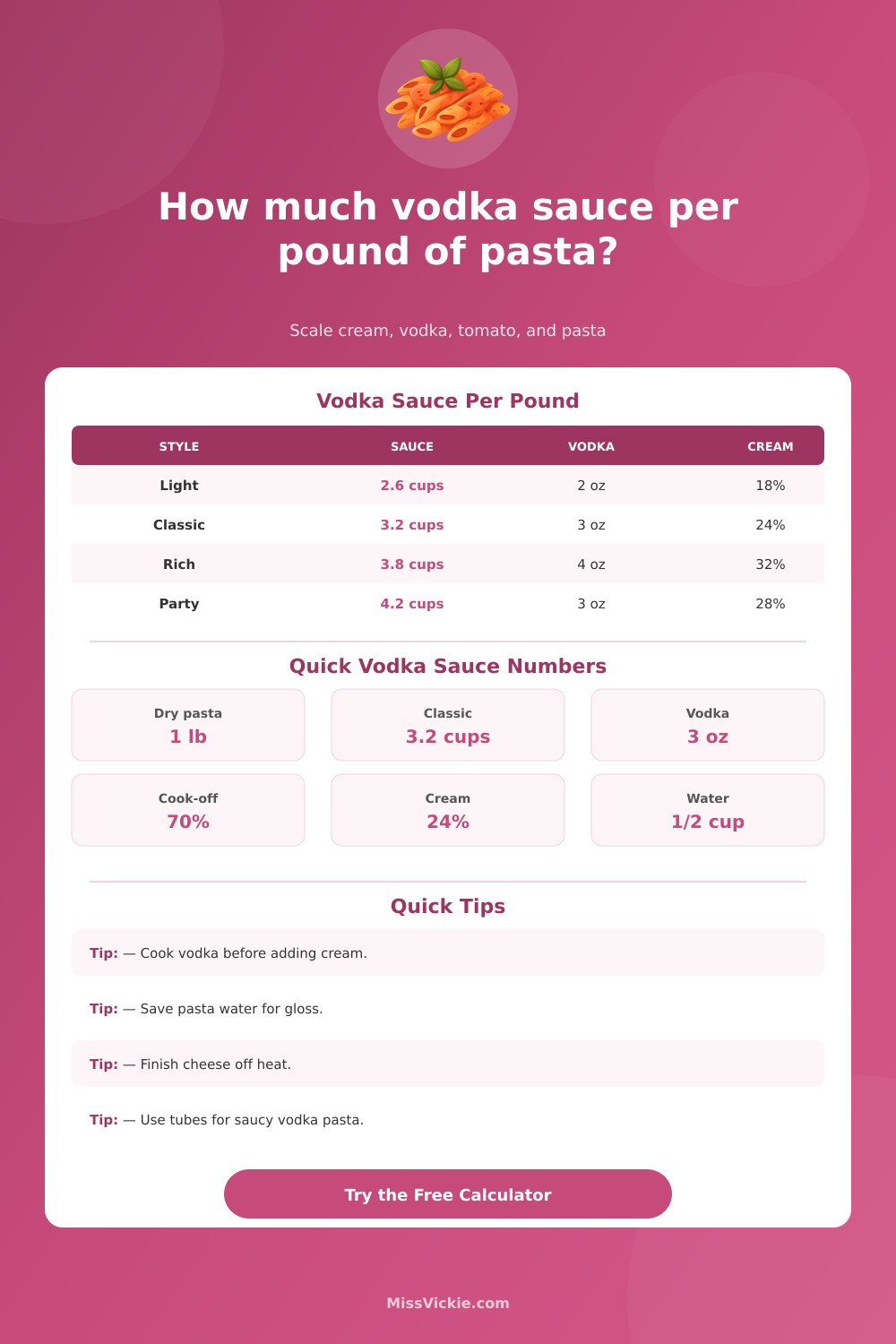
| Classic | 24% of finished sauce | 1.5 to 2 oz | The balanced penne alla vodka target. |
| Silky | 30% of finished sauce | 1 to 2 oz | Restaurant texture when tossed hard with pasta water. |
| Rich | 36% of finished sauce | 1 to 1.5 oz | Use with spicy tomato and big ridged pasta. |
| Pecorino finish | 24% to 30% | 1 to 1.5 oz | Sharper, saltier finish; add gradually off heat. |
| Mozzarella baked finish | 24% to 28% | 2 to 3 oz | Best for baked ziti or party trays. |
Lower cream, less cheese, and more pasta water for linguine or smaller portions.
Balanced tomato, cream, vodka, and Parmesan for immediate stovetop serving.
More sauce and more cook-off so chili, tomato paste, and cream stay rounded.
Extra sauce protects pasta during baking, holding, transport, or reheating.
| Adjustment | Typical setting | What it changes | Use it when |
|---|---|---|---|
| Quick vodka simmer | 45% cooked off | More vodka aroma remains | You simmer briefly before adding cream. |
| Standard vodka simmer | 70% cooked off | Balanced bite and aroma | Most penne alla vodka batches. |
| Deep vodka simmer | 85% cooked off | Softer alcohol edge | Party trays or sauce for kids at the table. |
| Classic pancetta | 3 oz per lb pasta | Adds salt, fat, and volume | You want a savory restaurant-style base. |
| Meatless mushroom depth | 1 cup per lb pasta | Adds bulk without meat | Vegetarian sauce needs more umami. |
| Buffet or bake hold | 12% to 20% extra | Offsets absorption | Pasta will sit or reheat before serving. |
| Dry pasta | Classic sauce | Vodka before cook-off | Heavy cream |
|---|---|---|---|
| 0.5 lb | 1.6 cups | 1.5 fl oz | 0.4 cup |
| 1 lb | 3.2 cups | 3 fl oz | 0.75 cup |
| 2 lb | 6.4 cups | 6 fl oz | 1.5 cups |
| 3 lb | 9.6 cups | 9 fl oz | 2.3 cups |
| 5 lb | 16 cups | 15 fl oz | 3.8 cups |
| 8 lb | 25.6 cups | 24 fl oz | 6.1 cups |
A lot of people freak out at the stove trying to make vodka sauce because they messed up the ratio… Not because they’re a terrible cook.
You have boiled the pasta and drained the water, and now you are staring into a pan with a thin, broken pool of tomato cream. The pasta sits dry, leaving behind a puddle of oily-looking separated liquid, no dinner here.
Why Vodka Sauce Breaks and How to Fix It
Vodka sauce is an emulsion, which means it require exact proportions of starch, acid, and fat to maintain its glossy consistency. Stir it all you want; it won’t save it once the ratios is wrong and you’ve got a grainy disaster. It scales for you, but understanding why the inputs matter make you a better cook.
Recipes typically call for a pound of pasta, scaled to feed four (if they say penne). But you don’t always serve a pound of pasta to four people so most of your actual cooking isn’t quite that neat. Sometimes it’s light; sometimes it’s a big tray for company. Those two dinners aren’t just about extra sauce; it’s also about how much pasta water, cream, and tomato reduction are in there.
More importantly, it’s all about the shape. Rigatoni, because of its ridged outside and hollow inside, can captures sauce but needs a thicker coating to reach the center. Long pastas like linguine don’t hold any sauce inside, relying instead on what coats their surface. Pouring the same amount of heavy cream over spaghetti as with shells will result in something greasy rather than rich.
By understanding this geometry, the tool knows to multiply the thickness by a greater number for tube forms. This guarantees that each bite recieve adequate coverage. It also avoids the dreaded watery-noodle disaster without drowning the plate in dairy.
The vodka also acts as a structural element by binding the oil and water molecules together. It must be cooked out just to a point that it won’t curdle the cream when added later in the process. If it’s still there (leftover from a quick simmer), you’ll have a sharp-tasting sauce and it will never emulsify properly. If you’ve removed nearly all of it through a deeper simmer, you’re left with the flavor connection but none of the burn.
With the calculator, you choose the amount of time you want to simmer to decide how much booze is cooked off. That way, you don’t waste time guessing if you’ve reached your cook-off goal or not before adding dairy.
That’s when home cooks go off the rails: the cream ratio. A shortage of cream leave the sauce thin and slightly acidic, while an excess will leave your mouth feeling weighed down with a heavy blanket instead of the lifted sensation good pasta should bring. For the classic version, look for roughly twenty-four percent cream by volume in your final sauce, enough to add richness but not bury the tomato base.
You can reduce this if you’re looking for a lighter meal and make up for it with more reserved pasta water. This starchy water serves as both natural binder and thickener, achieving the same glossy finish without added fat.
There’s also a secret ingredient: Cheese-timing. If you drop the Parmesan or Pecorino on top when there’s still some boil left in the pan, it’ll go all stringy with globs of protein curd. Always remove the pan from the heat first then fold in your cheese. This saves the salty bite that balances the acidity of the tomato and the sweetness of the cream, and it ensures a smooth, creamy consistency.
The best part is that there is less stress when dinner is cooking. Whether it’s two people or twenty, planning ahead prevents any need for mid-cooking correction. With the ratios correct before setting foot near the stove, there’s no guessing or stressing as dinner bubbles away.
If you’re making something in batches of various sizes, the page’s reference tables spells it all out. Depending on your total weight, you will know exactly how much cream, crushed tomatoes, or tomato paste to start with… And then you won’t have to worry about watery, broken-up sauces!
Because you’ve got the ratio down, vodka sauce isn’t an experiment anymore; it’s something you rely on for comfort. Before long, the confidence comes from knowing each tube or strand is coated just right.
You should of used the calculator earlier. It would of been more easy.