Age, sex, life stage, food groups, supplement label amount, and vitamin mix
Vitamin Intake Calculator
Estimate general vitamin coverage from everyday food groups and supplements, with RDA or AI targets by age, sex, and life stage plus label-style Daily Value percentages.
Pick a common eating pattern, then adjust servings and supplement details. This calculator is for general nutrition planning only and does not diagnose deficiency or set medical treatment.
Vitamin Intake Breakdown
Food-First Meal Plan Prompt
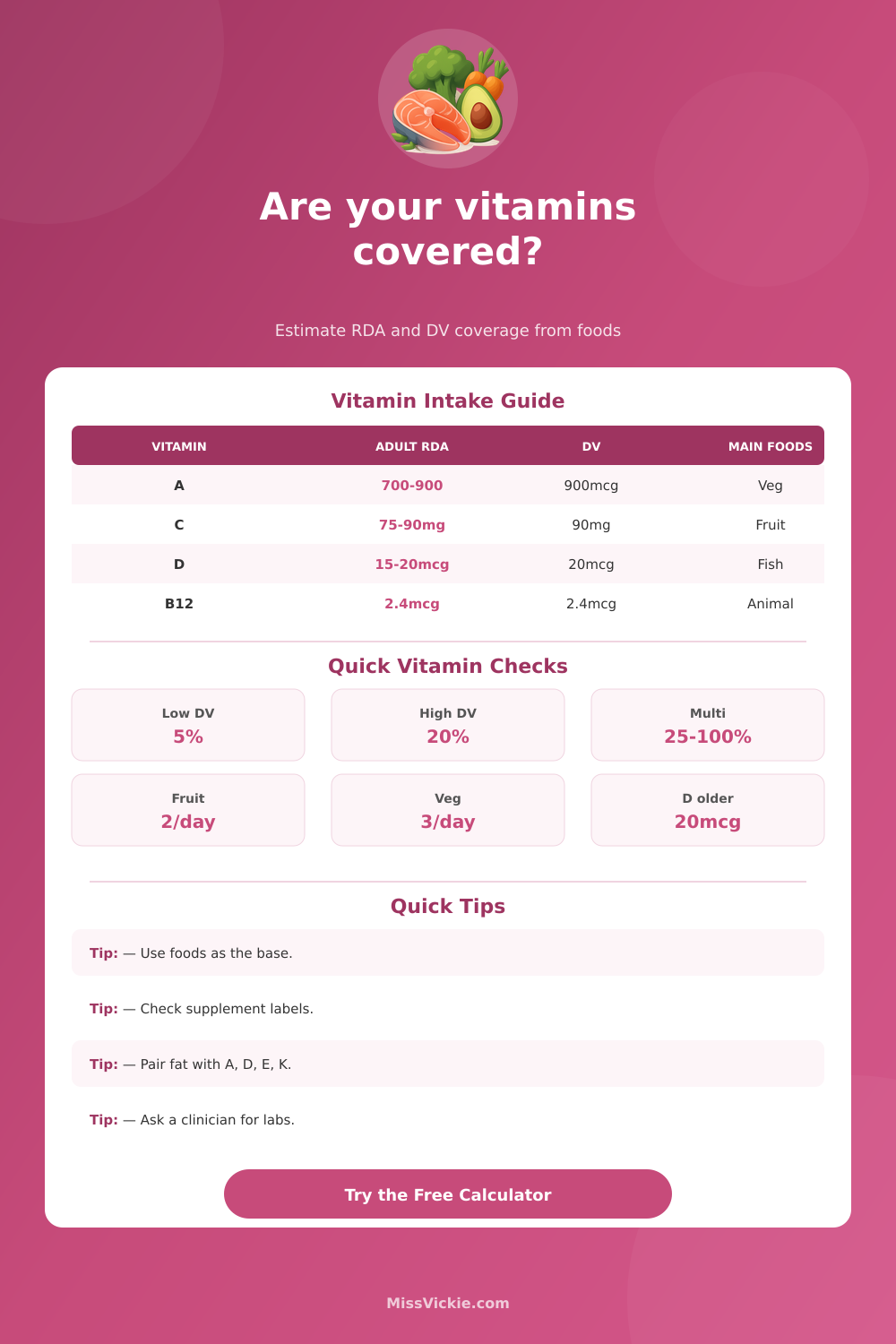
| Vitamin | Adult 19-50 Target | Older Adult Note | Pregnancy Or Lactation |
|---|---|---|---|
| Vitamin A | 900 mcg RAE men, 700 mcg RAE women | Same adult RDA; avoid high preformed retinol unless advised | 770 mcg RAE pregnancy, 1300 mcg RAE lactation |
| Vitamin C | 90 mg men, 75 mg women | Same RDA; food variety still matters | 85 mg pregnancy, 120 mg lactation |
| Vitamin D | 15 mcg ages 19-70 | 20 mcg for ages 71 and older | 15 mcg pregnancy or lactation |
| Vitamin K | 120 mcg men, 90 mcg women AI | Same adult AI; medication interactions can matter | 90 mcg AI pregnancy or lactation |
| B Vitamin | Adult Target | Life Stage Shift | Common Food Drivers |
|---|---|---|---|
| Vitamin B6 | 1.3 mg adults 19-50 | 1.7 mg men 51+, 1.5 mg women 51+, 1.9 mg pregnancy | Fish, poultry, potatoes, chickpeas, fortified cereal |
| Vitamin B12 | 2.4 mcg adults | 2.6 mcg pregnancy, 2.8 mcg lactation | Seafood, meat, eggs, dairy, fortified foods |
| Folate | 400 mcg DFE adults | 600 mcg DFE pregnancy, 500 mcg DFE lactation | Leafy greens, beans, citrus, fortified grains |
| Vitamin E | 15 mg alpha-tocopherol adults | 19 mg lactation; 15 mg pregnancy | Nuts, seeds, oils, greens, fortified foods |
| Food Group Input | Vitamins Estimated | Approximation Used | Best Use |
|---|---|---|---|
| Fruit serving | C, folate, small A and B6 | General mixed-fruit average per serving | Quick vitamin C coverage and snack planning |
| Non-leafy vegetable serving | A, C, K, folate, B6, E | Mixed colorful vegetable average | Balanced meals and side-dish planning |
| Leafy green cup | K, A, folate, C, E | Raw or lightly cooked leafy greens average | Raising K, folate, and carotenoid intake |
| Fortified grain serving | Folate, B6, B12, D | Typical fortified cereal or enriched grain estimate | Label-based breakfast and pantry planning |
| % DV Range | Calculator Meaning | Food Label Context | Practical Reading |
|---|---|---|---|
| 0-49% | Likely gap for this model | Depends on actual food choices | Add food sources and check labels |
| 50-89% | Partial coverage | May be normal for one meal or day | Round out with varied meals |
| 90-150% | Near target to comfortably covered | Often label-friendly coverage | Maintain variety, avoid duplicate high doses |
| Over 150% | High estimate, especially if supplements included | Some vitamins have upper limits | Review supplement labels with a clinician |
RDA and AI values are planning references for generally healthy people. Individual needs can change with health conditions, medications, lab results, diet restrictions, and clinician guidance.
Best considered with meal fat and supplement labels because excess intake can matter more for some forms.
Often tied to daily food variety; cooking, storage, and low intake days can shift estimates.
Useful for plant-forward diets, low dairy intake, and quick label-based checks.
Pregnancy, lactation, teen years, and older adulthood change several planning targets.
A vitamin intake calculator is a tool that calculate how much of each vitamin you consume daily from the foods that you eat and the supplements that you take. Many peoples use multivitamins to meet there daily vitamin requirements. However, there may not be an information regarding whether the multivitamin that they take provides the vitamins that they require.
The requirement of each vitamin will differ based off the age, sex, and life stage of the individual. A vitamin intake calculator will require that the user input their variables to produce an accurate reading of the requirements of each of the vitamins that an average person should consume daily. For example, if the user indicates that they are a man, a woman, a teenager, or an older adult, the body will change the parameters of the reference levels since the requirements of vitamins will be different for each of these groups.
How the Vitamin Intake Calculator Works
To calculate the vitamins that an individual consume daily, the user will have to input the number of serving of each food group that they consume daily. These food group include fruits, nonleafy vegetables, leafy greens, fortified grains, dairy products, protein foods, oily fish, and eggs. These groups are required because they are the main source of the eight different vitamins that the vitamin intake calculator calculates.
The supplement that the individual takes will also have to be entered into the vitamin intake calculator. The user will have to indicate the type of supplement that they take, whether they take no supplement, a low dose supplement, a standard supplement, or a custom supplement. Additionally, the user will have to give an input of the number of days per week that the supplement is taken to calculate the average number of vitamins that are taken daily.
The vitamin intake calculator will provide several score to indicate the amount of vitamins that is consumed daily by the individual. The vitamin intake calculator will provide a score for the coverage of each of the eight vitamins that the tool calculates. Furthermore, the vitamin intake calculator will calculate the number of vitamins that are consumed from food alone before the supplements are taken.
Additionally, the vitamin intake calculator will calculate the average Daily Value of each of the vitamins. If the score for any of the vitamins is near or above the reference level, it indicates that the individual consume the appropriate amount of that vitamin. However, if the score is low for any of the vitamins, it indicates that the individual should of consume more of a specific food group.
Within the vitamin intake calculator will be reference tables that provide information for each of the calculated vitamins. These reference tables will contain the Recommended Dietary Allowance (RDA) and the Adequate Intake (AI) for adult. Furthermore, there will be separate tables for pregnant individuals and those over the age of seventy.
Additionally, a percentage of the Daily Value (% DV) will be indicated for each vitamin. For instance, if a percentage below 50% of the Daily Value is shown for any vitamin, it indicates that the individual should consume more of that vitamin containing food group. If the percentage of the Daily Value is between 90% and 150%, the individual is consuming the appropriate amount of that vitamin.
If the percentage of the Daily Value is above 150%, the individual should consult a health care clinician to ensure that they are not consuming too many vitamins as some vitamins has upper limits to the amount that should be consumed by an individual. A vitamin intake calculator can be a helpful tool for calculating the amount of vitamins that an individual consumes daily. However, the vitamin intake calculator does not account for all of the variables in an individual’s life.
For instance, the medications that an individual takes can affect the absorption of vitamins. Additionally, the conditions that an individual have in there body can change their requirement of certain vitamins. Furthermore, the amount of soil in which a vegetable was grown and the length of time that the vegetable was stored can change the amount of vitamins that the vegetable contain.
These variables can make a vitamin intake calculator an estimation of the amount of vitamins that should be consumed daily by an individual. However, they can help an individual to recognize the vitamin deficiency that they may have. By recognizing these deficiencies, individuals can make changes to their diet so that they consume the vitamins that their body require to function properly.