Age, sex, life stage, smoker adjustment, produce servings, cooking loss, and supplement amount
Vitamin C Calculator
Estimate daily vitamin C from fruit, vegetables, juice, cooked produce, and supplements, then compare it with a personal target, the Daily Value, and general upper-limit guidance.
Choose a common day, then adjust the inputs. This calculator is for general food planning only and is not medical advice.
Vitamin C Breakdown
Food Source Share
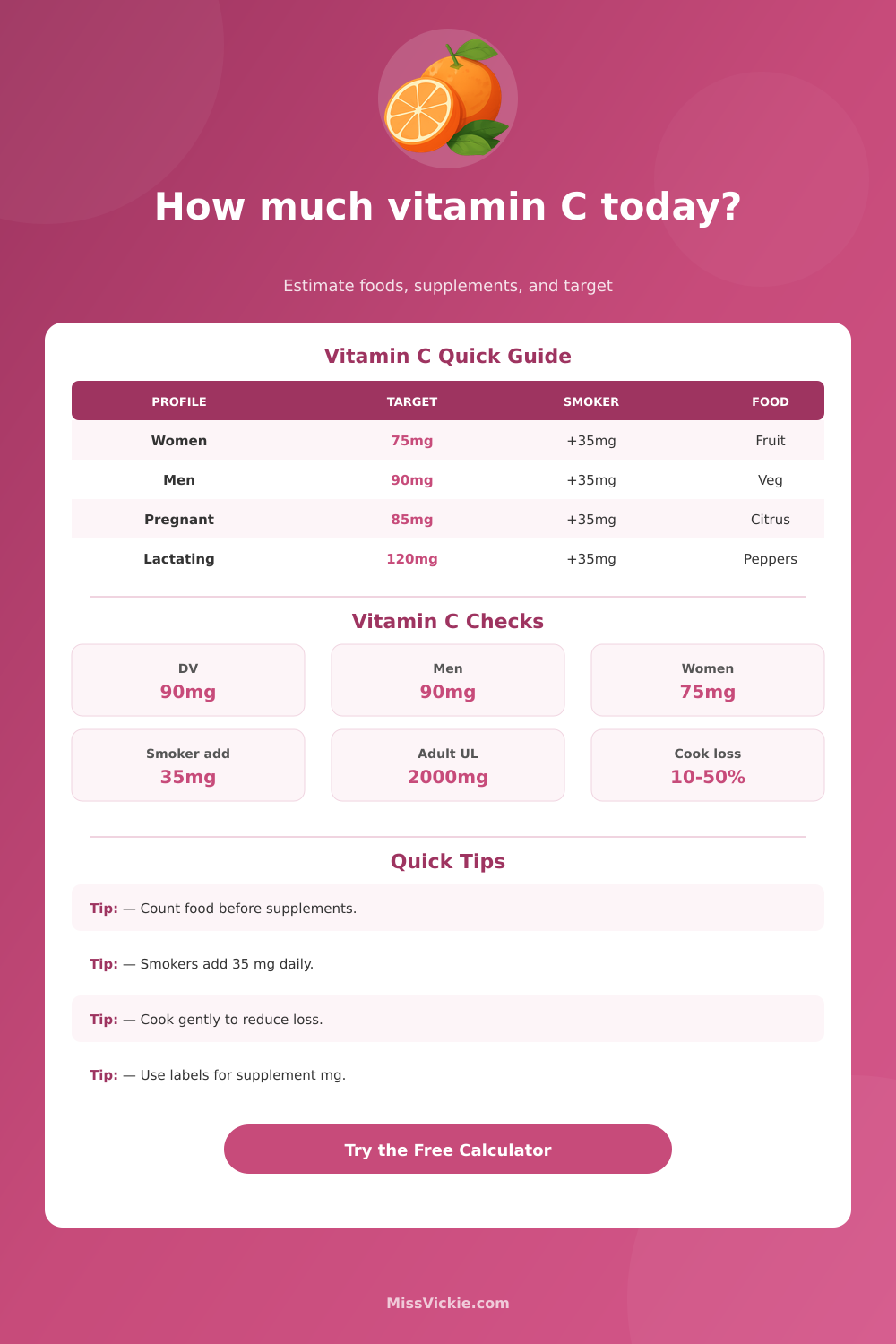
Personal target logic uses age, sex, pregnancy, breastfeeding, and the 35 mg smoker addition.
The Daily Value is a label reference, so it may differ from a personal RDA for some users.
Fruit, pepper, broccoli, juice, potato, and leafy-green estimates are rounded kitchen portions.
Cooking and holding loss is user-adjusted because heat, water, cut size, and time vary.
| Age Or Life Stage | Female Target | Male Target | Calculator Note |
|---|---|---|---|
| Children 4-8 | 25 mg/day | 25 mg/day | Used when age is under 9. |
| Children 9-13 | 45 mg/day | 45 mg/day | Used when age is 9 through 13. |
| Teens 14-18 | 65 mg/day | 75 mg/day | Applies when age or life-stage choice is teen. |
| Adults 19+ | 75 mg/day | 90 mg/day | Default adult personal target. |
| Pregnancy | 80-85 mg/day | Not applicable | Teen pregnancy uses 80 mg; adult pregnancy uses 85 mg. |
| Breastfeeding | 115-120 mg/day | Not applicable | Teen breastfeeding uses 115 mg; adult breastfeeding uses 120 mg. |
| Smokers | Add 35 mg/day | Add 35 mg/day | Added after the age, sex, and life-stage target. |
| Fruit Or Juice | Typical Portion | Vitamin C Estimate | Serving Use |
|---|---|---|---|
| Orange or grapefruit | 1 medium fruit | 70-80 mg | High-C fruit preset and citrus breakfast. |
| Kiwi fruit | 1 medium kiwi | 60-65 mg | Dense vitamin C fruit choice. |
| Strawberries | 1 cup halves | 85-90 mg | Berry-style fruit estimate. |
| Mango, papaya, pineapple | 1 cup cut fruit | 55-90 mg | Tropical fruit estimate. |
| Apple, pear, or banana | 1 medium fruit | 8-12 mg | Low-C fruit estimate. |
| Orange juice | 1 cup | 120 mg | Used by the juice cup input. |
| Vegetable Source | Typical Portion | Vitamin C Estimate | Cooking Note |
|---|---|---|---|
| Bell pepper, raw | 1/2 cup | 60-95 mg | Raw pepper keeps a high share of vitamin C. |
| Broccoli, cooked | 1/2 cup | 50 mg | Steaming generally retains more than boiling and draining. |
| Brussels sprouts, cooked | 1/2 cup | 45-50 mg | Count under broccoli or cruciferous cooked choices. |
| Tomatoes or salad vegetables | 1 cup | 15-25 mg | Useful as a daily add-on, but less dense than peppers. |
| Leafy greens | 1 cup raw or 1/2 cup cooked | 10-30 mg | Amount varies widely by green and preparation. |
| Potato with skin | 1 medium | 15-25 mg | Boiling and discarding water can lower the retained amount. |
| Planning Check | Reference Amount | Calculator Use | Practical Meaning |
|---|---|---|---|
| Daily Value | 90 mg/day | Label comparison mode | Good for comparing foods and supplements on labels. |
| Adult upper limit | 2,000 mg/day | High-intake flag | Mainly relevant when large supplements are entered. |
| Cooking loss | 0-55% | Applied to cooked produce only | Shorter cooking and less water usually preserve more. |
| Produce waste | 0-50% | Applied to food sources | Accounts for trimming, leftovers, or servings not finished. |
| Supplement average | mg x days / 7 | Added to daily total | Uses the entered label amount and weekly frequency. |
Food values are rounded planning estimates. Exact vitamin C varies by cultivar, storage time, ripeness, brand fortification, preparation, and serving size.
Vitamin C is essential for the body and affect how the body manages stress, how quick wounds will heal, and how steady the energy levels will be throughout the body. Fruit and vegetable intake based off color is not as accurate as measuring the nutrients contained in the produce that is consumed daily. A planning tool will allow an individual to input the meals that they prepared and to adjust the calculation according to the meals that is prepared.
Because the tool will track what meals the individual prepares, it will also provide recommendations regarding whether or not the individual consumed enough Vitamin C to meet the bodys need each day. The various inputs into the calculator are important because they will change the calculation that is output by the calculator. Inputs like age, sex, pregnancy status, and smoking status have impact upon the bodys requirements for Vitamin C intake.
Vitamin C Calculator to Check Your Daily Intake
Smokers have higher needs for Vitamin C due to the bodys use of Vitamin C to combat the stress of smoking, thus the calculator provide an extra input for Vitamin C for smokers to determine if any supplement are required. Vegetables that are boiled or drained will contain less Vitamin C than vegetables that are quickly steamed, thus the loss of Vitamin C during cooking can be accounted for in the calculator. Produce is divided into fruit, raw vegetables, cooked vegetables, and juice because produce with higher amounts of Vitamin C are included in each group.
For instance, a cup of strawberries will contain more Vitamin C than a cup of cucumber vegetables, and peppers contains more Vitamin C than celery. A waste factor is included in the calculator for two different reasons: the body often does not eat the peels or the cores of vegetables, and not all of the produce prepared by an individual may be eaten by that individual. The supplement intake for the body is averaged over seven days because it is unlikely for an individual to take the supplement every day.
The output of the calculator will display recommendations to the user regarding the amount of Vitamin C that the individual consumed relative to their target. The output will show whether the amount of Vitamin C consumed is small relative to the target, or whether the amount of Vitamin C consumed is large enough to suggest changes to the individuals diet the following day. The output will also compare the amount of Vitamin C consumed to the Daily Value for that type of food.
This comparison can be helpful for individuals reading the label of the products they purchase in stores. The calculator will also display the upper limit of the amount of Vitamin C that can be consumed, though it is used only as a check on the amount of Vitamin C consumed rather than as a warning; it is helpful in noting when high dose of Vitamin C supplements are consumed daily. The calculator will only provide recommendations as to the amount of Vitamin C consumed by the individual each day because the calculator cannot measure the Vitamin C content of food if it was stored differently or if it is of different ripeness.
An orange that is picked early in its growth cycle will contain less Vitamin C than an orange that is grown and consume during the same day that it is harvested. The amounts of vegetables consumed are only average figure for kitchens, as some meals may contain more Vitamin C than others. The cooking loss of Vitamin C is also only an estimate, as cooks vary in the length of time that vegetables may sit in boiling water.
For most individuals, the body will get the Vitamin C requirement from the foods that they consume. It is possible that an individual may find that they require few or no supplements to fulfill their bodys need for Vitamin C. For instance, a diet that contains peppers in salads will contain more Vitamin C than a diet that contains fewer vegetables high in Vitamin C. For instance, steamed broccoli will contain more Vitamin C than boiled broccoli. The calculator makes it easy for an individual to determine these changes to their diet without having to rely upon their memory to remember if they consumed enough Vitamin C from their food daily.
It also allows for recommendations regarding whether or not the individual should take the supplement, which could allow for those who use the calculator to have a conversation with their doctor regarding the need for such a supplement. An essential habit of many individuals is to count the amount of food that they consume and to count the amount of supplements that they consume second. This is because the produce groups will contain the Vitamin C requirement of the body, and the supplement is used as insurance.
Thus, this method ensure that the body receives the amount of Vitamin C that is required while also allowing for the bodys natural variations in food intake each day. The calculator allows for these methods to be used by displaying the count for the produce that is consumed separately from the average amount of supplement that is consumed daily. As the individual uses the calculator for a full weeks worth of meals, they will begin to recognize patterns in their intake of Vitamin C from the food that they consume.
For example, days that contain more vegetables or citrus fruits will contain more Vitamin C than days that include food that is low in Vitamin C. Thus, the individual will not have to worry about perfection in their intake of Vitamin C each day, but they will recognize if they are progress toward their goals each week. These same principles an individual can utilize if any changes occur in their lives; such as travel, physical illness, or increase in physical activity. Thus, the calculator can help an individual to make changes to their diet to ensure that their body continues to receive enough of the vitamin daily.
Additionally, the calculator allows for these changes and helps the individual to understand the relationship between the food that is consumed and the Vitamin C that is received by the body. Thus, the individual will have better control over their food choice once they understand the relationship between these two variables.