
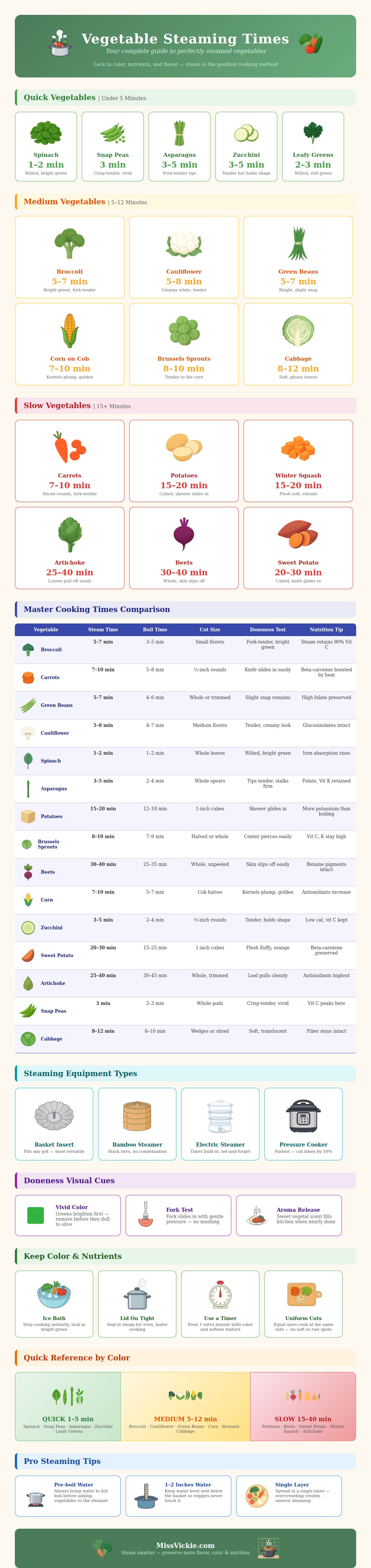
Steaming is an cooking method in which the rising water vapor from boiling water is used to cook vegetable. Steaming is a very useful cooking method for vegetables because steaming vegetable use less water than boiling vegetables, and because steaming retains more of the nutrients of the vegetables. Boiling vegetable cause nutrients to leave the vegetables and enter the boiling water.
Steaming vegetables keeps the nutrient of the vegetables contained within the vegetables. For instance, vitamin C is lost when boiling vegetables, but vegetables preserve vitamin C when they are steam. Additionally, carrots contains the beta-carotene vitamin that is beneficial for the eyes and the immune system of the body.
How to Steam Vegetables
Some vegetables require more time to steam than others due to the density of the vegetables. Vegetables that is thin and delicate require less time to steam than vegetables that are dense. Vegetables that are thin and delicate, such as spinach and snap peas, will become tender very quick when steamed.
Additionally, thin vegetables will become overcooked if cook for too long, so thin vegetables only require five minutes of steaming. Vegetables that are dense, such as potatoes and artichokes, require long period of steaming to become soft. For instance, potatoes must steam until the starch within the vegetable break down enough for a fork to pierce the vegetable.
Artichokes require long periods of steaming to soften the central heart of the vegetable. To steam vegetables properly, it is important to cut the vegetables into uniform size. Otherwise, some vegetables will be raw while others will be overcooked.
Many types of equipment can be used for steaming vegetables. Steam basket can be placed within boiling water, vegetables can be steamed within bamboo stacks, and you can use electric steamers with timers to cook vegetables. It is important not to overcrowd the steaming equipment with too many vegetables.
If too many vegetable are placed into the steamer at once, the steam may stall. If the steam stalls, the vegetables will not steam proper. There are two way to determine when steamed vegetables are cooked.
Vegetables that are green in color will change color when cook. For instance, green vegetables will change from bright green to dull olive green if overcooked. Additionally, you can test vegetables with a fork to determine if they are done cooking; the vegetable should be soft to the touch when cook with the fork.
After the vegetables are cooked, they can be placed into an ice bath to halt the carryover heat from the boiling water. Placing vegetables into an ice water bath can halt carryover heat, which will preserve the texture of the vegetables. Some common mistake when steaming vegetables include placing vegetables into cold water to start the steaming process.
By placing vegetables into cold water, the length of time vegetables must steam to become done will increase. Additionally, the lid should be placed on the pot of boiling water during the steaming process to ensure that the heat of the water are trapped. Finally, a timer should be used when steaming vegetables.
Without a timer, it is easy to cook vegetables for too long and lose the nutritional value of vegetables. If you follow these steps when steaming vegetables, the nutritional and textural value of the vegetables will be preserve.