MissVickie vegetable soup math
Vegetable Broth for Soup Calculator
Scale vegetable broth for soup by servings, soup style, vegetable solids, simmer reduction, broth-to-solid ratio, salt level, pasta or grain absorption, and planned leftovers.
🥣Pick a vegetable soup scenario
Each preset loads a practical soup batch. Adjust the serving count, broth-to-solid balance, simmer loss, salt, pasta or grain load, and leftover reserve afterward.
⚖Choose units
🍜Servings, soup style, and vegetables
🥄Simmer reduction, absorption, salt, and leftovers
📊Batch quick check
📘Vegetable broth soup references
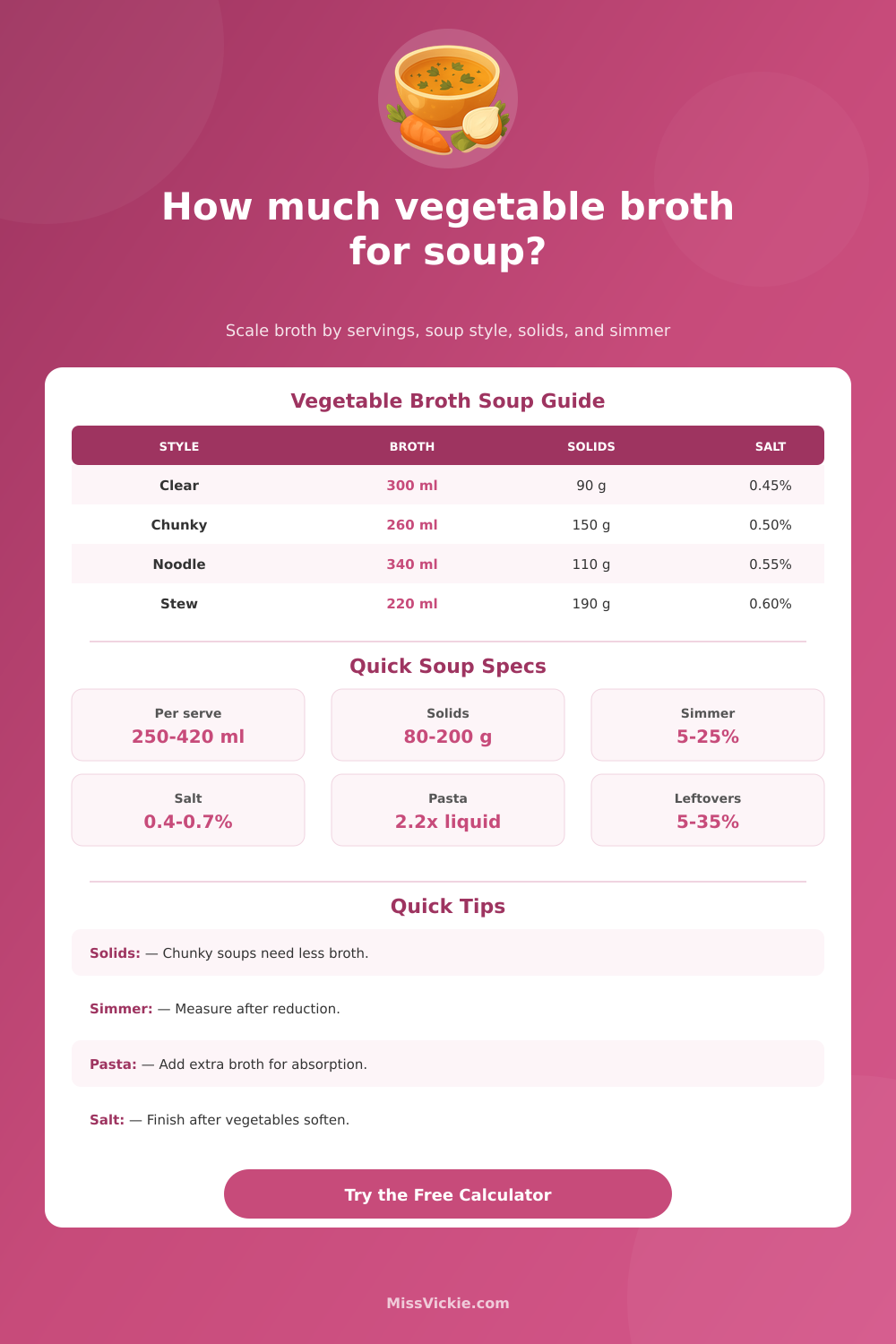
| Soup style | Finished broth per serving | Vegetable solids per serving | Best broth-to-solid feel | Use when |
|---|---|---|---|---|
| Clear vegetable broth | 300 to 380 ml | 70 to 110 g | Very brothy | You want a light starter with visible vegetables. |
| Chunky vegetable soup | 280 to 360 ml | 125 to 175 g | Balanced to chunky | Carrots, celery, potato, beans, or greens should fill the spoon. |
| Vegetable noodle soup | 340 to 430 ml | 90 to 135 g plus noodles | Very brothy | Pasta keeps absorbing broth after cooking and during storage. |
| Rice or barley soup | 350 to 450 ml | 95 to 150 g plus grain | Brothy to balanced | Grains swell strongly and can turn leftovers thick. |
| Bean or lentil vegetable soup | 260 to 340 ml | 150 to 220 g | Chunky | Legumes add body and reduce the broth needed per bowl. |
| Blended vegetable puree | 240 to 330 ml | 160 to 240 g | Dense or pureed | Vegetables become the body of the soup after blending. |
| Add-in | Dry amount per serving | Broth absorbed | Storage note | Calculator factor |
|---|---|---|---|---|
| Small soup pasta | 20 to 40 g | About 2.1 ml per g | Add extra broth before chilling. | Medium-high |
| Egg noodles | 25 to 45 g | About 2.3 ml per g | Cook separately for clearer leftovers. | High |
| White rice | 20 to 35 g | About 2.7 ml per g | Rice thickens soup quickly as it rests. | Very high |
| Barley or farro | 25 to 45 g | About 2.8 ml per g | Long simmer and extra broth help texture. | Very high |
| Quinoa or millet | 18 to 35 g | About 2.2 ml per g | Rinse first to keep broth clean. | High |
| Cooked beans or lentils | 60 to 120 g cooked | About 0.5 ml per g | They add body with less liquid soak-up. | Low |
| Batch size | Clear soup broth | Chunky soup broth | Noodle soup broth | Typical vegetable solids |
|---|---|---|---|---|
| 4 servings | 1.4 L | 1.1 L | 1.6 L | 0.4 to 0.7 kg |
| 6 servings | 2.1 L | 1.7 L | 2.4 L | 0.7 to 1.1 kg |
| 8 servings | 2.8 L | 2.3 L | 3.2 L | 0.9 to 1.5 kg |
| 12 servings | 4.2 L | 3.4 L | 4.8 L | 1.4 to 2.2 kg |
| 16 servings | 5.6 L | 4.6 L | 6.4 L | 1.9 to 3.0 kg |
| 24 servings | 8.4 L | 6.9 L | 9.6 L | 2.8 to 4.5 kg |
🧂Salt and simmer planning notes
Salt estimates assume about 1 g salt per 400 mg sodium and roughly 1 g per milliliter finished soup density. Taste before adding the full amount, especially with salted broth, canned tomatoes, soy sauce, miso, bouillon paste, or Parmesan rinds.
💡Vegetable broth soup tips
A broth calculator will help you to determine the amount of liquids that your soup should have. Furthermore, a broth calculator will ensure that your soup eventually reaches the textures that you desire for your broth. Many people encounters problems when they are making their broth, such as the liquid being to thinly or too salty.
A broth calculator allow you to avoid these problems by calculating the different variable involved in the creation of your broth. A broth calculator can account for factors like the liquid that vegetables will contribute and the liquid that grains will absorb. Vegetables will contribute to the amount of liquid in the broth, as they will release some of there water when simmermed.
Use a Broth Calculator to Get the Right Broth
Root vegetables will absorb more liquid than vegetables like leafy greens. You must tell the broth calculator what type of vegetables you are using in your broth. A pot containing root vegetables will require less broth than a pot that also contain leafy green vegetables.
Additionally, if you will be blended the vegetables at the end of the cooking process, the broth will thicken the soup, and you will have to account for that in your calculation. Simmer time will impact the amount of liquid in the broth. Broth simmermed in a wide pot over high heat will lose more liquid than broth simmermed in a narrow pot over low heat.
The broth calculator account for this loss of liquid, so you will not have to add more liquid to the pot once it has been simmered. Additionally, the broth calculator accounts for the amount of liquid that pasta and grains will absorb. Even after the pot is removed from the heat, the pasta will continue to absorbs liquid.
Therefore, you will not have to worry about adding too much broth to the pot once the soup is prepared. Another factor to consider when using a broth calculator is the amount of salts in the ingredients. Many ingredient contain salt, such as store-bought broth, canned tomatoes, and Parmesan cheese rinds.
The broth calculator will account for the amount of salt in these ingredient so you dont add too much salt to your broth. Again, you will have to taste the broth to ensure the salt is to your liking, but the broth calculator will prepare your broth to be not too salty to begin with. If you would like to prepare your broth with the understanding that it will last for several day, the leftover reserve setting will help you with that.
This setting will help you prepare extra volume of broth for second helpings. Additionally, if the soup simmers in the pot for several hours, the calculation will account for the thickening that occur in the refrigerator. Thickening can occur in the refrigerator if the vegetables continue to release their liquids or if the grains continue to absorb the liquid in the pot.
By preparing an extra reserve of broth, your broth will not become too thick when you are ready to eat it. Broths come in many style, and each style requires different ratios of ingredients. For instance, clear broth requires a high ratio of liquid to the other ingredients, while a lentil stew require a lower ratio because the lentils will thicken the broth.
Depending on the type of broth you would like to make, the broth calculator can switch between these different styles. The broth calculator will ensure the proportions of the broth are maintained to each style. Using this tool will ensure your broth simmers to the desired texture and contains the correct amount of liquids.