
It’s time to bake. You grab a bottle of vanilla extract from your cupboard and it’s empty. What about that vanilla bean in your pantry? Oh, there’s also that jar of paste. There is also some vanilla powder in the powdered sugar. Which one do you choose?
Vanilla comes in many flavors, not just varieties. It are available in many textures and strengths. Those factors affect it behavior in a cream or batter. But then again, substitutions aren’t always a straight-up swap.
How to Swap Different Types of Vanilla
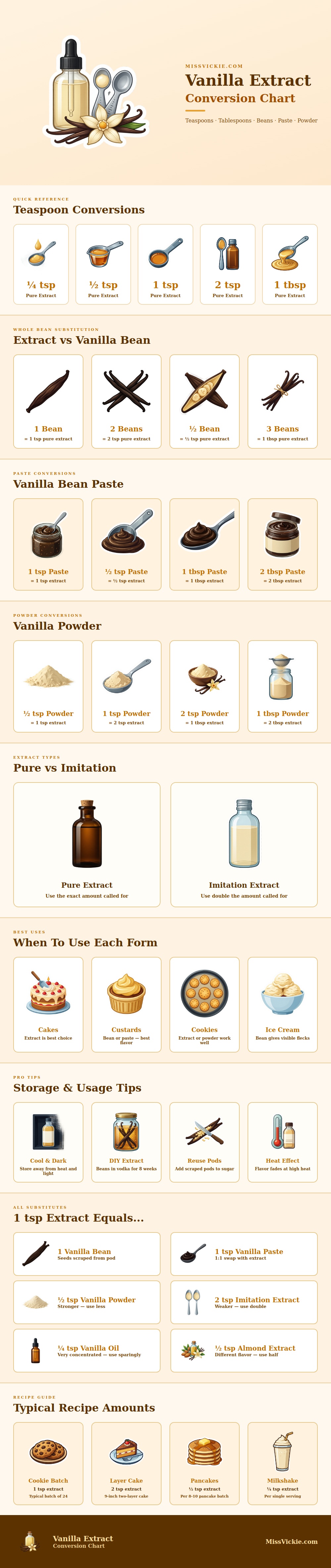
Pure extract is most common, for example. However, it’s important to know the ratio so you don’t end up with tasteless cookies or an overly sweet custard that lacks enough vanilla. For instance: home bakers tend to think that a teaspoon of paste must equal a teaspoon of beans (also by volume), which isn’t true, strength and density differ based off processing methods used in vanilla production.
Pure extract is liquid solution containing only the flavor compounds extracted by the alcohol from the bean. Imitation vanilla is what we use as a stand-in once our pure extract supply is empty. Unfortunatly, this substitution contain no such complexity; it’s made with synthetic vanillin. It won’t have nearly the same depth of flavor, which means that in general you’ll have to double whatever amount a recipe calls for. If you use equal amounts of imitation and pure, your baked goods will taste flat. Why? People just don’t think about changing the amount when they make substitutions (and they’re rushing!)
Vanilla beans are another story. A single whole bean equals about one teaspoon of pure extract… But it will give you some seeds as well (which are all tiny black bits inside). Scrape out those little guys and split open the bean. This gives you something visual in your finished product, which is important when making things like pudding, ice creams, and custards. People want to know their pudding was made with real vanilla, and these flecks indicates that. In cakes, though, where the focus is on a smooth crumb, I find extract preferable; if a tiny bit of vanilla fiber makes it through into the final cake, it can take away from texture.
Between extract and beans, there’s vanilla paste: a handy substitute if you want the look with minimal effort. Simply spoon in the same amount called for (one-to-one) and proceed. No need to scrape out empty pods; no need to eyeball fractions, so it’s kind of forgiving for first-timers.
With vanilla powder, however, be careful, since it’s also very concentrated, and therefore hygroscopic, meaning it’ll absorb moisture from other ingredients. So go easy: a half teaspoon of powder takes the place of an entire teaspoon of extract. Overdoing it here will overwhelm the recipe, and cause dough for whatever you’re baking (like cookies) to become too dry.
Potency is also a function of storage. Don’t keep your pure extract by the stove; place it in a cool cupboard, out of sunlight and heat. Over time, exposure to these factors break down those subtle aromatic compounds and makes the ingredient a sort of hazy background note.
Purchase whole beans? After scraping off the beans, don’t discard the pod; soak the used ones in vodka (or even sugar) for two months and create an at-home extract that’s every bit as deep as what you can purchase. How much? That depends; ¼ teaspoon for a milkshake (it’s just right); up to a whole teaspoon in a big-batch cookie.
When do I switch? It just depends: One isn’t necessarily better then the other, just better for this particular dish. Knowing how much to use and when to use it allows for easy adjustments, making an empty bottle a non-issue. No wasted money or flavor, no lost recipe, and still the comfort of vanilla in your baked goods.