Bean weight, alcohol volume, extract fold, and steep planning
How Much Vanilla Beans to Make Extract
Calculate vanilla bean weight, approximate pod count, alcohol volume, final extract strength, and steeping timeline for single-fold, double-fold, gifting, baking, and refill batches.
Choose a real kitchen scenario, then adjust jar size, bean type, alcohol proof, extract strength, headspace, reuse factor, and splitting style.
Batch Breakdown
Good when vanilla is a background note in sweet breads, pancakes, and quick batters.
The standard home baking target, usually about 1 ounce of beans per 8 fluid ounces.
Useful for buttercream, custards, ice cream, and recipes where vanilla should stand forward.
A stronger extract for smaller measured doses, gifts, and long pantry batches.
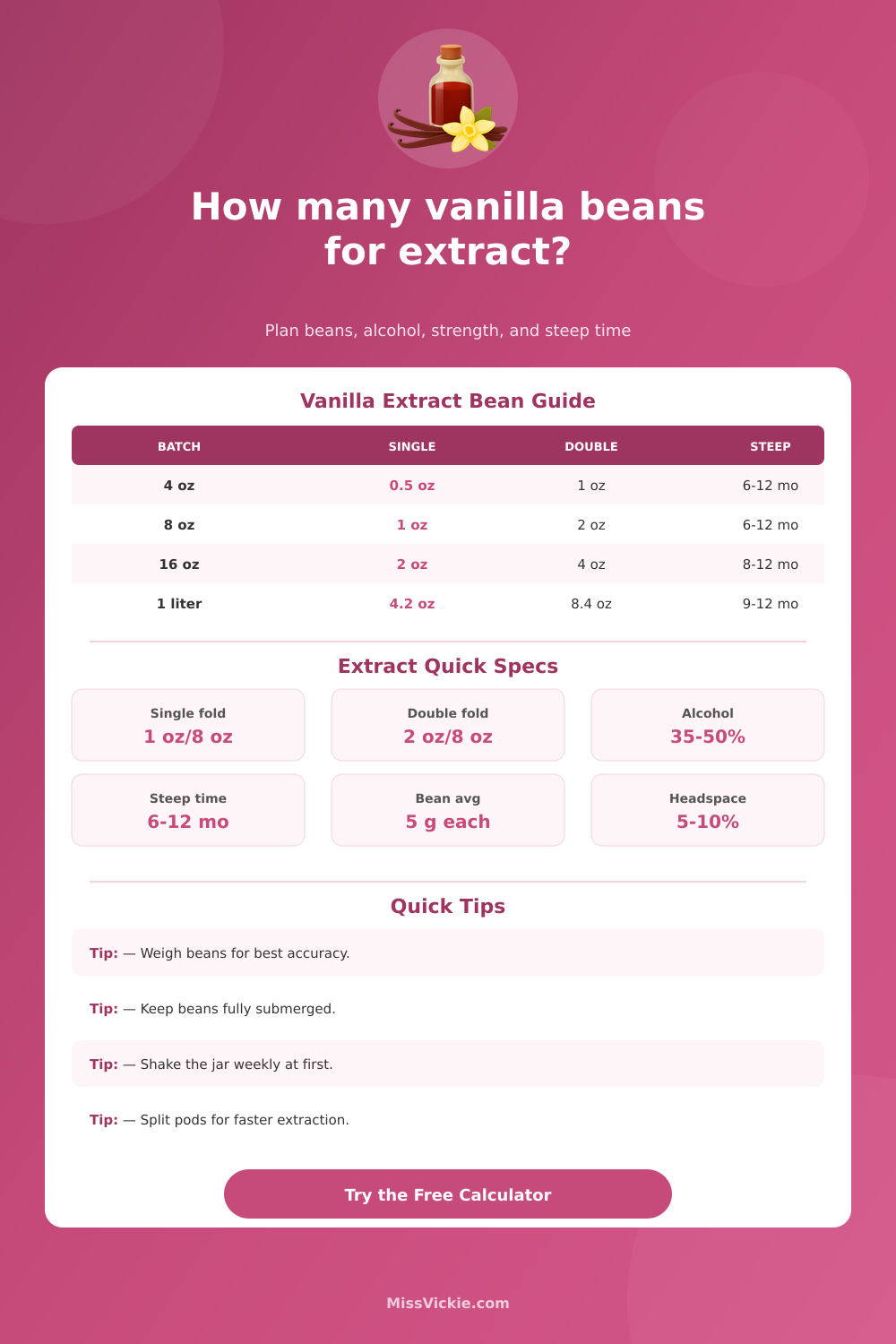
| Usable Alcohol Volume | Single-Fold Beans | Double-Fold Beans | Approx Pod Count |
|---|---|---|---|
| 4 fl oz / 118 ml | 0.5 oz / 14 g | 1 oz / 28 g | 3 to 7 pods |
| 8 fl oz / 237 ml | 1 oz / 28 g | 2 oz / 57 g | 6 to 14 pods |
| 12 fl oz / 355 ml | 1.5 oz / 43 g | 3 oz / 85 g | 9 to 21 pods |
| 16 fl oz / 473 ml | 2 oz / 57 g | 4 oz / 113 g | 12 to 28 pods |
| 32 fl oz / 946 ml | 4 oz / 113 g | 8 oz / 227 g | 24 to 56 pods |
| 1 liter / 33.8 fl oz | 4.2 oz / 120 g | 8.4 oz / 240 g | 25 to 60 pods |
| Bean Type | Average Pod Weight | Flavor Direction | Planning Adjustment |
|---|---|---|---|
| Madagascar bourbon vanilla | 4.8 g to 5.5 g | Creamy, classic, round | Use as the baseline for most home extract |
| Tahitian vanilla | 3.5 g to 4.8 g | Floral, cherry, delicate | Count more pods for the same bean weight |
| Mexican vanilla | 4.5 g to 5.5 g | Warm spice and deep aroma | Good with rum, bourbon, or neutral vodka |
| Ugandan vanilla | 5 g to 6.2 g | Bold, chocolate, dense | Often needs fewer pods to hit target weight |
| Indonesian vanilla | 4.6 g to 5.8 g | Smoky, woody, intense | Start at single fold if pairing with bourbon |
| Grade B extract beans | 3.8 g to 5 g | Dryer, concentrated aroma | Add a small allowance for dryness |
| Alcohol Base | Common Proof | Best Vanilla Match | Calculator Note |
|---|---|---|---|
| Vodka | 80 proof | Any bean, especially Madagascar | Cleanest extract when you want pure vanilla flavor |
| Bourbon | 80 to 100 proof | Ugandan, Mexican, Indonesian | Oak and caramel notes make the extract taste warmer |
| Rum | 80 proof | Tahitian, Mexican, mixed beans | Sweet aroma works well for cakes, frostings, and drinks |
| Brandy | 80 proof | Tahitian and Madagascar | Fruit notes can soften floral beans nicely |
| Diluted grain spirit | 70 to 100 proof | Large pantry batches | Calculate final proof after dilution before steeping |
| Glycerin blend | 0 proof | Alcohol-free style only | Not traditional extract; flavor pulls more slowly |
| Preparation | Early Flavor | Usable Window | Fuller Maturity |
|---|---|---|---|
| Chopped beans | 8 to 10 weeks | 4 to 6 months | 8 to 12 months |
| Split lengthwise | 10 to 12 weeks | 6 months | 9 to 12 months |
| Scraped seeds plus pods | 8 to 10 weeks | 4 to 6 months | 8 to 12 months |
| Whole beans | 14 to 18 weeks | 8 months | 12 to 18 months |
| Previously used beans | 16 to 20 weeks | 9 to 12 months | 12 to 18 months |
Making vanilla extract at home requires considering several differently variables, including the weight of the vanilla bean, the volume of the alcohol, and the proof of the alcohol that will be use in the process. The ratio of vanilla beans to alcohol will determine the strength of the vanilla extract that is made. Vanilla extract that use a ratio of vanilla beans to alcohol is referred to as single-fold vanilla extract.
Double-fold vanilla extract use twice the weight of vanilla beans compared to the volume of alcohol that is used. Because double-fold vanilla extract is more concentrated than single-fold vanilla extract, many cooks uses double-fold vanilla extract in recipe that require a stronger flavor of vanilla extract. The type of vanilla beans that are use will affect both the weight of the vanilla beans that are used as well as the length of time that the vanilla extract need to be brewed.
How to Make Vanilla Extract at Home
Vanilla beans that is sourced from Madagascar is often consistent in the size of there beans. Vanilla beans from Tahiti are often lighter in weight and contain a floral flavor to their vanilla beans. Vanilla beans from Uganda contain more weight per pod than vanilla beans from other origin, meaning fewer vanilla beans from Uganda will be needed to reach the target weight of vanilla beans for the vanilla extract.
The type of alcohol that is used will affect the flavor of the vanilla extract that is brewed. Vodka will allow for the vanilla flavor to remain clear in the vanilla extract. Vanilla extract that use bourbon will contain flavors of oak and caramel from the vanilla alcohol.
Rum will impart a sweetness to the vanilla extract, flavors that work good with Tahitian vanilla beans. The proof of the alcohol will affect the shelf stability of the vanilla extract. Vanilla extract that contains less than 35% alcohol can spoil over time, so the proof of the alcohol must be sufficient to avoid spoilage of the vanilla extract.
The method in which vanilla beans are prepared will impact the rate at which the vanilla flavor move into the alcohol. Splitting the vanilla beans lengthwise will increase the area over which the alcohol will diffuse into the vanilla beans. Increasing the surface area of the vanilla beans increases the rate at which vanilla flavor move into the alcohol.
Chopping the vanilla beans will also increase the rate at which vanilla flavor move into the alcohol. The disadvantage of chopping vanilla beans, however, is that it make straining the vanilla extract from the vanilla beans more difficult. Vanilla beans that are left whole will take longer to extract the vanilla flavor from the beans to the alcohol.
It is important to leave headspace within the jar in which vanilla beans and alcohol will be placed into the jar. Vanilla beans will swell when they absorbs the alcohol. Head space within the jar allow for the alcohol to move around within the vanilla beans when the jar is shaken.
Shaking the jar increase the rate at which vanilla flavor moves into the alcohol. If there is not enough headspace for the vanilla beans to swell, vanilla alcohol may push out of the jar when the vanilla jar is shaken. The length of time that vanilla beans are placed into alcohol is referred to as the steeping time for the vanilla extract.
After placing vanilla beans and alcohol into a jar, it may take two to four month for vanilla flavor to begin appearing in the vanilla alcohol. After four months vanilla extract that has been brewed will typically contain a deep vanilla flavor. Many individual will taste vanilla extract at the six-month mark to determine the strength and flavor of the vanilla alcohol that has brewed.
The vanilla beans should be steeped in alcohol for the vanilla flavor to reach its strongest taste over time. There are a few common mistake that occur when brewing vanilla extract at home. Using too few vanilla beans will result in vanilla extract that is thin and does not contain as deep of a flavor as desired.
Using alcohol that has a low proof may result in vanilla extract that spoils over time. Vanilla beans should be weighed, not count, to ensure that the vanilla extract contains the correct amount of vanilla flavor. The proof of the alcohol should be high enough to prevent spoilage of the vanilla extract.