How Much Vanilla Bean Paste To Use Instead Of Extract
Convert vanilla extract to vanilla bean paste by volume, metric weight, recipe style, heat exposure, paste strength, batch size, and visible bean-speck preference.
Choose a real kitchen scenario to load the extract amount, recipe type, paste strength, and adjustment style instantly.
Full Vanilla Paste Breakdown
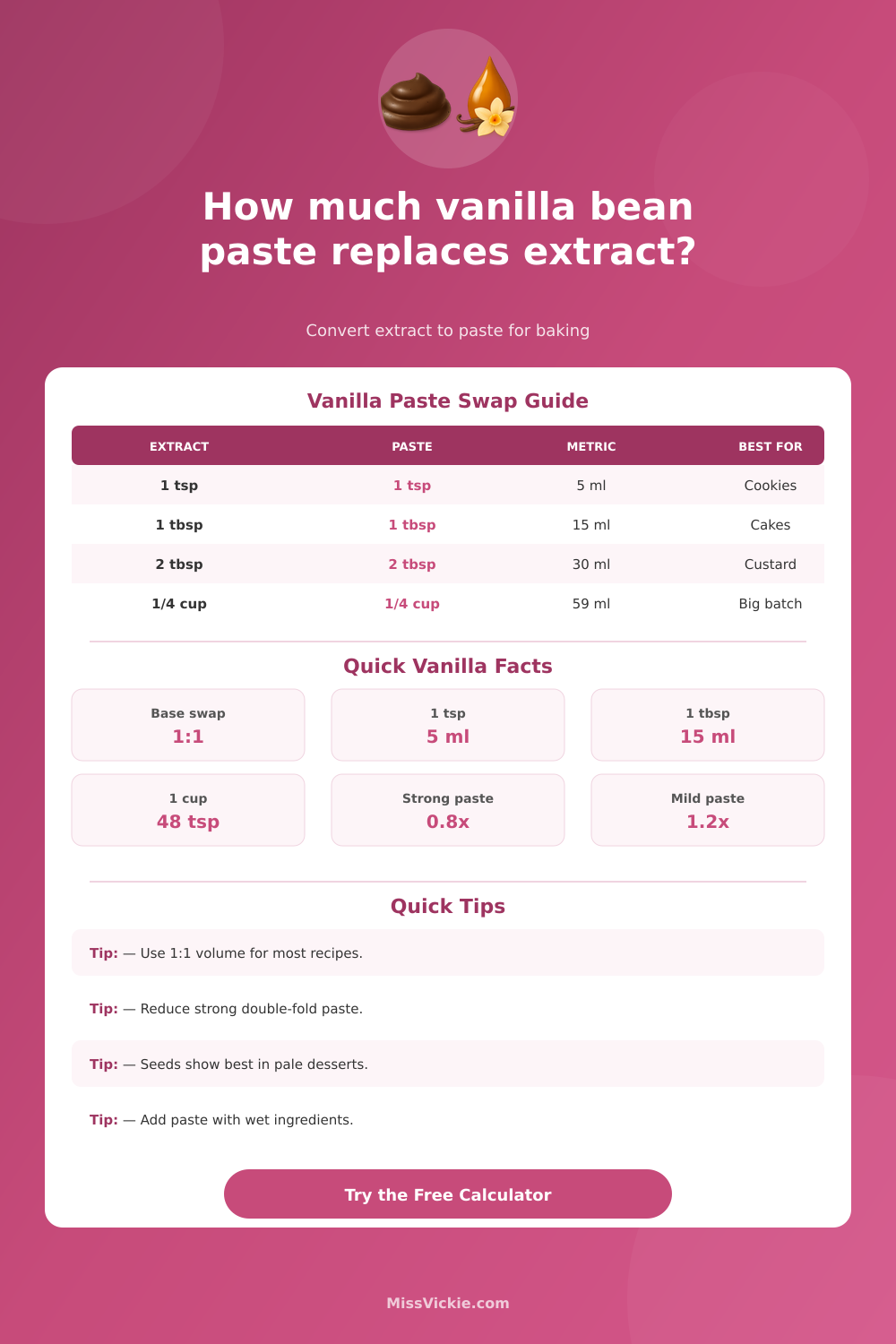
| Extract In Recipe | Standard Paste | Metric Volume | Approx Paste Weight |
|---|---|---|---|
| 1/4 teaspoon extract | 1/4 teaspoon paste | 1.25 ml | 1.6 g |
| 1/2 teaspoon extract | 1/2 teaspoon paste | 2.5 ml | 3.1 g |
| 1 teaspoon extract | 1 teaspoon paste | 5 ml | 6.3 g |
| 2 teaspoons extract | 2 teaspoons paste | 10 ml | 12.5 g |
| 1 tablespoon extract | 1 tablespoon paste | 15 ml | 18.8 g |
| 1/4 cup extract | 1/4 cup paste | 59 ml | 74 g |
| Recipe Style | Suggested Factor | Why It Changes | Best Output Unit |
|---|---|---|---|
| Cookies and bars | 1.00x | Butter, sugar, and browning carry vanilla well. | teaspoons |
| Cakes and muffins | 1.00x to 1.05x | Baking softens aroma, especially in larger batters. | teaspoons or grams |
| Buttercream and glaze | 0.90x to 1.10x | No heat preserves aroma, but specks are more visible. | teaspoons |
| Custards and pudding | 1.05x to 1.15x | Dairy can mellow vanilla while heat releases seeds. | ml or grams |
| Ice cream and mousse | 0.95x to 1.10x | Cold serving dulls aroma but paste specks stand out. | ml or grams |
| French toast and pancakes | 1.00x | Short cooking time keeps the swap close to even. | teaspoons |
| Measure | Teaspoons | Milliliters | Use When |
|---|---|---|---|
| 1/8 teaspoon | 0.125 tsp | 0.6 ml | Small glaze correction |
| 1/4 teaspoon | 0.25 tsp | 1.25 ml | Single mug or tiny batch |
| 1/2 teaspoon | 0.5 tsp | 2.5 ml | Half batch cookies |
| 1 teaspoon | 1 tsp | 5 ml | Most home recipes |
| 1 tablespoon | 3 tsp | 15 ml | Cake or custard batch |
| 1/4 cup | 12 tsp | 59 ml | Bakery-size batch |
| Paste Type | Calculator Factor | Texture Clue | Flavor Note |
|---|---|---|---|
| Standard 1:1 paste | 1.00x | Syrupy with visible seeds | Replace extract evenly by volume. |
| Mild or thinner paste | 1.18x | Loose and lightly speckled | Use a little more for clear vanilla flavor. |
| Strong seed-heavy paste | 0.88x | Dense and dark with many seeds | Use slightly less than extract. |
| Double-fold style paste | 0.72x | Very aromatic and concentrated | Reduce to avoid overpowering delicate batters. |
| Homemade syrupy paste | 1.10x | Varies by bean and sweetener | Start modestly, then taste no-bake mixtures. |
| Dry concentrated paste | 0.82x | Thick, tacky, less pourable | Blend into wet ingredients before flour. |
Use the same volume as extract when the product label says it replaces extract one for one.
Extract blends smoothly into batters, but it will not add the bean specks paste provides.
One split vanilla bean is often treated like about one tablespoon of extract in many desserts.
Powder can be potent and dry, so it usually needs brand-specific directions instead of a liquid swap.
Vanilla extract and vanilla bean paste is two different products that contain vanilla flavoring. Vanilla extract is a thin and clear liquid, while vanilla bean paste contain visible seeds. If you would like to use vanilla bean paste instead of vanilla extract, you will need to change the measurement for vanilla bean paste from vanilla extract.
This vanilla bean paste to vanilla extract calculator will help you to change the measurement for vanilla extract to vanilla bean paste because vanilla extract and vanilla bean paste does not have a simple one-to-one relationship with each other in most recipes. To use the vanilla bean paste calculator, you must enter the amount of vanilla extract that the recipe that you are preparing requires. Additionally, you must enter the type of dessert that you are preparing.
Change Vanilla Extract to Vanilla Bean Paste
Vanilla bean paste isnt a uniform product; some jar of vanilla bean paste contain more flavoring than others. To account for this, you must also enter the strength of the vanilla bean paste that you are using in the recipe. Finally, you will need to enter the type of recipe that you are preparing; heat and dairy ingredient can impact the strength of vanilla bean paste differently in some recipes than in others.
It is common for individuals to believe that vanilla extract and vanilla bean paste can be easily substituted for one another by simply using the same amount of vanilla bean paste as vanilla extract in the recipe. This may not be true, however, for recipes that contain ingredient that will allow the vanilla bean paste seeds to become visible, such as pale frosting or cheesecake. For recipes like these, the vanilla flavoring may change with the change to vanilla bean paste.
The vanilla bean paste calculator will ask for whether you would like the vanilla flavoring to be subtle or strong in the recipe. Additionally, the calculator will ask for whether the dessert will be baked, simmered, or left at room temperature for consumption; the flavor of vanilla compound changes with the introduction of heat. The calculator will also ask for the level of sweetness for the recipe.
Vanilla bean paste often contains sugar; this can make baked goods taste too sweetly if the recipe itself is low in sugar. The sweetness level of the vanilla bean paste recipe can be adjusted in the calculator to account for this additional sweetness; the calculator will adjust the amount of vanilla bean paste to ensure that the dessert will not be too sweet when prepared with the vanilla bean paste. The amount of vanilla bean paste may also need to be change according to the batch size for the recipe.
If a recipe is to be doubled, the vanilla extract portion of the recipe may be doubled, but the amount of vanilla bean paste may not need to be doubled. The vanilla bean paste calculator will multiply the vanilla bean paste amount by the batch factor that you enter in the vanilla bean paste calculator. This ensures that you have the correct amount of vanilla bean paste for the new batch size.
The calculator cannot determine the specific taste of the vanilla bean paste that you use. You will have to smell the vanilla bean paste or make a test batch of the dessert to determine whether the vanilla bean paste that you are using is strong or mild. You can enter this strength into the calculator; you will also have to determine how long and at what heat setting the cook will cook the vanilla bean paste.
If the vanilla bean paste will be cooked for long period at high heat, the vanilla flavor will dissapear from the vanilla bean paste. In this case, the vanilla bean paste calculator will ask you to use a high heat setting so that it can suggest an amount of vanilla bean paste to use in the recipe. Vanilla extract and vanilla bean paste have slightly different use in the kitchen.
Vanilla extract is used in baked goods where a smooth appearance is desired; vanilla extract will not leave seeds in the batter. Vanilla bean paste is used when the visibility of the seeds of the vanilla bean is desired. Thus, the calculator allow cooks to change vanilla extract to vanilla bean paste without having to manually calculate the change in vanilla product needed.
When first attempting to use a recipe that contains vanilla bean paste, it is advisable to treat the recipe as an experiment. Use the amount of vanilla bean paste that the vanilla bean paste calculator indicated. Taste the dessert.
If the vanilla flavor is too quiet in the dessert, increase the flavor-role setting for the recipe in the next batch of the recipe. If the vanilla flavor is too sharp, decrease the strength factor of the vanilla bean paste or the total amount of vanilla bean paste that is used in the recipe. Using this vanilla bean paste calculator and making these adjustment to the recipes will ensure that you can maintain a consistent and correct amount of vanilla flavor in your dessert.
You should of checked the recipe first.