Turkey Gravy Per Person Calculator
Plan turkey gravy for holiday plates by guest count, serving role, drippings, stock strength, roux ratio, ladle size, leftovers, holding loss, and reheating thickness.
🦃 Turkey gravy presets
Pick a real holiday setup, then adjust the guests, plate style, pan drippings, stock, roux, ladles, leftovers, and reheating plan.
⚖ Gravy inputs
Plan turkey gravy for the table.
Results include finished yield, stock to add, roux amount, ladle pours, leftover buffer, and reheating guidance.
Serving math
Pan and roux math
Cooking guidance
🧮 Quick gravy counts
🍽 Holiday serving table
| Plate role | Finished gravy per person | Best use | Ladle planning note |
|---|---|---|---|
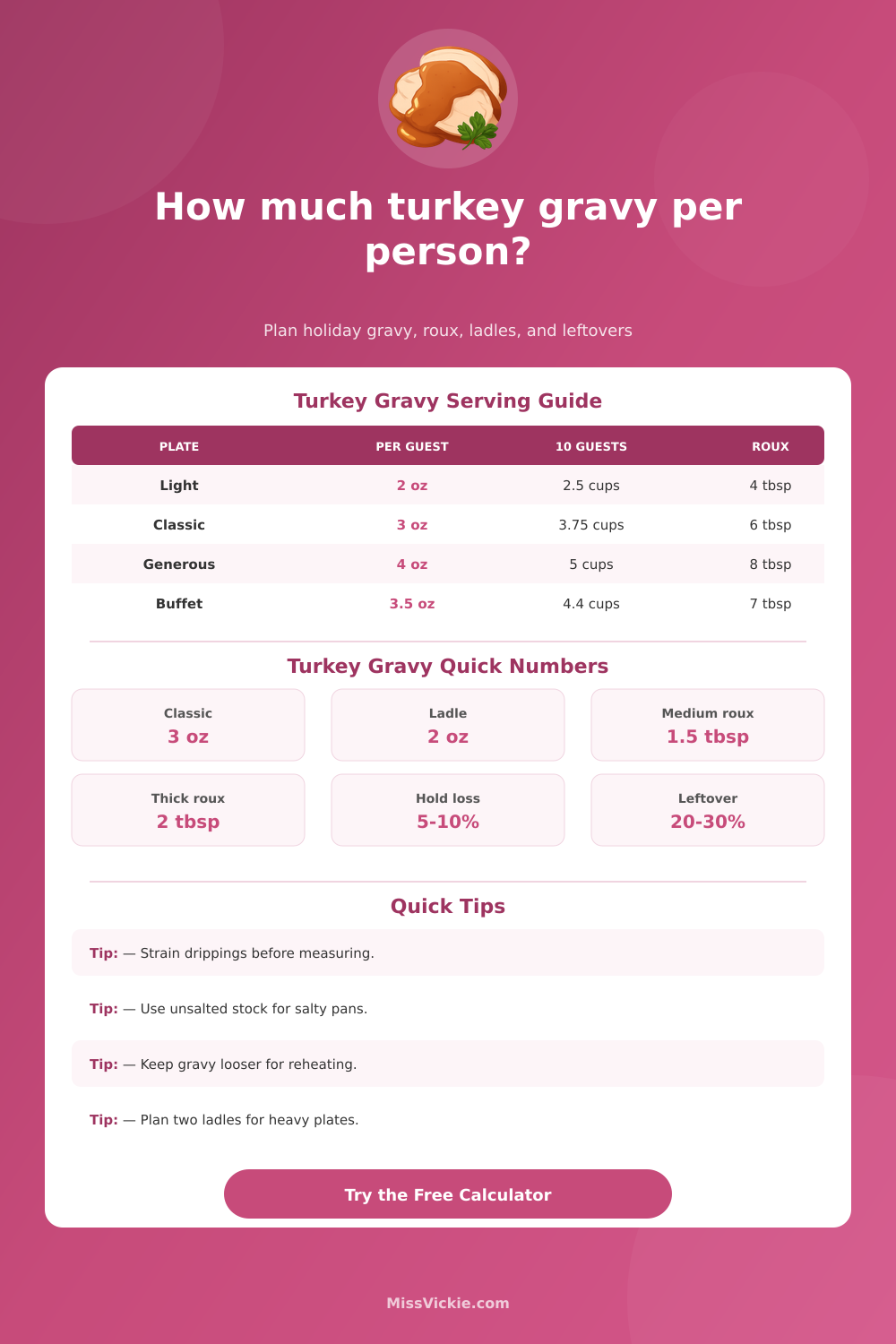
| Light turkey-only drizzle | 2 fl oz / 59 ml | Several sides and light gravy eaters | One small ladle per person is usually enough |
| Classic holiday plate | 3 fl oz / 89 ml | Turkey, stuffing, potatoes, and rolls | Plan one full 2 oz ladle plus a top-up |
| Turkey and mashed potatoes | 4 fl oz / 118 ml | Guests who expect gravy on potatoes too | Two 2 oz ladles per hearty plate |
| Self-serve buffet gravy | 3.5 fl oz / 104 ml | Gravy boat or chafing service | Add buffer because self-serve pours run large |
| Open-face turkey sandwiches | 5 fl oz / 148 ml | Leftover meal or hot turkey plates | Needs a deeper ladle and thicker body |
| Kids or small plates | 1.5 fl oz / 44 ml | Mixed adults and children | Use a small spoon or half ladle |
🥣 Roux and thickening table
| Gravy texture | Flour per finished cup | Fat per finished cup | Holiday use |
|---|---|---|---|
| Thin pourable gravy | 1 tbsp flour | 1 tbsp turkey fat or butter | Light turkey slices and make-ahead batches |
| Classic medium gravy | 1 1/2 tbsp flour | 1 1/2 tbsp fat | Standard gravy boat texture |
| Coats turkey slices | 1 3/4 tbsp flour | 1 3/4 tbsp fat | Good for carved meat and stuffing |
| Thick mashed potato gravy | 2 tbsp flour | 2 tbsp fat | Stays visible on potatoes and plates |
| Slightly loose for reheating | 1 1/4 tbsp flour | 1 1/4 tbsp fat | Thickens after chilling and reheating |
These roux ratios are starting points for all-purpose flour cooked with turkey fat or butter, then simmered until the raw flour flavor is gone.
💧 Drippings and stock balance table
| Pan liquid | Flavor strength | Stock pairing | Seasoning warning |
|---|---|---|---|
| Mild roast juices | Gentle turkey flavor | Regular or rich turkey stock | Season near the end after reducing |
| Balanced turkey drippings | Classic roasted flavor | Regular stock or light broth | Skim fat and taste before adding salt |
| Dark fond-heavy drippings | Deep browned flavor | Light unsalted stock | Whisk well so browned bits do not scorch |
| Brined or salty drippings | Strong and salty | Unsalted stock only | Dilute before reducing or thickening |
| Smoked turkey drippings | Smoky and intense | Mild turkey or chicken stock | Use fewer drippings if smoke tastes sharp |
| No pan drippings | Stock-led flavor | Rich roasted turkey stock | Add browned butter or roasted bones for depth |
👥 Guest count comparison grid
Includes a 20 percent leftover cushion and a small simmer loss.
A 2 cup drippings pan usually needs about 3 1/2 cups stock.
Self-serve gravy needs a larger buffer and a warm backup pot.
Thick roux works, but keep unsalted stock ready for thinning.
🔥 Holding and reheating table
| Plan | Roux adjustment | Liquid buffer | Best reheating move |
|---|---|---|---|
| Serve fresh from the pan | Use full target roux | 5 to 8 percent hold loss | Simmer 5 minutes and serve hot |
| Hold warm 1 to 2 hours | Use about 5 percent less flour | 8 to 12 percent hold loss | Whisk every 15 minutes and cover loosely |
| Refrigerate and reheat tomorrow | Use about 10 percent less flour | Keep 1/4 cup stock per quart nearby | Reheat gently and thin in small splashes |
| Freeze for leftovers | Use about 12 percent less flour | Freeze slightly loose | Thaw overnight and whisk over low heat |
📘 Gravy planning notes
Separate the fat first, then measure the liquid part for flavor. Use the saved fat as part of the roux if it tastes clean and roasted.
The calculator treats drippings as flavor concentrate and adds enough stock to reach the planned finished yield before hold loss.
Flour is based on the gravy you want after simmering and holding, not just the liquid sitting in the roasting pan.
A 2 ounce ladle makes classic gravy easy to portion. Big buffet ladles can double the pour before anyone notices.
💡 Turkey gravy tips
The gravy is typically the trickiest part of any holiday meal, which is why I love this turkey gravy calculator so much. Most people has no idea how many cups they’ll end up with once their gravy thickens and boils down from roasting pan drippings. The calculator takes into account loss that happens when gravy sits in a warming tray, the strength of your stock, amount of drippings used, and ratio of roux vs stock.
The whole point isn’t just to get a certain amount of gravy out, but rather to get a certain consistency, which is realy where home cooks mess up. What will your guests be eating? Before you start, make this decision. Some thing sop up every drop of liquid (think: mashed potatoes) whereas others don’t need much at all (i.e. This is turkey with a light drizzle. To take the guesswork out of portion planning, simply pick a plate role that sets an ounce-per-person baseline. Then it’s as easy as adjusting the number of guests or choosing a midway point if half your table want veggies and the rest want potatoes.
How to Make Perfect Turkey Gravy
Better to err on the side of having too much gravy, versus serving dry plates, although having extra means there’ll be leftovers in containers for weeks. Next, look at the pan chemistry. Don’t guess your strain; measure what’s left in the pan (that’s the juicy part). Remove any surface fat and don’t just pour the rest into roasting pan’s juices. You want those flavors in your sauce!
Was there fat involved? Did you brine the bird? Those drippings will be super-salty, so you’ll want some unsalted stock to help dial things back to normal. This is shown in the calculator, so you won’t get stuck with a salty sludge. It’s a common mistake for many to throw salt in early, but seasoning should always follows reduction. Why? Because salt intensifies when you reduce. A gentle touch at the beginning can turn bitter by dinnertime. Patience is a virtue, so is science.
Adding flour and turkey fat creates a roux that thickens your gravy… But the balance between those two ingredient really makes or breaks the consistency of the finished product. Thick gravy clings to meat like a sauce; thin gravy just slides off. The page includes a chart of the proper amount of flour for each desired texture.
Since starchy thickener will tighten in the refrigerator, if you intend to store your gravy overnight, cook it slightly runnier then you think it needs. When reheating, add a splash of warm stock while whisking slowly over low heat. Perfect gravy becomes glue with a spoon most times and adding liquid helps prevent this.
Another secret variable is the ladle size. A typical serving spoon hold about two ounces, but buffet ladles can hold twice that much. This means guests might not realize they are pouring a large serving. If you’re expecting self-serve service, add a buffer to your overall yield, since the gravy boat appearing half-full will lead to patrons heading back for more (and getting seconds).
The calculator also takes into account leftover targets and holding loss, so that you’ll know how much to prepare ahead of time, before ever turning on the stove. There will be no more pan-scraping panic or waste. The leftovers can be an afterthought, but also should of get their due planning time. A strong gravy will withstand overnight storage and make your turkey sandwich and stuffing better. Making ahead requires extra care to keep things consistent, especially since freezing changes thing in another way. You can specify the leftover percentage you want, so not too little now and not too little for tomorrow’s comfort food. Allowing for this a bit in the input avoids all kinds of stress later.
Gravy is about preparation and balance. It’s knowing what stock to use, how to handle roux over heat, and when to add drippings from your pan. Some people like to measure in volumes, others in weights; but with experience, you learn to pay attention to your pot, tweaking things along the way. But the math can be a source of anxiety. That’s where the calculator comes into play. It is a trustworthy way to start the process by taking the math out of the kitchen so you can concentrate on the food. With a turkey hot out of the oven, you’ll know just what to do next.