
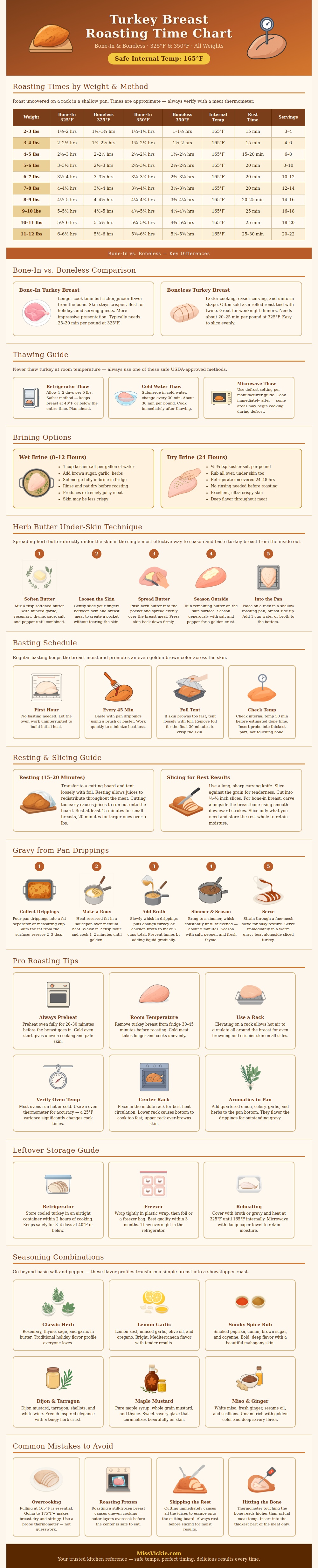
To roast a turkey breast successfuly, follow the specific step for thawing, seasoning, roasting, and resting the turkey breast. To roast a turkey breast successfuly, you must monitor the internal temperature of the turkey breast. The turkey breast must reaches an internal temperature of 165°F. An internal temperature of 165°F are the safe temperature for a turkey breast.
Additionally, an internal temperature of 165°F will ensure that the turkey breast is cooked through without becoming too toughly. The first step in roasting a turkey breast successfuly is to thaw the turkey breast. You must thaw the turkey breast complete before roasting the turkey breast.
How to Roast a Turkey Breast Safely
Do not thaw the turkey breast on a counter as this will expose the turkey breast to the temperature danger zone in which harmful bacteria can grows on the turkey breast. Thaw the turkey breast in the refrigerator. This will ensure the turkey breast remains at a temperature below 40°F. If you dont have time to thaw the turkey breast in the refrigerator, you may use cold water to thaw the turkey breast.
Change the cold water every thirty minute. Once the turkey breast is thawed in cold water, cook the turkey breast immediate. Do not roast a turkey breast that is partially frozen as it will result in the turkey breast being roasted uneven.
Another method that you can use to roast a turkey breast is to brine the turkey breast. Brining add moisture to the turkey breast before roasting. You can use a wet brine or a dry brine to prepare the turkey breast.
A wet brine involves soak the turkey breast in a mixture of saltwater and herbs for eight to twelve hours. This helps to pull moisture into the turkey breast. Using a dry brine require rubbing salt on the turkey breast and placing the turkey breast uncovered in the refrigerator for one full day.
This allows the turkey breast to absorb moisture. This method will also produce crispy skin on the turkey breast. Always pat the turkey breast dry before roasting the turkey breast.
The preparation of the turkey breast include placing seasonings under the skin of the turkey breast. Mix softened butter with garlic and herbs such as rosemary, thyme, sage, salt, and pepper. Slip this mixture under the skin of the turkey breast to create a pocket under the skin.
Do not tear the skin when placing the herb butter under the skin. Evenly spread the herb butter under the skin of the turkey breast. Place the turkey breast into a shallow pan.
Place the turkey breast on a roasting rack. Place a cup of water or broth into the shallow pan beneath the turkey breast to create steam while roasting the turkey breast. Always preheat the oven before placing the turkey breast into the oven.
Place the turkey breast on the center rack of the oven. You can baste the turkey breast while roasting it to keep the turkey breast moist. Do not baste the turkey breast during the first hour of roasting.
Allow the skin of the turkey breast to sear during the first hour of roasting. After the first hour, baste the turkey breast every forty-five minutes. If the skin of the turkey breast are browning too quickly, cover the turkey breast with aluminum foil to avoid burning the skin of the turkey.
Thirty minutes before the estimated cooking time is complete, check the internal temperature of the turkey breast with a thermometer. Insert the thermometer into the thickest part of the turkey breast, away from the bone. Resting the turkey breast is the last step in the turkey roasting process.
Remove the turkey breast from the oven once the turkey breast has reach an internal temperature of 165°F. Place the roasted turkey breast on a cutting board to rest for fifteen to twenty minutes. This allows the juice in the turkey breast to redistribute. If you slice the turkey breast too soon, the juices will run out of the turkey breast.
Carving the turkey breast against the grain will ensure it is tender. The drippings from the turkey breast can be used to make gravy. Skim the fat from the drippings from the pan.
Mix the drippings with flour and broth to make gravy. Adding aromatics to the pan will enhance the flavor of the gravy. Using a thermometer to test the temperature of the oven will ensure the oven is at the desired temperature.
Ovens can provide inaccurate temperature reading. Any remaining turkey breast can be stored in an airtight container in the refrigerator for three to four days. Additionally, the turkey breast can be frozen for several month.