
If you’ve made green tea, you likely followed this same process: Boiled some hot water, listened until it stopped making a sound, and then poured extremely hot water onto your tea leaves. You took a drink and found it full of bitterness and ash. No, the tea wasn’t terrible. That kind of leaf is simply ruined by heat.
Hot water makes the difference between a deep earthy rich cup, and a flat one laced with sweetness and floral notes. Because everyone assumes hotter = more flavorful, most people use all hot water the same way and thereby ruin lots of cups. Think about it as if you’re cooking: Would you throw a delicate fish on the grill next to a tough steak? Yet we dump near boiling water onto fragile white teas all the time.
How to Make Perfect Tea
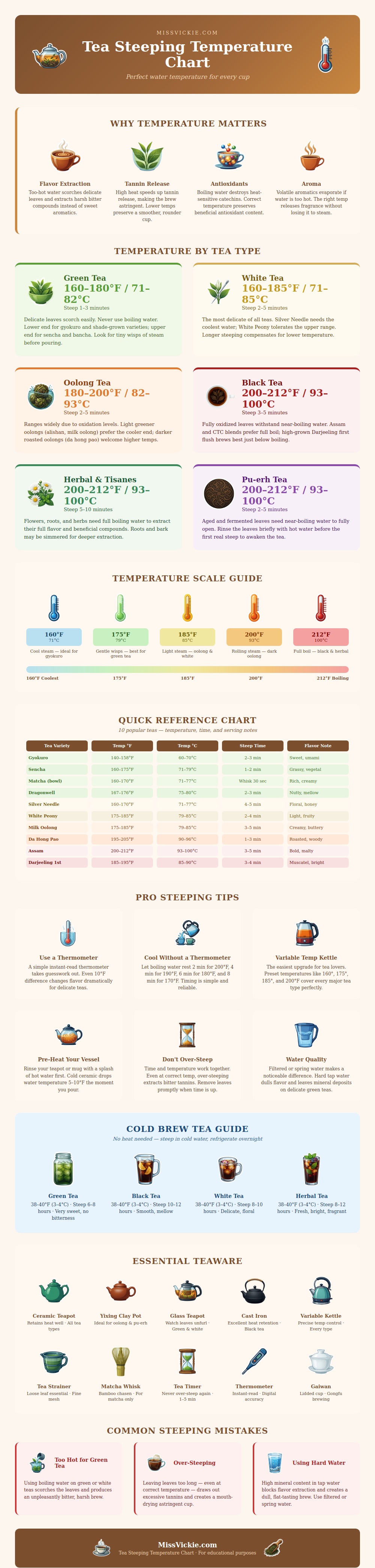
It’s simple science; the graphic above explains how different leaves respond to heat (and precision trumps quantity). As soon as hot water touches green tea, it jolts the leaf immediately. This thermal shock pulls out bitter compounds and harsh tannins before the sweeter aromatics has time to dissolve into the cup. You experience the bad stuff first, and the good stuff never has a chance to completely develop. In the worst of ways, boiling water beat the good guys in the race for chemicals.
Why? Certain herbs and robust black tea is made from tough flower or root materials, or are fully-oxidized varieties that require a great deal of energy to extract their flavors. Let your water get too tepid on an Assam or chamomile blend, and what you’ll have is a pale, watery cup without any body to it. Again, as the chart shows, there’s no random line here: dark oolong and black teas tends to move toward the boiling end of the scale while delicate white and green ones get pushed toward the cool side.
Why? Because the leaf structure resists the water, and the amount of energy need to match. Managing your time means there is no guessing game; you just need to get the water temperature right. Heat up some water in a pot or kettle. Once boiling, remove from heat source. Black teas actualy need that full rolling boil. Most oolong teas will benefit from four minutes. Green and white tend toward six-eight minutes of cooling time.
You don’t need an overpriced variable temp kettle. Just practice patience as the steam dissapears, and voila: right-on-the-money water temperature every time. Simple.
The vessel you choose matters because a cold ceramic mug will suck heat out of your water as soon as it meet the surface. That’s true whether we’re talking about a single degree or ten. In just seconds, the decrease in temperature can affect the opening and closing of leaf. To keep that thermal energy in the tea, preheat your cup beforehand by splashing some hot water into it prior to brewing. Again: a little thing that makes a tangible difference in the final mouthfeel.
The quality of the water is just as important; hard tap water dulls the flavor and deposits a residue on the tea leaves that’s not pleasant. Spring water or filtered water lets the tea’s subtle flavors come through clearly. The water is the canvas you’re painting on, and if it’s been ruined, all your care in how you paint won’t make the picture look good.
Even once you get the temperature dialed in, timing becomes an issue: letting the leaves steep for too long pulls out excess astringency, resulting in a harsh, dry puckery feeling on your tongue, an indication of over-extracting. To avoid this, set a timer (if need be) and grab your tea right at the moment where the full aroma potential has been unlocked without any of the nasty stuff taking up residence in the cup. You’re looking for balance, not strength.
Making good tea isn’t so much an exercise in complicated ritual as it is an act of respect for the leaf itself. From basic teabags to precious oolong, the key lies in temperature; the wrong temperature hides the tea’s potential, more then poor water and impatience do. Don’t beat up the dainty leaves. Turn up the heat with the bolder brews. Don’t pour all your hot water into the same pot. You’ll thank me for the next cuppa.