
A thick T-bone steak wants to be cooked so the interior stays pink and juicy while outside develops deep charred crust. It’s a biological contradiction: It contain two different muscles on same bone.
One side. Strip loin, is highly marbled with fat, making it forgiving of heat. The other… Tenderloin, is lean filet mignon, which will dry out within seconds unless you’re watching like a hawk.
How to Cook a Perfect T-Bone Steak
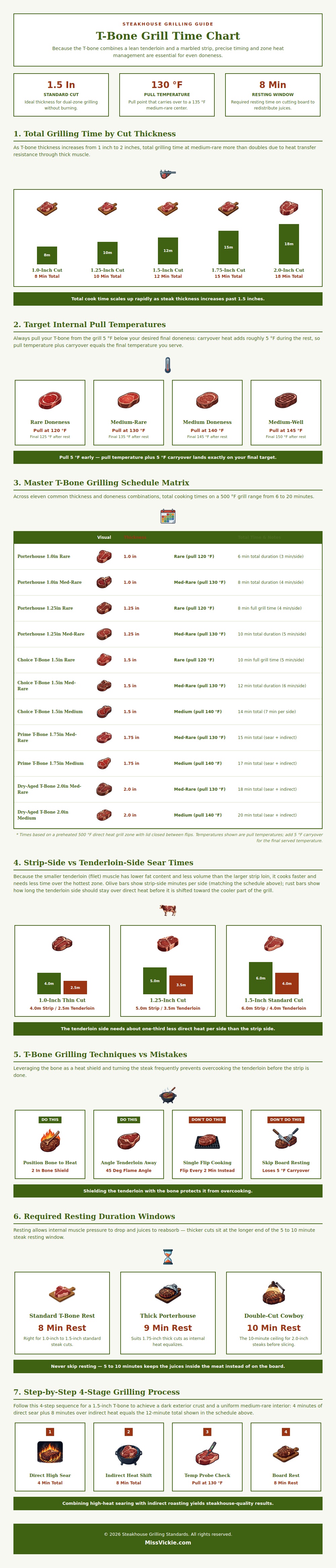
Most home cooks cook entire steak as one unit (but that’s the mistake). The chart above explain how to break down this cut into two separate parts, the only way to make it work.
This is where center bone comes into play, as both a structural component, yes, but also as a sort of heat shield. To demonstrate: Place steak on grill with bone facing out from flame. That way the tenderloin is protected from the heat (and the bone provide insulation to the leaner portion). The visual guide highlight how positioning the bone between fire and the tenderloin protect the leaner side from cooking too fast.
This makes perfect sense, roughly one-third longer for the strip side vs. The tenderloin; that’s because fat has ability to slow down cook time and actualy provide some insulation against heat. Lean muscle, however, will lose moisture more rapidly and conduct heat at a higher rate. Understanding this help you work with the cut, not fight against it.
The other variable that trips everyone up is thickness of steak. It takes a bit longer, which is a significant change, and a thicker steak require a totally different technique. Because there’s so much distance between outside of the steak and its core, by the time the inside begin to warm up, the outside might already be charred.
Check out the timeline in infographic. When cut doubles in thickness, from one inch to two inches, the overall cooking time more than double. A thin-cut will be cooked in eight minutes, whereas a thick prime cut require 18 minutes. Turning up the temperature doesn’t help; you’ve got to reduce flame and let heat creep down slowly until it reaches middle without torching outside.
That’s where duel zone method really shines. You get your sear on for flavor, and then transfer steak to indirect heat to bring everything else up gradually. The key is thinking about temperature control as cooking for the future rather than current moment.
Remember: After you remove meat from grill, it’s going to keep cooking. This extra cooking may increase the interior temperature up to five more degrees throughout the rest period. So when you wait until steak reaches your ideal doneness on grill, you’re actualy overcooking the steak by the time you place it on plate. That’s why you should of pull it five degrees before it reaches your goal so that the steak has a chance to reach its ideal temperature at table.
Removing it before it’s technically done sounds counterintuitive, but that’s how restaurants operate their professional kitchen. Trust the rest. Trust the thermometer. It’s not a suggestion: You have got to let it rest.
As soon as you cook it, muscle fibers contract and push all their juice inward. When you immediately slice into it, all that juice run onto the cutting board, and off your plate. Let it rest for about 8-10 minutes so the fibers can relax back into place and absorb moisture again.
Time depend on thickness; thinner steaks require less time than thicker ones like a cowboy cut. The graphic makes this window perfectly clear with a helpful visual aid for each different size. For example, a two-inch-thick steak require a full ten minutes’ worth of patience.
There is an art to grilling well. It’s all about balancing restraint with aggression. Use high enough heat for the Maillard reaction to happen on outside, but low enough heat to cook through middle gently so it doesn’t go gray.
Respect the two muscles and their differences. Use bone as your shield. Pull early (before it appears cooked) and let it rest. Then when you do cut into it, you’ll be happy you waited, patience pays off.
It is tender on each side. It is flavorful all over. It is a steakhouse-worthy meal in one. And that, my friend, is why we are here. Eat like you’re at the steakhouse.