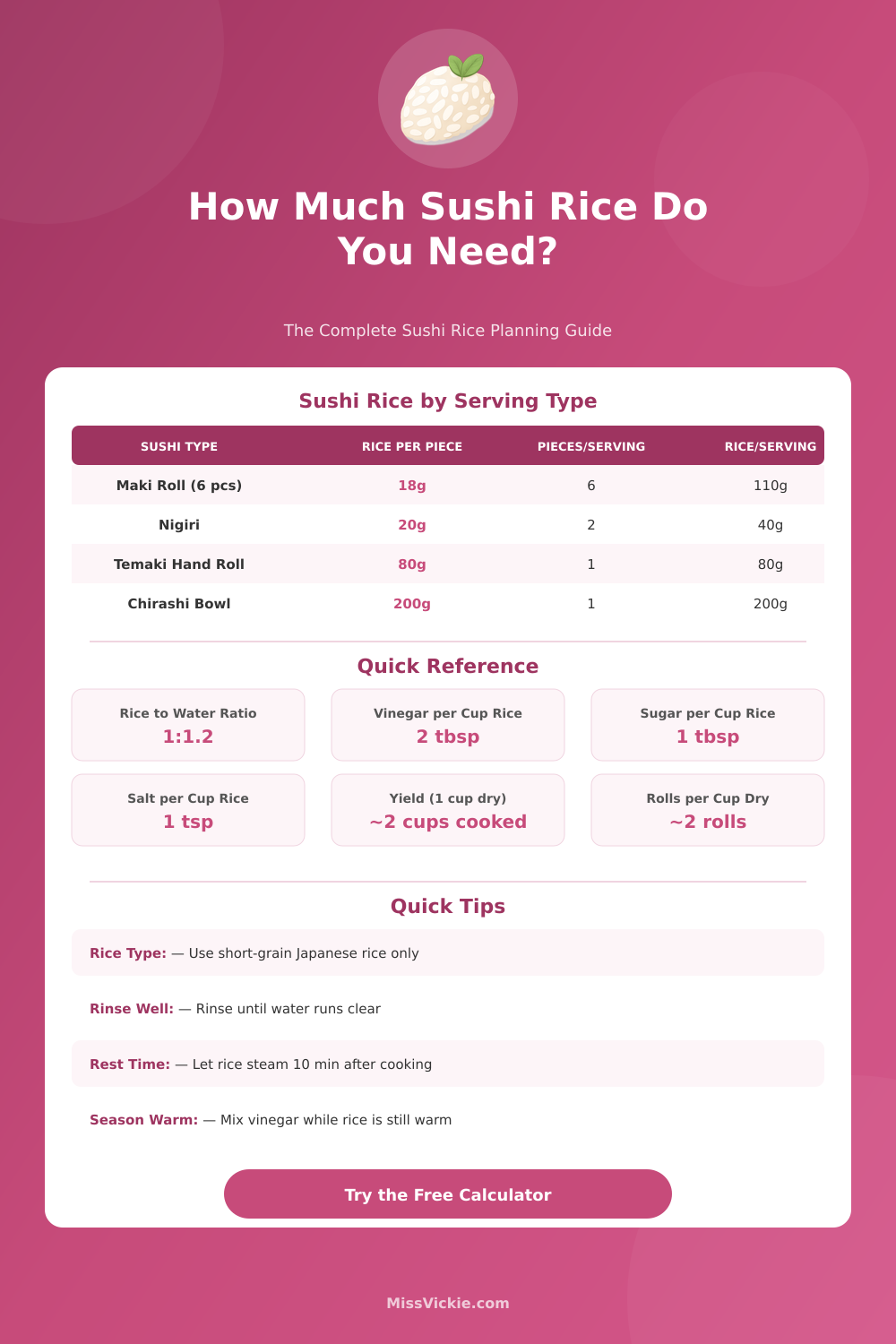
🍣 Sushi Rice Calculator
Calculate exact rice, water, and seasoning amounts for perfect sushi rice every time
| Servings / Rolls | Dry Rice | Water | Vinegar Mix |
|---|---|---|---|
| 1 Maki Roll | 0.5 cup (100g) | 0.6 cup (120ml) | 1 tbsp vinegar + 0.5 tbsp sugar + 0.5 tsp salt |
| 2 Maki Rolls | 1 cup (200g) | 1.2 cups (240ml) | 2 tbsp vinegar + 1 tbsp sugar + 1 tsp salt |
| 4 Maki Rolls | 2 cups (400g) | 2.4 cups (480ml) | 4 tbsp vinegar + 2 tbsp sugar + 2 tsp salt |
| 10 Nigiri | 0.6 cup (120g) | 0.72 cup (144ml) | 1.2 tbsp vinegar + 0.6 tbsp sugar + 0.6 tsp salt |
| 4 Hand Rolls | 1.6 cups (320g) | 1.92 cups (384ml) | 3.2 tbsp vinegar + 1.6 tbsp sugar + 1.6 tsp salt |
| 2 Chirashi Bowls | 2 cups (400g) | 2.4 cups (480ml) | 4 tbsp vinegar + 2 tbsp sugar + 2 tsp salt |
| Rice Type | Water Ratio | Cook Time | Seasoning |
|---|---|---|---|
| Sushi Rice (short-grain) | 1:1.2 | 15 min + 10 rest | Vinegar, sugar, salt |
| Regular White Rice | 1:1.5 | 18 min | None or butter/salt |
| Brown Rice | 1:2 | 40-45 min | None or broth |
| Jasmine Rice | 1:1.5 | 18 min | None or aromatics |
| Arborio (Risotto) | 1:3 (gradual) | 20-25 min | Parmesan, wine |
| Dry Rice | Rice Vinegar | Sugar | Salt |
|---|---|---|---|
| 0.5 cup (100g) | 1 tbsp | 0.5 tbsp | 0.5 tsp |
| 1 cup (200g) | 2 tbsp | 1 tbsp | 1 tsp |
| 1.5 cups (300g) | 3 tbsp | 1.5 tbsp | 1.5 tsp |
| 2 cups (400g) | 4 tbsp | 2 tbsp | 2 tsp |
| 3 cups (600g) | 6 tbsp | 3 tbsp | 3 tsp |
| 4 cups (800g) | 8 tbsp | 4 tbsp | 4 tsp |
Sushi rice is the base of every real sushi. The word “sushi” in Japanese actually means “sour taste” because you season it with vinegar. You can say also “rice with vinegar” or “sour rice” Every food with that rice is called sushi, even if it does not have fish.
Sashimi is simply raw meat cut specially.
How to Make Sushi Rice
In Japan you expect good fish, but the best sushi restaurants stand out by the quality of their rice. Good sushi rice sits between soft and firm. The grains stay separate without being gluey.
Making rice is among the most honored skills in sushi. Students in Japan work under a master for about five years before they can cook the rices thmeselves. The recipe of the sushi chef usually stays a trade secret.
For sushi you use only short-grain rice. Long-grain or processed kinds simply do not work. Cooked sushi rice shines, sticks and is chewy.
Popular types are Sasanishiki and Koshihikari, that you mix from old and new harvests for the best quality. CalRose, medium-grain Japanese rice from California, works also well.
The main difference of sushi rice to regular rice is the after-cooking. You add sweet vinegar to give taste, gloss and stickiness. For the vinegar mix you heat it in a pan with sesame oil and seaweed until salt and sugar dissolve.
After cooking you put the rice in a wide tin. With a wooden or plastic spoon you spread them. Vinegar you pour on and mix carefully.
It cools for 20 to 30 minutes, while you let steam exit every minute.
Cold rice is a Mistake. It loses sweetness, simplicity goes and it changes the taste of other parts. During dip in soy sauce, only the edge of the fish touch it.
Soy sauce on rice could destroy the whole sushi. Occasionally you leave it without any sauce.
One cup regular sushi rice gives around three rolls. Every roll becomes six to eight bits. Two rolls for one person are usual.
Two cups regular rice make eight rolls, so four servings. Leftover rice you can reheat, but it does not taste like fresh. You use it for ricebowls or risotto-like foods.