🍣 Sushi Burrito Nutrition Calculator
Calculate calories, protein, carbs, fat, and sodium by protein, rice type, toppings, and sauce
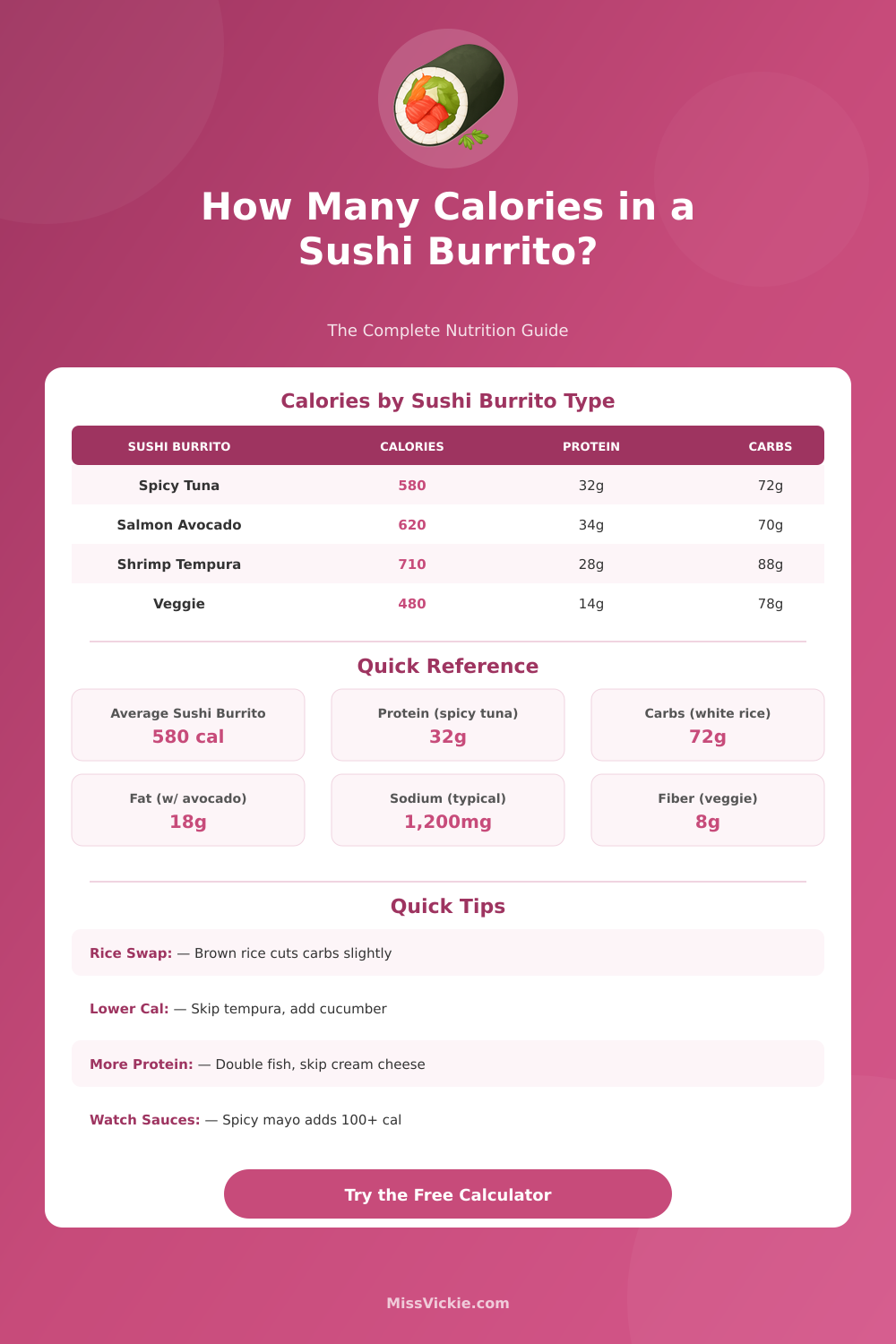
| Protein / Filling | Calories | Protein | Carbs | Fat |
|---|---|---|---|---|
| Spicy Tuna | 580 | 32g | 72g | 16g |
| Tuna (plain) | 540 | 34g | 70g | 10g |
| Salmon | 620 | 34g | 70g | 20g |
| Shrimp Tempura | 710 | 28g | 88g | 22g |
| Crab / Imitation | 560 | 22g | 76g | 12g |
| Chicken Teriyaki | 650 | 38g | 78g | 14g |
| Tofu | 490 | 18g | 72g | 14g |
| Veggie Only | 480 | 14g | 78g | 10g |
| Rice Type | Cal Added | Carbs Added | Notes |
|---|---|---|---|
| White Sushi Rice | +260 | +56g | Standard; seasoned with vinegar |
| Brown Rice | +240 | +50g | More fiber, slightly fewer carbs |
| Cauliflower Rice | +50 | +8g | Low-carb, keto-friendly option |
| No Rice | 0 | 0g | Protein bowl / lettuce wrap style |
| Sauce | Calories Added | Fat Added | Sodium Added |
|---|---|---|---|
| Spicy Mayo | +100 | +10g | +180mg |
| Ponzu (light) | +20 | 0g | +350mg |
| Soy Sauce | +10 | 0g | +900mg |
| Teriyaki Sauce | +60 | 0g | +500mg |
| No Sauce | 0 | 0g | 0mg |
| Meal | Calories | Protein | Notes |
|---|---|---|---|
| Sushi Burrito (spicy tuna) | 580 | 32g | High protein, moderate fat |
| Regular Sushi Roll (8 pc) | 350 | 18g | Smaller portion, less filling |
| Chipotle Burrito (chicken) | 740 | 51g | Higher cal, very high protein |
| Subway 12" Tuna | 700 | 36g | High fat from mayo |
| Poke Bowl (standard) | 520 | 30g | Similar macros, no seaweed wrap |
| Veggie Wrap (tortilla) | 420 | 12g | Lower protein, lower cal |
A sushi burrito is a kind of Japanese-Mexican fusion food. It mixes the portability of a burrito with the ingredients and flavors of classic sushi. Usually you roll fish and vegetables in a big nori sheet and eat it as a burrito.
You could smile about that mix of sushi and burrito but it is not that weird, and it tastes very good.
What is a sushi burrito
Making a sushi burrito at home is easy. Take seasoned sushi rice, smoked salmon, avocado and spicy mayo, that you wrap in nori sheets. Rather than average rolls with half a sheet, here you need two full sheets, laid one on the other for about half an inch.
Cover the bottom sheet with rice, add the ingredients and roll the whole thing from the bottom. Always dip the fingers in water before spreading the rice, because sushi rice sticks a lot. Hold a little bowl of water and wet cloth near, that helps alot.
For proteins you are not limited to salmon. Sashimi-grade tuna works as a replacement. Tempura shrimp is another good idea, and a dragon roll can become a sushi burrito by placing the avocado inside instead of outside.
Katsu chicken also works well as a filling. For sauces try a three-ingredient peanut sauce from peanut butter, hoisin and rice vinegar. Sriracha mayo is famous, as is yum yum sauce.
A mix of mayo, ketchup, sugar and spices.
Sushi burritos are best eaten the same day. For a bit longer storage, choose proteins other than raw fish. If you use raw fish, always choose sashimi-grade for safety.
Local Japanese stores provide such fish.
The Kirkland Signature sushi burrito from Costco has real snow crab and Sriracha-seasoned raw salmon. Two pieces of inari sushi come with the package together with Bachan sauce. It costs 16.99 dollars per pound.
Some customers are excited about it, while others are unhappy because of the price.
Sushi burritos look like giant sushi rolls. They mix Japanese and Mexican cuisine, are simple to do and very filling. Half a burrito usually suffices to be full.
Basically, a sushi burrito lets you eat a whole packed sushi roll during one meal and call it lunch without fault.