Sugar Per Gallon Of Wine Calculator
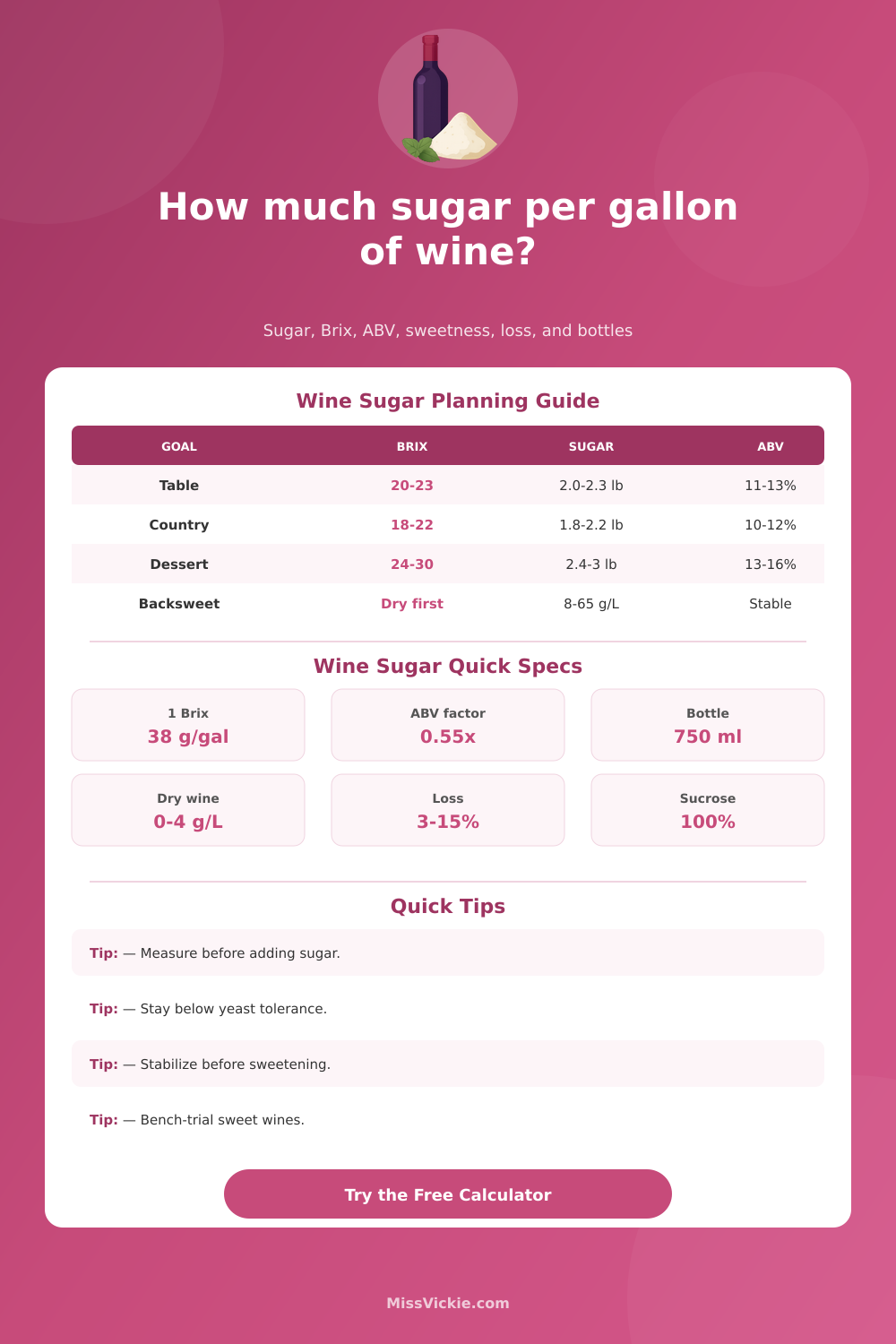
Estimate sugar additions from gallons, Brix or SG, target ABV, fruit style, yeast tolerance, sugar type, chaptalization stage, backsweetening, fermentation loss, and bottle yield.
🍷Winemaking Presets
Use a preset as a starting point, then adjust the hydrometer reading, yeast, stage, and sweetness target for your own must.
⚖Batch, Reading, And Fermentation Targets
Your Wine Sugar Plan
Enter your batch details, then calculate.
Fermentation Sugar
Sweetening And Bottles
📊Wine Sugar Benchmarks
🍇Fruit Must Reference
| Fruit Type | Typical Starting Brix | Common Wine Target | Planning Note |
|---|---|---|---|
| Wine grapes | 20-25 Brix | 11-14% ABV | Often needs little sugar unless picked early. |
| Table grapes | 14-19 Brix | 10-12.5% ABV | Usually benefits from measured chaptalization. |
| Apple or cider | 10-15 Brix | 8-12% ABV | Use yeast nutrition and avoid pushing weak juice too high. |
| Peach or apricot | 9-14 Brix | 10-12% ABV | Pulp losses can be high, so bottle yield may drop. |
| Berry wines | 8-13 Brix | 10-13% ABV | Acid and tannin can make sweetness read lower. |
| Plum or cherry | 12-18 Brix | 11-13% ABV | Bench trials help balance acidity and sugar. |
Fruit values are broad kitchen-scale references. Actual must sugar depends on variety, ripeness, dilution, pulp removal, and measurement temperature.
🍯Sugar Type Corrections
| Sugar Type | Fermentable Strength | Sweetness Strength | Use In Wine |
|---|---|---|---|
| Table sugar / sucrose | 100% | 100% | Neutral and predictable for chaptalization. |
| Corn sugar / dextrose | 91% | 75% | Gentler sweetness; more weight needed. |
| Honey | 79% | 95% | Adds aroma; dissolve well before mixing. |
| Maple syrup | 66% | 80% | Distinct flavor; use small bench trials. |
| Brown sugar | 96% | 98% | Adds molasses notes in dark fruit wines. |
| Juice concentrate | 68% | 85% | Adds fruit character and extra volume. |
📝Backsweetening Targets
Very little residual sweetness.
Softens acid without tasting sweet.
Noticeable but balanced sweetness.
Common for fruit-forward country wine.
Dessert-like, but still pourable.
Rich sweetness for small servings.
Use proper stabilization before bottling sweet wine.
Scale small tasting trials before sweetening the batch.
🍾Common Bottle Yield After Loss
| Starting Batch | 5% Loss | 10% Loss | 15% Loss |
|---|---|---|---|
| 1 gallon | 4 bottles | 4 bottles | 4 bottles |
| 3 gallons | 14 bottles | 13 bottles | 12 bottles |
| 5 gallons | 23 bottles | 22 bottles | 21 bottles |
| 6 gallons | 28 bottles | 27 bottles | 25 bottles |
⚠Fermentation Notes
With five gallons of smashed grapes (or whatever) and a hopeful prayer that you won’t end up with a barrel of vinegar, you’re off. Most home winemaker wind up there, blinking at their hydrometer’s number, too high, so the yeast will die trying to eat all that sugar? Too low, so it’ll be boozy but not much else?
Sugar isn’t just sweet. It’s also the fuel for fermentation; an equal amount of it turns into carbon dioxide as it does into alcohol. The numbers must add up correctly or you’ll have something good, or bad (that sits for months on your rack), refusing to complete fermentation and go out into the world as anything but a stuck mess.
How the Sugar Calculator Helps You Make Better Wine
That’s where calculator I built up there comes in: plug in what type of fruit you’ve got going in it, the kind of yeast in your jar, amount of volume in your batch, and your initial gravity… And it’ll do the math for you, converting those dry stats into actualy grams or pounds of sugar you’ll need to add.
Not all kinds of sugar produce alcohol at the same rates; nor can all types of yeast withstands the same pressure. In other words, while you may only require a small addition if you’re fermenting concord grapes… Which typically begin in the low 20’s Brix; you may be looking at a significant difference between your existing readout and desired alcohol content if you’re starting with lower-Brix apples or peaches. Precision are required here; guesswork won’t cut it.
Keep yeast tolerance in mind. It’s a thing, but it doesn’t get a lot of thought. Don’t push a yeast too far beyond what it can handle or you’ll stall out early. This consideration gives the tool some headroom. It prevents you from trying to hit an alcohol level with a given strain that just isn’t going to happen. A lot of people dumps more sugar into their batch several weeks later when the wine stalled halfway through. No thanks.
It will also adjust for different sugars. Sucrose (table sugar) behaves in a fairly predictable way. Maple syrup or honey are another story, as they differ based off how strong they ferment and how much water they contain. Again, the tool takes all this into account. This spares you from calculating how many cups of syrup equal a certain amount of sugar, so you don’t end up with a nasty fermenter to clean up.
Once fermentation is finished, we move on to the residual sweetness instead of potential alcohol content. Here’s where backsweetening comes into play. Adding any amount of sugar to an unstable wine risks refermentation. This could result in exploding bottles and dead wine.
The tool will tell you precisely what amount of stabilized sweetener you need to achieve desired profile, be that a lusciously sweet dessert wine or a dry wine with a nice crisp finish. It accounts for lost volume from lees removal and other racking, so it provides you with a practical number of expected bottles after fermentation. If you don’t take this into account, losing ten to fifteen percent of your volume when transferring wines can impact your final concentration.
So what is this? This is building the house on a foundation you cannot see. Sugar is the material. Yeast is the labor force. Fruit is the structure. Not enough, and it all falls down. Too much, and the weight of the roof caving in would of crush you.
A planning tool take away the stress of making those initial choices. It lets you play out different possibilities before investing in ingredients. How does a higher target ABV impact your yeast headroom? Two pounds of sugar vs honey, which will give me more alcohol? Those minor tweaks adds up over time and result in wines that feel intentional, not accidental.
It is about consistency. Whether you’re crushing up some berries from the grocery store, or a few bushel of homegrown grapes, it’s all about chemistry. The yeast will keep working until the sugar turns into alcohol or until they dies or run out of fuel. Knowing this gives you control over the process. Your reliance shifts from the changing friend known as luck to the predictable process. The calculator shows you the map; your palate tells you where you need to end up. Take the data, go in one direction, then taste and tweak. That’s how we make wine.