🌽 Sugar in Corn Flakes Calculator
Calculate sugar content by brand, milk type, serving size, and number of servings
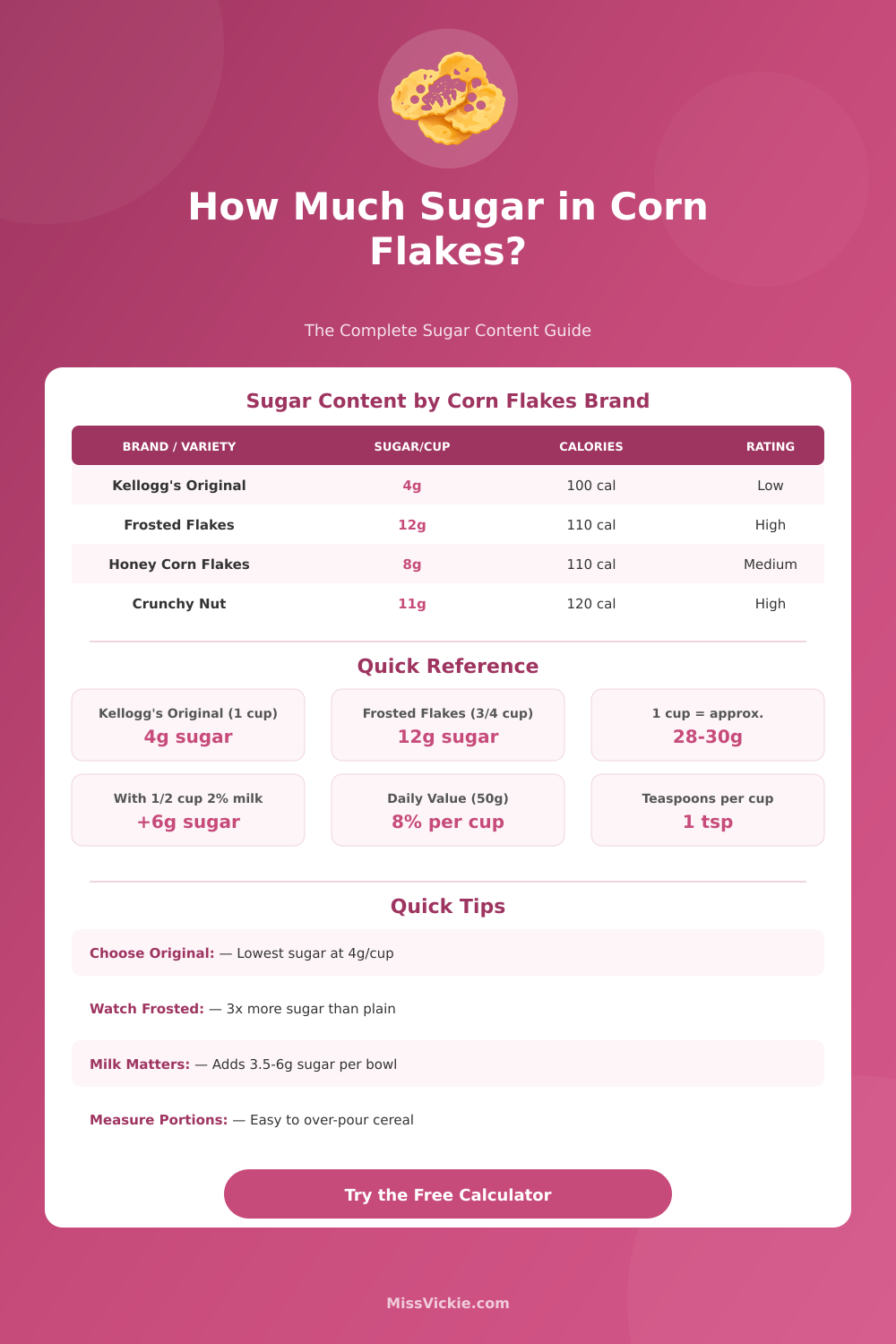
| Brand / Variety | 3/4 Cup | 1 Cup | 1.5 Cups |
|---|---|---|---|
| Kellogg's Original | 3g | 4g | 6g |
| Store Brand / Generic | 2.3g | 3g | 4.5g |
| Frosted Flakes | 12g | 16g | 24g |
| Organic Corn Flakes | 2.3g | 3g | 4.5g |
| Honey Corn Flakes | 6g | 8g | 12g |
| Banana Nut | 7.5g | 10g | 15g |
| Crunchy Nut | 8.3g | 11g | 16.5g |
| Nature's Path Organic | 2.3g | 3g | 4.5g |
| Cereal | Sugar | Calories | Notes |
|---|---|---|---|
| Corn Flakes (Kellogg's) | 4g | 100 | Low sugar classic |
| Cheerios | 2g | 100 | Lowest sugar option |
| Rice Krispies | 4g | 130 | Similar sugar level |
| Special K | 4g | 120 | Higher protein |
| Bran Flakes | 5g | 100 | High fiber choice |
| Grape-Nuts | 5g | 200 | Dense, high calorie |
| Measurement | Cups | Grams | Ounces |
|---|---|---|---|
| Small Serving | 1/2 cup | 14g | 0.5 oz |
| Kids Serving | 3/4 cup | 22g | 0.75 oz |
| Standard Serving | 1 cup | 29g | 1 oz |
| Large Bowl | 1.5 cups | 44g | 1.5 oz |
| Extra Large | 2 cups | 58g | 2 oz |
| Family Size (4) | 4 cups | 116g | 4 oz |
corn flakes started as basic food from roasted and flattened corn grains. Their first purpose was very clear: help with problems of digestion. What started as healthy food soon changed into something that millions of folks choose every morning.
Only in United Kingdom more than 6 millions of families keep boxes in their kitchens. That shows impressive level of use of cereals.
Corn Flakes: History, Health and Uses
History of that goes back to the 1890s. There is a famous legend, that the simple taste and choice of ingredients were meant to push a purer and moral way to eat. Reality is a bit more complex, even so. What genuinely happened was that cereals were widely seen almost as a miracle cure for everything during the end of the 19th century.
Folks believed, that these everyday foods could fix everthing that bothered them.
The corn flakes of Kellogg carry roasted corns without any extra fake taste. Sugar is around 3 grams per serving (that weighs about 29 grams). List of ingredients stays quite basic: ground corn, sugar, malt flavor and salt in small amounts, under 2 percent.
They add BHT in the package itself, so that everything stays fresh more long. They also strengthen the cereals with a whole set of nutrients. You receive iron, vitamin C, folic acid, vitamin D and some different B-vitamins included.
It forms a solid option, that works four children or adults, when you check it.
But here is the spot, note, that not every corn flakes are the same. Some organic versions reduce it to only corn grains and sea salt. They roast them in a boiler for that pleasant crunch and skip all preservatives and sweeteners.
Genuinely basic stuff.
Downside is, that pure corn flakes consist almost of only carbohydrates without big nutritional value on their own. If you would eat only that day after day for months, you would end with low fiber intake, wobbles of blood sugar and lack of nutrients. Even so, if you mix with other foods and vary your breakfast, that covers most of it.
The main benefit of corn flakes is speed. They are ready in less than two minutes. Whether daily meals of them help to gain weight, lose it or stay in form, everything depends on your whole calorie intake, not on the cereal itself.
Besides bowls for breakfast, these flakes genuinely work well in kitchen. Toss them in preserves, use as cover for sweets or try them for coating of meat. Their mild taste allows them to absorb anything around without trouble.
Crush them and use as breadcrumbs on meat, just dip the protein in flour first, then in egg, and then roll through the crushed flakes. A food processor quickly turns them into good crumbs, that freeze well for future coatingtasks. Even leftover corn flakes go into recipes for cakes.