
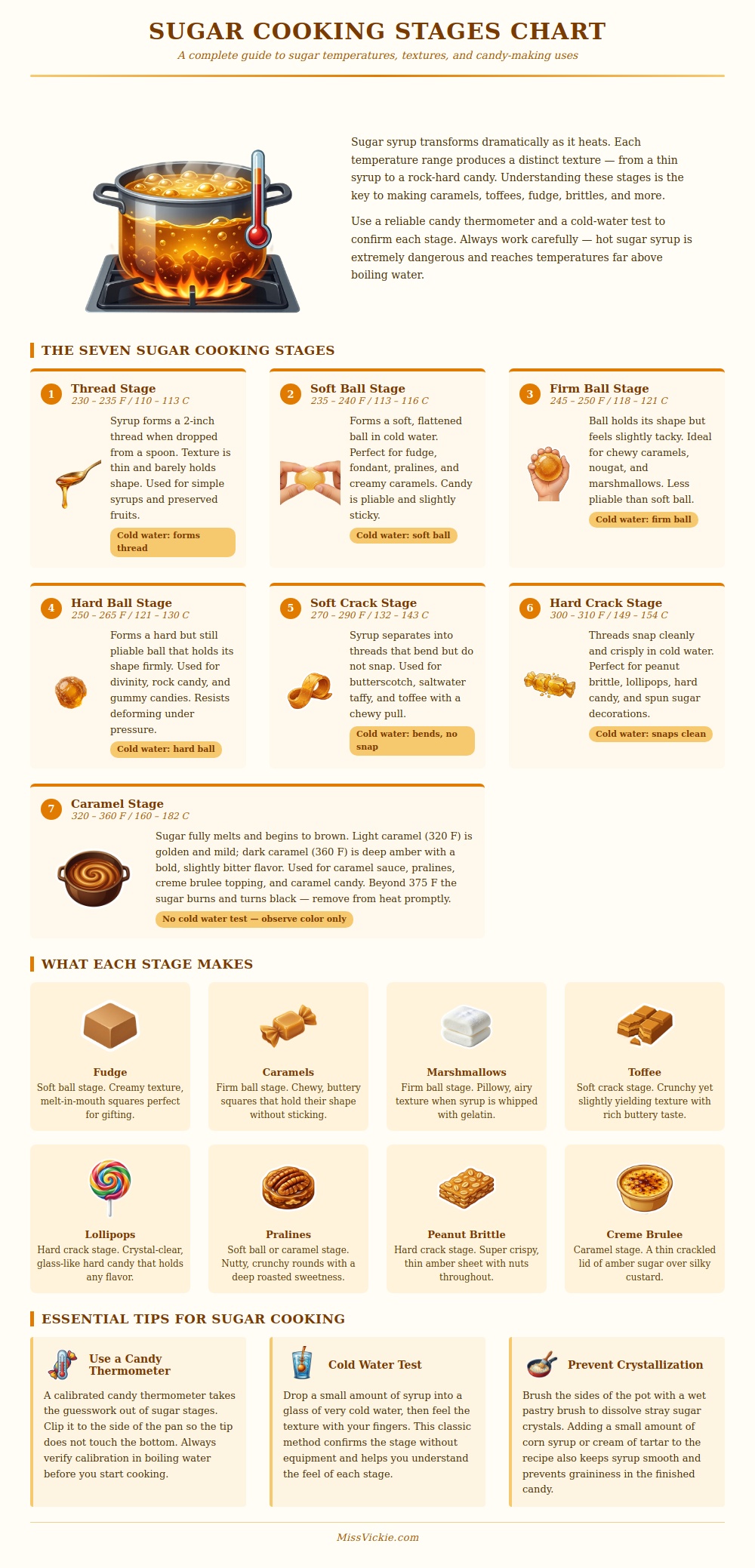
Making candy at home require that you monitor the temperature of the sugar syrup. Monitoring the temperature of the sugar syrup are necessary because the temperature of the syrup will determine the texture of a candy that you will make. The temperature of the syrup will change the physical property of the sugar molecules, which will determine whether the candy that you form with the syrup will be soft, chewy, or hard.
You can measure the temperature of the syrup with a candy thermometer, or you can test the stage of the syrup by dropping a small amount into cold water. The first stage of sugar syrup is the thin-thread stage. At this stage, the syrup will be in the form of a thin, flowing liquid; sugar molecules has not yet developed the structure to form a candy.
Sugar Syrup Stages for Making Candy
This stage is used to make flavored syrups and preserves, but not candies that is supposed to be chewy or hard. While many people will move through the thin-thread stage very quickly when making candy, thin-thread stage syrup acts as the baseline for the other stages of syrup. Next, the stage of the syrup will be the soft-ball stage.
At the soft-ball stage, the syrup will hold a soft shape when it is cooled, but will flatten if you apply any light pressure to the candy. This stage is used for making fudge and pralines; the texture of the syrup at this stage ensures that the candy will be tasty but not too hard to eat. If you remove the temperature from the syrup too early at this stage, the candy will be too sticky to eat.
If the temperature is too high, however, the candy will become grainy when eaten. Next, the syrup will reach the firm-ball stage. At this stage, the syrup will form a ball when cooled, and the firm-ball stage allow the candy to stretch.
This stage is used for making chewy caramels or marshmallows. At this stage, if you allow the syrup to continue to heat, the candy will begin to stick to the teeth; thus, it is important to not allow the syrup to heat beyond this stage. Next, the syrup can reach the hard-ball or hard-crack stage.
At the hard-ball stage, the drop of syrup that is cooled will feel hard to the touch but will remain pliable; this stage is used to make divinity and gummy candy. Beyond this stage, the syrup will reach the hard-crack stage. At the hard-crack stage, the syrup will no longer form a ball when cooled, but will form thin threads with a sharp break.
This stage is used to make butterscotch, saltwater taffy, and peanut brittle. In addition to the stages of syrup, the color of the syrup will change from pale gold to deep amber. The color of the syrup change due to chemical changes in the syrup, which also change the flavor of the syrup.
The more deeper the color of the syrup, the more bitter the candy will be; thus, it is important to monitor the color of the syrup. If it continues to heat, it may burn very quickly. Safety should of been considered in the making of candy.
Because the temperature of the syrup can reach much higher temperature than boiling water, pain may be felt if a drop of the syrup touch the skin. For this reason, cold water should be kept nearby, and you should wear long sleeves while making candy with the syrup. Furthermore, the candy thermometer should also be accurately in measuring the temperature of the syrup.
For this reason, you should clip the thermometer to the side of the pot so that the tip of the thermometer is within the syrup but not in contact with the bottom of the pot. Another issue that may develop when making candy is crystallization. Crystallization occurs when the sugar syrup form crystals along the sides of the pot that then fall into the syrup; these crystals create a grainy candy.
The best way to avoid this issue is to use a wet pastry brush to brush the sides of the pot, or adding corn syrup to the pot to prevent crystallization. Thus, preventing crystallization will ensure that the individual eats a smooth candy. Finally, each stage of the sugar syrup indicates the texture of the candy that will create.
The thin-thread stage indicates the syrup will be liquid; the ball stages indicates the structure of the candy is setting; the hard-crack stage ensures the candy will hold its shape at room temperature. By following these stages and these tests for the stages, those who wish to create candy at home can make the entire process of making candy repeatable.