
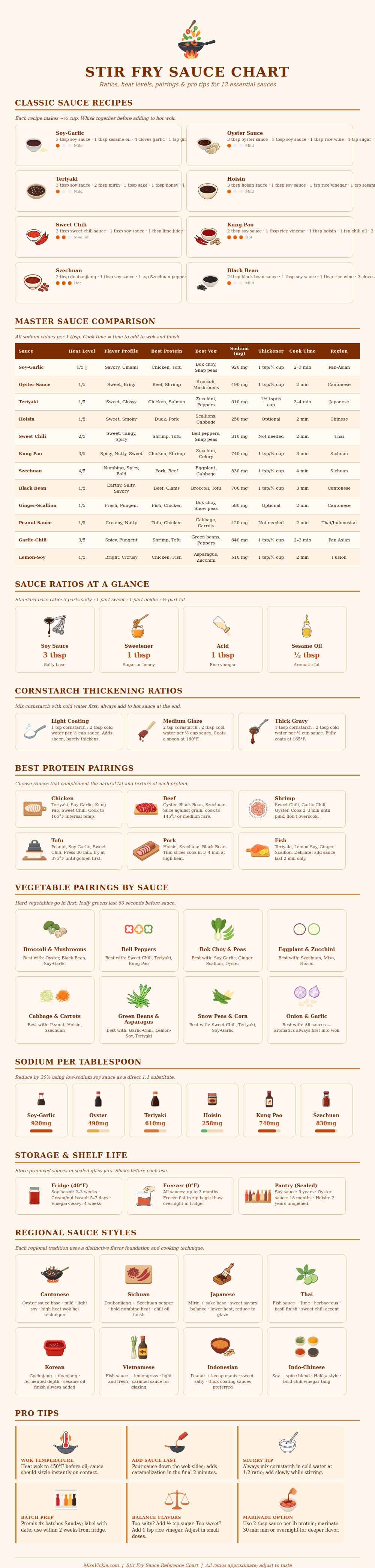
Stir fry sauce is a liquid component that is added to the wok during the stir frying process. Stir fry sauce are used to coat the protein and vegetables, as well as to provide specific flavors to the meal. You can purchase stir fry sauce from store, but can also be prepared in accordance with a specific recipe that includes specific ratios of the sauce ingredients.
Each of these sauce ingredients may include a salty base, sweet component, acidic component, and fat component. If the ratio of each of these components are correct, the stir fry sauce will coat the proteins and vegetables properly; however, if the ratio is incorrect, the stir fry sauce may lead to a dish that contains too much salt. The heat levels of stir fry sauce can vary based off the preference of the sauce’s maker.
How to Make and Use Stir Fry Sauce
For instance, soy-garlic sauce is a mild stir fry sauce that contain savory flavors and that can be used in recipes that contain proteins like chicken and bok choy. Medium heat stir fry sauces, like sweet chili sauce, contains tangy and spicy flavors that are good for proteins like shrimp and bell peppers. Hot stir fry sauce, like Kung Pao or Szechuan sauces, contain ingredients like numbing and fiery peppers.
The heat level of the sauce that is use in the stir fry recipe can depend upon the individual taste preference of the people who will consume the dish; mild sauces are good for young children, while spicy sauces are good for those who enjoy dish with heat. Additionally, high heat help to draw the oil from the chilies that are contained in the stir fry sauce, and creates the specific mouthfeel to the sauce. Certain protein require specific types of stir fry sauces.
For instance, beef is a protein that is best prepared with a stir fry sauce that contain oyster sauce. Additionally, shrimp is a protein that the cook prepares quickly in the stir fry process, so it is best prepared with a garlic and chili sauce, as the shrimp should be removed from the heat once it turns pink. Tofu should be pressed and fry prior to adding a peanut sauce to the tofu.
Fish is a more delicate protein than others, so it is best prepared with more subtle sauce, like lemon and soy sauce. Additionally, proteins like beef and pork are bold in flavor, so sauces like black bean sauce work well with these protein. However, the same bold flavor may overpower the delicate flavor of fish, so a more subtle sauce should be used.
Certain vegetables has to be added to the wok in a specific order. Hard vegetables, like broccoli and carrots, must be added to the wok first, as they require more heat to become sweet and tender. Leafy vegetables, like bok choy, should be added to the wok at the end of the stir fry process, as overexposure to heat will cause them to wilt.
Finally, vegetables like onions and garlic should be added to the oil first, as they contain the aroma that should be present in the oil. By adding the vegetables in this specific order, the proteins will be properly cooked, and the leafy vegetable will remain crunchy. The cook can control the thickness of the stir fry sauce by adding a cornstarch slurry to the sauce.
A cornstarch slurry is a mixture of cornstarch and cold water; you must use cold water to prepare the slurry, as hot water will cause the cornstarch to clump together. The cook can add the cornstarch slurry to the stir fry sauce after the stir fry process, and the sauce should be stir as it bubbles. A light cornstarch slurry will result in a thin sheen on the cooked food; a medium cornstarch slurry will result in the sauce cling to the spoon; and a thick cornstarch slurry will result in the sauce having the same consistency than gravy.
Stir fry sauces contain a major component of sodium, which gives the sauces there salty flavor. Stir fry sauce can contain low-sodium soy sauce to reduce the amount of sodium in the sauce by thirty percent. Additionally, you can balance the sauce by adding sugar or vinegar to the sauce.
Stir fry sauce can be stored in the refrigerator in clean jar for up to two weeks, provided that the sauce has a soy base. Nutty-based stir fry sauce can be stored for a shorter period of time then soy-based sauce, but can be frozen in flat containers for up to three months.