🍞 Stiff Sourdough Starter Calculator
Calculate exact flour, water & starter amounts for your stiff levain at any hydration
| Ratio (S:F:W) | Starter (g) | Flour (g) | Water @ 50% | Best For |
|---|---|---|---|---|
| 1:1:0.5 | 100 | 100 | 50g | Quick same-day refresh |
| 1:2:1 | 50 | 100 | 50g | Standard daily feed |
| 1:3:1.5 | 33 | 100 | 50g | Mild overnight build |
| 1:5:2.5 | 20 | 100 | 50g | Stiff levain for panettone |
| 1:10:5 | 10 | 100 | 50g | Long cold retard |
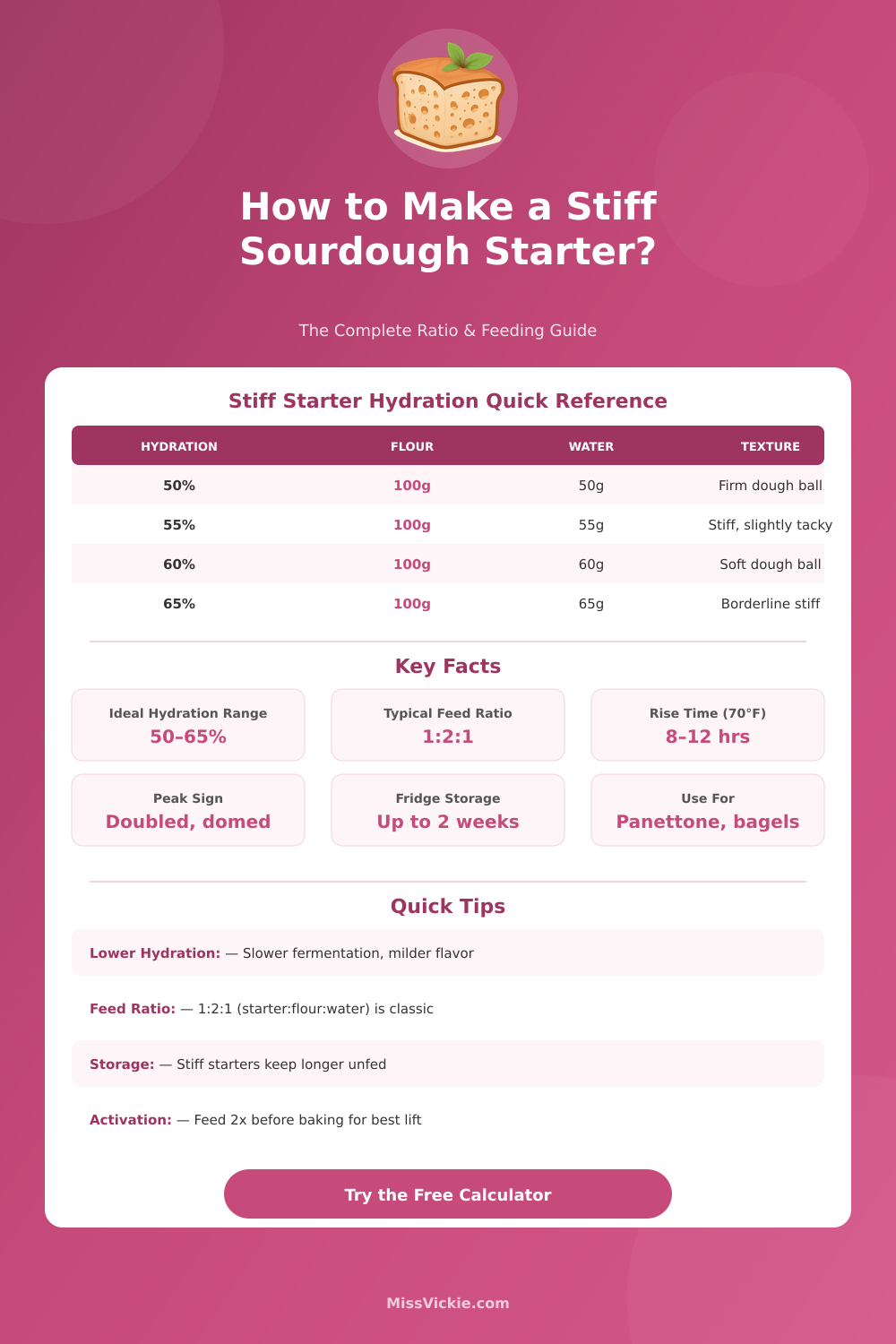
| Hydration | Water (g) | Texture | Rise Time (70°F) |
|---|---|---|---|
| 45% | 45g | Very stiff, crumbly edges | 12–16 hrs |
| 50% | 50g | Firm dough ball | 10–14 hrs |
| 55% | 55g | Stiff, slightly tacky | 8–12 hrs |
| 60% | 60g | Soft dough ball | 6–10 hrs |
| 65% | 65g | Borderline stiff / sticky | 5–8 hrs |
| Temperature | Fermentation Speed | Approx. Peak Time | Notes |
|---|---|---|---|
| 65°F / 18°C | Very slow | 14–18 hrs | Good for overnight builds |
| 70°F / 21°C | Slow | 10–14 hrs | Standard room temp |
| 75°F / 24°C | Moderate | 6–10 hrs | Ideal for most kitchens |
| 80°F / 27°C | Fast | 4–7 hrs | Summer / warm proofing box |
| 85°F / 29°C | Very fast | 3–5 hrs | Risk of over-fermentation |
| Property | Stiff Starter (50–65%) | Liquid Starter (100%) |
|---|---|---|
| Hydration | 50–65% | 100% |
| Texture | Firm dough ball | Pourable batter |
| Flavor | Milder, slightly sweeter | More tangy / acidic |
| Rise Speed | Slower | Faster |
| Fridge Life | Up to 2 weeks | 1 week |
| Best Used In | Panettone, bagels, pasta | Standard sourdough loaves |
| Maintenance | Less frequent feeding | More frequent feeding |
In its center, the sourdough starter is simply a mix of flour and water that becomes home for useful bacteria and wild yeasts. It gathers the natural yeasts that naturally float around in the flour and in the air beside you Regularly feed it, and it leavens your bread and gives its tangy taste. Over some days…
Around a week, the sourdough starter forms its own microbial community from its surroundings.
How to Make and Use a Sourdough Starter
Create sourdough starter from scratch does not happen in a moment. Expect at least seven days, occasionally longer according to the conditions. The secret is starting with whole wheat flour, that well starts the fermentation.
When it operates, switch to everyday flour or bread flour to feed the yeasts and bacteria. Simply avoid bleached flour, the bleaching kills the germs that you cultivate.
In the first day mix flour and water in a non-reactive bin… Glass, ceramics, stainless steel or food plastic works. Choose something with half to one quart capacity, so that the mix has space to grow.
Before sterilise the bowl: wash it with a hot machine or boil around ten minutes, to remove unwanted molds and bacteria. A scale is not compulsory, but it simplifies the feedings and makes them faste.
For feed the sourdough starter, scoop roughly the half part and dump it, later add equal parts of flour and warm water. Mix until smooth, cover and leave rest twenty-four hours in warm room temperature. Other feeding ratios operate according to your time (from 1:1:1 until 1:5:5), depending on your target.
Healthy sourdough starter, ready to use, doubles in size between four and six hours after feeding. It smells pleasant and acid, not bad or off. It looks bubbly and airy; test: cast a spoon in water, it will float.
Genuinely ready it is thick, bubbly, and wobbles like jelly when you shake the bowl, without falling. A spoon through it feels like thick batter.
What to do with the discard of the sourdough starter? do not waste it! It works for corndogs, pretzel-bites, onion rings, brownies, sugar cookies and chocolate chip cookies.
Also use for pancakes, waffles, pizza, pasta, crackers, tortillas and cinnamon rolls.
Recipes require different amounts of sourdough starter. Some need three spoons, others want whole cups or two. For big recipes, grow the sourdough starter with extra feedings before.
If you keep it in the refrigerator and feed once weekly, the fermentation slows and it stays stable morelong.