Steaming Time Calculator
Estimate steaming minutes for vegetables, seafood, dumplings, and eggs using food type, thickness, weight, frozen state, steamer setup, boil vigor, altitude, basket loading, texture target, and rest time.
🍜Steaming presets
Choose a common steaming job, then adjust cut size, load, altitude, steam intensity, and target texture before timing from full visible steam.
⚖Units
🥦Food, size, and loading
💨Steamer conditions
Your steaming plan
Calculation breakdown
Use a thermometer for seafood and a texture check for vegetables.
📋Vegetable steaming reference
| Vegetable | Typical cut | Crisp-tender | Tender or soft cue |
|---|---|---|---|
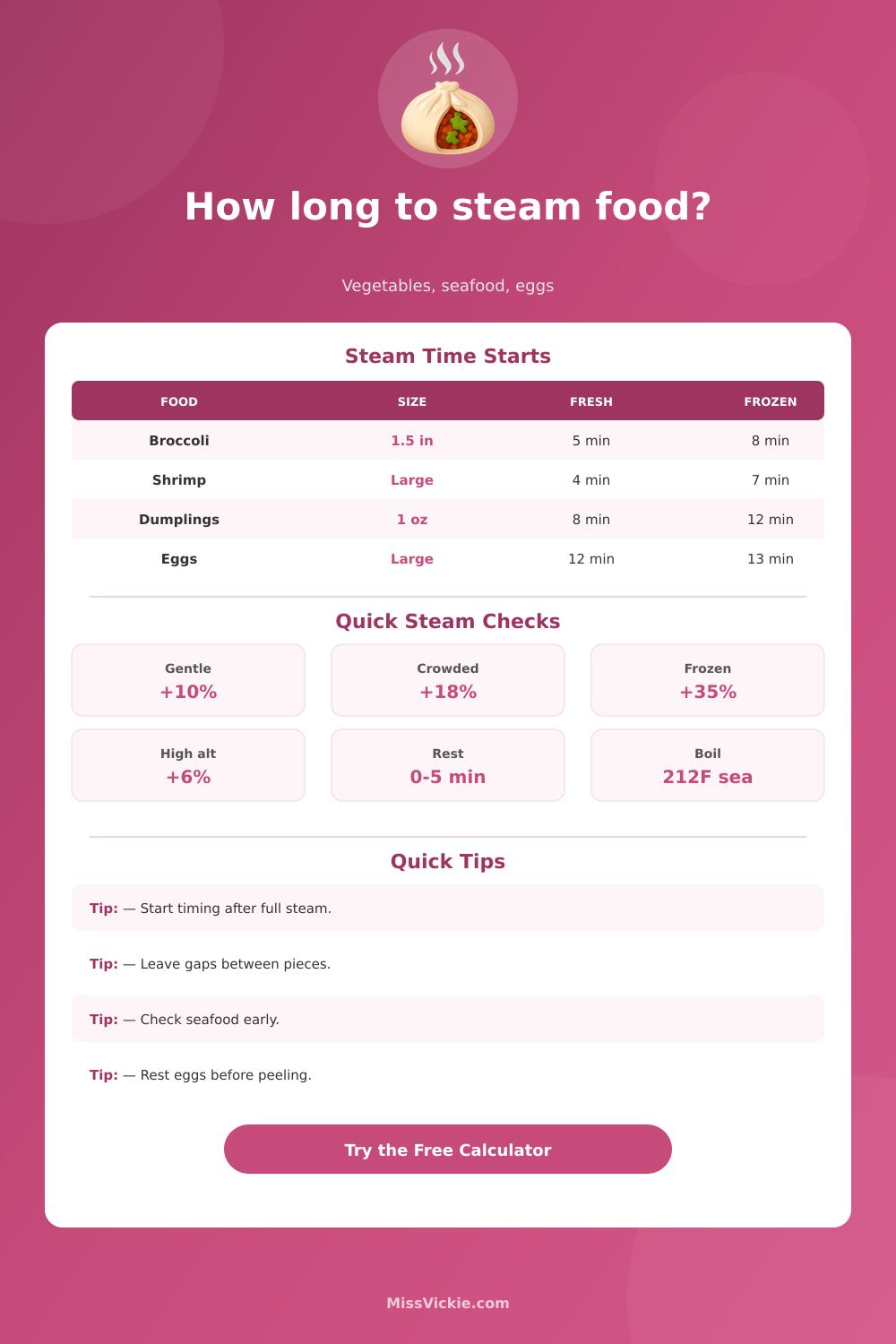
| Broccoli florets | 1 to 1.5 in pieces | 4 to 6 min | 7 to 9 min for tender stems. |
| Green beans | Whole trimmed beans | 4 to 6 min | 7 to 9 min for soft beans. |
| Carrot slices | 1/4 to 1/2 in coins | 6 to 8 min | 9 to 12 min for soft slices. |
| Baby potatoes | 1 to 1.5 in potatoes | 12 to 16 min | 18 to 24 min until fork-tender. |
| Corn on the cob | Whole ears | 6 to 8 min | 9 to 11 min for plumper kernels. |
🍤Seafood steaming reference
| Seafood | Size cue | Fresh time | Doneness cue |
|---|---|---|---|
| Salmon fillet | 1 in thick | 7 to 9 min | Center flakes and reaches 145°F for safe reference. |
| White fish fillet | 3/4 to 1 in thick | 5 to 8 min | Opaque and flakes easily; check early. |
| Large shrimp | 16 to 25 per lb | 3 to 5 min | Opaque, curled, and 145°F for safe reference. |
| Mussels or clams | Scrubbed shellfish | 5 to 8 min | Shells open; discard any that stay closed. |
🥟Dumpling and egg reference
| Food | Starting state | Steam time | Rest or finish cue |
|---|---|---|---|
| Fresh dumplings | 1 oz pieces | 7 to 9 min | Wrapper translucent and filling hot in center. |
| Frozen dumplings | 1 oz pieces | 11 to 14 min | Add time if stacked or tightly packed. |
| Tamales | Thawed, medium | 18 to 25 min | Masa pulls cleanly from husk after resting. |
| Large eggs | Cold from fridge | 7 to 13 min | 7 to 8 min jammy; 12 to 13 min hard-cooked. |
🧪Adjustment reference
Frozen pieces spend early minutes thawing before the center cooks.
Touching pieces block steam flow and slow heat transfer.
Cooler steam above sea level needs a longer cook window.
Dense foods finish softening during a short covered rest.
💡Steaming notes
Time from full steam. Add food after the steamer is producing steady visible steam, or begin timing once steam recovers after loading.
Use the right cue. Vegetables need a fork test, dumplings need a hot filling, seafood needs safe temperature, and eggs need an ice bath or rest plan.
Steaming food looks easy enough. Until you try to do it right. Broccoli can go from green to olive drab. It can also turn sulfur-smelling in a few extra minutes. Shrimp can be translucent in the center if they doesn’t have several more minutes.
How does steam move through each item after surrounding it? It depends on its thickness, starting temperature, how tightly packed the items is in the basket, and whether the pot of water is sighing under the lid or boiling steadily. Plugging in your conditions (in your kitchen), weight, cut size and food type into the calculator above do all this for you. But it’s knowing why that changes with those inputs that’s important.
Why This Steaming Tool Is Useful
Because when it comes down to it, steam penetrates from the outside in, and thickness makes a difference. Even if everything is fresh, a thick dumpling that stands an inch high will take noticeable longer then a thin spear of asparagus. Thawing counts as a layer of work too so frozen adds one more: The tool stretches out the base time so that you don’t have to guess how much extra time to add after thawing.
That’s where the second issue comes in… Crowding. Because the steam can’t hit all surfaces evenly when things is touching, the edge of a piece will be done before the middle of another one inside the basket. That’s why there’s a load setting; it lets you finish a single layer quicker (and more evenly) than finishing a full, stacked up tier.
Then there is altitude. Water only boils at a lower temperature the higher you climb, making steam itself cooler and requiring more time to do the same task. Without having to remember rule of thumb about every thousand feet, the calculator takes this into account as well.
Early is better when it comes to seafood than veg. Once thin fish fillets or shrimp reach the right temperature they go from perfect to rubbery fast. The early end of that check window is often the right time to pull it. That is why the tool exists. It reminds you that fish have a narrow safe range, and the window tells you what that range is.
Then there are egg. They get cooked by steam, but their ultimate texture depends on the length of their post-steam rest, as the yolk continues to set with its own residual heat. So then on the page there is these reference tables that lay out what the typical range is for common things so that you can see where your choices fall compared to average. These are not hard-and-fast rules. These are starting points. Then adjust based off the type of steamer, how snug the lid fits, and how vigorously the water boils. A tight-fitting metal lid will lose a bit less heat along the edge than a loose-fitting bamboo one; that little bit compounds over a ten- or dozen-minute cooking time.
So what’s the practical habit to build? Treat that initial calculation not as a promise, but as a plan. Do it, write down the recommended window and look for actual cue from your food. Does it have bright green stems like broccoli? Is there a clean pull on tamale masa? The precise minute on the clock means less than those cues once you begin to pay attention to them. The calculator then can be used to help you get close the first time, rather than replace paying attention.
You should of seen how much easier it is with this tool. It makes everything more comfortabley. If you want luxurius results you need it.