Steak Thawing Time Calculator
Estimate steak thaw time from cut, thickness, weight, fridge or cold-water method, vacuum seal, water changes, start temperature, cook window, and batch count.
🥩Steak Thaw Presets
Pick a common freezer-to-dinner setup, then adjust the packaging, batch size, target steak temperature, and deadline.
⚙Thaw Inputs
Your Steak Thaw Plan
Enter steak details to estimate thaw time, start deadline, water changes, and cook-readiness.
Thaw Math
Handling Plan
📏Cut, Thickness, And Shape Guide
🧊Steak Thaw Reference Tables
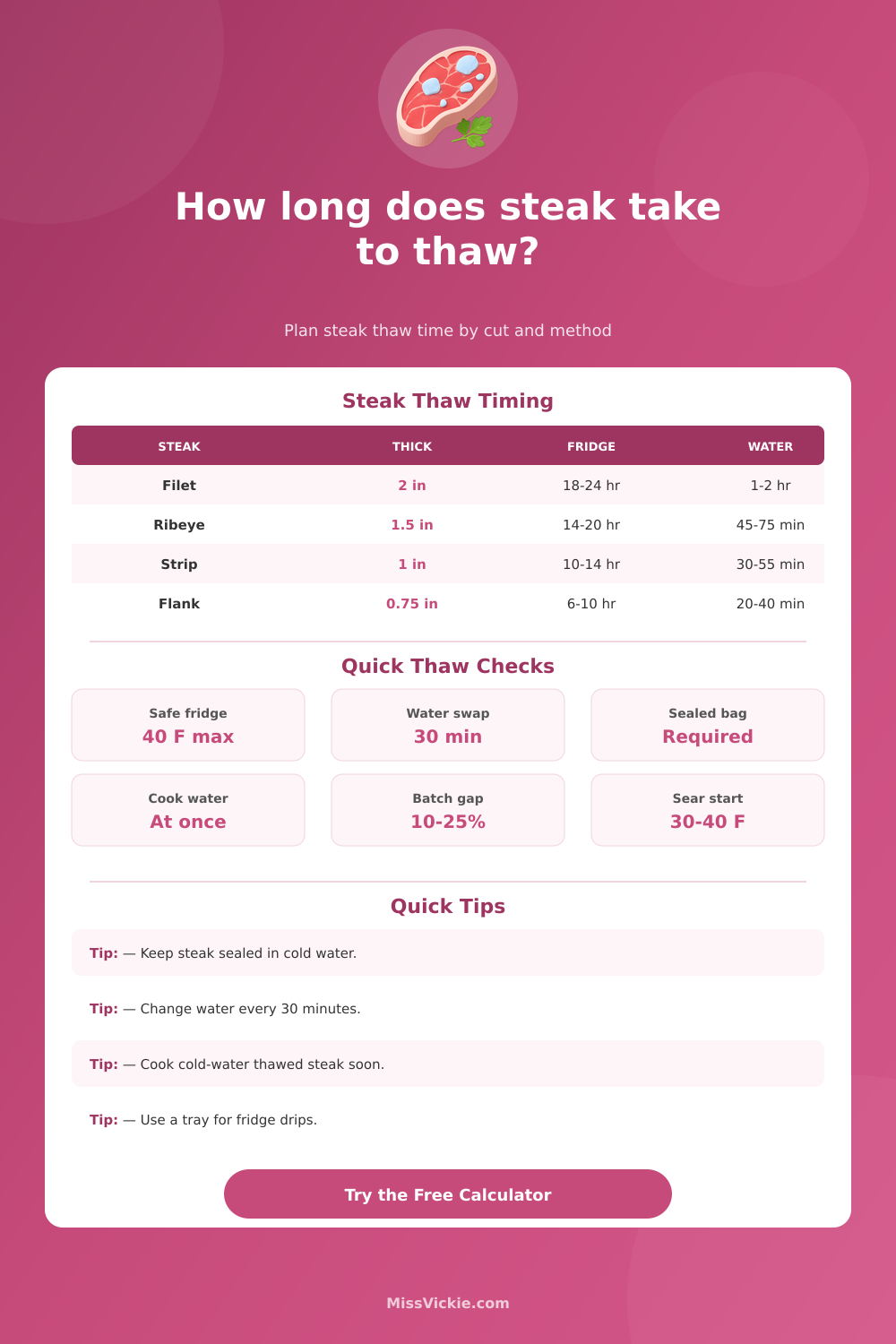
Use these tables as a check against the calculator. Your result changes with packaging, batch stacking, start temperature, and water changes.
| Cut or Shape | Typical Thickness | Fridge Thaw | Cold-Water Thaw | Best Use |
|---|---|---|---|---|
| Thin sandwich steak | 0.25-0.5 in | 3-6 hr | 10-25 min | Fast skillet meals; keep pieces in a sealed bag. |
| Skirt or flank steak | 0.5-1 in | 6-12 hr | 20-45 min | Large surface area thaws quickly if flat and separated. |
| Strip, sirloin, ribeye | 1-1.5 in | 10-20 hr | 30-80 min | Most weeknight steaks fit this range. |
| Filet or thick ribeye | 1.75-2.5 in | 18-30 hr | 70-150 min | Dense centers need extra time and a probe check. |
| Porterhouse or tomahawk | 1.5-3 in | 20-36 hr | 90-210 min | Bone and thickness make these thaw more slowly. |
| Packaging | Fridge Effect | Cold-Water Effect | Safety Watch | Calculator Adjustment |
|---|---|---|---|---|
| Vacuum sealed | Efficient, even thaw | Excellent if seal is intact | Check for punctures before submerging | Baseline or slightly faster |
| Freezer bag pressed flat | Good if air is pushed out | Good water contact | Use a bowl to keep steak submerged | Near baseline |
| Butcher wrap inside bag | Paper slows center thaw | Water contact is indirect | Bag must be leakproof | Adds moderate time |
| Foam tray store pack | Tray insulates the bottom | Not ideal unless re-bagged | Move to a leakproof bag for water thaw | Adds the most time |
| Method | Temperature Target | Active Work | After Thaw | Best Fit |
|---|---|---|---|---|
| Refrigerator | 40 F or colder | Low | Cook same day or next day if held cold | Best texture and easiest planning |
| Cold water | Cold tap water | Change water every 30 min | Cook promptly after thawing | Rush dinners and thin steaks |
| Hybrid | Fridge first, cold water last | Medium | Cook promptly after the water stage | Thick steaks started too late |
| Counter thaw | Not recommended | None | Unsafe surface warming risk | Do not use for raw steak |
| Cook Start Goal | Target Steak Temp | Seasoning Timing | Surface Prep | Reminder |
|---|---|---|---|---|
| Hot sear | 30-38 F center | Salt after thaw or dry brine in fridge | Pat very dry | Cold steak can still sear well if dry. |
| Reverse sear | 32-40 F center | Season before low oven or smoker | Rack over tray | Thickness matters more than starting warmth. |
| Marinate after thaw | 34-40 F center | Marinate in the refrigerator | Use a clean container | Do not reuse raw marinade as sauce. |
| Slice for stir fry | 28-34 F center | Season after slicing | Slice while firm | Slightly icy steak is easier to cut thin. |
⚖Method Comparison Grid
Best for thick ribeye, filet, porterhouse, and any steak you want ready tomorrow without hands-on water changes.
Works well for vacuum sealed steaks and flat freezer bags. Change water on schedule and cook promptly.
Use when a steak has already softened in the fridge but the center is still icy near dinner time.
A single flat layer can beat a stacked package by hours in the fridge and several water cycles in a bowl.
💡Steak Thawing Tips
These estimates assume raw beef steaks kept refrigerated or submerged in cold water while sealed. Always discard leaking packaging, clean raw-meat contact surfaces, and cook steak to your preferred doneness with safe handling.
The night is coming. Your guests will be here any minute. And that steak is still frozen. Panic set in. Oh, just put it on the counter! Or maybe stick it under some warm water? These are all invitations for bacteria.
To thaw meat properly requires both science and patience, no speeding up are allowed here. It means moving environmental heat into your meat without heating the outside enough to make it go bad. That’s where the problem arise for home cooks.
How To Thaw Meat Safely And Easily
It takes time, and that varies depending off packaging and time limitations. If the steak is too thin, it will turn gray if you wait too long in refrigerator. If it’s too big, you’ll risk overcooking the outside but leaving inside raw. People tend to overlook thickness as their largest variable. Thinner sandwiches thaw faster. Ribeyes with a two-inch core are more like roasts than steaks because the cold center isn’t directly touching warm water or air.
That’s why the calculator ask about the thickest part, which is more important then the average. It then factors that into its calculations.
When you have multiple steak stacked in your fridge, they’re insulating each other, doubling the time it takes to get through to safe thaw. By separating the steaks, you let cold air flow on all surfaces, so it turns an all day thaw into an overnight one. It’s just changing how you set things up, saving you hours of waiting.
Water is a powerful tool, but its effectiveness depend on packaging. Water is about 25x more conductive of heat than air. But here’s the rub: the water needs to stay cold, and the meat needs to be sealed tight.
Don’t plop your steak right in the water if it’s still in the leaky grocery store foam tray. All that packaging insulates the bottom and runs the risk of washing flavor away down the drain. To get most contact between the surface of the meat and the cold water, remove the meat from the package. Place it in a heavy duty freezer bag with all the air squeezed out, or better yet, use a vacuum sealer. This will ensure maximum contact between the cold water and meat. The tool takes that seal into account, as a bag that is full of air pockets becomes its own insulation layer.
You’ll also need to periodically replace the water, about every half hour, otherwise the water will warm up as it absorbs heat from the frozen block.
But most folks think thawing is an on/off switch, either completely defrosted, or not at all. It’s really somewhere in between. You actualy want the steak dry and cold if you’re planning on searing it. Ten minutes prior to cooking time helps, but several hours too soon will mean the exterior texture is no longer best for achieving a nice crust. By letting you set a cook window, the calculator help you find this happy middle ground. Want the steak ready at 6pm? It’ll tell you exactly when to take it out so it’s thawed, but still firm enough to handle cleanly. This prevents a big, messy wet mess from sitting out at room temperature for too long.
For everyday cuts (filet vs skirt steak), there’s a set of reference tables included with the tool to provide a quick check for a rough timeline if you don’t have exact measurements at hand. But it doesn’t capture how your particular fridge work, or how oddly shaped your bone-in tomahawk might be. Which is why the more detailed inputs can help: you tweak for starting temp and batch layout, and end up with a plan that fits your kitchen reality versus some generic textbook average.
The best way to get rid of all meal preparation stress is to plan for it. Stop guessing when to do what. Once you learn that thickness determines time and packaging determines safety, you’ve got it made. It is a thin strip. Wait till it’s in the sink. Thick cut? Need fridge overnight. An extra hour of fridge space or a half-hour of water changes can be the difference between a good sear and a ruined dinner.
You should of planned ahead. Respect the cold chain, and your meat will stay intact and retain its texture right up until it touches the pan. That level of control is the key to turning a block of frozen meat into a real meal.