Steak salt, surface area, crust, dry brine, and butter
Steak Seasoning Per Pound Calculator
Calculate steak seasoning from pounds, thickness, cut shape, salt percentage, coarse pepper, garlic herb balance, sear method, dry-brine time, and finishing butter.
Choose a real steak scenario, then tune the salt percentage, pepper level, surface estimate, crust intensity, pan or grill method, and butter finish.
Your Steak Seasoning Plan
Seasoning amounts will appear after calculation.
Full Breakdown
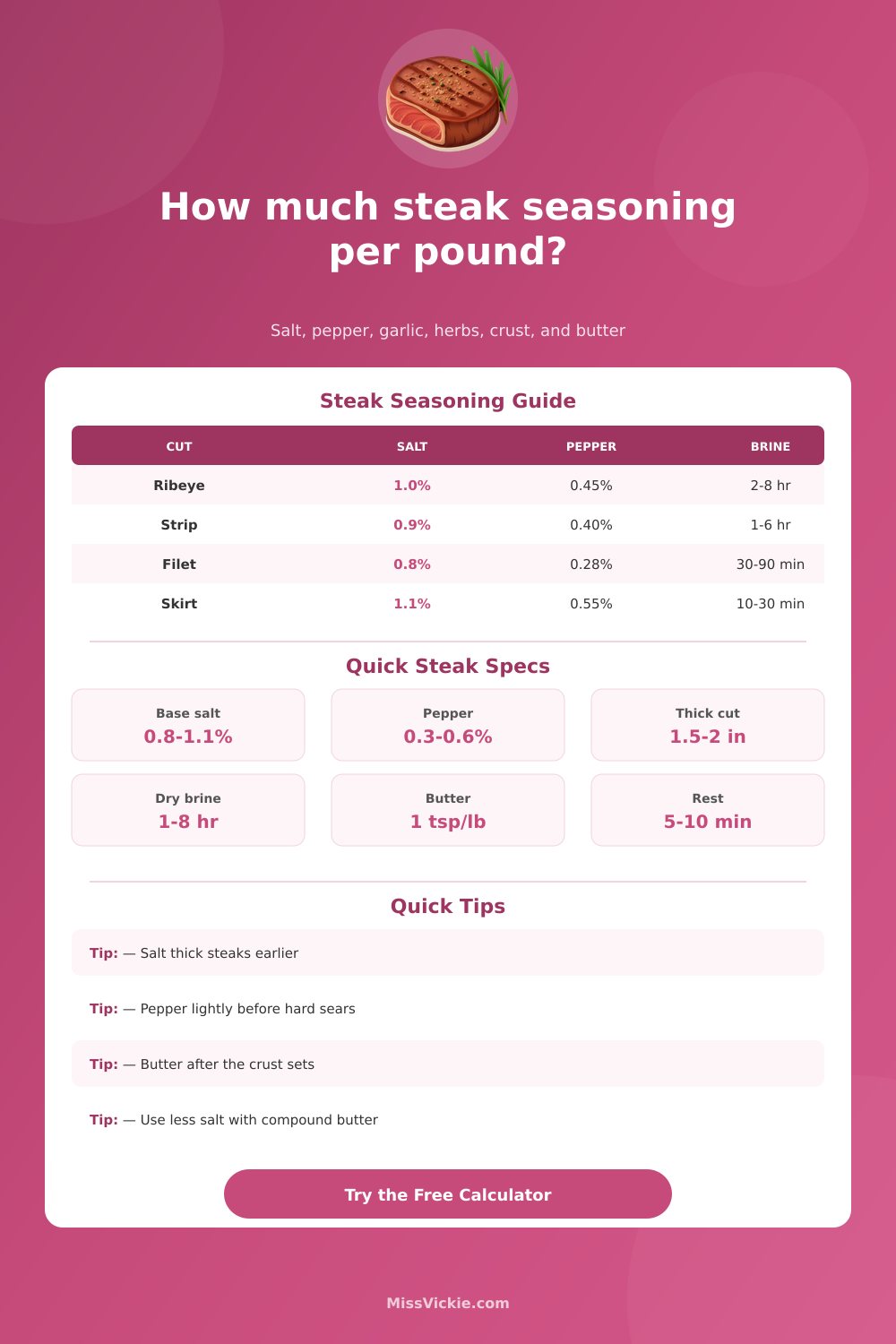
| Cut | Typical Thickness | Salt Range | Pepper Range | Best Dry-Brine Window |
|---|---|---|---|---|
| Ribeye | 1 to 1.75 in | 0.9% to 1.1% | 0.35% to 0.55% | 1 to 8 hours |
| New York strip | 1 to 1.5 in | 0.85% to 1.0% | 0.30% to 0.50% | 1 to 6 hours |
| Filet mignon | 1.5 to 2.25 in | 0.75% to 0.95% | 0.20% to 0.35% | 30 minutes to 4 hours |
| Skirt or flank | 0.4 to 0.9 in | 0.95% to 1.15% | 0.40% to 0.65% | 10 to 45 minutes |
| Tomahawk | 1.75 to 2.5 in | 1.0% to 1.15% | 0.35% to 0.55% | 4 to 24 hours |
| Method | Salt Move | Pepper Move | Butter Timing | Crust Note |
|---|---|---|---|---|
| Grilling | No change | Use coarse grind | Resting plate | Some seasoning falls through grates |
| Cast iron pan | Reduce if butter is salted | Moderate pepper | Last 1 to 2 minutes | Best for even contact crust |
| Reverse sear | Dry brine friendly | Add pepper near sear | After final sear | Dry surface matters most |
| Broiler | No change | Use lighter pepper | After broiling | High top heat can scorch spices |
| Ingredient | 1 Teaspoon Approx. | Best Use | Calculator Role |
|---|---|---|---|
| Kosher salt | 3 g to 5 g | Primary seasoning | Salt percentage by steak weight |
| Coarse black pepper | 2.2 g | Crust and aroma | Pepper percentage with sear adjustment |
| Granulated garlic | 3.1 g | Steakhouse flavor | Part of garlic herb ratio |
| Dried herbs | 1 g | Herb butter or finish | Light dry aromatic share |
| Unsalted butter | 4.7 g | Finish or baste | Teaspoon recommendation per pound |
Less surface per pound, so salt percentage matters more than coverage volume.
Low surface and mild beef flavor pair well with restrained pepper and butter.
Thin, wide cuts need more even distribution and shorter dry-brine time.
Very thick steaks benefit from early salt and pepper added closer to the sear.
When faced with a slab of raw steak (let’s say a ribeye), you find yourself panicking: “how much salt should I sprinkle on here?” You’re likely to either under season out of fear or over salt by sprinkling excessiveley. Cooking by feel often fail. Salt clings to surface area (not weight). But weight is not the same as surface area.
Salt clings to surface area, not weight… Whereas weight do not equate to surface area. There is no guesswork in weighing out ingredient, just accuracy. A quick calculation with tool above will show you exactly how much salt you need for the steak based off its size and cut. Typically, most steaks, such as regular cuts of beef; fall somewhere between 0.8 and 1.1 percent salt (by total weight). That means enough salt get in without burying the meat’s natural flavor.
How to Season Your Steak Correctly
There is one exception. Steak that are very thick will require a bit more salt then something very thin like a strip since protein nearer the core won’t penetrate well unless you use a higher concentration of sodium against that dense muscle fiber. With dry brining, however, you can do something completely different: You want to have some salt on there, but not enough that you’re tasting it with each bite. But when you leave all of that salt on for an hour (or two), it’ll start pulling moisture off your steak and dissolving into a brine. And then re-absorbing back into the meat. It will season the inside of the steak instead of just its exterior. Depending on the thickness of your steak, this is where the tool comes into play. The thicker your steak, the more time it need to be brined; since the salt has more ground to cover. Flank and skirt steak are thin enough that they cook through quickly, so leaving them in a brine too long may pull away too much moisture before heat reaches the interior.
Unlike salt, however, which can withstand higher searing temperatures without burning, pepper will burn: fine-ground pepper becomes acrid and bitter in more than a few seconds over high heat. The amount of pepper varies depending upon how intensely you want your steak crust cooked and what method you’re using, the calculator factors this in. For instance, if you plan to grill or reverse-sear, you may wish to apply some coarser pepper toward the tail-end of the cook so as not to burn off its fragrant oils. Applying excessive pepper early on during a hard sear ensures an unpleasant, charred bite.
Garlic makes it more interesting, and herbs do too. But it has to be done right. You don’t want fresh herbs, which will scorch in seconds; typically you’ll toss them over at serving time, or mix them into some butter. If using dried herbs and other aromatics, incorporate those into your salt rub, but no more than a hint of their flavor, as this shouldn’t overwhelm the flavor of the beef. Seasoning plans includes recommended proportions, ones that improve the beef… Not bury it. Overpowering the dish with a fistful of garlic powder will leave your steaks tasting like snack food, not something special.
The finishing butter ties it all up. Using butter near the end of cook time to baste a steak imparts richness and carries flavor into the crust. Salted or unsalted butter? Use unsalted if you’d like to maintain higher dry salt content in your food. Compound herb butters contains salt. You will need to reduce your dry seasonings a bit so you don’t make the finished product too salty. Making this slight tweak prevents the dish from becoming unbalanced.
That’s where surface area comes into play. Because a round piece of meat is going to be much more compact than a steak, it doesn’t have as much space for seasoning. The calculator takes this into account depending on thickness and shape of your cut, assuming they weigh the same. This way, the seasoning is applied evenly to thinner pieces so they don’t come out under-seasoned.
Control is key when cooking steak. You don’t want to mess up your seasoning, but you also don’t want to go back and fix it after. So measure your salt out so that you are confident with how much you has in there. Now you can spend less time thinking about messing something up and more time focusing on getting the heat and timing just right. Keep it simple, get the ratio right, trust the brine, let the meat do the heavy lifting.