Steak Reheating Time Calculator
Estimate leftover steak reheating time from cut, thickness, doneness, method, start temperature, moisture level, sear refresh, target temperature, and rest.
🥩 Steak Reheating Presets
Choose a real leftover steak setup, then adjust the warmth target and finish so the calculator treats it as reheating, not raw cooking.
⚖ Steak And Method Inputs
Your Steak Reheating Plan
Warm the steak gently, then finish only if the sear refresh is selected.
Timing Breakdown
Handling Notes
- Preheat the selected tool before timing.
- Probe the thickest center before searing.
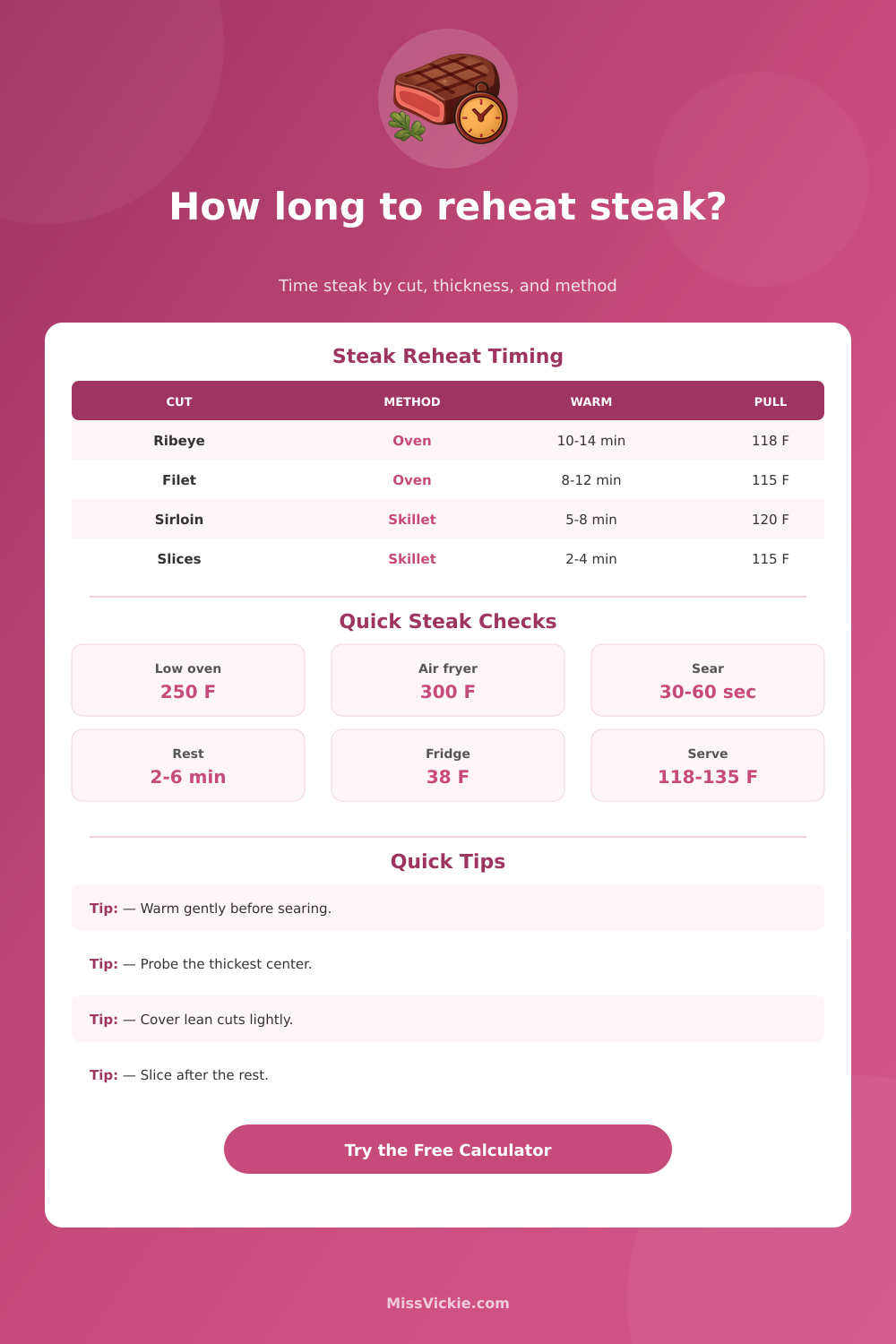
🌡 Quick Reheat Targets
🔥 Method Comparison Grid
Good for whole steaks. Slow heat protects doneness and leaves room for a pan sear.
Best for lean steak or lunch portions. A tiny splash keeps the surface from drying out.
Useful for small leftovers. Lower temperature helps avoid a gray, overcooked band.
Best for thick premium steak when you want a precise warm center before a sear.
📋 Steak Cut Reheat Reference
| Cut Or Shape | Best Method | Moisture Risk | Typical Target | Reheat Note |
|---|---|---|---|---|
| Ribeye or prime rib slice | Low oven or water bath | Low | 120 to 130°F | Marbling protects the center; refresh crust after warming. |
| New York strip | Low oven then skillet | Medium | 118 to 130°F | Keep the first phase gentle so the lean edge does not tighten. |
| Filet mignon | Water bath or low oven | Medium high | 115 to 125°F | Lean and thick; pull early if adding a hot sear. |
| Sirloin steak | Covered skillet | High | 120 to 132°F | A splash of broth or pan juices helps the surface stay supple. |
| Flank or skirt steak | Skillet or toaster oven | High | 115 to 125°F | Heat quickly and slice across the grain after resting. |
| Already sliced steak | Skillet with splash | Very high | 110 to 120°F | Use short bursts because the cut faces lose moisture fast. |
⏱ Method Timing Table
| Method | Suggested Setting | Best For | Check Interval | Sear Pairing |
|---|---|---|---|---|
| Low oven on rack | 225 to 275°F | Whole steaks, thick cuts | Every 4 minutes | Excellent |
| Toaster oven rack | 250 to 275°F | Single leftovers | Every 3 minutes | Good |
| Air fryer gentle reheat | 280 to 300°F | Small thick pieces | Every 2 minutes | Often optional |
| Covered skillet with splash | Low heat, covered | Lean cuts and slices | Every 90 seconds | Light only |
| Dry skillet low heat | Low then medium-high | Dry surface crust | Every 90 seconds | Built in |
| Sealed warm water bath | 120 to 135°F water | Filet, ribeye, prime rib | Every 8 minutes | Excellent |
| Microwave at low power | 30 to 40% power | Slices in sauce | Every 30 seconds | Usually skip |
🔪 Thickness And Pull Guide
| Thickness | Whole Steak | Sliced Steak | Pull Before Sear | Rest |
|---|---|---|---|---|
| Under 0.5 inch | 2 to 5 minutes | 1 to 3 minutes | 8 to 12°F below target | 1 to 2 minutes |
| 0.5 to 1 inch | 5 to 10 minutes | 2 to 4 minutes | 6 to 10°F below target | 2 to 4 minutes |
| 1 to 1.5 inches | 9 to 16 minutes | Not ideal | 5 to 8°F below target | 3 to 5 minutes |
| 1.5 to 2 inches | 14 to 24 minutes | Not ideal | 4 to 7°F below target | 4 to 6 minutes |
| Over 2 inches | 20 minutes plus | Not ideal | 3 to 6°F below target | 5 to 8 minutes |
💧 Moisture And Finish Table
| Steak Condition | Cover Or Vent | Add Splash | Sear Choice | Best Cue |
|---|---|---|---|---|
| Juicy or well-marbled | Vent lightly | No | Quick or crust | Fat softens at the edge |
| Average moisture | Vent or loose foil | Optional | Quick | Center reaches pull temp |
| Lean cut | Cover first phase | Yes | Short sear only | Surface stays glossy |
| Sauced or pan juices | Cover | Already added | Skip or torch | Sauce steams gently |
| Dry surface for crust | Vent | No | Crust refresh | Exterior sizzles fast |
Food safety note: reheat leftovers promptly, avoid long room-temperature holds, and use your thermometer and local guidance when serving higher-risk diners.
💡 Two Practical Tips
To remove the guesswork from temperature and time, leaving you free to execute instead of fret, I’ve run the numbers for you in this handy dandy calculator up top.
Now comes the grim reckoning: leftover meat has turned to glop in your refrigerator. The home cook throws in the towel, blasting her leftovers with a microwave or tossing them cold into a hot skillet. This is the outcome. It have an icy interior and a leathery crust.
How to Reheat Steak Perfectly
But reheating isn’t cooking, as such. Reheating is reversing the effects of thermal decay while avoiding the shrink reflex of meat’s muscle fibers. Separation is key. Don’t even consider heating up the outside until after you’ve warmed up the inside. Heat it too fast and you’ll have a ring of overdone grey meat surrounding a still-cold center.
To make up for that, the tool divides the operation into two stages: warming up gently followed (optionally) by crisping up again. It also takes into account where you’re starting from, another vital factor that’s frequently overlooked. How long does it take to get a steak warmed through if it’s at room temperature on the counter? Not as long as it does if it was just removed from the back of the fridge. That first gap is what determines everything else. Hurry that step along, and you’ll almost certainly overcook by the time the heat catches up with the centre.
One factor that’s unexpectedly important is thickness: Is your steak thick enough to withstand a quick reheat? Heat penetrates thin slices of beef almost instantly; there’s not much margin for error. Go over by just one minute and the entire thing are well done. As the reference table on the page explains, you must pay closer attention and keep things short when reheating a thin cut. For example, it could be a sirloin steak.
If, however, you’re working with something thicker, like a two-inch-thick ribeye or filet mignon, you’re in luck: It has thermal mass. Using either a water bath technique or a low oven, you can actualy get up to about 120 degrees Fahrenheit inside before the surface gets too cooked. Then, you have some leeway to bring back the crust by blasting that steak with a blisteringly hot skillet for thirty seconds.
There’s also a less visible variable called moisture content. Fatty cuts (such as strip and ribeye) has their own defense: the intramuscular fat renders slightly during the warm-up phase, basting the meat from the inside out. Leaner meats (flank steak, filet mignon) don’t have that advantage; cook them over dry heat too long and they will dry out fast. For this reason, the calculator advises lower pull temps or covering methods for leaner cuts of protein. Essentials, it says to treat a difficult-to-cook piece of meat more carefully than its more marbled counterpart. It makes sense, but it is easy to forget when rushing home to put dinner on the table.
The magic of the sear refresh depends on timing it properly. But what’s the right time? That’s the key. You’re not cooking the interior at all here; you’re just waking up the browning on the surface. Cook for usually thirty to sixty seconds per side in a ripping hot pan with a neutral oil. Longer and you’ll have lost the tender center that you worked so hard to maintain.
Timing it off here is what separates this method from the warm-up phase… You won’t accidentally count the same heat twice. You’ve got a specific pull temperature, and it’s always lower than your desired final serving temperature. There is still carryover heat to account for. Your steak will rise a few more degrees once off the heat. If you ignore this, you get the dreaded dry, gray texture of bad leftovers.
Last. But never least, is rest. Two to four minutes for even a reheated steak will allow the juice to redistribute. Slice too soon and the juice will run out on your plate rather than remain within the meat. I know, hunger calls, and it’s hard to wait. But waiting makes all the difference between fresh-tasting food and salvaged food.
Settle the heat. Use the timer. And when appropriate, slice against the grain. Steak reheating is a balancing act of precision and patience. You need to avoid the temptation of using high heat to make up for your mistake. Instead, divide and conquer: Consider the outside and inside independently. How much do you want to fix? Can you get back most of the initial experience or are you aiming just to make it taste intentional rather than accidental?
When it comes to pricey protein, a little love goes a long way. Respect your leftovers by cooking them the same way you would of cooked the raw cut, and you’ll be rewarded with a second dinner that is almost as good.