Steak Marinating Time Calculator
Estimate steak marinade time from cut tenderness, thickness, acid level, salt level, tenderizing enzyme, refrigerator temperature, contact style, and your target flavor depth.
🥩 Steak Marinade Presets
Choose a real steak marinade scenario, then fine tune the acid, salt, enzyme, fridge temperature, and flavor target.
⚖ Steak And Marinade Inputs
Steak Marinade Plan
A balanced marinade timing window will appear here.
Timing Breakdown
Handling Plan
📋 Quick Steak Marinade Plan
📊 Marinade Style Comparison
Gentle on texture, best for tender steaks where herbs, garlic, pepper, and oil need contact time.
Bright flavor arrives quickly. Long time can toughen the surface before the center tastes seasoned.
Salt carries seasoning into steak, but very salty marinades should stay on the shorter side.
Kiwi, papaya, and fresh pineapple soften fast. Use a timer and rinse or wipe excess before cooking.
🥩 Steak Cut Timing Reference
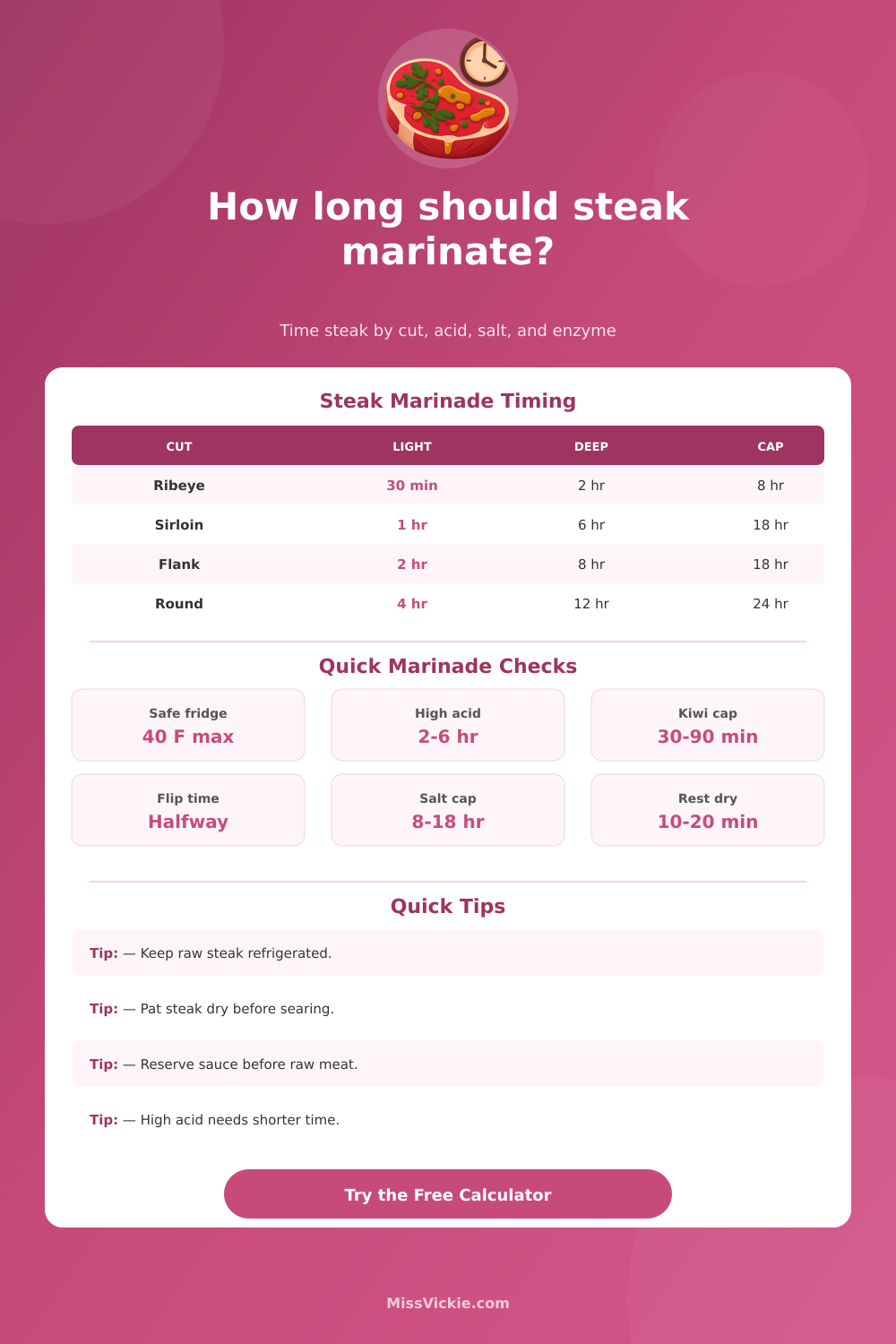
| Cut | Best Use | Balanced Time | Texture Cap | Marinade Note |
|---|---|---|---|---|
| Ribeye | Quick flavor | 30 minutes to 2 hours | 8 hours | Marbling already feels tender, so avoid aggressive acid. |
| New York strip | Classic grill steak | 1 to 4 hours | 10 hours | Good with herb oil, soy, garlic, and light vinegar. |
| Tenderloin | Gentle seasoning | 20 minutes to 90 minutes | 4 hours | Use low acid; texture is already delicate. |
| Sirloin | Weeknight grill | 2 to 6 hours | 18 hours | Balanced salt and mild acid work well. |
| Flank | Fajitas or sliced steak | 3 to 8 hours | 18 hours | Slice across the grain after cooking for tenderness. |
| Skirt | Fast, bold grilling | 1 to 6 hours | 12 hours | Loose grain takes flavor quickly; watch salt. |
| Tri-tip | Roast or smoke prep | 4 to 10 hours | 24 hours | Thicker sections need longer contact and a flip. |
| Round | London broil | 6 to 12 hours | 24 hours | Can use mild enzyme, but do not run it overnight. |
| Chuck steak | Lean tenderizing | 4 to 12 hours | 24 hours | Best with salt, aromatics, and controlled enzyme. |
| Kabob cubes | Small pieces | 30 minutes to 3 hours | 6 hours | Small pieces absorb salt and acid quickly. |
Timing is for raw beef held cold in the refrigerator. A marinade is not a substitute for safe cooking temperature or clean handling.
🧪 Acid, Salt, And Enzyme Limits
| Ingredient Pressure | Time Effect | Quality Cap | Best Cuts | Risk If Too Long |
|---|---|---|---|---|
| No acid | Slowest flavor change | 24 to 48 hours | Strip, sirloin, tri-tip | Muted flavor if under-seasoned. |
| Low acid | Normal timing | 18 to 24 hours | Most steaks | Usually low risk if kept cold. |
| High acid | Fast surface flavor | 2 to 6 hours | Skirt, flank, kabobs | Chalky or tight exterior. |
| Soy or briny salt | Faster penetration | 8 to 18 hours | Flank, skirt, sirloin | Hammy, cured, or firm texture. |
| Fresh ginger | Mild enzyme assist | 4 to 8 hours | Sirloin, round | Soft edges if heavily grated. |
| Kiwi, papaya, pineapple | Very fast tenderizing | 30 to 90 minutes | Round, chuck, kabobs | Mushy or mealy surface. |
❄ Refrigerator Window Reference
| Fridge Reading | Calculator Action | Safe Max Used | What To Do |
|---|---|---|---|
| 30 to 34 F | Slower marinating | 48 hours | Allow extra time, but keep texture caps. |
| 35 to 38 F | Normal cold timing | 48 hours | Best range for planned overnight marinades. |
| 39 to 40 F | Use shorter safe window | 24 hours | Cook sooner and verify the fridge temperature. |
| Over 40 F | Unsafe warning | 0 hours | Chill below 40 F before marinating raw steak. |
Food safety guidance recommends refrigerator temperatures at or below 40 F for perishable foods. Keep raw steak covered and separated from ready-to-eat foods.
📏 Thickness And Contact Guide
| Steak Shape | Thickness | Contact Style | Turn Timing | Notes |
|---|---|---|---|---|
| Thin skirt or flank | 0.25 to 0.75 in | Zip bag | 20 to 45 minutes | Fast seasoning, short acid window. |
| Standard steak | 1 to 1.5 in | Zip bag or dish | Halfway | Good balance of flavor and texture. |
| Thick steak | 1.75 to 2.5 in | Tight bag | Every 2 to 4 hours | Surface seasons; center will still taste like beef. |
| Kabob cubes | 0.75 to 1.25 in | Bowl or bag | Every 30 minutes | Lots of surface area, so avoid long acid time. |
💡 Steak Marinade Tips
Sometimes your steak appears ready to go after removing it from marinade, but melts to mush when it hits the grill. Other times, it’s too bland because you didn’t account for the time required for flavor to sink in. There’s not much science behind marinating; instead, it’s all about playing with texture versus time. That’s why the calculator (above) do the complicated math in balancing enzymes, salt, acids, cut, and thickness… You’ll never have to wing it again. You get a window that gets the job done without disrespecting the meat.
Marinades are kind of treated as a magical potion to transform anything into something else if only given sufficient time. This is often where people fail. Marinades changes the protein almost instantly on the surface. A 12 hour soak in high acid juice will result in the exterior being all chalky and cooked through, but the interior will still be raw and unchanged by flavors. So it caps the times depending on how acidic the mix is. High acid means quick contact time. Oil- and low-acid based mixes can be hung up for much longer before ruining texture. It’s a balancing act between time and safety and the calculator plots the line for you.
How to Marinate Your Steak Perfectly
Another thing that throws people off are enzymes. Papaya, kiwi, fresh pineapple have their own naturaly tenderizers which go to town very quickly. They don’t simply season the food; they literally break it apart at a fiber level. A little goes a long way. Using any of those in your marinade will greatly reduce the safe window (to avoid mealy steak). The powerful ones gets a big haircut on the max time. Better to under-do them than overdo and lose meat. The calculation takes into account these heavy-hitters.
Thickness is more important then many think. There’s no place for flavors to conceal themselves in a thin flank steak; it absorbs them within minutes. On the other hand, a thick round or chuck require hours simply to reach past its surface. To account for this, the calculator considers the thickness and tells you exactly how long it will take before your patience pays off. It saves you time with thin cuts (which are already cooked through after an hour) and it keeps you patient with thick ones (which would of been wasted if given up on prematurely).
One key part is the quiet but critical refrigerator temperature. Even with all that salt and acid in the bowl, bacteria will grow rapidly if the meat starts to warm up. No ifs, ands, or buts about it: keep it below forty degrees and make sure. This means that keeping your fridge below forty degrees are non-negotiable for safety, so you don’t accidentally grow bacteria while waiting for flavor development. The tool tests your fridge temp relative to what’s safe so you don’t get distracted by letting things warm up just enough to be ready for flavor growth. Focus on keeping it hygienic without compromising taste.
In a perfect world, there is a balance of intact texture with deeply seasoned flavor. We’re looking for something that tastes like beef, not like a chunk of cured beef or a piece of boiled beef, cooked in its own juices. Regardless of time, patting the steak dry before proceeding is crucial. If your meat is wet, it will steam instead of sear, which destroys the crust that you worked hard to create. Once out of the liquid, let it sit on a rack to firm back up and allow surface to breathe.
That means a different way to think about your kitchen: a knowledge of those variables shifts your perspective from guesswork to planning. It eliminates the expense of errors. If you know when enzymes and acids will reach their limit, you can decide whether to make a quick meal of fajitas on a weeknight, or plan ahead to treat a tough cut properly on the weekend. Want to see the baseline data? There are reference tables on the page that list individual cuts and their optimal window.
But more important is knowing: Marinades are meant to add flavor, not take it over. And so in conclusion: Treat the ingredient well. Don’t spend too long doing it; that’s counterproductive. Use the calculator to find the perfect balance of tenderness and flavor without entering the danger zone. Go from guess-work to routine. Keep both the quality of the cut and the depth of flavour desired. That’s how to get a beautifully seared, properly seasoned steak every time, instead of mush on the outside.