Steak Grilling Time Calculator
Estimate steak grill time from cut, thickness, grill temperature, direct or reverse sear method, start temperature, doneness, bone-in style, rest time, and heat intensity.
🔥Steak Presets
Choose a common grilling setup, then adjust the thickness, grate temperature, sear method, and final doneness for your actual steak.
⚙Inputs
Steak grill plan
Enter steak details to estimate timing.
Timing Breakdown
Grill Plan
- Preheat the grill before cooking.
- Set up the heat zones.
- Turn according to the chosen method.
- Probe from the side near the center.
📊Steak Doneness Grid
🥩Thickness and Direct Heat Table
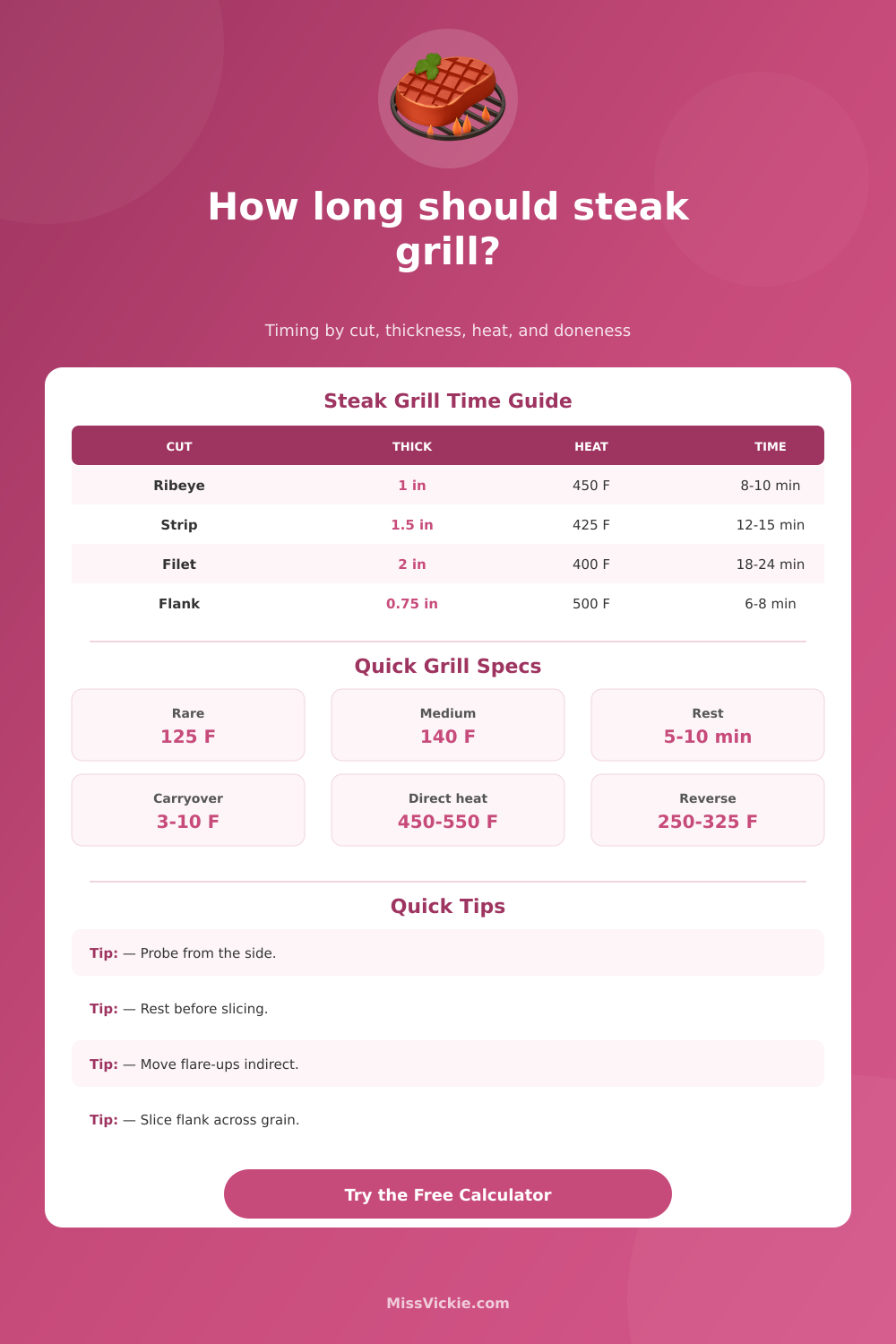
| Thickness | Best method | Grate temp | Medium-rare timing |
|---|---|---|---|
| 0.5-0.75 inch | Hot direct heat | 500-600°F | 2-4 minutes total, turn often. |
| 1 inch | Direct heat | 450-525°F | 7-10 minutes total, check early. |
| 1.5 inches | Two-zone grill | 400-475°F | 11-16 minutes total, finish indirect if needed. |
| 2 inches | Reverse sear | 250-325°F then hot sear | 18-28 minutes total, sear at the end. |
| 2.5-3 inches | Reverse sear or indirect | 250-300°F then 500°F | 28-45 minutes total for very thick cuts. |
These are planning ranges. A thermometer matters more than the clock because grills cycle and steak shapes vary.
🌡Doneness and Pull Temperature Table
| Doneness | Pull range | Final range | Texture cue |
|---|---|---|---|
| Rare | 118-122°F | 125°F | Cool red center, soft texture. |
| Medium-rare | 123-128°F | 130-135°F | Warm red center with juicy slices. |
| Medium | 133-138°F | 140-145°F | Hot pink center and firmer bite. |
| Medium-well | 143-146°F | 150°F | Slight pink center, less juice. |
| Well done | 152-155°F | 160°F | Firm center; use gentler heat if possible. |
🔥Cut and Grill Method Table
| Cut | Best grill style | Timing effect | Serving note |
|---|---|---|---|
| Ribeye | Direct or two-zone | Fat protects the steak but can flare. | Rest well so the fat settles. |
| NY strip | Direct heat | Even shape makes timing predictable. | Slice across the short side. |
| Filet mignon | Reverse sear for thick pieces | Lean center can overcook on high heat. | Use a hard final sear for crust. |
| T-bone or porterhouse | Two-zone with bone side shielded | Bone slows nearby meat slightly. | Probe both strip and tenderloin sides. |
| Flank or skirt | Hot and fast direct heat | Thin steaks finish quickly. | Slice across the grain after resting. |
| Tomahawk | Reverse sear | Large bone and thickness add time. | Rest longer before carving. |
⏱Start Temperature and Rest Table
| Choice | Time effect | Carryover effect | Practical check |
|---|---|---|---|
| Fridge cold | Baseline timing. | Moderate carryover. | Good default for food safety and planning. |
| Tempered 20-45 minutes | Slightly faster center. | Higher carryover. | Cook promptly after tempering. |
| Very cold or partly frozen | Adds time and uneven risk. | Lower carryover. | Probe more than one spot. |
| Normal rest, 5-7 minutes | No extra grill time. | Usually adds 4-7°F. | Best for 1-1.5 inch steaks. |
| Big steak rest, 12-15 minutes | Lets thick cuts finish gently. | Can add 8-10°F. | Use for tomahawk and porterhouse. |
⚖Direct vs Reverse Sear Comparison
Best for steaks under about 1.25 inches when the center can finish before the crust gets too dark.
Start over coals, then move indirect if the crust is ready before the center hits pull temperature.
Best for thick filet, tomahawk, porterhouse, and ribeye when you want edge-to-edge doneness.
Cook gently first, then build crust at the end so carryover and timing are easier to manage.
💡Two Steak Grilling Tips
The timer ticks down on your phone, and you hover over a grill blowing heat into your face. The steak looks like it’s done; you turn it based off smell, or maybe someone in a video said to do it after 90 seconds. But this ritual isn’t about the body; its about the mind. There are no old rules for grilling steak.
It’s about controlling the movement of heat around the fat and muscles until the inside hits a certain temp. When you understand that, everything becomes differant. The complicated math is done for you by the above calculator. If you understands what it’s asking of you, you’re not just a better cook, you’ll understand why.
How to Cook Steak Perfectly
Weight doesn’t matter as much than thickness; heat travels in from outside in. Indirect heat will save a thin slice, since it won’t have time to warm from the inside before burning on the outside. A thick slice take longer for the energy to move through. Know what the internal temp should of be at a given thickness.
Know that a half inch thick skirt steak has a different approach than two inch thick filet mignon. This tool accounts for how thick it is, and what temp your grill grates is set to. The first thing most folks do wrong is forget to start with a warm steak. They grab a sliver of cold raw beef from their fridge and drop it onto their piping hot grill.
The sudden temperature change causes uneven heating which can’t be fixed by turning the steak over. Leaving the steak out at room temp for 20 minutes will allow the center to come up a few degrees. This narrows the temperature difference between the outer surface and interior. Allowing meat to sit out before cooking results in better even heating.
The calculator assumes you’ll use either fridge-cold meat or tempered meat. It accounts for this when estimating the amount of time required. Starting temperature set the baseline for the rest of the cooking experience. And then there’s the bone in stuff.
The bone itself act as a barrier between the rest of the meat and the heat. So when cooking say a T-Bone, that portion next to the tenderloin will finish up later than the strip side. Use your probes close to the bone and know you don’t want it undercooked if it’s all protected by bone. Each cut varies with style of grilling.
Check out the reference table on the page. It’s not just flavor, heat combined with shape creates an even finished product all around the piece. Subjective: Doneness. The objective is temperature. At what point does myosin denature sufficiently to be safe? That’s your medium rare, that shade of pink you chase.
But the collagen isn’t quite ready to release all its water. Those are the pull temperatures the tool gives you; they take into consideration the carryover cooking. The meat will keep rising in temp even as you’re pulling it off the heat. A pulled steak at one hundred thirty-five will probably end up being medium.
Armed with that knowledge, you can halt the cooking before it gets there. The rest will be done by residual heat. The importance of rest: Letting your meat rest is essential for juiciness. Why? As proteins heat up, their muscle fibers want to contract; as they push against each other, they squeeze the liquid inside them inward.
If you cut into the meat right away, all that juice comes out onto your plate. Waiting a few minutes allows those fibers to relax and reabsorb some of that moisture. Why? Because as proteins are heated, their muscle fibers want to contract. Contracting against each other pushes the liquid inside them inward.
If you cut into the meat right away, all that juice comes out onto your plate. However, if you wait a few minutes (five to 10), those fibers relax and absorb some of the moisture back into themselves. Depending on how thick or thin the steak is it will stay hot longer, which means its juices has longer to redistribute. That’s why the calculator recommends rest time according to thickness.
Don’t expect to hit the numbers perfectly each time. Expect flare-ups. And expect broken thermometers. Expect the wind to gust through an open patio door. But if you have a grasp on these variables, then you can adjust accordingly instead of panicking.
If it’s too hot, move that steak over to indirect heat. Need to give something one last sear? Crank that fire up. There’s a conversation between the fire and you, and its all about cooking meat. You ask for heat, the grill provides it. The steak lets you know when it’s time.
Success lies in listening to thermometer instead of the clock. It’s not magic, it’s simple application of thermodynamics coupled with patience. It’s all about temperature; time is merely a suggestion.