Steak Cooking Time Calculator
Estimate steak timing for cast iron, grill, broiler, oven finish, reverse sear, or sous-vide finish with pull temperature, rest time, and carryover.
Breakdown
Cool red center, shortest cook, smallest rest rise.
Warm red center, balanced timing for most cuts.
Warm pink center, more core time and carryover.
Faint pink center, lower heat helps reduce drying.
Fully cooked center, best with gentler finish heat.
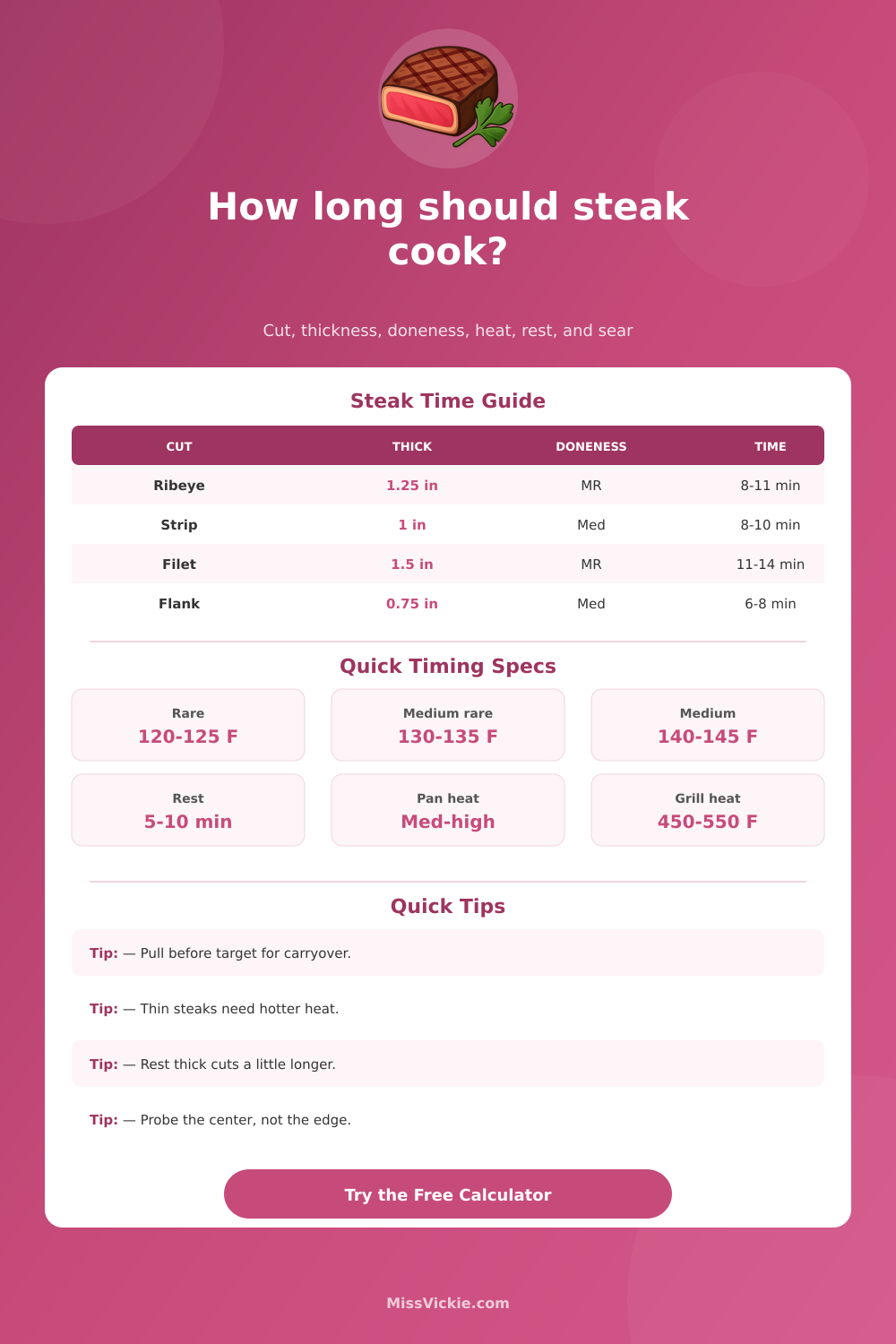
| Doneness | Pull Temp | Finish Temp | Rest Rise |
|---|---|---|---|
| Rare | 118-121°F | 125°F | 3-7°F |
| Medium-rare | 128-131°F | 135°F | 4-8°F |
| Medium | 137-141°F | 145°F | 4-9°F |
| Medium-well | 147-151°F | 155°F | 4-9°F |
| Well done | 157-161°F | 165°F | 4-8°F |
| Method | Heat Range | Best Thickness | Timing Style |
|---|---|---|---|
| Cast-iron pan | 400-550°F | 0.75-1.5 in | Sear plus turn |
| Grill | 450-550°F | 0.75-1.75 in | Direct heat |
| Broiler | High rack | 0.75-1.25 in | Fast top heat |
| Oven finish | 375-425°F | 1.25-2 in | Sear then bake |
| Reverse sear | 225-275°F | 1.5-3 in | Slow then sear |
| Thickness | Pan/Grill MR | Reverse MR | Rest Time |
|---|---|---|---|
| 0.5 in | 4-6 min | Not ideal | 3-4 min |
| 0.75 in | 5-7 min | Not ideal | 4-5 min |
| 1 in | 7-9 min | 18-24 min | 5-6 min |
| 1.5 in | 10-14 min | 28-38 min | 7-9 min |
| 2 in | 15-20 min | 40-55 min | 9-12 min |
| Cut | Time Bias | Carryover | Best Method |
|---|---|---|---|
| Ribeye | Slightly longer | Medium-high | Pan or grill |
| Filet mignon | Longer core | Medium | Reverse sear |
| Flank | Faster | Low | Broil or grill |
| Skirt | Fastest | Low | Very hot sear |
| Porterhouse | Longer bone side | Medium-high | Grill or oven |
Cooking a steak require consideration of several variable. The thickness of the steak, the starting temperature of the steak, and the method in which the cook cooks the steak will all have an impact on the internal temperature of the steak. If thickness isnt considered, the steak may cook unevenly.
If the starting temperature of the steak is not considered, the outside of the steak may overcook before the inside of the steak reach the target internal temperature. Because a steak taken from the refrigerator will be starting from a cold temperature, a cold steak will require more cooking time then a steak that has sat at room temperature for at least 30 minutes. Various cooking methods will impact the way in which the steak cook.
What Affects How a Steak Cooks
For instance, using a cast iron pan will allow the steak to reach high temperature on the pans surface. In contrast, a reverse-sear will heat the steak slowly in a low oven. Each cooking method will require the consideration of both the active cooking time that will occur with that method, as well as the carryover heat that the steak will experience after it is removed from the heat source.
Carryover heat refer to the heat that remains within the steak after removal from the heat source, and will continue to cook the steak after the cooking process is completed. The doneness of the steak is another variable that must be considered prior to cooking the steak. Different level of doneness will require different cooking times and different temperatures during the cooking process.
For example, a medium rare steak will have a larger margin for error in the cooking process than a well-done steak. The calculator that is provided with the cooking process will indicate the pull temperature that should of been reached for each level of doneness. Hitting this pull temperature will allow for the steak to reach the desired internal temperature after the steak rest.
Finally, it is necessary to allow the steak to rest after cooking. The longer resting period will be required for a thick steak as opposed to a thin steak due to the carryover heat that will be released from the thick steak. If the steak is not allowed to rest, the juice will not be able to redistribute throughout the steak.
Using the time indicated by the calculator for resting will ensure that the steak is allowed to rest for the appropriate length of time prior to slicing. Many of the factor in the kitchen will impact the cooking time required to cook the steak to the target internal temperature. For instance, placing many steak into one cast iron pan will lower the temperature of the pan, leading to longer cooking times.
Additionally, the pan may not be fully preheated prior to placing the steak into the pan, which will also lead to more longer cooking times. Monitoring the steak will allow the cook to account for these variables. By using the calculator to account for the thickness, starting temperature, and cooking method of the steak, the cook will be sure to ensure that the steak reach the target internal temperature.