
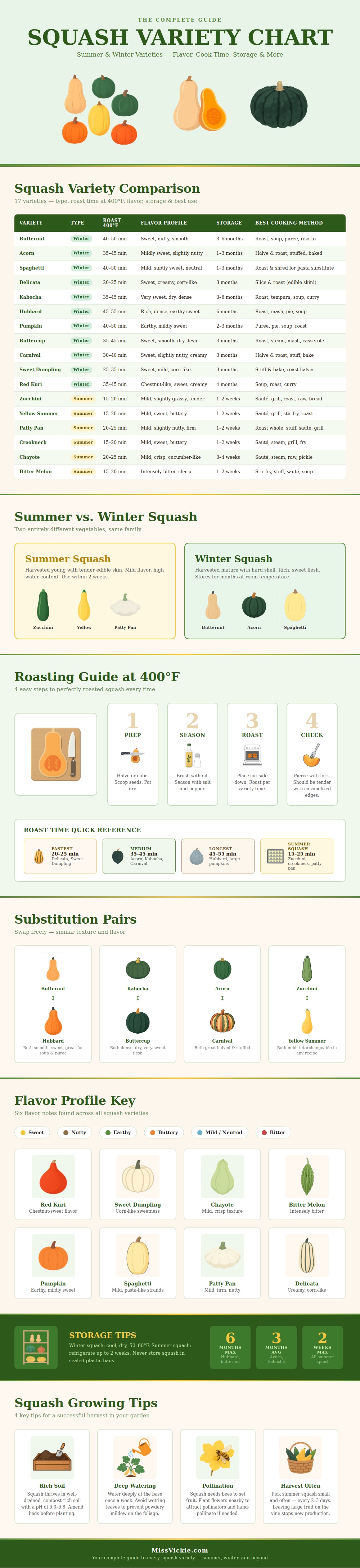
Squash come in many different varieties. However, squash can be categorized into just two main groups: summer squash and winter squash. Summer squash and winter squash is different from one another because the gardener harvests summer squash when the squash is still young, but winter squash are harvested after it has reached full maturity.
Squash that is use for summer squash has thin, tender skin that can be eaten and has a high amount of water content. Winter squash has thick and hard skin that protect the squash and allows it to be stored for longer period. Winter squash also contain denser flesh that is sweeter when compared to summer squash variety.
Summer and Winter Squash: How to Cook, Store, and Grow Them
Many type of squash can be cooked by utilizing the roasting method. To roast squash, the cook must first cut the squash in half and the seeds removed. After you scoop the squash, the squash should be brushed with oil and placed in a hot oven.
The squash should be placed cut side down in the oven so that the steam can cook the squash. Depending on the variety of squash, the squash will take more or less time to roast. For example, slender squash may roast in twenty minutes whereas large squash might need to roast for nearly one hour.
When the squash is done roasting, it will be tender to the touch and the edges of the squash will be caramelized. The flavor of squash can vary according to the type of squash. For instance, winter squash typically has a sweet flavor and can be flavored with chestnut or sweet corn flavors.
These types of squash can be used to make purees. Other winter squash varieties may have a neutral flavor that can be used in place of pasta in a recipe. Summer squash has a mild flavor with a grassy taste but some varieties has a bitter flavor.
For example, squash varieties with a bitter flavor can be balanced with sweet seasonings like cinnamon whereas squash with a mild flavor may be balanced with herb like sage or basil. Squash can be substituted for another type of squash within a recipe. For example, if a recipe require the use of winter squash puree, one type of winter squash with smooth and sweet flavors can be substituted for another type of winter squash.
The same can be said for recipes that require the use of squash in curries; in this instance, dense winter squash can be used as it will help to thicken the sauce. For sauté recipes, different types of summer squash can be used since they will all have the same outcome when prepared. The storage requirement for squash depend on the type of squash.
Summer squash should be stored in the refrigerator; however, they wilts quickly if not eaten soon after being stored. Winter squash should be stored in a dry pantry location where the squash can remain for several month. Avoid storing squash in plastic bag since the squash may rot.
Check the squash every week to make sure its in good condition. If desired, squash can be grown in the garden. To grow squash, squash plants requires nutrient-rich soil.
The cook should supplement the soil with compost to provide the squash plants with the nutrients required to grow healthy plants. Water the roots of the squash plants every week but avoid getting the leaves of the squash plants wet with water. The bees will naturally pollinate the squash plants but you can also use a soft brush to perform the same function.
Summer squash should be harvested frequently to encourage the squash plants to continue to produce squash.