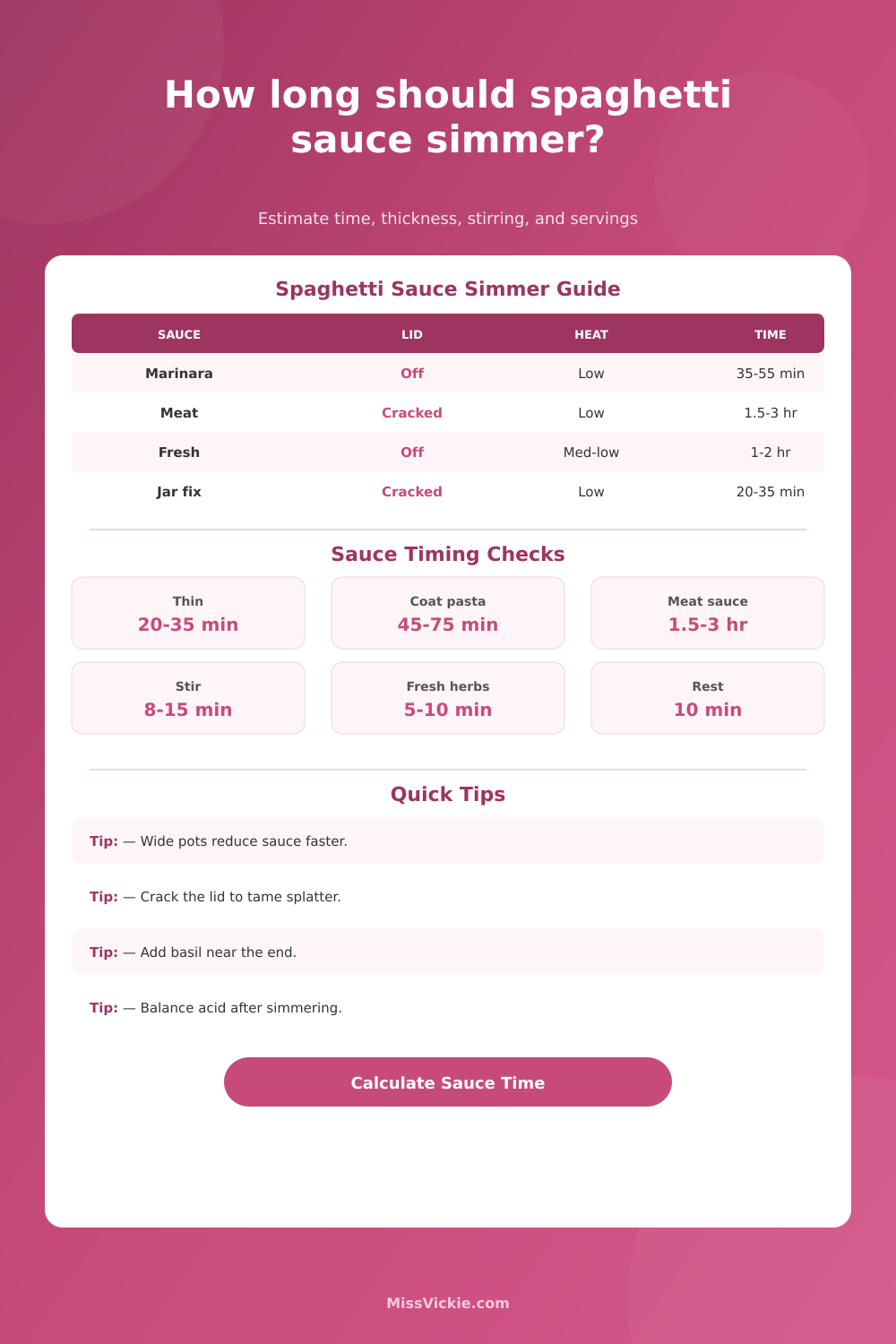
Spaghetti Sauce Simmer Time Calculator
Estimate how long to simmer spaghetti sauce from sauce volume, tomato type, meat, pot width, heat level, lid position, target thickness, acidity, herbs, and servings.
🍝Sauce Presets
Choose the closest kitchen situation, then adjust the pot, lid, thickness, meat, acidity, herbs, and serving count.
🍲Sauce Conditions
Spaghetti sauce simmer plan
Adjust the inputs to estimate sauce time, reduction, stirring, and serving yield.
Timing Breakdown
Reduction Breakdown
Simmer Schedule
📌Quick Sauce Checks
🍅Tomato Type Simmer Table
| Tomato Base | Typical Starting Texture | Base Simmer | Reduction Need | Best Use |
|---|---|---|---|---|
| Prepared jar sauce | Already seasoned and partly reduced | 15-30 minutes | Low | Refresh flavor, mellow garlic, or coat pasta. |
| Canned crushed tomatoes | Loose pulp with steady body | 40-70 minutes | Medium | Classic weeknight marinara or meatless sauce. |
| Passata or puree | Smooth and pourable | 35-65 minutes | Medium | Silky sauce that clings without chunks. |
| Whole canned tomatoes | Juicy pockets and uneven pieces | 55-90 minutes | Medium-high | Rustic sauce with crushed tomato texture. |
| Fresh Roma tomatoes | Seeded flesh with moderate water | 70-120 minutes | High | Fresh summer sauce after peeling or milling. |
| Fresh juicy tomatoes | High water and soft pulp | 90-150 minutes | Very high | Garden tomato sauce that needs open-pot reduction. |
| Tomato paste heavy base | Dense and concentrated | 30-60 minutes | Low-medium | Ragu, meat sauce, or thicker baked pasta sauce. |
🔥Pot, Lid, And Heat Table
| Setup | Reduction Speed | Stirring Need | Splatter Risk | Use When |
|---|---|---|---|---|
| Open wide pan | Fastest | Frequent at the end | High | You need quick thickening and can watch it closely. |
| Open Dutch oven | Steady | Every 8-12 minutes | Medium | You want a classic simmer and rounded flavor. |
| Cracked lid | Moderate | Every 10-15 minutes | Lower | You want less mess while still reducing. |
| Half covered | Slow | Every 15-20 minutes | Low | Meat needs time but sauce is already thick. |
| Mostly covered | Very slow | Every 20 minutes | Very low | You are braising meat and not chasing thickness yet. |
| Slow cooker lid | Minimal | Every 30-45 minutes | Very low | You want long flavor time, then finish uncovered if thin. |
🥄Thickness And Serving Table
| Target | Reduction Goal | Per Serving | Visual Cue | Common Use |
|---|---|---|---|---|
| Loose spoonable sauce | 8-12% | 1/2 to 2/3 cup | Runs off spoon but tastes cooked | Light pasta, seafood, or quick dinner. |
| Coats spaghetti lightly | 16-22% | 2/3 to 3/4 cup | Leaves a thin spoon track | Most spaghetti dinners and meatless marinara. |
| Thick baked pasta sauce | 24-32% | 3/4 to 1 cup | Spoon track holds briefly | Baked ziti, lasagna layers, or casseroles. |
| Dense ragu texture | 28-38% | 3/4 to 1 cup | Meat and tomato cling together | Tagliatelle, rigatoni, or Sunday sauce. |
| Pizza-style thickness | 35-45% | 1/3 to 1/2 cup | Mound stays in place | Pizza, calzones, and stromboli filling. |
🌿Herbs And Acidity Timing Table
| Ingredient | Add Early | Add Late | Timing Cue | Reason |
|---|---|---|---|---|
| Dried oregano | Yes | Optional pinch | Start of simmer | Oil-soluble flavor blooms during cooking. |
| Bay leaf | Yes | No | Remove before serving | Needs time but should not stay in the bowl. |
| Fresh basil | No | Yes | Last 5-10 minutes | Keeps the aroma green and sweet. |
| Fresh parsley | No | Yes | At rest or serving | Fresh finish fades with long heat. |
| Wine | Yes | No | Reduce before tomatoes or early in simmer | Raw alcohol flavor needs time to cook off. |
| Sugar or baking soda | No | Yes | After reduction | Acidity changes after water evaporates. |
📊Sauce Style Comparison Grid
Bright tomato flavor, open pot, no meat, and fresh herbs near the end.
Best all-purpose spaghetti sauce window for crushed tomatoes and gentle bubbles.
Longer time lets browned meat, fat, tomato, and aromatics settle together.
High water content needs open-pot reduction before final acid and salt checks.
💡Spaghetti Sauce Simmer Tips
This calculator estimates kitchen simmer timing for pasta sauce texture and flavor planning. Stir more often as sauce thickens, keep meat sauces at a gentle simmer, and reheat leftovers safely.
When you taste it, your meal smells like scent of something really well-cooked, which means that some of the water has boiled away and some of the flavor have concentrated. It requires time to do this and home cooks generaly guess how long it will take. Some end up with a pot of quickly-boiled-over sauce; others simmer it all day when a little less time would of done just as well.
It’s a matter of timing, and the right kind of timing are what separates a rich-tasting dish from one that’s just flat. If you input what is in your pot into the calculator above, it will tell you when it is ready. It finds the correct moment by taking into account factors most cook overlook until their sauce burns.
How to Time Your Sauce Perfectly
For example: Does the tomato matter? Yes; a low-moisture product like cooked-down, chunky or crushed tomatoes from a jar need less evaporation than fresh garden tomatoes, packed with juice. What about the initial ingredient? When you begin with fresh Roma plum tomatoes (shown here), you has to cook off the steam but not overcook and reduce flesh to nothing, so the sauce isn’t watery. This is factored in: Watery ingredients takes longer to reduce to desired consistency compared more than thick pastes.
How long does it take? Meat. All that meaty goodness can make the cook time very different than usual. Sausage links will takes longer than ground beef or other browned meats. Even a quick marinara may be better if it sits for forty-five minutes to mellow. At least they don’t need hours like a good meat sauce, which has all that time to let its fats melt into the tomatoes’ acid. Why so long? The fat carries flavors, but it also acts as an insulator that keeps things from heating up too fast.
You want a gentle bubble rather than a rolling boil and a cracked lid will help accomplish both goals. Letting just enough steam out will slow down the rise in temp and reduce the liquid without boiling over and making your backsplash look like painting of Jackson Pollock. Another thing that throws people off is size of the pan. A wide skillet reduces much more quickly than, say, a tall narrow Dutch oven. Why? Because you’re exposing a lot of surface area to the air.
This is because you are exposing very little surface area to the air. What’s happening? Steam can’t escape. To get it as thick, you have to either let it go longer or just take the lid off entirely. That table on the page breaks it down clearly with different set-ups. It goes fast with the lid off the wide pan, but you’ll have to watch it so it doesn’t stick. Speed vs. Vigilance, it’s a trade-off.
The timing of the herbs is key, too. Dried oregano takes time to open up in the fat and oil. Get that in at the beginning. Fresh basil is fickle. If you cook it for an hour or two the flavor gets cooked out and its bright green color turns brown and muddy. Toss fresh herbs into the mix at the end (or when letting the sauce rest) for maximum aroma.
Water dissapears from the pot changes the acidity, too; as the sauce concentrates, it can get sharper, requiring a longer cooking time or even a pinch of sugar to tame. Everyone always skips this step: rest the sauce. Let it stand off the heat for 10 minutes before serving. This lets the flavors come together and the texture will also unify. The seasoning pops in a way that just doesn’t happen as long as it’s still bubbling away on the stove.
Plan your timeline with the tool, but use your nose to tell you when it’s time to stop. Your sense of smell tells you when you’re finished; the clock tells you what to aim for. That combination take simple ingredients and makes them worth gathering around for.