
Pull a chicken breast out of the oven a few extra seconds too long and it’s tough as leather; those are moments in which tender meat transform into a chewy regret. It’s only a matter of moments, but those are moments in which tender meat transforms into a chewy remorse.
That’s where sous vide comes in: it takes the guessing out off the process. If you set water to the exact temperature you want your food to be, you can’t overcook anything. This means tender, moist meat, something that traditional cooking methods simply can’t achieve.
How to Cook Perfect Chicken
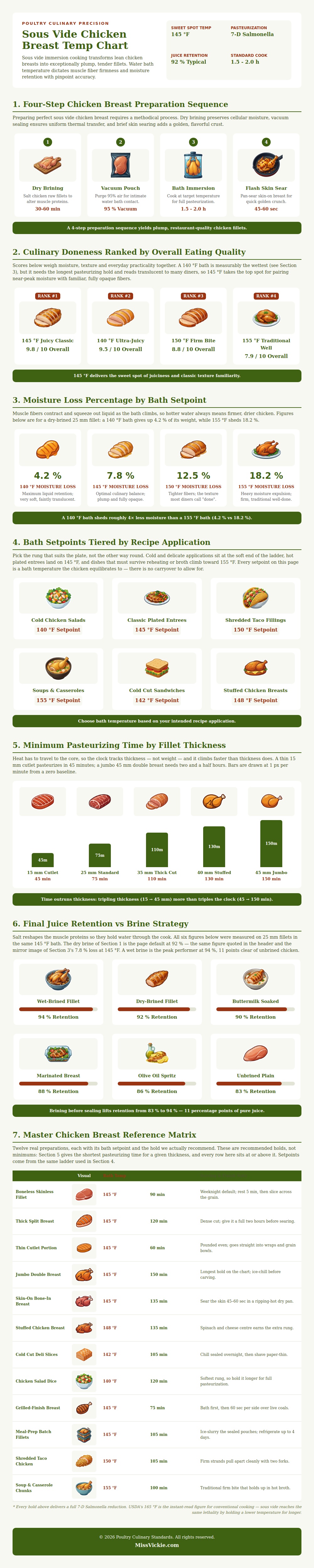
There’s a perfect temperature for best texture, too. Depending on the temp, your resulting meat will retain more or less of its juices (see chart). At home, most people opt for a higher temperature, just in case. But by doing so, you’re squeezing out all that water that you want to retain.
Cooking at 145 degrees hits the sweet spot: opaque enough to appear familiar yet still juicy enough to go down luxuriously. Drop it down to 140 degrees and you’ll have a mushier piece of meat. Although it has more moisture then before, it might not appeal to everyone’s taste. Crank it back up to 155 degrees and you’ve got a firm bite. But you lose that melt-in-your-mouth sensation that makes sous vide cooking worthwhile.
How hot it is isn’t the only variable. How long does it has to stay that way? Heat penetrates meat from the outside-in, so getting to the center requires time. And since the thicker the piece, the longer it will take, thickness matter more than weight when it comes to pasteurization: while a 45-minute wait might do for a thin cutlet, it takes almost two and a half hours for a thick breast.
It’s all about keeping the edge of meat safe without letting it get too done. Weight doesn’t matter as much as thickness; again, you’re cooking on geometric grounds rather than mass ones. The chart breaks out those timings nicely. Don’t skimp on this step, make friends with the clock.
The preparation that goes into water bath is equally important. An hour-long dry brine transforms the muscle protein so they holds onto water. Combined with wet brine, it boosts juice retention from eighty-three percent to ninety-four percent. That’s almost eleven percentage points of raw moisture retained. The thing is, most people don’t do it because it requires some waiting. But proof is in the pudding.
The last step: heat up your pan and quickly sear it off at very hot temperatures. Less than a minute on a ripping-hot pan will result in a golden crunch. Don’t think about this too much. It’s already cooked. This is all about texture. Let the precise temperature of the water determine how done it is, and then focus on the finish.
When you can think like that, approaching the meal with no anxiety, then that’s where things realy get interesting. No more thinking about whether or not something are going to be overcooked. Just thinking about how the dish is going to taste. The texture will remain consistent throughout, from one end of chicken to another. No distracting dry meat, just pure flavor.
A little mindset change like that makes this once weekly, mundane weeknight staple into something special. And that’s what precision cooking is all about. Creating something that values the ingredients being cooked. When that first tender, juicy bite hits your mouth, you’ll know it would of been all worth it.