Soft Boiled Quail Egg Time Calculator
Estimate a quail-specific soft-boil time from egg count, tiny egg size, fridge temperature, boil or steam start, altitude, simmer intensity, ice bath seconds, peeling strategy, and serving use.
🥚Soft quail egg presets
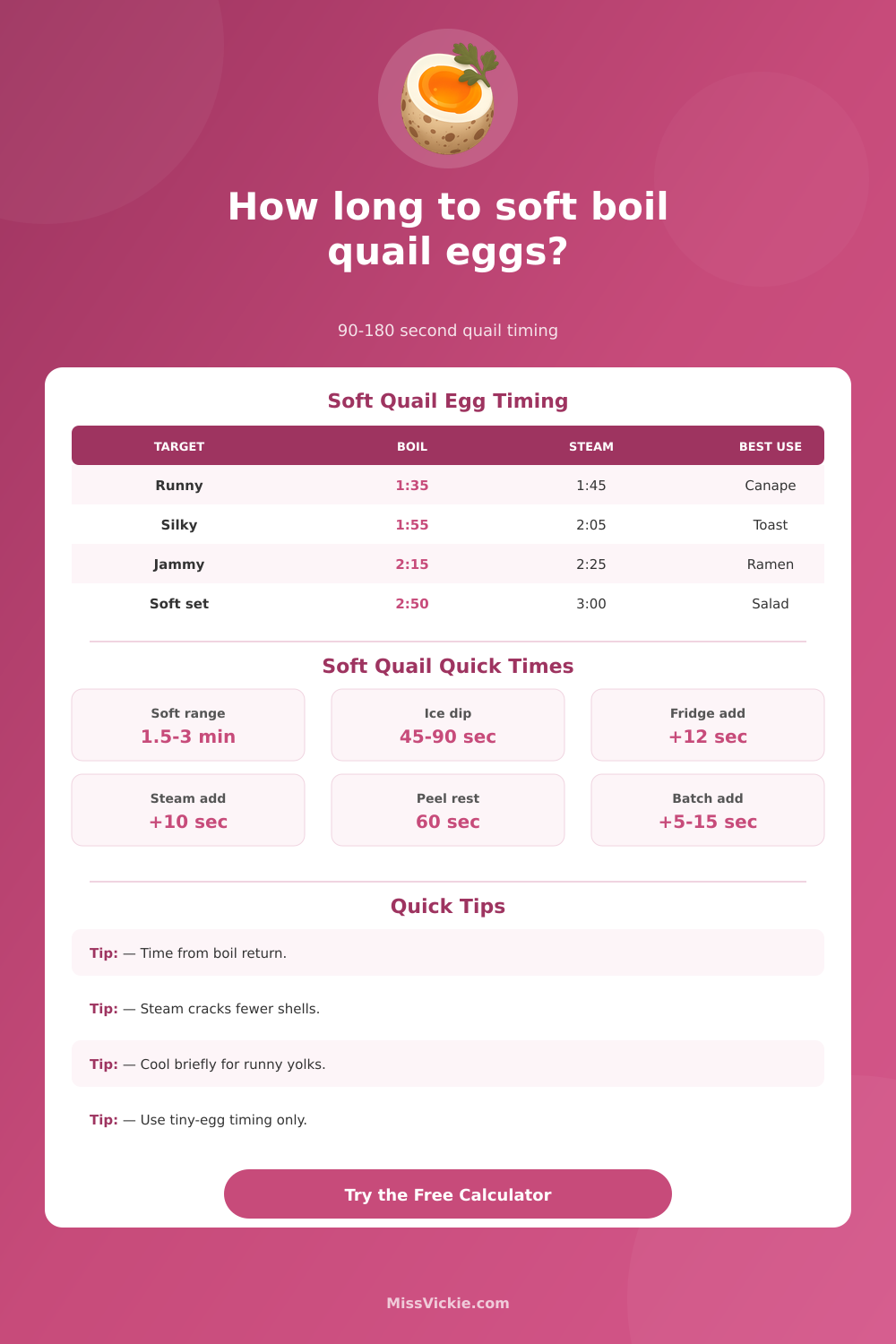
These presets stay in the 1.5 to 3 minute quail egg range. They are built for tiny eggs, not chicken eggs.
⚙Calculator inputs
Your quail egg timing
Fine-tuned for tiny quail eggs and a short soft-boil window.
Timing breakdown
⏱Quail soft-boil timing grid
📋Reference timing table
| Target | Standard boil start | Covered steam start | Ice bath | Best use |
|---|---|---|---|---|
| Runny yolk, tender white | 1:30 to 1:45 | 1:40 to 1:55 | 45 to 60 seconds | Canapes, toast, tasting plates |
| Silky spoonable yolk | 1:50 to 2:10 | 2:00 to 2:20 | 60 to 75 seconds | Breakfast bowls, small plates |
| Jammy ramen-style yolk | 2:10 to 2:35 | 2:20 to 2:45 | 75 to 90 seconds | Ramen, noodles, rice bowls |
| Soft-set but sliceable | 2:40 to 3:00 | 2:50 to 3:05 | 90 to 120 seconds | Salads, bento, packed lunches |
| Fridge-cold adjustment | Add 10 to 18 seconds | Add 8 to 15 seconds | Keep normal chill | Use when eggs go straight from refrigerator |
| High-altitude adjustment | Add 4 to 18 seconds | Add 4 to 16 seconds | Keep normal chill | Most noticeable above 3000 feet |
🍴Serving and yield guide
| Use | Eggs per person | Texture target | Peeling note | Plating tip |
|---|---|---|---|---|
| Canapes | 2 to 3 | Runny or silky | Peel gently after a short chill | Halve at the last minute |
| Ramen bowl | 2 to 4 | Jammy | Steam start helps clean shells | Split with a wet thin knife |
| Green salad | 3 to 5 | Soft set | Longer ice bath firms whites | Quarter only if yolk is soft-set |
| Bento or packed lunch | 4 to 6 | Soft set | Chill fully before packing | Keep cold until eating |
| Brunch toast | 3 to 4 | Silky | Peel under cool running water | Season after cutting |
🍳Quail egg adjustment reference
| Scenario | Tiny egg size | Yolk target | Altitude cue | Ice bath seconds | Peeling and serving data |
|---|---|---|---|---|---|
| Canape runny bite | Petite, 8 to 9 g | 1:30 to 1:40 pull for flowing yolks | Sea level to 1000 ft: no added time | 45 to 55 | Serve fast; peel only if the white feels fully set. |
| Toast or brunch plate | Standard, 10 to 11 g | 1:50 to 2:10 for a silky center | 1000 to 3000 ft: add 4 to 8 seconds | 60 to 75 | Crack-roll gently, then halve with a wet knife. |
| Ramen jammy topper | Standard to large, 10 to 13 g | 2:10 to 2:35 for jammy yolks | 3000 to 5000 ft: add 8 to 16 seconds | 75 to 90 | Steam start gives cleaner peeling for noodle bowls. |
| Clean canape prep | Petite to standard, 8 to 11 g | 2:00 to 2:20 for set whites | Use the lower altitude add-on if serving runny | 75 to 105 | Prioritize peeling by chilling longer before topping. |
| Soft salad garnish | Large, 12 to 13 g | 2:40 to 3:00 for soft-set yolks | Above 5000 ft: add 16 to 24 seconds | 90 to 120 | Peel under cool water; quarter only after whites firm. |
📊Quail egg nutrition snapshot
💡Soft-boiled quail egg tips
For boiling water starts, lower the eggs in with a spoon and start the timer when the water returns to an active simmer.
When cooking a large party batch, pull one egg at the early edge of the window, chill it briefly, and cut it open before pulling the rest.
Crack the shell all over, roll lightly, then peel from the air-pocket end under cool water. Steam starts often peel more cleanly.
Runny eggs only need a short stop-cooking dip. Salad and bento eggs need a fuller chill so the whites hold their shape.
🔬Method notes
Boiling water start
Best when texture precision matters. It minimizes the unknown warm-up time, which is important because quail eggs can move from runny to jammy in under a minute.
Covered steam start
Best when you want cleaner peeling or are cooking a larger batch. Steam heats evenly but usually needs about 8 to 12 extra seconds for the same center.
Because quail eggs are small it takes a little extra care compared to chicken eggs. Not only are the eggs small, they also gives you less time in which to properly cook them. When you get that classic egg there’s a fairly large window from rubbery to runny. That isn’t true of quail eggs. Often with quail eggs, it can be a matter of seconds between a perfectly cooked yolk and an overcooked yolk. Timing is everything.
Instead, use this: the little egg calculator up there do it all for you. It spares your guesswork about these tiny eggs and how temperature and altitude might impact those numbers. Quail eggs are different from chicken eggs (they’re smaller), which means heat gets through faster. Once those little guys touch warm water, the countdown begins. If you start the stopwatch a split second too late, most home cooks will end up with undercooked quail eggs. And if you don’t pay attention to pre-cooking storage condition? Your eggs will be…well…
Why Timing Is Important For Quail Eggs
The second thing to think about is starting temperature: Room-temperature eggs will cook faster then cold fridge eggs. The calculator takes that into account by adding seconds when they’re chilly. That little tweak help avoid cooking them too long. If you cook cold eggs for as long as warm ones, you can scramble up their insides. Warmer egg should come off the heat earlier, or else dry out in the middle.
Then there’s what it cooks: boiling is quick and direct, allowing you to get precise with texture. Steaming is gentler on the shells, meaning less cracking. Quail eggs bounce around in boiling water; that can cause cracking. If you want peeled eggs (for a salad, say), steamed tend to be cleaner. Steam tends to prevent shell from fusing too tightly against the membrane. You can flip the switch between the two options. It adjust the cook time accordingly, so you don’t need to figure out the heat transfer yourself.
Don’t skip the ice bath step. Boiling is key, but stopping the cooking process right there is just as important. The quick dunk in cold water seals the deal, locking in whatever texture you’ve got going on. If you want more of a runny yolk, a short 45 seconds will suffice for chilling them. Firmer whites requires a longer soak. This shrinks the egg away from shell and makes it easier to peel later. If you don’t do this, residual heat will keep cooking your yolk, turning what you wanted to be a silky center into an overdone mess.
If you’re above sea level, altitude also plays a quieter but important part. At higher altitudes, water boils at a lower temperature. So, they needs more time to get up to the same interior state as an egg sitting at sea level. By default, the calculator accounts for this automatically (based off what you type in). Because you don’t want to undercook them (i.e. The water isn’t reaching 212 degrees Fahrenheit. But this is an invisible variable and will mess up a batch if completely disregarded.
To master soft-boiled quail eggs treat them as a special ingredient. Know your ingredients and know their properties in terms of size and how they react to heat. If you’re preparing them for broths or toast, it’s all about how long you apply gentle heat and then cool immediately. These little guys can be trusted once you play around with the factors and get the timing down. And the payoff would of been worth every bite.