Snow Crab Legs Cooking Time Calculator
Estimate heat-through time for snow crab leg clusters using total cluster pounds, frozen or thawed state, steam, boil, bake, or grill method, cluster size, pot crowding, boil recovery, serving count, butter hold time, target temperature, and shell split.
🦀Snow crab presets
Pick a common snow crab setup, then fine tune the cluster pounds, method, frozen state, crowding, water recovery, butter hold, and shell split.
⚖Units
🍲Crab weight and cooking method
🔥Pot recovery, crowding, and serving timing
Snow crab timing estimate
Detailed crab timing breakdown
Use visible steam and the thickest knuckle as your final check.
📌Snow crab serving reference
Good when served with several sides.
Common adult portion for crab legs.
Better for big appetites or fewer sides.
Use for seafood boil style meals.
⏱Method timing table
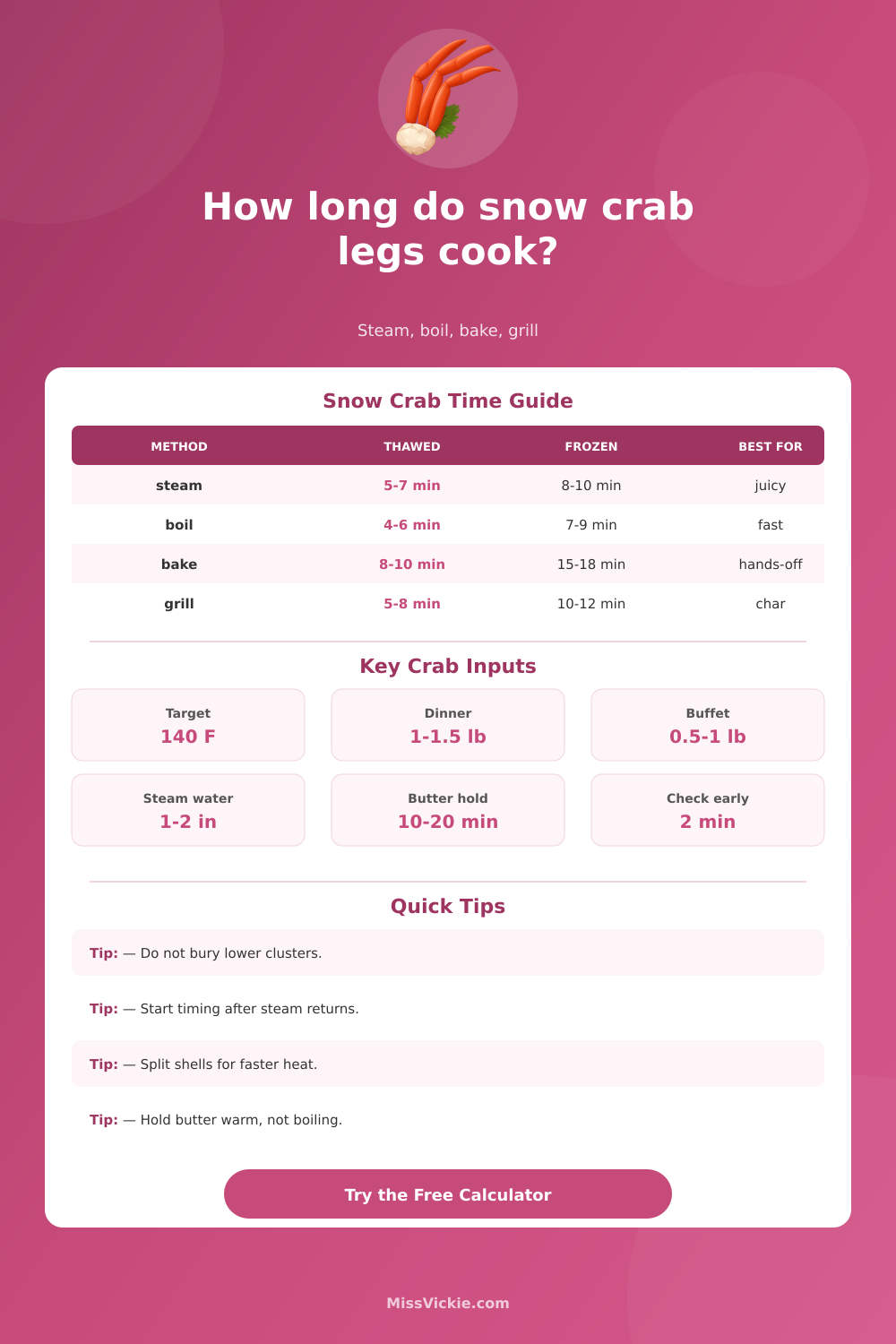
| Method | Thawed clusters | Frozen clusters | Timing note |
|---|---|---|---|
| Steam basket | 5 to 7 minutes | 8 to 10 minutes | Start timing after strong steam returns. |
| Boil or simmer | 4 to 6 minutes | 7 to 9 minutes | Keep water moving gently, not violently. |
| Bake covered | 8 to 10 minutes at 375°F | 15 to 18 minutes at 375°F | Add a splash of water and cover tightly. |
| Grill covered | 5 to 8 minutes | 10 to 12 minutes | Use medium heat and rotate clusters once. |
📊Cluster size and crowding guide
| Cluster setup | Time adjustment | Check point | Best move |
|---|---|---|---|
| Small thin clusters | Subtract about 1 minute | Leg sections | Do not overcook exposed meat. |
| Medium grocery clusters | Use base time | Thickest knuckle | Rotate once if stacked. |
| Large shoulder clusters | Add 1 to 2 minutes | Shoulder joint | Give steam room around the joints. |
| Jumbo or frozen block | Add 3 to 5 minutes | Center of block | Separate as soon as clusters loosen. |
🧈Butter hold and heat-through notes
| Serving plan | Butter hold | Crab hold | Quality note |
|---|---|---|---|
| Eat immediately | 0 to 5 minutes | Serve right away | Best texture and sweetest aroma. |
| Family table | 10 to 15 minutes | Covered warm tray | Keep clusters lightly covered. |
| Buffet batches | 15 to 25 minutes | Low warm oven | Avoid direct dry heat on meat. |
| Seafood boil spread | 20 to 30 minutes | Insulated pan | Add hot clusters in waves. |
💡Crab timing tips
Steam return matters: for steam or boil methods, the useful cooking clock begins after the pot recovers, not the moment cold crab enters.
Split shell shortcut: lengthwise-split legs heat faster, but exposed meat can dry during baking or grilling if it is not covered or basted.
Snow Crab Legs come fully cooked to you so you warm them up, which is nice, though you must be careful not to overheat, as this can lead to rubbery or dry meat.
And when everyone’s sitting around the table waiting for food, little things really matter: What size of leg? You can choose whole shells or cut shells. How much weight should go into the pot? Will the crab be too hot before it gets back to the table? How cold was it to begin with?
How to Warm Up Snow Crab Legs
With all those inputs about how the coldest part of the crab warms up, just type in the number of pounds, whether they’re frozen or fresh, how many is crowded into your cooking pot, what kind of pan you use (a steam basket is best for one layer; no cold spots), and then you get the answer: How long?
That’s why there’s a setting for “recovery.” Because cold crabs going into hot water aren’t really boiling yet; they need some time for the pot to boil again first. If you have a gentle burner, that wait can add several minutes before the timer begins ticking down.
The reason it’s important to pay attention to leg size is because thick legs will take longer than thin ones. Even within one bag of clusters, some will be bigger (large shoulders) and others smaller (thinner legs). So base your check time based off the biggest cluster in the batch instead of average. Also, shell splits affects cook times. While cuts increase heat penetration, they also open the meat up to drying out from a lengthy butter hold.
The number of servings you input converts pounds into portion sizes. This helps you determine how much food you’ll need for your guests. Will this serve as a light appetizer, or should we plan on having a huge feast?
The common pitfalls is overcooking from starting the clock too soon and not paying attention to crowd factor. Add a brief rest after warming and don’t neglect that step, as many people forget it. That couple of minutes allow the meat to reach a balance while avoiding moisture loss in the outside layer.
The other variable is butter hold time. Ten or fifteen minutes are enough for a family dinner. For a buffet with a longer hold, use an insulated platter or warm your oven to keep it nice and moist.
You want the shells left intact so they can be eaten but want that meat all hot and on the knuckle. So how do you get there? Well a quick test first, then it’s just patience. If you know what order your clusters is going into the pot, the total weight of the cluster and the initial temp…then you’re good to go. Just make sure to double check for doneness before putting them on the table.
You should of checked carefully so meat dont dissapears from being too dry. It would of been better if you used more modern method. Naturaly, it’s harder then expected.