
The wood is also an ingredient (like pepper or salt), and the wrong wood will ruin value of what could of been a great meal. I’ve seen people spend hundreds on a cut of beef like brisket and then turn around and burn it for 12 hours. “It’s smoked!” they say. “That’s all that matters.”
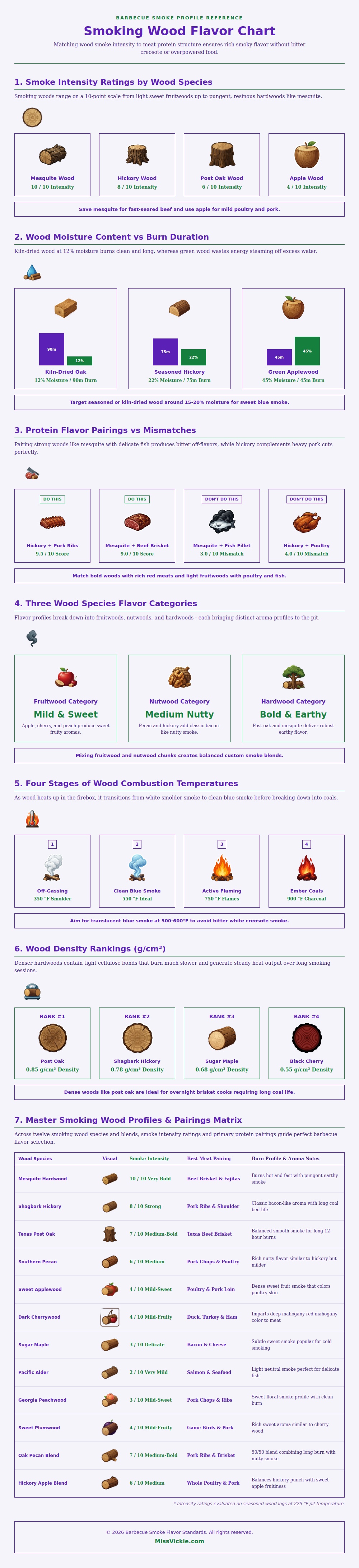
It isn’t. All smoke doesn’t taste the same. Here’s a chart describing which woods pairs best with various proteins. Use it so your food doesn’t end up tasting burnt.
How to Choose the Right Wood for Cooking
Smoke intensity is like spiciness. You wouldn’t dump a big heap of hot pepper into your mild chicken stock. Likewise, mesquite, which is an intense aggressive smoke, is like strong spices. Adding mesquite to poultry or fish will result in something tasteing burnt. Strong woods such as mesquite is better paired with richer red meats which can stand up to the strong flavor. Fajita meat (or beef brisket) pair well with mesquite. Subtle, sweet applewood pairs nicely with turkey breast or pork loin.
The first rule of good barbecue are to match the wood to the meat. Half of it is choosing the right species, and the other half is dealing with its moisture content. Many home cooks select based off looks rather than performance. Wood that makes a nice picture burns like crap.
Green (read: wet) wood will steam instead of smoke, giving you thick white smoke and all the bitter creosote that comes along with it. You’re going for blue smoke which indicates your wood is clean-burning and hot. Kiln-dried and seasoned wood are your friends here. Dry wood burns longer, puts off translucent smoke that clings to meat without any harshness. Go for dry enough to be able to snap but not green as to be bent.
It’s a matter of chemistry. The temperature is what controls it. As the wood heat, it passes through several stages. The first stage lets off harsh gases which is the last thing you want. Instead, aim for the clean blue smoke zone. When the firebox starts cracking, but isn’t flaming like crazy, you’re there. White, billowing smoke will cook your meat with nasty flavors. Clear hardly-there smoke is the goal.
It’s not magic, it’s just physics. Longevity also depends on wood density. Post oak is a dense species. Its tight grain structure breaks down more slow than other species and produces an even burn ideal for longer cooking sessions. Conversely, lighter woods are faster-burning (great for a flash-sear, not-so-great for a long-cook) and produce a hotter fire. To combine these species into a personal blend that suits your desired taste (including balancing long-lasting fires and sweet-fruit flavor), you can make a simple adjustment by mixing them. That’s where you get some control over the end result.
Heat is only part of barbecue. Patience is another ingredient. Barbecue is about creating an environment in which time and temperature works together to enhance both the flavor and tenderness of your meat. This begins with the kind of wood you select. Once you know how moisture affects the burn and how wood species match up to proteins, you stop guessing and start cooking with intention.
Consider type of wood when lighting the fire. Does it go well with the meat? If not, don’t even look at it until you do. That’s the difference between a good cook and a great one.