MissVickie Syrup Station
Simple Syrup Calculator
Build reliable 1:1 and adjacent syrup batches for cocktails, coffee, tea, lemonades, and pastry prep. Enter yield goals, ratio style, heat loss, and bottle strategy to get clear sugar and water targets with cost insight.
Batch Method And Presets
This planner solves syrup from your finished volume goal and selected ratio. It adds starting water to account for evaporation and shows serving output, bottle count, estimated sweetness strength, and shelf guidance for your workflow.
Ratio is sugar-to-water by weight. Final syrup mass is estimated from density, then split into sugar and post-cook water mass. Starting water is increased by your loss percentage so final yield lands closer to target.
Flavor profile and dissolve speed vary by sugar type. The calculator applies small shifts for white, caster, demerara, turbinado, and blend options to keep estimates practical instead of generic.
Use presets for common service patterns, then fine tune bottle size, dose, and cooling notes for your station.
Inputs
Results
Full Batch Breakdown
Ratio Comparison Grid
Compare nearby ratio styles at your same target yield so you can decide if you want lighter sweetness, balanced body, or thicker mouthfeel for your menu.
Reference Table 1: Common Syrup Styles
| Style | Ratio | Est. Brix | Texture | Best Use | Typical Dose |
|---|---|---|---|---|---|
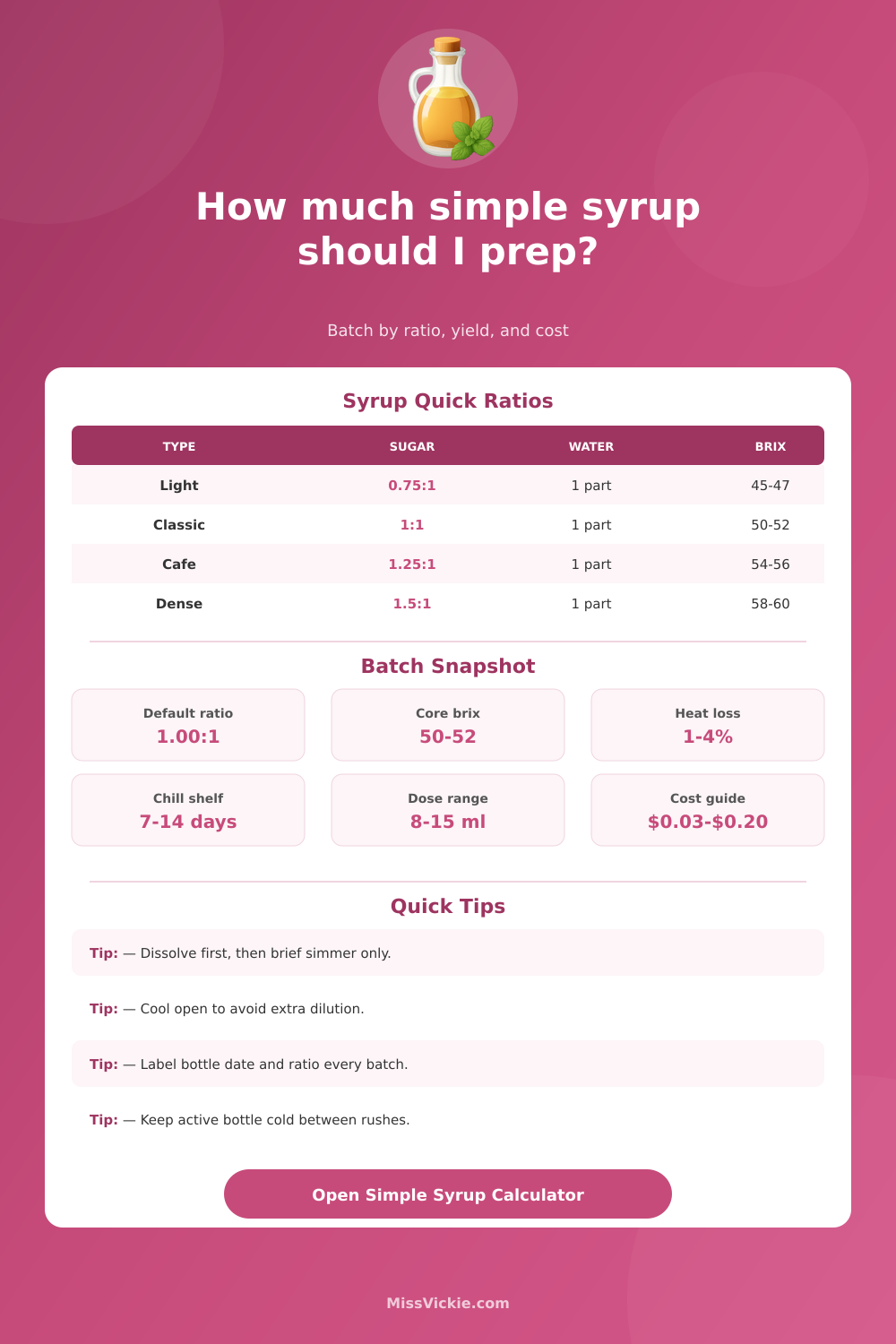
| Light | 0.75:1 | 45-47 | Thin | Highball and tea | 12-20 ml |
| Classic | 1.00:1 | 50-52 | Medium | Most cocktails | 8-15 ml |
| Balanced+ | 1.10:1 | 52-53 | Round | Coffee and soda | 10-16 ml |
| Cafe | 1.25:1 | 54-56 | Silky | Iced coffee | 8-14 ml |
| Dense | 1.35:1 | 56-58 | Velvet | Dessert drinks | 6-12 ml |
| Heavy | 1.50:1 | 58-60 | Thick | Stirred spirit | 5-10 ml |
Reference Table 2: Real-World Batch Benchmarks
| Program | Target Yield | Ratio | Sugar Type | Bottle Size | Shift Plan |
|---|---|---|---|---|---|
| Small bar rail | 1.5 L | 1.00:1 | White | 750 ml | 2 bottles daily |
| Busy cafe | 2.5 L | 1.25:1 | Caster | 1 L | Morning refill |
| Tea kiosk | 1.2 L | 0.75:1 | White | 500 ml | Midday top-up |
| Pastry station | 1.0 L | 1.35:1 | Blend | 500 ml | Single shift |
| Event prep | 5.0 L | 1.10:1 | White | 1 L | Ice bin staging |
| Retail lot | 2.0 L | 1.25:1 | Demerara | 250 ml | Lot labels |
Reference Table 3: Shelf And Handling Guide
| Storage | Ratio Zone | Expected Life | Risk Level | Handling Rule | Reset Trigger |
|---|---|---|---|---|---|
| Refrigerated | 1.00-1.25 | 7-14 days | Low | Sanitized cap | Cloudy look |
| Refrigerated | 1.35-1.50 | 10-20 days | Low | Date label | Off aroma |
| Cool room | 1.00-1.10 | 3-6 days | Medium | Daily taste check | Ferment note |
| Warm room | 0.75-1.00 | 1-3 days | High | Ice backup ready | Foam bubbles |
| Event ice well | 1.00-1.25 | Single day | Medium | Swap every rush | Temp drift |
| Retail sealed | 1.25-1.50 | 2-4 weeks | Medium | Tamper seal | Cap leak |
Reference Table 4: Dose Planning Shortcuts
| Drink Type | Base Volume | Ratio Pick | Dose Start | Taste Direction | Final Check |
|---|---|---|---|---|---|
| Sour cocktail | 90-120 ml | 1.00:1 | 10 ml | Add in 2 ml | Balance acid |
| Spirit stirred | 80-100 ml | 1.25:1 | 7 ml | Keep body dry | Aroma lead |
| Iced latte | 250-350 ml | 1.10:1 | 12 ml | Raise in 3 ml | No candy finish |
| Milk tea | 350-500 ml | 0.75:1 | 18 ml | Watch tea tannin | Soft finish |
| Lemonade | 300-450 ml | 1.00:1 | 15 ml | Match citrus load | Clean aftertaste |
| Mocktail spritz | 250-400 ml | 1.10:1 | 13 ml | Keep bubbles bright | Low syrup tail |
Quick Benchmarks
Typical sweetness zone for 1:1 syrup.
Common stovetop evaporation in short cooks.
Frequent range for cocktails and coffee.
Practical refrigerated life with clean handling.
Production Tips
To make simple syrups, follow the process so that the simple syrup is always the same when prepared. If you dont follow the process for making simple syrup, the level of sweetness of the simple syrup will be different during different shift. The inconsistency in the level of sweetness will make some drink taste different than the customers.
Using precise measurement when preparing simple syrup will allow for the simple syrup to be consistent and to be useful in the house cocktails. Simple syrup can be made using a one to one ratio of sugar and water. Using a one-to-one ratio ensure that the simple syrup has a balanced level of sweetness.
How to Make Simple Syrup the Same Every Time
However, using a different ratio of sugar to water change the density of the simple syrup. For instance, using a lighter ratio of sugar to water produce simple syrup that is useful in teas. On the other hand, using a heavier ratio of sugar to water produces simple syrup that is useful in iced latte or cocktails.
Using a heavier ratio of sugar to water create a simple syrup that is thicker than simple syrup prepared with a lighter ratio of sugar to water. Sugar takes up space within the simple syrup. For instance, using one quart of water and one quart of sugar will create a final product that is more than two quarts of simple syrup.
The final volume of simple syrup is more than the initial volume of water. To prepare simple syrup, calculate how many bottles of simple syrup you need to fill. Based off the number of bottles of simple syrup you need to fill, calculate how much sugar and water you will need to produce that amount of simple syrup.
When heat the water and sugar to make simple syrup, some of the water will turn into steam and leave the cooking pot. The loss of water to steam will make the simple syrup thicker than you would make it if you did not heat the ingredients. To account for the evaporation of water when heating the sugar and water, the simple syrup you prepare will have the correct thickness when poured into bottles of simple syrup.
You can use different type of sugar to prepare simple syrup. Using white cane sugar will produce simple syrup with a neutral flavor. Using caster sugar will produce simple syrup that dissolve quickly in drinks.
Using raw sugars, such as demerara or turbinado sugar, will add flavor to the simple syrup. The flavor of raw sugars will change the density of the simple syrup. This changed density of simple syrup will change the way it incorporate into a cold drink.
Simple syrup can spoil if not store correctly. Simple syrup that is prepared using a lighter ratio of sugar to water is more likely to spoil than simple syrup prepared using a heavier ratio. To prevent the simple syrup from spoiling, store bottles of simple syrup in a cold area.
Rotate the stock of simple syrup. Adding citric or malic acid to the simple syrup will stabilize the simple syrup so it does not spoil easy. Adding these ingredients will ensure that bottles of simple syrup last longer.
To maintain control of your business, you should keep track of the cost of your simple syrup. Knowing the cost per fluid ounce of your simple syrup will allow you to track the cost of sugar and how it impact your profit margins. Knowing the cost of the simple syrup you prepare will allow you to make better purchasing decisions for your restaurant.
Knowing the cost of your simple syrup is essential to maintaining a profitable business. To ensure the consistency of the simple syrup, eliminate human error from the process. Always use the same weight of sugar and the same volume of water to prepare the simple syrup.
Store the simple syrup in clean container. Label all bottles of simple syrup with the date of preparation and the ratio of sugar to water by volume. Taste the simple syrup prior to the start of your shift.
By using precise measurements for each ingredient when preparing simple syrup, you will ensure that you prepare the simple syrup in the same way for each customer.