
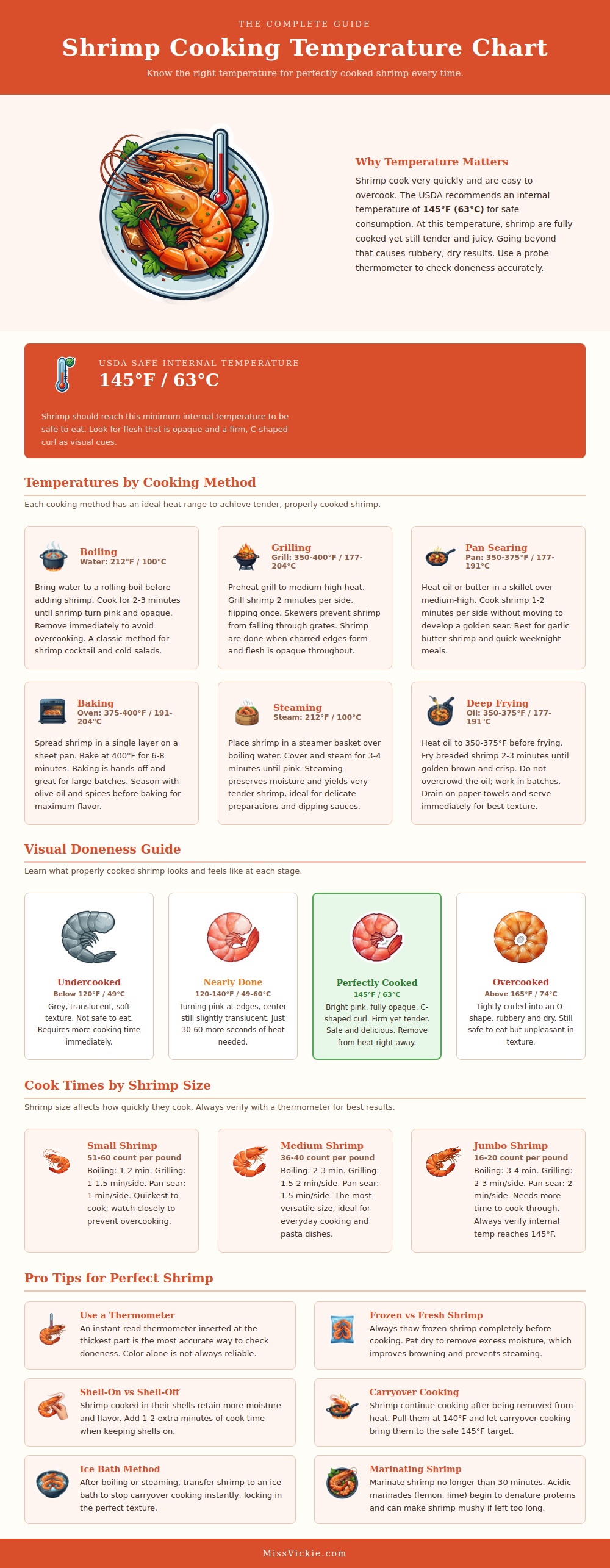
Shrimp cook very quick and if shrimp is cooked for to long it will become tough. Because shrimp cooks so quickly, a temperature guide need to be used when preparing shrimp in order to avoid overcooking the shrimp. While many people cook shrimp until it reach a certain color, the color of the shrimp isnt as accurate as measuring the internal temperature of the shrimp.
By measuring the internal temperature of the shrimp with a thermometer, you can remove the shrimp from the heat source at an appropriate time. This avoids the issue of the shrimp becoming rubbery and ensures that the shrimp will remain tender. The ideal temperature of shrimp should be cooked to 145 degree.
Cook Shrimp to 145°F
At this temperature the muscle fibers of the shrimp will have set but not become tough. The shrimp will turn opaque and form into a loose C-shape. If the shrimp is cooked to temperatures above 145 degrees, however, the shrimp will begin to lose moisture and become rubbery.
A temperature chart can be used to determine the target temperature for the shrimp that are being prepared for each cooking method. The different cooking methods will impact the way that the shrimp will reach the target temperature. For example, methods like boiling and steaming will use water to cook the shrimp and will cook the shrimp in a moist environment.
Methods like grilling and pan-searing will use high heat on the surface of the shrimp, which will help the shrimp to brown. Lastly, baking shrimp will even heat to the shrimp, but does not require as much attention as grilling or pan-searing. Each cooking method will have a target range on the temperature chart to indicate the target temperature for each cooking method.
The size of the shrimp will impact the time it takes to cook the shrimp. Small shrimp will cook very quickly, but jumbo shrimp will take longer to cook to the center of the shrimp. The count per pound of the shrimp should be considered to determine the length of time to cook the shrimp.
If the length of time for cooking is not adjusted according to the size of the shrimp, the shrimp may become overcooked. Shell-on shrimp will take longer to cook than shrimp that have been peeled, as the shells will act as an insulator for the shrimp. The starting temperature of the shrimp will also impact the time required to cook the shrimp.
If the shrimp come from the refrigerator, it will start at a lower temperature then shrimp that have been sitting out of the refrigerator for a period of time. Additionally, shrimp that are frozen will tend to release extra water while being cooked, which will lower the temperature of the pan in which it are being cooked. If the shrimp is thawed and then patted dry of the excess water, the shrimp will brown properly in the pan.
Marinades can also impact the way that the shrimp reacts to heat. For instance, if shrimp are marinated in an acidic solution, the proteins will break down very quick. In this case, the shrimp should not sit in the marinade for longer than thirty minutes.
Oil-based marinades, however, will not have this same effect on the shrimp, and can be in contact with the shrimp for a longer length of time. Regardless of the type of marinade used on the shrimp, however, the internal temperature of the shrimp should reach 145 degrees. An ice bath can be used to stop the cooking process of the shrimp.
If the shrimp is removed from the heat while it is slightly below the target cooking temperature, it will continue to cook because of carryover cooking. If, however, you place the shrimp into an ice bath, the cooking process will be stopped immediate. By using the temperature chart to determine how long to cook the shrimp and by monitoring the internal temperature of the shrimp, the shrimp will remain tender and plump.
Shrimp cook very quick and if shrimp is cooked for to long it will become tough. Because shrimp cooks so quickly, a temperature guide need to be used when preparing shrimp in order to avoid overcooking the shrimp. While many people cook shrimp until it reach a certain color, the color of the shrimp is not as accurate as measuring the internal temperature of the shrimp.
By measuring the internal temperature of the shrimp with a thermometer, you can remove the shrimp from the heat source at an appropriate time. This avoids the issue of the shrimp becoming rubbery and ensures that the shrimp will remain tender. The ideal temperature of shrimp should be cooked to 145 degree.
At this temperature the muscle fibers of the shrimp will have set but not become tough. The shrimp will turn opaque and form into a loose C-shape. If the shrimp is cooked to temperatures above 145 degrees, however, the shrimp will begin to lose moisture and become rubbery.
A temperature chart can be used to determine the target temperature for the shrimp that are being prepared for each cooking method. The different cooking methods will impact the way that the shrimp will reach the target temperature. For example, methods like boiling and steaming will use water to cook the shrimp and will cook the shrimp in a moist environment.
Methods like grilling and pan-searing will use high heat on the surface of the shrimp, which will help the shrimp to brown. Lastly, baking shrimp will even heat to the shrimp, but does not require as much attention as grilling or pan-searing. Each cooking method will have a target range on the temperature chart to indicate the target temperature for each cooking method.
The size of the shrimp will impact the time it takes to cook the shrimp. Small shrimp will cook very quickly, but jumbo shrimp will take longer to cook to the center of the shrimp. The count per pound of the shrimp should be considered to determine the length of time to cook the shrimp.
If the length of time for cooking is not adjusted according to the size of the shrimp, the shrimp may become overcooked. Shell-on shrimp will take longer to cook than shrimp that have been peeled, as the shells will act as an insulator for the shrimp. The starting temperature of the shrimp will also impact the time required to cook the shrimp.
If the shrimp come from the refrigerator, it will start at a lower temperature then shrimp that have been sitting out of the refrigerator for a period of time. Additionally, shrimp that are frozen will tend to release extra water while being cooked, which will lower the temperature of the pan in which it are being cooked. If the shrimp is thawed and then patted dry of the excess water, the shrimp will brown properly in the pan.
Marinades can also impact the way that the shrimp reacts to heat. For instance, if shrimp are marinated in an acidic solution, the proteins will break down very quick. In this case, the shrimp should not sit in the marinade for longer than thirty minutes.
Oil-based marinades, however, will not have this same effect on the shrimp, and can be in contact with the shrimp for a longer length of time. Regardless of the type of marinade used on the shrimp, however, the internal temperature of the shrimp should reach 145 degrees. An ice bath can be used to stop the cooking process of the shrimp.
If the shrimp is removed from the heat while it is slightly below the target cooking temperature, it will continue to cook because of carryover cooking. If, however, you place the shrimp into an ice bath, the cooking process will be stopped immediate. By using the temperature chart to determine how long to cook the shrimp and by monitoring the internal temperature of the shrimp, the shrimp will remain tender and plump.
Shrimp cook very quick and if shrimp is cooked for to long it will become tough. Because shrimp cooks so quickly, a temperature guide need to be used when preparing shrimp in order to avoid overcooking the shrimp. While many people cook shrimp until it reach a certain color, the color of the shrimp is not as accurate as measuring the internal temperature of the shrimp.
By measuring the internal temperature of the shrimp with a thermometer, you can remove the shrimp from the heat source at an appropriate time. This avoids the issue of the shrimp becoming rubbery and ensures that the shrimp will remain tender. The ideal temperature of shrimp should be cooked to 145 degree.
At this temperature the muscle fibers of the shrimp will have set but not become tough. The shrimp will turn opaque and form into a loose C-shape. If the shrimp is cooked to temperatures above 145 degrees, however, the shrimp will begin to lose moisture and become rubbery.
A temperature chart can be used to determine the target temperature for the shrimp that are being prepared for each cooking method. The different cooking methods will impact the way that the shrimp will reach the target temperature. For example, methods like boiling and steaming will use water to cook the shrimp and will cook the shrimp in a moist environment.
Methods like grilling and pan-searing will use high heat on the surface of the shrimp, which will help the shrimp to brown. Lastly, baking shrimp will even heat to the shrimp, but does not require as much attention as grilling or pan-searing. Each cooking method will have a target range on the temperature chart to indicate the target temperature for each cooking method.
The size of the shrimp will impact the time it takes to cook the shrimp. Small shrimp will cook very quickly, but jumbo shrimp will take longer to cook to the center of the shrimp. The count per pound of the shrimp should be considered to determine the length of time to cook the shrimp.
If the length of time for cooking is not adjusted according to the size of the shrimp, the shrimp may become overcooked. Shell-on shrimp will take longer to cook than shrimp that have been peeled, as the shells will act as an insulator for the shrimp. The starting temperature of the shrimp will also impact the time required to cook the shrimp.
If the shrimp come from the refrigerator, it will start at a lower temperature then shrimp that have been sitting out of the refrigerator for a period of time. Additionally, shrimp that are frozen will tend to release extra water while being cooked, which will lower the temperature of the pan in which it are being cooked. If the shrimp is thawed and then patted dry of the excess water, the shrimp will brown properly in the pan.
Marinades can also impact the way that the shrimp reacts to heat. For instance, if shrimp are marinated in an acidic solution, the proteins will break down very quick. In this case, the shrimp should not sit in the marinade for longer than thirty minutes.
Oil-based marinades, however, will not have this same effect on the shrimp, and can be in contact with the shrimp for a longer length of time. Regardless of the type of marinade used on the shrimp, however, the internal temperature of the shrimp should reach 145 degrees. An ice bath can be used to stop the cooking process of the shrimp.
If the shrimp is removed from the heat while it is slightly below the target cooking temperature, it will continue to cook because of carryover cooking. If, however, you place the shrimp into an ice bath, the cooking process will be stopped immediate. By using the temperature chart to determine how long to cook the shrimp and by monitoring the internal temperature of the shrimp, the shrimp will remain tender and plump.
Shrimp cook very quick and if shrimp is cooked for to long it will become tough. Because shrimp cooks so quickly, a temperature guide need to be used when preparing shrimp in order to avoid overcooking the shrimp. While many people cook shrimp until it reach a certain color, the color of the shrimp is not as accurate as measuring the internal temperature of the shrimp.
By measuring the internal temperature of the shrimp with a thermometer, you can remove the shrimp from the heat source at an appropriate time. This avoids the issue of the shrimp becoming rubbery and ensures that the shrimp will remain tender. The ideal temperature of shrimp should be cooked to 145 degree.
At this temperature the muscle fibers of the shrimp will have set but not become tough. The shrimp will turn opaque and form into a loose C-shape. If the shrimp is cooked to temperatures above 145 degrees, however, the shrimp will begin to lose moisture and become rubbery.
A temperature chart can be used to determine the target temperature for the shrimp that are being prepared for each cooking method. The different cooking methods will impact the way that the shrimp will reach the target temperature. For example, methods like boiling and steaming will use water to cook the shrimp and will cook the shrimp in a moist environment.
Methods like grilling and pan-searing will use high heat on the surface of the shrimp, which will help the shrimp to brown. Lastly, baking shrimp will even heat to the shrimp, but does not require as much attention as grilling or pan-searing. Each cooking method will have a target range on the temperature chart to indicate the target temperature for each cooking method.
The size of the shrimp will impact the time it takes to cook the shrimp. Small shrimp will cook very quickly, but jumbo shrimp will take longer to cook to the center of the shrimp. The count per pound of the shrimp should be considered to determine the length of time to cook the shrimp.
If the length of time for cooking is not adjusted according to the size of the shrimp, the shrimp may become overcooked. Shell-on shrimp will take longer to cook than shrimp that have been peeled, as the shells will act as an insulator for the shrimp. The starting temperature of the shrimp will also impact the time required to cook the shrimp.
If the shrimp come from the refrigerator, it will start at a lower temperature then shrimp that have been sitting out of the refrigerator for a period of time. Additionally, shrimp that are frozen will tend to release extra water while being cooked, which will lower the temperature of the pan in which it are being cooked. If the shrimp is thawed and then patted dry of the excess water, the shrimp will brown properly in the pan.
Marinades can also impact the way that the shrimp reacts to heat. For instance, if shrimp are marinated in an acidic solution, the proteins will break down very quick. In this case, the shrimp should not sit in the marinade for longer than thirty minutes.
Oil-based marinades, however, will not have this same effect on the shrimp, and can be in contact with the shrimp for a longer length of time. Regardless of the type of marinade used on the shrimp, however, the internal temperature of the shrimp should reach 145 degrees. An ice bath can be used to stop the cooking process of the shrimp.
If the shrimp is removed from the heat while it is slightly below the target cooking temperature, it will continue to cook because of carryover cooking. If, however, you place the shrimp into an ice bath, the cooking process will be stopped immediate. By using the temperature chart to determine how long to cook the shrimp and by monitoring the internal temperature of the shrimp, the shrimp will remain tender and plump.
Shrimp cook very quick and if shrimp is cooked for to long it will become tough. Because shrimp cooks so quickly, a temperature guide need to be used when preparing shrimp in order to avoid overcooking the shrimp. While many people cook shrimp until it reach a certain color, the color of the shrimp is not as accurate as measuring the internal temperature of the shrimp.
By measuring the internal temperature of the shrimp with a thermometer, you can remove the shrimp from the heat source at an appropriate time. This avoids the issue of the shrimp becoming rubbery and ensures that the shrimp will remain tender. The ideal temperature of shrimp should be cooked to 145 degree.
At this temperature the muscle fibers of the shrimp will have set but not become tough. The shrimp will turn opaque and form into a loose C-shape. If the shrimp is cooked to temperatures above 145 degrees, however, the shrimp will begin to lose moisture and become rubbery.
A temperature chart can be used to determine the target temperature for the shrimp that are being prepared for each cooking method. The different cooking methods will impact the way that the shrimp will reach the target temperature. For example, methods like boiling and steaming will use water to cook the shrimp and will cook the shrimp in a moist environment.
Methods like grilling and pan-searing will use high heat on the surface of the shrimp, which will help the shrimp to brown. Lastly, baking shrimp will even heat to the shrimp, but does not require as much attention as grilling or pan-searing. Each cooking method will have a target range on the temperature chart to indicate the target temperature for each cooking method.
The size of the shrimp will impact the time it takes to cook the shrimp. Small shrimp will cook very quickly, but jumbo shrimp will take longer to cook to the center of the shrimp. The count per pound of the shrimp should be considered to determine the length of time to cook the shrimp.
If the length of time for cooking is not adjusted according to the size of the shrimp, the shrimp may become overcooked. Shell-on shrimp will take longer to cook than shrimp that have been peeled, as the shells will act as an insulator for the shrimp. The starting temperature of the shrimp will also impact the time required to cook the shrimp.
If the shrimp come from the refrigerator, it will start at a lower temperature then shrimp that have been sitting out of the refrigerator for a period of time. Additionally, shrimp that are frozen will tend to release extra water while being cooked, which will lower the temperature of the pan in which it are being cooked. If the shrimp is thawed and then patted dry of the excess water, the shrimp will brown properly in the pan.
Marinades can also impact the way that the shrimp reacts to heat. For instance, if shrimp are marinated in an acidic solution, the proteins will break down very quick. In this case, the shrimp should not sit in the marinade for longer than thirty minutes.
Oil-based marinades, however, will not have this same effect on the shrimp, and can be in contact with the shrimp for a longer length of time. Regardless of the type of marinade used on the shrimp, however, the internal temperature of the shrimp should reach 145 degrees. An ice bath can be used to stop the cooking process of the shrimp.
If the shrimp is removed from the heat while it is slightly below the target cooking temperature, it will continue to cook because of carryover cooking. If, however, you place the shrimp into an ice bath, the cooking process will be stopped immediate. By using the temperature chart to determine how long to cook the shrimp and by monitoring the internal temperature of the shrimp, the shrimp will remain tender and plump.
Shrimp cook very quick and if shrimp is cooked for to long it will become tough. Because shrimp cooks so quickly, a temperature guide need to be used when preparing shrimp in order to avoid overcooking the shrimp. While many people cook shrimp until it reach a certain color, the color of the shrimp is not as accurate as measuring the internal temperature of the shrimp.
By measuring the internal temperature of the shrimp with a thermometer, you can remove the shrimp from the heat source at an appropriate time. This avoids the issue of the shrimp becoming rubbery and ensures that the shrimp will remain tender. The ideal temperature of shrimp should be cooked to 145 degree.
At this temperature the muscle fibers of the shrimp will have set but not become tough. The shrimp will turn opaque and form into a loose C-shape. If the shrimp is cooked to temperatures above 145 degrees, however, the shrimp will begin to lose moisture and become rubbery.
A temperature chart can be used to determine the target temperature for the shrimp that are being prepared for each cooking method. The different cooking methods will impact the way that the shrimp will reach the target temperature. For example, methods like boiling and steaming will use water to cook the shrimp and will cook the shrimp in a moist environment.
Methods like grilling and pan-searing will use high heat on the surface of the shrimp, which will help the shrimp to brown. Lastly, baking shrimp will even heat to the shrimp, but does not require as much attention as grilling or pan-searing. Each cooking method will have a target range on the temperature chart to indicate the target temperature for each cooking method.
The size of the shrimp will impact the time it takes to cook the shrimp. Small shrimp will cook very quickly, but jumbo shrimp will take longer to cook to the center of the shrimp. The count per pound of the shrimp should be considered to determine the length of time to cook the shrimp.
If the length of time for cooking is not adjusted according to the size of the shrimp, the shrimp may become overcooked. Shell-on shrimp will take longer to cook than shrimp that have been peeled, as the shells will act as an insulator for the shrimp. The starting temperature of the shrimp will also impact the time required to cook the shrimp.
If the shrimp come from the refrigerator, it will start at a lower temperature then shrimp that have been sitting out of the refrigerator for a period of time. Additionally, shrimp that are frozen will tend to release extra water while being cooked, which will lower the temperature of the pan in which it are being cooked. If the shrimp is thawed and then patted dry of the excess water, the shrimp will brown properly in the pan.
Marinades can also impact the way that the shrimp reacts to heat. For instance, if shrimp are marinated in an acidic solution, the proteins will break down very quick. In this case, the shrimp should not sit in the marinade for longer than thirty minutes.
Oil-based marinades, however, will not have this same effect on the shrimp, and can be in contact with the shrimp for a longer length of time. Regardless of the type of marinade used on the shrimp, however, the internal temperature of the shrimp should reach 145 degrees. An ice bath can be used to stop the cooking process of the shrimp.
If the shrimp is removed from the heat while it is slightly below the target cooking temperature, it will continue to cook because of carryover cooking. If, however, you place the shrimp into an ice bath, the cooking process will be stopped immediate. By using the temperature chart to determine how long to cook the shrimp and by monitoring the internal temperature of the shrimp, the shrimp will remain tender and plump.
Shrimp cook very quick and if shrimp is cooked for to long it will become tough. Because shrimp cooks so quickly, a temperature guide need to be used when preparing shrimp in order to avoid overcooking the shrimp. While many people cook shrimp until it reach a certain color, the color of the shrimp is not as accurate as measuring the internal temperature of the shrimp.
By measuring the internal temperature of the shrimp with a thermometer, you can remove the shrimp from the heat source at an appropriate time. This avoids the issue of the shrimp becoming rubbery and ensures that the shrimp will remain tender. The ideal temperature of shrimp should be cooked to 145 degree.
At this temperature the muscle fibers of the shrimp will have set but not become tough. The shrimp will turn opaque and form into a loose C-shape. If the shrimp is cooked to temperatures above 145 degrees, however, the shrimp will begin to lose moisture and become rubbery.
A temperature chart can be used to determine the target temperature for the shrimp that are being prepared for each cooking method. The different cooking methods will impact the way that the shrimp will reach the target temperature. For example, methods like boiling and steaming will use water to cook the shrimp and will cook the shrimp in a moist environment.
Methods like grilling and pan-searing will use high heat on the surface of the shrimp, which will help the shrimp to brown. Lastly, baking shrimp will even heat to the shrimp, but does not require as much attention as grilling or pan-searing. Each cooking method will have a target range on the temperature chart to indicate the target temperature for each cooking method.
The size of the shrimp will impact the time it takes to cook the shrimp. Small shrimp will cook very quickly, but jumbo shrimp will take longer to cook to the center of the shrimp. The count per pound of the shrimp should be considered to determine the length of time to cook the shrimp.
If the length of time for cooking is not adjusted according to the size of the shrimp, the shrimp may become overcooked. Shell-on shrimp will take longer to cook than shrimp that have been peeled, as the shells will act as an insulator for the shrimp. The starting temperature of the shrimp will also impact the time required to cook the shrimp.
If the shrimp come from the refrigerator, it will start at a lower temperature then shrimp that have been sitting out of the refrigerator for a period of time. Additionally, shrimp that are frozen will tend to release extra water while being cooked, which will lower the temperature of the pan in which it are being cooked. If the shrimp is thawed and then patted dry of the excess water, the shrimp will brown properly in the pan.
Marinades can also impact the way that the shrimp reacts to heat. For instance, if shrimp are marinated in an acidic solution, the proteins will break down very quick. In this case, the shrimp should not sit in the marinade for longer than thirty minutes.
Oil-based marinades, however, will not have this same effect on the shrimp, and can be in contact with the shrimp for a longer length of time. Regardless of the type of marinade used on the shrimp, however, the internal temperature of the shrimp should reach 145 degrees. An ice bath can be used to stop the cooking process of the shrimp.
If the shrimp is removed from the heat while it is slightly below the target cooking temperature, it will continue to cook because of carryover cooking. If, however, you place the shrimp into an ice bath, the cooking process will be stopped immediate. By using the temperature chart to determine how long to cook the shrimp and by monitoring the internal temperature of the shrimp, the shrimp will remain tender and plump.
Shrimp cook very quick and if shrimp is cooked for to long it will become tough. Because shrimp cooks so quickly, a temperature guide need to be used when preparing shrimp in order to avoid overcooking the shrimp. While many people cook shrimp until it reach a certain color, the color of the shrimp is not as accurate as measuring the internal temperature of the shrimp.
By measuring the internal temperature of the shrimp with a thermometer, you can remove the shrimp from the heat source at an appropriate time. This avoids the issue of the shrimp becoming rubbery and ensures that the shrimp will remain tender. The ideal temperature of shrimp should be cooked to 145 degree.
At this temperature the muscle fibers of the shrimp will have set but not become tough. The shrimp will turn opaque and form into a loose C-shape. If the shrimp is cooked to temperatures above 145 degrees, however, the shrimp will begin to lose moisture and become rubbery.
A temperature chart can be used to determine the target temperature for the shrimp that are being prepared for each cooking method. The different cooking methods will impact the way that the shrimp will reach the target temperature. For example, methods like boiling and steaming will use water to cook the shrimp and will cook the shrimp in a moist environment.
Methods like grilling and pan-searing will use high heat on the surface of the shrimp, which will help the shrimp to brown. Lastly, baking shrimp will even heat to the shrimp, but does not require as much attention as grilling or pan-searing. Each cooking method will have a target range on the temperature chart to indicate the target temperature for each cooking method.
The size of the shrimp will impact the time it takes to cook the shrimp. Small shrimp will cook very quickly, but jumbo shrimp will take longer to cook to the center of the shrimp. The count per pound of the shrimp should be considered to determine the length of time to cook the shrimp.
If the length of time for cooking is not adjusted according to the size of the shrimp, the shrimp may become overcooked. Shell-on shrimp will take longer to cook than shrimp that have been peeled, as the shells will act as an insulator for the shrimp. The starting temperature of the shrimp will also impact the time required to cook the shrimp.
If the shrimp come from the refrigerator, it will start at a lower temperature then shrimp that have been sitting out of the refrigerator for a period of time. Additionally, shrimp that are frozen will tend to release extra water while being cooked, which will lower the temperature of the pan in which it are being cooked. If the shrimp is thawed and then patted dry of the excess water, the shrimp will brown properly in the pan.
Marinades can also impact the way that the shrimp reacts to heat. For instance, if shrimp are marinated in an acidic solution, the proteins will break down very quick. In this case, the shrimp should not sit in the marinade for longer than thirty minutes.
Oil-based marinades, however, will not have this same effect on the shrimp, and can be in contact with the shrimp for a longer length of time. Regardless of the type of marinade used on the shrimp, however, the internal temperature of the shrimp should reach 145 degrees. An ice bath can be used to stop the cooking process of the shrimp.
If the shrimp is removed from the heat while it is slightly below the target cooking temperature, it will continue to cook because of carryover cooking. If, however, you place the shrimp into an ice bath, the cooking process will be stopped immediate. By using the temperature chart to determine how long to cook the shrimp and by monitoring the internal temperature of the shrimp, the shrimp will remain tender and plump.
Shrimp cook very quick and if shrimp is cooked for to long it will become tough. Because shrimp cooks so quickly, a temperature guide need to be used when preparing shrimp in order to avoid overcooking the shrimp. While many people cook shrimp until it reach a certain color, the color of the shrimp is not as accurate as measuring the internal temperature of the shrimp.
By measuring the internal temperature of the shrimp with a thermometer, you can remove the shrimp from the heat source at an appropriate time. This avoids the issue of the shrimp becoming rubbery and ensures that the shrimp will remain tender. The ideal temperature of shrimp should be cooked to 145 degree.
At this temperature the muscle fibers of the shrimp will have set but not become tough. The shrimp will turn opaque and form into a loose C-shape. If the shrimp is cooked to temperatures above 145 degrees, however, the shrimp will begin to lose moisture and become rubbery.
A temperature chart can be used to determine the target temperature for the shrimp that are being prepared for each cooking method. The different cooking methods will impact the way that the shrimp will reach the target temperature. For example, methods like boiling and steaming will use water to cook the shrimp and will cook the shrimp in a moist environment.
Methods like grilling and pan-searing will use high heat on the surface of the shrimp, which will help the shrimp to brown. Lastly, baking shrimp will even heat to the shrimp, but does not require as much attention as grilling or pan-searing. Each cooking method will have a target range on the temperature chart to indicate the target temperature for each cooking method.
The size of the shrimp will impact the time it takes to cook the shrimp. Small shrimp will cook very quickly, but jumbo shrimp will take longer to cook to the center of the shrimp. The count per pound of the shrimp should be considered to determine the length of time to cook the shrimp.
If the length of time for cooking is not adjusted according to the size of the shrimp, the shrimp may become overcooked. Shell-on shrimp will take longer to cook than shrimp that have been peeled, as the shells will act as an insulator for the shrimp. The starting temperature of the shrimp will also impact the time required to cook the shrimp.
If the shrimp come from the refrigerator, it will start at a lower temperature then shrimp that have been sitting out of the refrigerator for a period of time. Additionally, shrimp that are frozen will tend to release extra water while being cooked, which will lower the temperature of the pan in which it are being cooked. If the shrimp is thawed and then patted dry of the excess water, the shrimp will brown properly in the pan.
Marinades can also impact the way that the shrimp reacts to heat. For instance, if shrimp are marinated in an acidic solution, the proteins will break down very quick. In this case, the shrimp should not sit in the marinade for longer than thirty minutes.
Oil-based marinades, however, will not have this same effect on the shrimp, and can be in contact with the shrimp for a longer length of time. Regardless of the type of marinade used on the shrimp, however, the internal temperature of the shrimp should reach 145 degrees. An ice bath can be used to stop the cooking process of the shrimp.
If the shrimp is removed from the heat while it is slightly below the target cooking temperature, it will continue to cook because of carryover cooking. If, however, you place the shrimp into an ice bath, the cooking process will be stopped immediate. By using the temperature chart to determine how long to cook the shrimp and by monitoring the internal temperature of the shrimp, the shrimp will remain tender and plump.
Shrimp cook very quick and if shrimp is cooked for to long it will become tough. Because shrimp cooks so quickly, a temperature guide need to be used when preparing shrimp in order to avoid overcooking the shrimp. While many people cook shrimp until it reach a certain color, the color of the shrimp is not as accurate as measuring the internal temperature of the shrimp.
By measuring the internal temperature of the shrimp with a thermometer, you can remove the shrimp from the heat source at an appropriate time. This avoids the issue of the shrimp becoming rubbery and ensures that the shrimp will remain tender. The ideal temperature of shrimp should be cooked to 145 degree.
At this temperature the muscle fibers of the shrimp will have set but not become tough. The shrimp will turn opaque and form into a loose C-shape. If the shrimp is cooked to temperatures above 145 degrees, however, the shrimp will begin to lose moisture and become rubbery.
A temperature chart can be used to determine the target temperature for the shrimp that are being prepared for each cooking method. The different cooking methods will impact the way that the shrimp will reach the target temperature. For example, methods like boiling and steaming will use water to cook the shrimp and will cook the shrimp in a moist environment.
Methods like grilling and pan-searing will use high heat on the surface of the shrimp, which will help the shrimp to brown. Lastly, baking shrimp will even heat to the shrimp, but does not require as much attention as grilling or pan-searing. Each cooking method will have a target range on the temperature chart to indicate the target temperature for each cooking method.
The size of the shrimp will impact the time it takes to cook the shrimp. Small shrimp will cook very quickly, but jumbo shrimp will take longer to cook to the center of the shrimp. The count per pound of the shrimp should be considered to determine the length of time to cook the shrimp.
If the length of time for cooking is not adjusted according to the size of the shrimp, the shrimp may become overcooked. Shell-on shrimp will take longer to cook than shrimp that have been peeled, as the shells will act as an insulator for the shrimp. The starting temperature of the shrimp will also impact the time required to cook the shrimp.
If the shrimp come from the refrigerator, it will start at a lower temperature then shrimp that have been sitting out of the refrigerator for a period of time. Additionally, shrimp that are frozen will tend to release extra water while being cooked, which will lower the temperature of the pan in which it are being cooked. If the shrimp is thawed and then patted dry of the excess water, the shrimp will brown properly in the pan.
Marinades can also impact the way that the shrimp reacts to heat. For instance, if shrimp are marinated in an acidic solution, the proteins will break down very quick. In this case, the shrimp should not sit in the marinade for longer than thirty minutes.
Oil-based marinades, however, will not have this same effect on the shrimp, and can be in contact with the shrimp for a longer length of time. Regardless of the type of marinade used on the shrimp, however, the internal temperature of the shrimp should reach 145 degrees. An ice bath can be used to stop the cooking process of the shrimp.
If the shrimp is removed from the heat while it is slightly below the target cooking temperature, it will continue to cook because of carryover cooking. If, however, you place the shrimp into an ice bath, the cooking process will be stopped immediate. By using the temperature chart to determine how long to cook the shrimp and by monitoring the internal temperature of the shrimp, the shrimp will remain tender and plump.
Shrimp cook very quick and if shrimp is cooked for to long it will become tough. Because shrimp cooks so quickly, a temperature guide need to be used when preparing shrimp in order to avoid overcooking the shrimp. While many people cook shrimp until it reach a certain color, the color of the shrimp is not as accurate as measuring the internal temperature of the shrimp.
By measuring the internal temperature of the shrimp with a thermometer, you can remove the shrimp from the heat source at an appropriate time. This avoids the issue of the shrimp becoming rubbery and ensures that the shrimp will remain tender. The ideal temperature of shrimp should be cooked to 145 degree.
At this temperature the muscle fibers of the shrimp will have set but not become tough. The shrimp will turn opaque and form into a loose C-shape. If the shrimp is cooked to temperatures above 145 degrees, however, the shrimp will begin to lose moisture and become rubbery.
A temperature chart can be used to determine the target temperature for the shrimp that are being prepared for each cooking method. The different cooking methods will impact the way that the shrimp will reach the target temperature. For example, methods like boiling and steaming will use water to cook the shrimp and will cook the shrimp in a moist environment.
Methods like grilling and pan-searing will use high heat on the surface of the shrimp, which will help the shrimp to brown. Lastly, baking shrimp will even heat to the shrimp, but does not require as much attention as grilling or pan-searing. Each cooking method will have a target range on the temperature chart to indicate the target temperature for each cooking method.
The size of the shrimp will impact the time it takes to cook the shrimp. Small shrimp will cook very quickly, but jumbo shrimp will take longer to cook to the center of the shrimp. The count per pound of the shrimp should be considered to determine the length of time to cook the shrimp.
If the length of time for cooking is not adjusted according to the size of the shrimp, the shrimp may become overcooked. Shell-on shrimp will take longer to cook than shrimp that have been peeled, as the shells will act as an insulator for the shrimp. The starting temperature of the shrimp will also impact the time required to cook the shrimp.
If the shrimp come from the refrigerator, it will start at a lower temperature then shrimp that have been sitting out of the refrigerator for a period of time. Additionally, shrimp that are frozen will tend to release extra water while being cooked, which will lower the temperature of the pan in which it are being cooked. If the shrimp is thawed and then patted dry of the excess water, the shrimp will brown properly in the pan.
Marinades can also impact the way that the shrimp reacts to heat. For instance, if shrimp are marinated in an acidic solution, the proteins will break down very quick. In this case, the shrimp should not sit in the marinade for longer than thirty minutes.
Oil-based marinades, however, will not have this same effect on the shrimp, and can be in contact with the shrimp for a longer length of time. Regardless of the type of marinade used on the shrimp, however, the internal temperature of the shrimp should reach 145 degrees. An ice bath can be used to stop the cooking process of the shrimp.
If the shrimp is removed from the heat while it is slightly below the target cooking temperature, it will continue to cook because of carryover cooking. If, however, you place the shrimp into an ice bath, the cooking process will be stopped immediate. By using the temperature chart to determine how long to cook the shrimp and by monitoring the internal temperature of the shrimp, the shrimp will remain tender and plump.
Shrimp cook very quick and if shrimp is cooked for to long it will become tough. Because shrimp cooks so quickly, a temperature guide need to be used when preparing shrimp in order to avoid overcooking the shrimp. While many people cook shrimp until it reach a certain color, the color of the shrimp is not as accurate as measuring the internal temperature of the shrimp.
By measuring the internal temperature of the shrimp with a thermometer, you can remove the shrimp from the heat source at an appropriate time. This avoids the issue of the shrimp becoming rubbery and ensures that the shrimp will remain tender. The ideal temperature of shrimp should be cooked to 145 degree.
At this temperature the muscle fibers of the shrimp will have set but not become tough. The shrimp will turn opaque and form into a loose C-shape. If the shrimp is cooked to temperatures above 145 degrees, however, the shrimp will begin to lose moisture and become rubbery.
A temperature chart can be used to determine the target temperature for the shrimp that are being prepared for each cooking method. The different cooking methods will impact the way that the shrimp will reach the target temperature. For example, methods like boiling and steaming will use water to cook the shrimp and will cook the shrimp in a moist environment.
Methods like grilling and pan-searing will use high heat on the surface of the shrimp, which will help the shrimp to brown. Lastly, baking shrimp will even heat to the shrimp, but does not require as much attention as grilling or pan-searing. Each cooking method will have a target range on the temperature chart to indicate the target temperature for each cooking method.
The size of the shrimp will impact the time it takes to cook the shrimp. Small shrimp will cook very quickly, but jumbo shrimp will take longer to cook to the center of the shrimp. The count per pound of the shrimp should be considered to determine the length of time to cook the shrimp.
If the length of time for cooking is not adjusted according to the size of the shrimp, the shrimp may become overcooked. Shell-on shrimp will take longer to cook than shrimp that have been peeled, as the shells will act as an insulator for the shrimp. The starting temperature of the shrimp will also impact the time required to cook the shrimp.
If the shrimp come from the refrigerator, it will start at a lower temperature then shrimp that have been sitting out of the refrigerator for a period of time. Additionally, shrimp that are frozen will tend to release extra water while being cooked, which will lower the temperature of the pan in which it are being cooked. If the shrimp is thawed and then patted dry of the excess water, the shrimp will brown properly in the pan.
Marinades can also impact the way that the shrimp reacts to heat. For instance, if shrimp are marinated in an acidic solution, the proteins will break down very quick. In this case, the shrimp should not sit in the marinade for longer than thirty minutes.
Oil-based marinades, however, will not have this same effect on the shrimp, and can be in contact with the shrimp for a longer length of time. Regardless of the type of marinade used on the shrimp, however, the internal temperature of the shrimp should reach 145 degrees. An ice bath can be used to stop the cooking process of the shrimp.
If the shrimp is removed from the heat while it is slightly below the target cooking temperature, it will continue to cook because of carryover cooking. If, however, you place the shrimp into an ice bath, the cooking process will be stopped immediate. By using the temperature chart to determine how long to cook the shrimp and by monitoring the internal temperature of the shrimp, the shrimp will remain tender and plump.
Shrimp cook very quick and if shrimp is cooked for to long it will become tough. Because shrimp cooks so quickly, a temperature guide need to be used when preparing shrimp in order to avoid overcooking the shrimp. While many people cook shrimp until it reach a certain color, the color of the shrimp is not as accurate as measuring the internal temperature of the shrimp.
By measuring the internal temperature of the shrimp with a thermometer, you can remove the shrimp from the heat source at an appropriate time. This avoids the issue of the shrimp becoming rubbery and ensures that the shrimp will remain tender. The ideal temperature of shrimp should be cooked to 145 degree.
At this temperature the muscle fibers of the shrimp will have set but not become tough. The shrimp will turn opaque and form into a loose C-shape. If the shrimp is cooked to temperatures above 145 degrees, however, the shrimp will begin to lose moisture and become rubbery.
A temperature chart can be used to determine the target temperature for the shrimp that are being prepared for each cooking method. The different cooking methods will impact the way that the shrimp will reach the target temperature. For example, methods like boiling and steaming will use water to cook the shrimp and will cook the shrimp in a moist environment.
Methods like grilling and pan-searing will use high heat on the surface of the shrimp, which will help the shrimp to brown. Lastly, baking shrimp will even heat to the shrimp, but does not require as much attention as grilling or pan-searing. Each cooking method will have a target range on the temperature chart to indicate the target temperature for each cooking method.
The size of the shrimp will impact the time it takes to cook the shrimp. Small shrimp will cook very quickly, but jumbo shrimp will take longer to cook to the center of the shrimp. The count per pound of the shrimp should be considered to determine the length of time to cook the shrimp.
If the length of time for cooking is not adjusted according to the size of the shrimp, the shrimp may become overcooked. Shell-on shrimp will take longer to cook than shrimp that have been peeled, as the shells will act as an insulator for the shrimp. The starting temperature of the shrimp will also impact the time required to cook the shrimp.
If the shrimp come from the refrigerator, it will start at a lower temperature then shrimp that have been sitting out of the refrigerator for a period of time. Additionally, shrimp that are frozen will tend to release extra water while being cooked, which will lower the temperature of the pan in which it are being cooked. If the shrimp is thawed and then patted dry of the excess water, the shrimp will brown properly in the pan.
Marinades can also impact the way that the shrimp reacts to heat. For instance, if shrimp are marinated in an acidic solution, the proteins will break down very quick. In this case, the shrimp should not sit in the marinade for longer than thirty minutes.
Oil-based marinades, however, will not have this same effect on the shrimp, and can be in contact with the shrimp for a longer length of time. Regardless of the type of marinade used on the shrimp, however, the internal temperature of the shrimp should reach 145 degrees. An ice bath can be used to stop the cooking process of the shrimp.
If the shrimp is removed from the heat while it is slightly below the target cooking temperature, it will continue to cook because of carryover cooking. If, however, you place the shrimp into an ice bath, the cooking process will be stopped immediate. By using the temperature chart to determine how long to cook the shrimp and by monitoring the internal temperature of the shrimp, the shrimp will remain tender and plump.
Shrimp cook very quick and if shrimp is cooked for to long it will become tough. Because shrimp cooks so quickly, a temperature guide need to be used when preparing shrimp in order to avoid overcooking the shrimp. While many people cook shrimp until it reach a certain color, the color of the shrimp is not as accurate as measuring the internal temperature of the shrimp.
By measuring the internal temperature of the shrimp with a thermometer, you can remove the shrimp from the heat source at an appropriate time. This avoids the issue of the shrimp becoming rubbery and ensures that the shrimp will remain tender. The ideal temperature of shrimp should be cooked to 145 degree.
At this temperature the muscle fibers of the shrimp will have set but not become tough. The shrimp will turn opaque and form into a loose C-shape. If the shrimp is cooked to temperatures above 145 degrees, however, the shrimp will begin to lose moisture and become rubbery.
A temperature chart can be used to determine the target temperature for the shrimp that are being prepared for each cooking method. The different cooking methods will impact the way that the shrimp will reach the target temperature. For example, methods like boiling and steaming will use water to cook the shrimp and will cook the shrimp in a moist environment.
Methods like grilling and pan-searing will use high heat on the surface of the shrimp, which will help the shrimp to brown. Lastly, baking shrimp will even heat to the shrimp, but does not require as much attention as grilling or pan-searing. Each cooking method will have a target range on the temperature chart to indicate the target temperature for each cooking method.
The size of the shrimp will impact the time it takes to cook the shrimp. Small shrimp will cook very quickly, but jumbo shrimp will take longer to cook to the center of the shrimp. The count per pound of the shrimp should be considered to determine the length of time to cook the shrimp.
If the length of time for cooking is not adjusted according to the size of the shrimp, the shrimp may become overcooked. Shell-on shrimp will take longer to cook than shrimp that have been peeled, as the shells will act as an insulator for the shrimp. The starting temperature of the shrimp will also impact the time required to cook the shrimp.
If the shrimp come from the refrigerator, it will start at a lower temperature then shrimp that have been sitting out of the refrigerator for a period of time. Additionally, shrimp that are frozen will tend to release extra water while being cooked, which will lower the temperature of the pan in which it are being cooked. If the shrimp is thawed and then patted dry of the excess water, the shrimp will brown properly in the pan.
Marinades can also impact the way that the shrimp reacts to heat. For instance, if shrimp are marinated in an acidic solution, the proteins will break down very quick. In this case, the shrimp should not sit in the marinade for longer than thirty minutes.
Oil-based marinades, however, will not have this same effect on the shrimp, and can be in contact with the shrimp for a longer length of time. Regardless of the type of marinade used on the shrimp, however, the internal temperature of the shrimp should reach 145 degrees. An ice bath can be used to stop the cooking process of the shrimp.
If the shrimp is removed from the heat while it is slightly below the target cooking temperature, it will continue to cook because of carryover cooking. If, however, you place the shrimp into an ice bath, the cooking process will be stopped immediate. By using the temperature chart to determine how long to cook the shrimp and by monitoring the internal temperature of the shrimp, the shrimp will remain tender and plump.
Shrimp cook very quick and if shrimp is cooked for to long it will become tough. Because shrimp cooks so quickly, a temperature guide need to be used when preparing shrimp in order to avoid overcooking the shrimp. While many people cook shrimp until it reach a certain color, the color of the shrimp is not as accurate as measuring the internal temperature of the shrimp.
By measuring the internal temperature of the shrimp with a thermometer, you can remove the shrimp from the heat source at an appropriate time. This avoids the issue of the shrimp becoming rubbery and ensures that the shrimp will remain tender. The ideal temperature of shrimp should be cooked to 145 degree.
At this temperature the muscle fibers of the shrimp will have set but not become tough. The shrimp will turn opaque and form into a loose C-shape. If the shrimp is cooked to temperatures above 145 degrees, however, the shrimp will begin to lose moisture and become rubbery.
A temperature chart can be used to determine the target temperature for the shrimp that are being prepared for each cooking method. The different cooking methods will impact the way that the shrimp will reach the target temperature. For example, methods like boiling and steaming will use water to cook the shrimp and will cook the shrimp in a moist environment.
Methods like grilling and pan-searing will use high heat on the surface of the shrimp, which will help the shrimp to brown. Lastly, baking shrimp will even heat to the shrimp, but does not require as much attention as grilling or pan-searing. Each cooking method will have a target range on the temperature chart to indicate the target temperature for each cooking method.
The size of the shrimp will impact the time it takes to cook the shrimp. Small shrimp will cook very quickly, but jumbo shrimp will take longer to cook to the center of the shrimp. The count per pound of the shrimp should be considered to determine the length of time to cook the shrimp.
If the length of time for cooking is not adjusted according to the size of the shrimp, the shrimp may become overcooked. Shell-on shrimp will take longer to cook than shrimp that have been peeled, as the shells will act as an insulator for the shrimp. The starting temperature of the shrimp will also impact the time required to cook the shrimp.
If the shrimp come from the refrigerator, it will start at a lower temperature then shrimp that have been sitting out of the refrigerator for a period of time. Additionally, shrimp that are frozen will tend to release extra water while being cooked, which will lower the temperature of the pan in which it are being cooked. If the shrimp is thawed and then patted dry of the excess water, the shrimp will brown properly in the pan.
Marinades can also impact the way that the shrimp reacts to heat. For instance, if shrimp are marinated in an acidic solution, the proteins will break down very quick. In this case, the shrimp should not sit in the marinade for longer than thirty minutes.
Oil-based marinades, however, will not have this same effect on the shrimp, and can be in contact with the shrimp for a longer length of time. Regardless of the type of marinade used on the shrimp, however, the internal temperature of the shrimp should reach 145 degrees. An ice bath can be used to stop the cooking process of the shrimp.
If the shrimp is removed from the heat while it is slightly below the target cooking temperature, it will continue to cook because of carryover cooking. If, however, you place the shrimp into an ice bath, the cooking process will be stopped immediate. By using the temperature chart to determine how long to cook the shrimp and by monitoring the internal temperature of the shrimp, the shrimp will remain tender and plump.
Shrimp cook very quick and if shrimp is cooked for to long it will become tough. Because shrimp cooks so quickly, a temperature guide need to be used when preparing shrimp in order to avoid overcooking the shrimp. While many people cook shrimp until it reach a certain color, the color of the shrimp is not as accurate as measuring the internal temperature of the shrimp.
By measuring the internal temperature of the shrimp with a thermometer, you can remove the shrimp from the heat source at an appropriate time. This avoids the issue of the shrimp becoming rubbery and ensures that the shrimp will remain tender. The ideal temperature of shrimp should be cooked to 145 degree.
At this temperature the muscle fibers of the shrimp will have set but not become tough. The shrimp will turn opaque and form into a loose C-shape. If the shrimp is cooked to temperatures above 145 degrees, however, the shrimp will begin to lose moisture and become rubbery.
A temperature chart can be used to determine the target temperature for the shrimp that are being prepared for each cooking method. The different cooking methods will impact the way that the shrimp will reach the target temperature. For example, methods like boiling and steaming will use water to cook the shrimp and will cook the shrimp in a moist environment.
Methods like grilling and pan-searing will use high heat on the surface of the shrimp, which will help the shrimp to brown. Lastly, baking shrimp will even heat to the shrimp, but does not require as much attention as grilling or pan-searing. Each cooking method will have a target range on the temperature chart to indicate the target temperature for each cooking method.
The size of the shrimp will impact the time it takes to cook the shrimp. Small shrimp will cook very quickly, but jumbo shrimp will take longer to cook to the center of the shrimp. The count per pound of the shrimp should be considered to determine the length of time to cook the shrimp.
If the length of time for cooking is not adjusted according to the size of the shrimp, the shrimp may become overcooked. Shell-on shrimp will take longer to cook than shrimp that have been peeled, as the shells will act as an insulator for the shrimp. The starting temperature of the shrimp will also impact the time required to cook the shrimp.
If the shrimp come from the refrigerator, it will start at a lower temperature then shrimp that have been sitting out of the refrigerator for a period of time. Additionally, shrimp that are frozen will tend to release extra water while being cooked, which will lower the temperature of the pan in which it are being cooked. If the shrimp is thawed and then patted dry of the excess water, the shrimp will brown properly in the pan.
Marinades can also impact the way that the shrimp reacts to heat. For instance, if shrimp are marinated in an acidic solution, the proteins will break down very quick. In this case, the shrimp should not sit in the marinade for longer than thirty minutes.
Oil-based marinades, however, will not have this same effect on the shrimp, and can be in contact with the shrimp for a longer length of time. Regardless of the type of marinade used on the shrimp, however, the internal temperature of the shrimp should reach 145 degrees. An ice bath can be used to stop the cooking process of the shrimp.
If the shrimp is removed from the heat while it is slightly below the target cooking temperature, it will continue to cook because of carryover cooking. If, however, you place the shrimp into an ice bath, the cooking process will be stopped immediate. By using the temperature chart to determine how long to cook the shrimp and by monitoring the internal temperature of the shrimp, the shrimp will remain tender and plump.
Shrimp cook very quick and if shrimp is cooked for to long it will become tough. Because shrimp cooks so quickly, a temperature guide need to be used when preparing shrimp in order to avoid overcooking the shrimp. While many people cook shrimp until it reach a certain color, the color of the shrimp is not as accurate as measuring the internal temperature of the shrimp.
By measuring the internal temperature of the shrimp with a thermometer, you can remove the shrimp from the heat source at an appropriate time. This avoids the issue of the shrimp becoming rubbery and ensures that the shrimp will remain tender. The ideal temperature of shrimp should be cooked to 145 degree.
At this temperature the muscle fibers of the shrimp will have set but not become tough. The shrimp will turn opaque and form into a loose C-shape. If the shrimp is cooked to temperatures above 145 degrees, however, the shrimp will begin to lose moisture and become rubbery.
A temperature chart can be used to determine the target temperature for the shrimp that are being prepared for each cooking method. The different cooking methods will impact the way that the shrimp will reach the target temperature. For example, methods like boiling and steaming will use water to cook the shrimp and will cook the shrimp in a moist environment.
Methods like grilling and pan-searing will use high heat on the surface of the shrimp, which will help the shrimp to brown. Lastly, baking shrimp will even heat to the shrimp, but does not require as much attention as grilling or pan-searing. Each cooking method will have a target range on the temperature chart to indicate the target temperature for each cooking method.
The size of the shrimp will impact the time it takes to cook the shrimp. Small shrimp will cook very quickly, but jumbo shrimp will take longer to cook to the center of the shrimp. The count per pound of the shrimp should be considered to determine the length of time to cook the shrimp.
If the length of time for cooking is not adjusted according to the size of the shrimp, the shrimp may become overcooked. Shell-on shrimp will take longer to cook than shrimp that have been peeled, as the shells will act as an insulator for the shrimp. The starting temperature of the shrimp will also impact the time required to cook the shrimp.
If the shrimp come from the refrigerator, it will start at a lower temperature then shrimp that have been sitting out of the refrigerator for a period of time. Additionally, shrimp that are frozen will tend to release extra water while being cooked, which will lower the temperature of the pan in which it are being cooked. If the shrimp is thawed and then patted dry of the excess water, the shrimp will brown properly in the pan.
Marinades can also impact the way that the shrimp reacts to heat. For instance, if shrimp are marinated in an acidic solution, the proteins will break down very quick. In this case, the shrimp should not sit in the marinade for longer than thirty minutes.
Oil-based marinades, however, will not have this same effect on the shrimp, and can be in contact with the shrimp for a longer length of time. Regardless of the type of marinade used on the shrimp, however, the internal temperature of the shrimp should reach 145 degrees. An ice bath can be used to stop the cooking process of the shrimp.
If the shrimp is removed from the heat while it is slightly below the target cooking temperature, it will continue to cook because of carryover cooking. If, however, you place the shrimp into an ice bath, the cooking process will be stopped immediate. By using the temperature chart to determine how long to cook the shrimp and by monitoring the internal temperature of the shrimp, the shrimp will remain tender and plump.
Shrimp cook very quick and if shrimp is cooked for to long it will become tough. Because shrimp cooks so quickly, a temperature guide need to be used when preparing shrimp in order to avoid overcooking the shrimp. While many people cook shrimp until it reach a certain color, the color of the shrimp is not as accurate as measuring the internal temperature of the shrimp.
By measuring the internal temperature of the shrimp with a thermometer, you can remove the shrimp from the heat source at an appropriate time. This avoids the issue of the shrimp becoming rubbery and ensures that the shrimp will remain tender. The ideal temperature of shrimp should be cooked to 145 degree.
At this temperature the muscle fibers of the shrimp will have set but not become tough. The shrimp will turn opaque and form into a loose C-shape. If the shrimp is cooked to temperatures above 145 degrees, however, the shrimp will begin to lose moisture and become rubbery.
A temperature chart can be used to determine the target temperature for the shrimp that are being prepared for each cooking method. The different cooking methods will impact the way that the shrimp will reach the target temperature. For example, methods like boiling and steaming will use water to cook the shrimp and will cook the shrimp in a moist environment.
Methods like grilling and pan-searing will use high heat on the surface of the shrimp, which will help the shrimp to brown. Lastly, baking shrimp will even heat to the shrimp, but does not require as much attention as grilling or pan-searing. Each cooking method will have a target range on the temperature chart to indicate the target temperature for each cooking method.
The size of the shrimp will impact the time it takes to cook the shrimp. Small shrimp will cook very quickly, but jumbo shrimp will take longer to cook to the center of the shrimp. The count per pound of the shrimp should be considered to determine the length of time to cook the shrimp.
If the length of time for cooking is not adjusted according to the size of the shrimp, the shrimp may become overcooked. Shell-on shrimp will take longer to cook than shrimp that have been peeled, as the shells will act as an insulator for the shrimp. The starting temperature of the shrimp will also impact the time required to cook the shrimp.
If the shrimp come from the refrigerator, it will start at a lower temperature then shrimp that have been sitting out of the refrigerator for a period of time. Additionally, shrimp that are frozen will tend to release extra water while being cooked, which will lower the temperature of the pan in which it are being cooked. If the shrimp is thawed and then patted dry of the excess water, the shrimp will brown properly in the pan.
Marinades can also impact the way that the shrimp reacts to heat. For instance, if shrimp are marinated in an acidic solution, the proteins will break down very quick. In this case, the shrimp should not sit in the marinade for longer than thirty minutes.
Oil-based marinades, however, will not have this same effect on the shrimp, and can be in contact with the shrimp for a longer length of time. Regardless of the type of marinade used on the shrimp, however, the internal temperature of the shrimp should reach 145 degrees. An ice bath can be used to stop the cooking process of the shrimp.
If the shrimp is removed from the heat while it is slightly below the target cooking temperature, it will continue to cook because of carryover cooking. If, however, you place the shrimp into an ice bath, the cooking process will be stopped immediate. By using the temperature chart to determine how long to cook the shrimp and by monitoring the internal temperature of the shrimp, the shrimp will remain tender and plump.
Shrimp cook very quick and if shrimp is cooked for to long it will become tough. Because shrimp cooks so quickly, a temperature guide need to be used when preparing shrimp in order to avoid overcooking the shrimp. While many people cook shrimp until it reach a certain color, the color of the shrimp is not as accurate as measuring the internal temperature of the shrimp.
By measuring the internal temperature of the shrimp with a thermometer, you can remove the shrimp from the heat source at an appropriate time. This avoids the issue of the shrimp becoming rubbery and ensures that the shrimp will remain tender. The ideal temperature of shrimp should be cooked to 145 degree.
At this temperature the muscle fibers of the shrimp will have set but not become tough. The shrimp will turn opaque and form into a loose C-shape. If the shrimp is cooked to temperatures above 145 degrees, however, the shrimp will begin to lose moisture and become rubbery.
A temperature chart can be used to determine the target temperature for the shrimp that are being prepared for each cooking method. The different cooking methods will impact the way that the shrimp will reach the target temperature. For example, methods like boiling and steaming will use water to cook the shrimp and will cook the shrimp in a moist environment.
Methods like grilling and pan-searing will use high heat on the surface of the shrimp, which will help the shrimp to brown. Lastly, baking shrimp will even heat to the shrimp, but does not require as much attention as grilling or pan-searing. Each cooking method will have a target range on the temperature chart to indicate the target temperature for each cooking method.
The size of the shrimp will impact the time it takes to cook the shrimp. Small shrimp will cook very quickly, but jumbo shrimp will take longer to cook to the center of the shrimp. The count per pound of the shrimp should be considered to determine the length of time to cook the shrimp.
If the length of time for cooking is not adjusted according to the size of the shrimp, the shrimp may become overcooked. Shell-on shrimp will take longer to cook than shrimp that have been peeled, as the shells will act as an insulator for the shrimp. The starting temperature of the shrimp will also impact the time required to cook the shrimp.
If the shrimp come from the refrigerator, it will start at a lower temperature then shrimp that have been sitting out of the refrigerator for a period of time. Additionally, shrimp that are frozen will tend to release extra water while being cooked, which will lower the temperature of the pan in which it are being cooked. If the shrimp is thawed and then patted dry of the excess water, the shrimp will brown properly in the pan.
Marinades can also impact the way that the shrimp reacts to heat. For instance, if shrimp are marinated in an acidic solution, the proteins will break down very quick. In this case, the shrimp should not sit in the marinade for longer than thirty minutes.
Oil-based marinades, however, will not have this same effect on the shrimp, and can be in contact with the shrimp for a longer length of time. Regardless of the type of marinade used on the shrimp, however, the internal temperature of the shrimp should reach 145 degrees. An ice bath can be used to stop the cooking process of the shrimp.
If the shrimp is removed from the heat while it is slightly below the target cooking temperature, it will continue to cook because of carryover cooking. If, however, you place the shrimp into an ice bath, the cooking process will be stopped immediate. By using the temperature chart to determine how long to cook the shrimp and by monitoring the internal temperature of the shrimp, the shrimp will remain tender and plump.
Shrimp cook very quick and if shrimp is cooked for to long it will become tough. Because shrimp cooks so quickly, a temperature guide need to be used when preparing shrimp in order to avoid overcooking the shrimp. While many people cook shrimp until it reach a certain color, the color of the shrimp is not as accurate as measuring the internal temperature of the shrimp.
By measuring the internal temperature of the shrimp with a thermometer, you can remove the shrimp from the heat source at an appropriate time. This avoids the issue of the shrimp becoming rubbery and ensures that the shrimp will remain tender. The ideal temperature of shrimp should be cooked to 145 degree.
At this temperature the muscle fibers of the shrimp will have set but not become tough. The shrimp will turn opaque and form into a loose C-shape. If the shrimp is cooked to temperatures above 145 degrees, however, the shrimp will begin to lose moisture and become rubbery.
A temperature chart can be used to determine the target temperature for the shrimp that are being prepared for each cooking method. The different cooking methods will impact the way that the shrimp will reach the target temperature. For example, methods like boiling and steaming will use water to cook the shrimp and will cook the shrimp in a moist environment.
Methods like grilling and pan-searing will use high heat on the surface of the shrimp, which will help the shrimp to brown. Lastly, baking shrimp will even heat to the shrimp, but does not require as much attention as grilling or pan-searing. Each cooking method will have a target range on the temperature chart to indicate the target temperature for each cooking method.
The size of the shrimp will impact the time it takes to cook the shrimp. Small shrimp will cook very quickly, but jumbo shrimp will take longer to cook to the center of the shrimp. The count per pound of the shrimp should be considered to determine the length of time to cook the shrimp.
If the length of time for cooking is not adjusted according to the size of the shrimp, the shrimp may become overcooked. Shell-on shrimp will take longer to cook than shrimp that have been peeled, as the shells will act as an insulator for the shrimp. The starting temperature of the shrimp will also impact the time required to cook the shrimp.
If the shrimp come from the refrigerator, it will start at a lower temperature then shrimp that have been sitting out of the refrigerator for a period of time. Additionally, shrimp that are frozen will tend to release extra water while being cooked, which will lower the temperature of the pan in which it are being cooked. If the shrimp is thawed and then patted dry of the excess water, the shrimp will brown properly in the pan.
Marinades can also impact the way that the shrimp reacts to heat. For instance, if shrimp are marinated in an acidic solution, the proteins will break down very quick. In this case, the shrimp should not sit in the marinade for longer than thirty minutes.
Oil-based marinades, however, will not have this same effect on the shrimp, and can be in contact with the shrimp for a longer length of time. Regardless of the type of marinade used on the shrimp, however, the internal temperature of the shrimp should reach 145 degrees. An ice bath can be used to stop the cooking process of the shrimp.
If the shrimp is removed from the heat while it is slightly below the target cooking temperature, it will continue to cook because of carryover cooking. If, however, you place the shrimp into an ice bath, the cooking process will be stopped immediate. By using the temperature chart to determine how long to cook the shrimp and by monitoring the internal temperature of the shrimp, the shrimp will remain tender and plump.
Shrimp cook very quick and if shrimp is cooked for to long it will become tough. Because shrimp cooks so quickly, a temperature guide need to be used when preparing shrimp in order to avoid overcooking the shrimp. While many people cook shrimp until it reach a certain color, the color of the shrimp is not as accurate as measuring the internal temperature of the shrimp.
By measuring the internal temperature of the shrimp with a thermometer, you can remove the shrimp from the heat source at an appropriate time. This avoids the issue of the shrimp becoming rubbery and ensures that the shrimp will remain tender. The ideal temperature of shrimp should be cooked to 145 degree.
At this temperature the muscle fibers of the shrimp will have set but not become tough. The shrimp will turn opaque and form into a loose C-shape. If the shrimp is cooked to temperatures above 145 degrees, however, the shrimp will begin to lose moisture and become rubbery.
A temperature chart can be used to determine the target temperature for the shrimp that are being prepared for each cooking method. The different cooking methods will impact the way that the shrimp will reach the target temperature. For example, methods like boiling and steaming will use water to cook the shrimp and will cook the shrimp in a moist environment.
Methods like grilling and pan-searing will use high heat on the surface of the shrimp, which will help the shrimp to brown. Lastly, baking shrimp will even heat to the shrimp, but does not require as much attention as grilling or pan-searing. Each cooking method will have a target range on the temperature chart to indicate the target temperature for each cooking method.
The size of the shrimp will impact the time it takes to cook the shrimp. Small shrimp will cook very quickly, but jumbo shrimp will take longer to cook to the center of the shrimp. The count per pound of the shrimp should be considered to determine the length of time to cook the shrimp.
If the length of time for cooking is not adjusted according to the size of the shrimp, the shrimp may become overcooked. Shell-on shrimp will take longer to cook than shrimp that have been peeled, as the shells will act as an insulator for the shrimp. The starting temperature of the shrimp will also impact the time required to cook the shrimp.
If the shrimp come from the refrigerator, it will start at a lower temperature then shrimp that have been sitting out of the refrigerator for a period of time. Additionally, shrimp that are frozen will tend to release extra water while being cooked, which will lower the temperature of the pan in which it are being cooked. If the shrimp is thawed and then patted dry of the excess water, the shrimp will brown properly in the pan.
Marinades can also impact the way that the shrimp reacts to heat. For instance, if shrimp are marinated in an acidic solution, the proteins will break down very quick. In this case, the shrimp should not sit in the marinade for longer than thirty minutes.
Oil-based marinades, however, will not have this same effect on the shrimp, and can be in contact with the shrimp for a longer length of time. Regardless of the type of marinade used on the shrimp, however, the internal temperature of the shrimp should reach 145 degrees. An ice bath can be used to stop the cooking process of the shrimp.
If the shrimp is removed from the heat while it is slightly below the target cooking temperature, it will continue to cook because of carryover cooking. If, however, you place the shrimp into an ice bath, the cooking process will be stopped immediate. By using the temperature chart to determine how long to cook the shrimp and by monitoring the internal temperature of the shrimp, the shrimp will remain tender and plump.
Shrimp cook very quick and if shrimp is cooked for to long it will become tough. Because shrimp cooks so quickly, a temperature guide need to be used when preparing shrimp in order to avoid overcooking the shrimp. While many people cook shrimp until it reach a certain color, the color of the shrimp is not as accurate as measuring the internal temperature of the shrimp.
By measuring the internal temperature of the shrimp with a thermometer, you can remove the shrimp from the heat source at an appropriate time. This avoids the issue of the shrimp becoming rubbery and ensures that the shrimp will remain tender. The ideal temperature of shrimp should be cooked to 145 degree.
At this temperature the muscle fibers of the shrimp will have set but not become tough. The shrimp will turn opaque and form into a loose C-shape. If the shrimp is cooked to temperatures above 145 degrees, however, the shrimp will begin to lose moisture and become rubbery.
A temperature chart can be used to determine the target temperature for the shrimp that are being prepared for each cooking method. The different cooking methods will impact the way that the shrimp will reach the target temperature. For example, methods like boiling and steaming will use water to cook the shrimp and will cook the shrimp in a moist environment.
Methods like grilling and pan-searing will use high heat on the surface of the shrimp, which will help the shrimp to brown. Lastly, baking shrimp will even heat to the shrimp, but does not require as much attention as grilling or pan-searing. Each cooking method will have a target range on the temperature chart to indicate the target temperature for each cooking method.
The size of the shrimp will impact the time it takes to cook the shrimp. Small shrimp will cook very quickly, but jumbo shrimp will take longer to cook to the center of the shrimp. The count per pound of the shrimp should be considered to determine the length of time to cook the shrimp.
If the length of time for cooking is not adjusted according to the size of the shrimp, the shrimp may become overcooked. Shell-on shrimp will take longer to cook than shrimp that have been peeled, as the shells will act as an insulator for the shrimp. The starting temperature of the shrimp will also impact the time required to cook the shrimp.
If the shrimp come from the refrigerator, it will start at a lower temperature then shrimp that have been sitting out of the refrigerator for a period of time. Additionally, shrimp that are frozen will tend to release extra water while being cooked, which will lower the temperature of the pan in which it are being cooked. If the shrimp is thawed and then patted dry of the excess water, the shrimp will brown properly in the pan.
Marinades can also impact the way that the shrimp reacts to heat. For instance, if shrimp are marinated in an acidic solution, the proteins will break down very quick. In this case, the shrimp should not sit in the marinade for longer than thirty minutes.
Oil-based marinades, however, will not have this same effect on the shrimp, and can be in contact with the shrimp for a longer length of time. Regardless of the type of marinade used on the shrimp, however, the internal temperature of the shrimp should reach 145 degrees. An ice bath can be used to stop the cooking process of the shrimp.
If the shrimp is removed from the heat while it is slightly below the target cooking temperature, it will continue to cook because of carryover cooking. If, however, you place the shrimp into an ice bath, the cooking process will be stopped immediate. By using the temperature chart to determine how long to cook the shrimp and by monitoring the internal temperature of the shrimp, the shrimp will remain tender and plump.
Shrimp cook very quick and if shrimp is cooked for to long it will become tough. Because shrimp cooks so quickly, a temperature guide need to be used when preparing shrimp in order to avoid overcooking the shrimp. While many people cook shrimp until it reach a certain color, the color of the shrimp is not as accurate as measuring the internal temperature of the shrimp.
By measuring the internal temperature of the shrimp with a thermometer, you can remove the shrimp from the heat source at an appropriate time. This avoids the issue of the shrimp becoming rubbery and ensures that the shrimp will remain tender. The ideal temperature of shrimp should be cooked to 145 degree.
At this temperature the muscle fibers of the shrimp will have set but not become tough. The shrimp will turn opaque and form into a loose C-shape. If the shrimp is cooked to temperatures above 145 degrees, however, the shrimp will begin to lose moisture and become rubbery.
A temperature chart can be used to determine the target temperature for the shrimp that are being prepared for each cooking method. The different cooking methods will impact the way that the shrimp will reach the target temperature. For example, methods like boiling and steaming will use water to cook the shrimp and will cook the shrimp in a moist environment.
Methods like grilling and pan-searing will use high heat on the surface of the shrimp, which will help the shrimp to brown. Lastly, baking shrimp will even heat to the shrimp, but does not require as much attention as grilling or pan-searing. Each cooking method will have a target range on the temperature chart to indicate the target temperature for each cooking method.
The size of the shrimp will impact the time it takes to cook the shrimp. Small shrimp will cook very quickly, but jumbo shrimp will take longer to cook to the center of the shrimp. The count per pound of the shrimp should be considered to determine the length of time to cook the shrimp.
If the length of time for cooking is not adjusted according to the size of the shrimp, the shrimp may become overcooked. Shell-on shrimp will take longer to cook than shrimp that have been peeled, as the shells will act as an insulator for the shrimp. The starting temperature of the shrimp will also impact the time required to cook the shrimp.
If the shrimp come from the refrigerator, it will start at a lower temperature then shrimp that have been sitting out of the refrigerator for a period of time. Additionally, shrimp that are frozen will tend to release extra water while being cooked, which will lower the temperature of the pan in which it are being cooked. If the shrimp is thawed and then patted dry of the excess water, the shrimp will brown properly in the pan.
Marinades can also impact the way that the shrimp reacts to heat. For instance, if shrimp are marinated in an acidic solution, the proteins will break down very quick. In this case, the shrimp should not sit in the marinade for longer than thirty minutes.
Oil-based marinades, however, will not have this same effect on the shrimp, and can be in contact with the shrimp for a longer length of time. Regardless of the type of marinade used on the shrimp, however, the internal temperature of the shrimp should reach 145 degrees. An ice bath can be used to stop the cooking process of the shrimp.
If the shrimp is removed from the heat while it is slightly below the target cooking temperature, it will continue to cook because of carryover cooking. If, however, you place the shrimp into an ice bath, the cooking process will be stopped immediate. By using the temperature chart to determine how long to cook the shrimp and by monitoring the internal temperature of the shrimp, the shrimp will remain tender and plump.
Shrimp cook very quick and if shrimp is cooked for to long it will become tough. Because shrimp cooks so quickly, a temperature guide need to be used when preparing shrimp in order to avoid overcooking the shrimp. While many people cook shrimp until it reach a certain color, the color of the shrimp is not as accurate as measuring the internal temperature of the shrimp.
By measuring the internal temperature of the shrimp with a thermometer, you can remove the shrimp from the heat source at an appropriate time. This avoids the issue of the shrimp becoming rubbery and ensures that the shrimp will remain tender. The ideal temperature of shrimp should be cooked to 145 degree.
At this temperature the muscle fibers of the shrimp will have set but not become tough. The shrimp will turn opaque and form into a loose C-shape. If the shrimp is cooked to temperatures above 145 degrees, however, the shrimp will begin to lose moisture and become rubbery.
A temperature chart can be used to determine the target temperature for the shrimp that are being prepared for each cooking method. The different cooking methods will impact the way that the shrimp will reach the target temperature. For example, methods like boiling and steaming will use water to cook the shrimp and will cook the shrimp in a moist environment.
Methods like grilling and pan-searing will use high heat on the surface of the shrimp, which will help the shrimp to brown. Lastly, baking shrimp will even heat to the shrimp, but does not require as much attention as grilling or pan-searing. Each cooking method will have a target range on the temperature chart to indicate the target temperature for each cooking method.
The size of the shrimp will impact the time it takes to cook the shrimp. Small shrimp will cook very quickly, but jumbo shrimp will take longer to cook to the center of the shrimp. The count per pound of the shrimp should be considered to determine the length of time to cook the shrimp.
If the length of time for cooking is not adjusted according to the size of the shrimp, the shrimp may become overcooked. Shell-on shrimp will take longer to cook than shrimp that have been peeled, as the shells will act as an insulator for the shrimp. The starting temperature of the shrimp will also impact the time required to cook the shrimp.
If the shrimp come from the refrigerator, it will start at a lower temperature then shrimp that have been sitting out of the refrigerator for a period of time. Additionally, shrimp that are frozen will tend to release extra water while being cooked, which will lower the temperature of the pan in which it are being cooked. If the shrimp is thawed and then patted dry of the excess water, the shrimp will brown properly in the pan.
Marinades can also impact the way that the shrimp reacts to heat. For instance, if shrimp are marinated in an acidic solution, the proteins will break down very quick. In this case, the shrimp should not sit in the marinade for longer than thirty minutes.
Oil-based marinades, however, will not have this same effect on the shrimp, and can be in contact with the shrimp for a longer length of time. Regardless of the type of marinade used on the shrimp, however, the internal temperature of the shrimp should reach 145 degrees. An ice bath can be used to stop the cooking process of the shrimp.
If the shrimp is removed from the heat while it is slightly below the target cooking temperature, it will continue to cook because of carryover cooking. If, however, you place the shrimp into an ice bath, the cooking process will be stopped immediate. By using the temperature chart to determine how long to cook the shrimp and by monitoring the internal temperature of the shrimp, the shrimp will remain tender and plump.
Shrimp cook very quick and if shrimp is cooked for to long it will become tough. Because shrimp cooks so quickly, a temperature guide need to be used when preparing shrimp in order to avoid overcooking the shrimp. While many people cook shrimp until it reach a certain color, the color of the shrimp is not as accurate as measuring the internal temperature of the shrimp.
By measuring the internal temperature of the shrimp with a thermometer, you can remove the shrimp from the heat source at an appropriate time. This avoids the issue of the shrimp becoming rubbery and ensures that the shrimp will remain tender. The ideal temperature of shrimp should be cooked to 145 degree.
At this temperature the muscle fibers of the shrimp will have set but not become tough. The shrimp will turn opaque and form into a loose C-shape. If the shrimp is cooked to temperatures above 145 degrees, however, the shrimp will begin to lose moisture and become rubbery.
A temperature chart can be used to determine the target temperature for the shrimp that are being prepared for each cooking method. The different cooking methods will impact the way that the shrimp will reach the target temperature. For example, methods like boiling and steaming will use water to cook the shrimp and will cook the shrimp in a moist environment.
Methods like grilling and pan-searing will use high heat on the surface of the shrimp, which will help the shrimp to brown. Lastly, baking shrimp will even heat to the shrimp, but does not require as much attention as grilling or pan-searing. Each cooking method will have a target range on the temperature chart to indicate the target temperature for each cooking method.
The size of the shrimp will impact the time it takes to cook the shrimp. Small shrimp will cook very quickly, but jumbo shrimp will take longer to cook to the center of the shrimp. The count per pound of the shrimp should be considered to determine the length of time to cook the shrimp.
If the length of time for cooking is not adjusted according to the size of the shrimp, the shrimp may become overcooked. Shell-on shrimp will take longer to cook than shrimp that have been peeled, as the shells will act as an insulator for the shrimp. The starting temperature of the shrimp will also impact the time required to cook the shrimp.
If the shrimp come from the refrigerator, it will start at a lower temperature then shrimp that have been sitting out of the refrigerator for a period of time. Additionally, shrimp that are frozen will tend to release extra water while being cooked, which will lower the temperature of the pan in which it are being cooked. If the shrimp is thawed and then patted dry of the excess water, the shrimp will brown properly in the pan.
Marinades can also impact the way that the shrimp reacts to heat. For instance, if shrimp are marinated in an acidic solution, the proteins will break down very quick. In this case, the shrimp should not sit in the marinade for longer than thirty minutes.
Oil-based marinades, however, will not have this same effect on the shrimp, and can be in contact with the shrimp for a longer length of time. Regardless of the type of marinade used on the shrimp, however, the internal temperature of the shrimp should reach 145 degrees. An ice bath can be used to stop the cooking process of the shrimp.
If the shrimp is removed from the heat while it is slightly below the target cooking temperature, it will continue to cook because of carryover cooking. If, however, you place the shrimp into an ice bath, the cooking process will be stopped immediate. By using the temperature chart to determine how long to cook the shrimp and by monitoring the internal temperature of the shrimp, the shrimp will remain tender and plump.
Shrimp cook very quick and if shrimp is cooked for to long it will become tough. Because shrimp cooks so quickly, a temperature guide need to be used when preparing shrimp in order to avoid overcooking the shrimp. While many people cook shrimp until it reach a certain color, the color of the shrimp is not as accurate as measuring the internal temperature of the shrimp.
By measuring the internal temperature of the shrimp with a thermometer, you can remove the shrimp from the heat source at an appropriate time. This avoids the issue of the shrimp becoming rubbery and ensures that the shrimp will remain tender. The ideal temperature of shrimp should be cooked to 145 degree.
At this temperature the muscle fibers of the shrimp will have set but not become tough. The shrimp will turn opaque and form into a loose C-shape. If the shrimp is cooked to temperatures above 145 degrees, however, the shrimp will begin to lose moisture and become rubbery.
A temperature chart can be used to determine the target temperature for the shrimp that are being prepared for each cooking method. The different cooking methods will impact the way that the shrimp will reach the target temperature. For example, methods like boiling and steaming will use water to cook the shrimp and will cook the shrimp in a moist environment.
Methods like grilling and pan-searing will use high heat on the surface of the shrimp, which will help the shrimp to brown. Lastly, baking shrimp will even heat to the shrimp, but does not require as much attention as grilling or pan-searing. Each cooking method will have a target range on the temperature chart to indicate the target temperature for each cooking method.
The size of the shrimp will impact the time it takes to cook the shrimp. Small shrimp will cook very quickly, but jumbo shrimp will take longer to cook to the center of the shrimp. The count per pound of the shrimp should be considered to determine the length of time to cook the shrimp.
If the length of time for cooking is not adjusted according to the size of the shrimp, the shrimp may become overcooked. Shell-on shrimp will take longer to cook than shrimp that have been peeled, as the shells will act as an insulator for the shrimp. The starting temperature of the shrimp will also impact the time required to cook the shrimp.
If the shrimp come from the refrigerator, it will start at a lower temperature then shrimp that have been sitting out of the refrigerator for a period of time. Additionally, shrimp that are frozen will tend to release extra water while being cooked, which will lower the temperature of the pan in which it are being cooked. If the shrimp is thawed and then patted dry of the excess water, the shrimp will brown properly in the pan.
Marinades can also impact the way that the shrimp reacts to heat. For instance, if shrimp are marinated in an acidic solution, the proteins will break down very quick. In this case, the shrimp should not sit in the marinade for longer than thirty minutes.
Oil-based marinades, however, will not have this same effect on the shrimp, and can be in contact with the shrimp for a longer length of time. Regardless of the type of marinade used on the shrimp, however, the internal temperature of the shrimp should reach 145 degrees. An ice bath can be used to stop the cooking process of the shrimp.
If the shrimp is removed from the heat while it is slightly below the target cooking temperature, it will continue to cook because of carryover cooking. If, however, you place the shrimp into an ice bath, the cooking process will be stopped immediate. By using the temperature chart to determine how long to cook the shrimp and by monitoring the internal temperature of the shrimp, the shrimp will remain tender and plump.
Shrimp cook very quick and if shrimp is cooked for to long it will become tough. Because shrimp cooks so quickly, a temperature guide need to be used when preparing shrimp in order to avoid overcooking the shrimp. While many people cook shrimp until it reach a certain color, the color of the shrimp is not as accurate as measuring the internal temperature of the shrimp.
By measuring the internal temperature of the shrimp with a thermometer, you can remove the shrimp from the heat source at an appropriate time. This avoids the issue of the shrimp becoming rubbery and ensures that the shrimp will remain tender. The ideal temperature of shrimp should be cooked to 145 degree.
At this temperature the muscle fibers of the shrimp will have set but not become tough. The shrimp will turn opaque and form into a loose C-shape. If the shrimp is cooked to temperatures above 145 degrees, however, the shrimp will begin to lose moisture and become rubbery.
A temperature chart can be used to determine the target temperature for the shrimp that are being prepared for each cooking method. The different cooking methods will impact the way that the shrimp will reach the target temperature. For example, methods like boiling and steaming will use water to cook the shrimp and will cook the shrimp in a moist environment.
Methods like grilling and pan-searing will use high heat on the surface of the shrimp, which will help the shrimp to brown. Lastly, baking shrimp will even heat to the shrimp, but does not require as much attention as grilling or pan-searing. Each cooking method will have a target range on the temperature chart to indicate the target temperature for each cooking method.
The size of the shrimp will impact the time it takes to cook the shrimp. Small shrimp will cook very quickly, but jumbo shrimp will take longer to cook to the center of the shrimp. The count per pound of the shrimp should be considered to determine the length of time to cook the shrimp.
If the length of time for cooking is not adjusted according to the size of the shrimp, the shrimp may become overcooked. Shell-on shrimp will take longer to cook than shrimp that have been peeled, as the shells will act as an insulator for the shrimp. The starting temperature of the shrimp will also impact the time required to cook the shrimp.
If the shrimp come from the refrigerator, it will start at a lower temperature then shrimp that have been sitting out of the refrigerator for a period of time. Additionally, shrimp that are frozen will tend to release extra water while being cooked, which will lower the temperature of the pan in which it are being cooked. If the shrimp is thawed and then patted dry of the excess water, the shrimp will brown properly in the pan.
Marinades can also impact the way that the shrimp reacts to heat. For instance, if shrimp are marinated in an acidic solution, the proteins will break down very quick. In this case, the shrimp should not sit in the marinade for longer than thirty minutes.
Oil-based marinades, however, will not have this same effect on the shrimp, and can be in contact with the shrimp for a longer length of time. Regardless of the type of marinade used on the shrimp, however, the internal temperature of the shrimp should reach 145 degrees. An ice bath can be used to stop the cooking process of the shrimp.
If the shrimp is removed from the heat while it is slightly below the target cooking temperature, it will continue to cook because of carryover cooking. If, however, you place the shrimp into an ice bath, the cooking process will be stopped immediate. By using the temperature chart to determine how long to cook the shrimp and by monitoring the internal temperature of the shrimp, the shrimp will remain tender and plump.
Shrimp cook very quick and if shrimp is cooked for to long it will become tough. Because shrimp cooks so quickly, a temperature guide need to be used when preparing shrimp in order to avoid overcooking the shrimp. While many people cook shrimp until it reach a certain color, the color of the shrimp is not as accurate as measuring the internal temperature of the shrimp.
By measuring the internal temperature of the shrimp with a thermometer, you can remove the shrimp from the heat source at an appropriate time. This avoids the issue of the shrimp becoming rubbery and ensures that the shrimp will remain tender. The ideal temperature of shrimp should be cooked to 145 degree.
At this temperature the muscle fibers of the shrimp will have set but not become tough. The shrimp will turn opaque and form into a loose C-shape. If the shrimp is cooked to temperatures above 145 degrees, however, the shrimp will begin to lose moisture and become rubbery.
A temperature chart can be used to determine the target temperature for the shrimp that are being prepared for each cooking method. The different cooking methods will impact the way that the shrimp will reach the target temperature. For example, methods like boiling and steaming will use water to cook the shrimp and will cook the shrimp in a moist environment.
Methods like grilling and pan-searing will use high heat on the surface of the shrimp, which will help the shrimp to brown. Lastly, baking shrimp will even heat to the shrimp, but does not require as much attention as grilling or pan-searing. Each cooking method will have a target range on the temperature chart to indicate the target temperature for each cooking method.
The size of the shrimp will impact the time it takes to cook the shrimp. Small shrimp will cook very quickly, but jumbo shrimp will take longer to cook to the center of the shrimp. The count per pound of the shrimp should be considered to determine the length of time to cook the shrimp.
If the length of time for cooking is not adjusted according to the size of the shrimp, the shrimp may become overcooked. Shell-on shrimp will take longer to cook than shrimp that have been peeled, as the shells will act as an insulator for the shrimp. The starting temperature of the shrimp will also impact the time required to cook the shrimp.
If the shrimp come from the refrigerator, it will start at a lower temperature then shrimp that have been sitting out of the refrigerator for a period of time. Additionally, shrimp that are frozen will tend to release extra water while being cooked, which will lower the temperature of the pan in which it are being cooked. If the shrimp is thawed and then patted dry of the excess water, the shrimp will brown properly in the pan.
Marinades can also impact the way that the shrimp reacts to heat. For instance, if shrimp are marinated in an acidic solution, the proteins will break down very quick. In this case, the shrimp should not sit in the marinade for longer than thirty minutes.
Oil-based marinades, however, will not have this same effect on the shrimp, and can be in contact with the shrimp for a longer length of time. Regardless of the type of marinade used on the shrimp, however, the internal temperature of the shrimp should reach 145 degrees. An ice bath can be used to stop the cooking process of the shrimp.
If the shrimp is removed from the heat while it is slightly below the target cooking temperature, it will continue to cook because of carryover cooking. If, however, you place the shrimp into an ice bath, the cooking process will be stopped immediate. By using the temperature chart to determine how long to cook the shrimp and by monitoring the internal temperature of the shrimp, the shrimp will remain tender and plump.
Shrimp cook very quick and if shrimp is cooked for to long it will become tough. Because shrimp cooks so quickly, a temperature guide need to be used when preparing shrimp in order to avoid overcooking the shrimp. While many people cook shrimp until it reach a certain color, the color of the shrimp is not as accurate as measuring the internal temperature of the shrimp.
By measuring the internal temperature of the shrimp with a thermometer, you can remove the shrimp from the heat source at an appropriate time. This avoids the issue of the shrimp becoming rubbery and ensures that the shrimp will remain tender. The ideal temperature of shrimp should be cooked to 145 degree.
At this temperature the muscle fibers of the shrimp will have set but not become tough. The shrimp will turn opaque and form into a loose C-shape. If the shrimp is cooked to temperatures above 145 degrees, however, the shrimp will begin to lose moisture and become rubbery.
A temperature chart can be used to determine the target temperature for the shrimp that are being prepared for each cooking method. The different cooking methods will impact the way that the shrimp will reach the target temperature. For example, methods like boiling and steaming will use water to cook the shrimp and will cook the shrimp in a moist environment.
Methods like grilling and pan-searing will use high heat on the surface of the shrimp, which will help the shrimp to brown. Lastly, baking shrimp will even heat to the shrimp, but does not require as much attention as grilling or pan-searing. Each cooking method will have a target range on the temperature chart to indicate the target temperature for each cooking method.
The size of the shrimp will impact the time it takes to cook the shrimp. Small shrimp will cook very quickly, but jumbo shrimp will take longer to cook to the center of the shrimp. The count per pound of the shrimp should be considered to determine the length of time to cook the shrimp.
If the length of time for cooking is not adjusted according to the size of the shrimp, the shrimp may become overcooked. Shell-on shrimp will take longer to cook than shrimp that have been peeled, as the shells will act as an insulator for the shrimp. The starting temperature of the shrimp will also impact the time required to cook the shrimp.
If the shrimp come from the refrigerator, it will start at a lower temperature then shrimp that have been sitting out of the refrigerator for a period of time. Additionally, shrimp that are frozen will tend to release extra water while being cooked, which will lower the temperature of the pan in which it are being cooked. If the shrimp is thawed and then patted dry of the excess water, the shrimp will brown properly in the pan.
Marinades can also impact the way that the shrimp reacts to heat. For instance, if shrimp are marinated in an acidic solution, the proteins will break down very quick. In this case, the shrimp should not sit in the marinade for longer than thirty minutes.
Oil-based marinades, however, will not have this same effect on the shrimp, and can be in contact with the shrimp for a longer length of time. Regardless of the type of marinade used on the shrimp, however, the internal temperature of the shrimp should reach 145 degrees. An ice bath can be used to stop the cooking process of the shrimp.
If the shrimp is removed from the heat while it is slightly below the target cooking temperature, it will continue to cook because of carryover cooking. If, however, you place the shrimp into an ice bath, the cooking process will be stopped immediate. By using the temperature chart to determine how long to cook the shrimp and by monitoring the internal temperature of the shrimp, the shrimp will remain tender and plump.
Shrimp cook very quick and if shrimp is cooked for to long it will become tough. Because shrimp cooks so quickly, a temperature guide need to be used when preparing shrimp in order to avoid overcooking the shrimp. While many people cook shrimp until it reach a certain color, the color of the shrimp is not as accurate as measuring the internal temperature of the shrimp.
By measuring the internal temperature of the shrimp with a thermometer, you can remove the shrimp from the heat source at an appropriate time. This avoids the issue of the shrimp becoming rubbery and ensures that the shrimp will remain tender. The ideal temperature of shrimp should be cooked to 145 degree.
At this temperature the muscle fibers of the shrimp will have set but not become tough. The shrimp will turn opaque and form into a loose C-shape. If the shrimp is cooked to temperatures above 145 degrees, however, the shrimp will begin to lose moisture and become rubbery.
A temperature chart can be used to determine the target temperature for the shrimp that are being prepared for each cooking method. The different cooking methods will impact the way that the shrimp will reach the target temperature. For example, methods like boiling and steaming will use water to cook the shrimp and will cook the shrimp in a moist environment.
Methods like grilling and pan-searing will use high heat on the surface of the shrimp, which will help the shrimp to brown. Lastly, baking shrimp will even heat to the shrimp, but does not require as much attention as grilling or pan-searing. Each cooking method will have a target range on the temperature chart to indicate the target temperature for each cooking method.
The size of the shrimp will impact the time it takes to cook the shrimp. Small shrimp will cook very quickly, but jumbo shrimp will take longer to cook to the center of the shrimp. The count per pound of the shrimp should be considered to determine the length of time to cook the shrimp.
If the length of time for cooking is not adjusted according to the size of the shrimp, the shrimp may become overcooked. Shell-on shrimp will take longer to cook than shrimp that have been peeled, as the shells will act as an insulator for the shrimp. The starting temperature of the shrimp will also impact the time required to cook the shrimp.
If the shrimp come from the refrigerator, it will start at a lower temperature then shrimp that have been sitting out of the refrigerator for a period of time. Additionally, shrimp that are frozen will tend to release extra water while being cooked, which will lower the temperature of the pan in which it are being cooked. If the shrimp is thawed and then patted dry of the excess water, the shrimp will brown properly in the pan.
Marinades can also impact the way that the shrimp reacts to heat. For instance, if shrimp are marinated in an acidic solution, the proteins will break down very quick. In this case, the shrimp should not sit in the marinade for longer than thirty minutes.
Oil-based marinades, however, will not have this same effect on the shrimp, and can be in contact with the shrimp for a longer length of time. Regardless of the type of marinade used on the shrimp, however, the internal temperature of the shrimp should reach 145 degrees. An ice bath can be used to stop the cooking process of the shrimp.
If the shrimp is removed from the heat while it is slightly below the target cooking temperature, it will continue to cook because of carryover cooking. If, however, you place the shrimp into an ice bath, the cooking process will be stopped immediate. By using the temperature chart to determine how long to cook the shrimp and by monitoring the internal temperature of the shrimp, the shrimp will remain tender and plump.
Shrimp cook very quick and if shrimp is cooked for to long it will become tough. Because shrimp cooks so quickly, a temperature guide need to be used when preparing shrimp in order to avoid overcooking the shrimp. While many people cook shrimp until it reach a certain color, the color of the shrimp is not as accurate as measuring the internal temperature of the shrimp.
By measuring the internal temperature of the shrimp with a thermometer, you can remove the shrimp from the heat source at an appropriate time. This avoids the issue of the shrimp becoming rubbery and ensures that the shrimp will remain tender. The ideal temperature of shrimp should be cooked to 145 degree.
At this temperature the muscle fibers of the shrimp will have set but not become tough. The shrimp will turn opaque and form into a loose C-shape. If the shrimp is cooked to temperatures above 145 degrees, however, the shrimp will begin to lose moisture and become rubbery.
A temperature chart can be used to determine the target temperature for the shrimp that are being prepared for each cooking method. The different cooking methods will impact the way that the shrimp will reach the target temperature. For example, methods like boiling and steaming will use water to cook the shrimp and will cook the shrimp in a moist environment.
Methods like grilling and pan-searing will use high heat on the surface of the shrimp, which will help the shrimp to brown. Lastly, baking shrimp will even heat to the shrimp, but does not require as much attention as grilling or pan-searing. Each cooking method will have a target range on the temperature chart to indicate the target temperature for each cooking method.
The size of the shrimp will impact the time it takes to cook the shrimp. Small shrimp will cook very quickly, but jumbo shrimp will take longer to cook to the center of the shrimp. The count per pound of the shrimp should be considered to determine the length of time to cook the shrimp.
If the length of time for cooking is not adjusted according to the size of the shrimp, the shrimp may become overcooked. Shell-on shrimp will take longer to cook than shrimp that have been peeled, as the shells will act as an insulator for the shrimp. The starting temperature of the shrimp will also impact the time required to cook the shrimp.
If the shrimp come from the refrigerator, it will start at a lower temperature then shrimp that have been sitting out of the refrigerator for a period of time. Additionally, shrimp that are frozen will tend to release extra water while being cooked, which will lower the temperature of the pan in which it are being cooked. If the shrimp is thawed and then patted dry of the excess water, the shrimp will brown properly in the pan.
Marinades can also impact the way that the shrimp reacts to heat. For instance, if shrimp are marinated in an acidic solution, the proteins will break down very quick. In this case, the shrimp should not sit in the marinade for longer than thirty minutes.
Oil-based marinades, however, will not have this same effect on the shrimp, and can be in contact with the shrimp for a longer length of time. Regardless of the type of marinade used on the shrimp, however, the internal temperature of the shrimp should reach 145 degrees. An ice bath can be used to stop the cooking process of the shrimp.
If the shrimp is removed from the heat while it is slightly below the target cooking temperature, it will continue to cook because of carryover cooking. If, however, you place the shrimp into an ice bath, the cooking process will be stopped immediate. By using the temperature chart to determine how long to cook the shrimp and by monitoring the internal temperature of the shrimp, the shrimp will remain tender and plump.
Shrimp cook very quick and if shrimp is cooked for to long it will become tough. Because shrimp cooks so quickly, a temperature guide need to be used when preparing shrimp in order to avoid overcooking the shrimp. While many people cook shrimp until it reach a certain color, the color of the shrimp is not as accurate as measuring the internal temperature of the shrimp.
By measuring the internal temperature of the shrimp with a thermometer, you can remove the shrimp from the heat source at an appropriate time. This avoids the issue of the shrimp becoming rubbery and ensures that the shrimp will remain tender. The ideal temperature of shrimp should be cooked to 145 degree.
At this temperature the muscle fibers of the shrimp will have set but not become tough. The shrimp will turn opaque and form into a loose C-shape. If the shrimp is cooked to temperatures above 145 degrees, however, the shrimp will begin to lose moisture and become rubbery.
A temperature chart can be used to determine the target temperature for the shrimp that are being prepared for each cooking method. The different cooking methods will impact the way that the shrimp will reach the target temperature. For example, methods like boiling and steaming will use water to cook the shrimp and will cook the shrimp in a moist environment.
Methods like grilling and pan-searing will use high heat on the surface of the shrimp, which will help the shrimp to brown. Lastly, baking shrimp will even heat to the shrimp, but does not require as much attention as grilling or pan-searing. Each cooking method will have a target range on the temperature chart to indicate the target temperature for each cooking method.
The size of the shrimp will impact the time it takes to cook the shrimp. Small shrimp will cook very quickly, but jumbo shrimp will take longer to cook to the center of the shrimp. The count per pound of the shrimp should be considered to determine the length of time to cook the shrimp.
If the length of time for cooking is not adjusted according to the size of the shrimp, the shrimp may become overcooked. Shell-on shrimp will take longer to cook than shrimp that have been peeled, as the shells will act as an insulator for the shrimp. The starting temperature of the shrimp will also impact the time required to cook the shrimp.
If the shrimp come from the refrigerator, it will start at a lower temperature then shrimp that have been sitting out of the refrigerator for a period of time. Additionally, shrimp that are frozen will tend to release extra water while being cooked, which will lower the temperature of the pan in which it are being cooked. If the shrimp is thawed and then patted dry of the excess water, the shrimp will brown properly in the pan.
Marinades can also impact the way that the shrimp reacts to heat. For instance, if shrimp are marinated in an acidic solution, the proteins will break down very quick. In this case, the shrimp should not sit in the marinade for longer than thirty minutes.
Oil-based marinades, however, will not have this same effect on the shrimp, and can be in contact with the shrimp for a longer length of time. Regardless of the type of marinade used on the shrimp, however, the internal temperature of the shrimp should reach 145 degrees. An ice bath can be used to stop the cooking process of the shrimp.
If the shrimp is removed from the heat while it is slightly below the target cooking temperature, it will continue to cook because of carryover cooking. If, however, you place the shrimp into an ice bath, the cooking process will be stopped immediate. By using the temperature chart to determine how long to cook the shrimp and by monitoring the internal temperature of the shrimp, the shrimp will remain tender and plump.
Shrimp cook very quick and if shrimp is cooked for to long it will become tough. Because shrimp cooks so quickly, a temperature guide need to be used when preparing shrimp in order to avoid overcooking the shrimp. While many people cook shrimp until it reach a certain color, the color of the shrimp is not as accurate as measuring the internal temperature of the shrimp.
By measuring the internal temperature of the shrimp with a thermometer, you can remove the shrimp from the heat source at an appropriate time. This avoids the issue of the shrimp becoming rubbery and ensures that the shrimp will remain tender. The ideal temperature of shrimp should be cooked to 145 degree.
At this temperature the muscle fibers of the shrimp will have set but not become tough. The shrimp will turn opaque and form into a loose C-shape. If the shrimp is cooked to temperatures above 145 degrees, however, the shrimp will begin to lose moisture and become rubbery.
A temperature chart can be used to determine the target temperature for the shrimp that are being prepared for each cooking method. The different cooking methods will impact the way that the shrimp will reach the target temperature. For example, methods like boiling and steaming will use water to cook the shrimp and will cook the shrimp in a moist environment.
Methods like grilling and pan-searing will use high heat on the surface of the shrimp, which will help the shrimp to brown. Lastly, baking shrimp will even heat to the shrimp, but does not require as much attention as grilling or pan-searing. Each cooking method will have a target range on the temperature chart to indicate the target temperature for each cooking method.
The size of the shrimp will impact the time it takes to cook the shrimp. Small shrimp will cook very quickly, but jumbo shrimp will take longer to cook to the center of the shrimp. The count per pound of the shrimp should be considered to determine the length of time to cook the shrimp.
If the length of time for cooking is not adjusted according to the size of the shrimp, the shrimp may become overcooked. Shell-on shrimp will take longer to cook than shrimp that have been peeled, as the shells will act as an insulator for the shrimp. The starting temperature of the shrimp will also impact the time required to cook the shrimp.
If the shrimp come from the refrigerator, it will start at a lower temperature then shrimp that have been sitting out of the refrigerator for a period of time. Additionally, shrimp that are frozen will tend to release extra water while being cooked, which will lower the temperature of the pan in which it are being cooked. If the shrimp is thawed and then patted dry of the excess water, the shrimp will brown properly in the pan.
Marinades can also impact the way that the shrimp reacts to heat. For instance, if shrimp are marinated in an acidic solution, the proteins will break down very quick. In this case, the shrimp should not sit in the marinade for longer than thirty minutes.
Oil-based marinades, however, will not have this same effect on the shrimp, and can be in contact with the shrimp for a longer length of time. Regardless of the type of marinade used on the shrimp, however, the internal temperature of the shrimp should reach 145 degrees. An ice bath can be used to stop the cooking process of the shrimp.
If the shrimp is removed from the heat while it is slightly below the target cooking temperature, it will continue to cook because of carryover cooking. If, however, you place the shrimp into an ice bath, the cooking process will be stopped immediate. By using the temperature chart to determine how long to cook the shrimp and by monitoring the internal temperature of the shrimp, the shrimp will remain tender and plump.
Shrimp cook very quick and if shrimp is cooked for to long it will become tough. Because shrimp cooks so quickly, a temperature guide need to be used when preparing shrimp in order to avoid overcooking the shrimp. While many people cook shrimp until it reach a certain color, the color of the shrimp is not as accurate as measuring the internal temperature of the shrimp.
By measuring the internal temperature of the shrimp with a thermometer, you can remove the shrimp from the heat source at an appropriate time. This avoids the issue of the shrimp becoming rubbery and ensures that the shrimp will remain tender. The ideal temperature of shrimp should be cooked to 145 degree.
At this temperature the muscle fibers of the shrimp will have set but not become tough. The shrimp will turn opaque and form into a loose C-shape. If the shrimp is cooked to temperatures above 145 degrees, however, the shrimp will begin to lose moisture and become rubbery.
A temperature chart can be used to determine the target temperature for the shrimp that are being prepared for each cooking method. The different cooking methods will impact the way that the shrimp will reach the target temperature. For example, methods like boiling and steaming will use water to cook the shrimp and will cook the shrimp in a moist environment.
Methods like grilling and pan-searing will use high heat on the surface of the shrimp, which will help the shrimp to brown. Lastly, baking shrimp will even heat to the shrimp, but does not require as much attention as grilling or pan-searing. Each cooking method will have a target range on the temperature chart to indicate the target temperature for each cooking method.
The size of the shrimp will impact the time it takes to cook the shrimp. Small shrimp will cook very quickly, but jumbo shrimp will take longer to cook to the center of the shrimp. The count per pound of the shrimp should be considered to determine the length of time to cook the shrimp.
If the length of time for cooking is not adjusted according to the size of the shrimp, the shrimp may become overcooked. Shell-on shrimp will take longer to cook than shrimp that have been peeled, as the shells will act as an insulator for the shrimp. The starting temperature of the shrimp will also impact the time required to cook the shrimp.
If the shrimp come from the refrigerator, it will start at a lower temperature then shrimp that have been sitting out of the refrigerator for a period of time. Additionally, shrimp that are frozen will tend to release extra water while being cooked, which will lower the temperature of the pan in which it are being cooked. If the shrimp is thawed and then patted dry of the excess water, the shrimp will brown properly in the pan.
Marinades can also impact the way that the shrimp reacts to heat. For instance, if shrimp are marinated in an acidic solution, the proteins will break down very quick. In this case, the shrimp should not sit in the marinade for longer than thirty minutes.
Oil-based marinades, however, will not have this same effect on the shrimp, and can be in contact with the shrimp for a longer length of time. Regardless of the type of marinade used on the shrimp, however, the internal temperature of the shrimp should reach 145 degrees. An ice bath can be used to stop the cooking process of the shrimp.
If the shrimp is removed from the heat while it is slightly below the target cooking temperature, it will continue to cook because of carryover cooking. If, however, you place the shrimp into an ice bath, the cooking process will be stopped immediate. By using the temperature chart to determine how long to cook the shrimp and by monitoring the internal temperature of the shrimp, the shrimp will remain tender and plump.
Shrimp cook very quick and if shrimp is cooked for to long it will become tough. Because shrimp cooks so quickly, a temperature guide need to be used when preparing shrimp in order to avoid overcooking the shrimp. While many people cook shrimp until it reach a certain color, the color of the shrimp is not as accurate as measuring the internal temperature of the shrimp.
By measuring the internal temperature of the shrimp with a thermometer, you can remove the shrimp from the heat source at an appropriate time. This avoids the issue of the shrimp becoming rubbery and ensures that the shrimp will remain tender. The ideal temperature of shrimp should be cooked to 145 degree.
At this temperature the muscle fibers of the shrimp will have set but not become tough. The shrimp will turn opaque and form into a loose C-shape. If the shrimp is cooked to temperatures above 145 degrees, however, the shrimp will begin to lose moisture and become rubbery.
A temperature chart can be used to determine the target temperature for the shrimp that are being prepared for each cooking method. The different cooking methods will impact the way that the shrimp will reach the target temperature. For example, methods like boiling and steaming will use water to cook the shrimp and will cook the shrimp in a moist environment.
Methods like grilling and pan-searing will use high heat on the surface of the shrimp, which will help the shrimp to brown. Lastly, baking shrimp will even heat to the shrimp, but does not require as much attention as grilling or pan-searing. Each cooking method will have a target range on the temperature chart to indicate the target temperature for each cooking method.
The size of the shrimp will impact the time it takes to cook the shrimp. Small shrimp will cook very quickly, but jumbo shrimp will take longer to cook to the center of the shrimp. The count per pound of the shrimp should be considered to determine the length of time to cook the shrimp.
If the length of time for cooking is not adjusted according to the size of the shrimp, the shrimp may become overcooked. Shell-on shrimp will take longer to cook than shrimp that have been peeled, as the shells will act as an insulator for the shrimp. The starting temperature of the shrimp will also impact the time required to cook the shrimp.
If the shrimp come from the refrigerator, it will start at a lower temperature then shrimp that have been sitting out of the refrigerator for a period of time. Additionally, shrimp that are frozen will tend to release extra water while being cooked, which will lower the temperature of the pan in which it are being cooked. If the shrimp is thawed and then patted dry of the excess water, the shrimp will brown properly in the pan.
Marinades can also impact the way that the shrimp reacts to heat. For instance, if shrimp are marinated in an acidic solution, the proteins will break down very quick. In this case, the shrimp should not sit in the marinade for longer than thirty minutes.
Oil-based marinades, however, will not have this same effect on the shrimp, and can be in contact with the shrimp for a longer length of time. Regardless of the type of marinade used on the shrimp, however, the internal temperature of the shrimp should reach 145 degrees. An ice bath can be used to stop the cooking process of the shrimp.
If the shrimp is removed from the heat while it is slightly below the target cooking temperature, it will continue to cook because of carryover cooking. If, however, you place the shrimp into an ice bath, the cooking process will be stopped immediate. By using the temperature chart to determine how long to cook the shrimp and by monitoring the internal temperature of the shrimp, the shrimp will remain tender and plump.
Shrimp cook very quick and if shrimp is cooked for to long it will become tough. Because shrimp cooks so quickly, a temperature guide need to be used when preparing shrimp in order to avoid overcooking the shrimp. While many people cook shrimp until it reach a certain color, the color of the shrimp is not as accurate as measuring the internal temperature of the shrimp.
By measuring the internal temperature of the shrimp with a thermometer, you can remove the shrimp from the heat source at an appropriate time. This avoids the issue of the shrimp becoming rubbery and ensures that the shrimp will remain tender. The ideal temperature of shrimp should be cooked to 145 degree.
At this temperature the muscle fibers of the shrimp will have set but not become tough. The shrimp will turn opaque and form into a loose C-shape. If the shrimp is cooked to temperatures above 145 degrees, however, the shrimp will begin to lose moisture and become rubbery.
A temperature chart can be used to determine the target temperature for the shrimp that are being prepared for each cooking method. The different cooking methods will impact the way that the shrimp will reach the target temperature. For example, methods like boiling and steaming will use water to cook the shrimp and will cook the shrimp in a moist environment.
Methods like grilling and pan-searing will use high heat on the surface of the shrimp, which will help the shrimp to brown. Lastly, baking shrimp will even heat to the shrimp, but does not require as much attention as grilling or pan-searing. Each cooking method will have a target range on the temperature chart to indicate the target temperature for each cooking method.
The size of the shrimp will impact the time it takes to cook the shrimp. Small shrimp will cook very quickly, but jumbo shrimp will take longer to cook to the center of the shrimp. The count per pound of the shrimp should be considered to determine the length of time to cook the shrimp.
If the length of time for cooking is not adjusted according to the size of the shrimp, the shrimp may become overcooked. Shell-on shrimp will take longer to cook than shrimp that have been peeled, as the shells will act as an insulator for the shrimp. The starting temperature of the shrimp will also impact the time required to cook the shrimp.
If the shrimp come from the refrigerator, it will start at a lower temperature then shrimp that have been sitting out of the refrigerator for a period of time. Additionally, shrimp that are frozen will tend to release extra water while being cooked, which will lower the temperature of the pan in which it are being cooked. If the shrimp is thawed and then patted dry of the excess water, the shrimp will brown properly in the pan.
Marinades can also impact the way that the shrimp reacts to heat. For instance, if shrimp are marinated in an acidic solution, the proteins will break down very quick. In this case, the shrimp should not sit in the marinade for longer than thirty minutes.
Oil-based marinades, however, will not have this same effect on the shrimp, and can be in contact with the shrimp for a longer length of time. Regardless of the type of marinade used on the shrimp, however, the internal temperature of the shrimp should reach 145 degrees. An ice bath can be used to stop the cooking process of the shrimp.
If the shrimp is removed from the heat while it is slightly below the target cooking temperature, it will continue to cook because of carryover cooking. If, however, you place the shrimp into an ice bath, the cooking process will be stopped immediate. By using the temperature chart to determine how long to cook the shrimp and by monitoring the internal temperature of the shrimp, the shrimp will remain tender and plump.
Shrimp cook very quick and if shrimp is cooked for to long it will become tough. Because shrimp cooks so quickly, a temperature guide need to be used when preparing shrimp in order to avoid overcooking the shrimp. While many people cook shrimp until it reach a certain color, the color of the shrimp is not as accurate as measuring the internal temperature of the shrimp.
By measuring the internal temperature of the shrimp with a thermometer, you can remove the shrimp from the heat source at an appropriate time. This avoids the issue of the shrimp becoming rubbery and ensures that the shrimp will remain tender. The ideal temperature of shrimp should be cooked to 145 degree.
At this temperature the muscle fibers of the shrimp will have set but not become tough. The shrimp will turn opaque and form into a loose C-shape. If the shrimp is cooked to temperatures above 145 degrees, however, the shrimp will begin to lose moisture and become rubbery.
A temperature chart can be used to determine the target temperature for the shrimp that are being prepared for each cooking method. The different cooking methods will impact the way that the shrimp will reach the target temperature. For example, methods like boiling and steaming will use water to cook the shrimp and will cook the shrimp in a moist environment.
Methods like grilling and pan-searing will use high heat on the surface of the shrimp, which will help the shrimp to brown. Lastly, baking shrimp will even heat to the shrimp, but does not require as much attention as grilling or pan-searing. Each cooking method will have a target range on the temperature chart to indicate the target temperature for each cooking method.
The size of the shrimp will impact the time it takes to cook the shrimp. Small shrimp will cook very quickly, but jumbo shrimp will take longer to cook to the center of the shrimp. The count per pound of the shrimp should be considered to determine the length of time to cook the shrimp.
If the length of time for cooking is not adjusted according to the size of the shrimp, the shrimp may become overcooked. Shell-on shrimp will take longer to cook than shrimp that have been peeled, as the shells will act as an insulator for the shrimp. The starting temperature of the shrimp will also impact the time required to cook the shrimp.
If the shrimp come from the refrigerator, it will start at a lower temperature then shrimp that have been sitting out of the refrigerator for a period of time. Additionally, shrimp that are frozen will tend to release extra water while being cooked, which will lower the temperature of the pan in which it are being cooked. If the shrimp is thawed and then patted dry of the excess water, the shrimp will brown properly in the pan.
Marinades can also impact the way that the shrimp reacts to heat. For instance, if shrimp are marinated in an acidic solution, the proteins will break down very quick. In this case, the shrimp should not sit in the marinade for longer than thirty minutes.
Oil-based marinades, however, will not have this same effect on the shrimp, and can be in contact with the shrimp for a longer length of time. Regardless of the type of marinade used on the shrimp, however, the internal temperature of the shrimp should reach 145 degrees. An ice bath can be used to stop the cooking process of the shrimp.
If the shrimp is removed from the heat while it is slightly below the target cooking temperature, it will continue to cook because of carryover cooking. If, however, you place the shrimp into an ice bath, the cooking process will be stopped immediate. By using the temperature chart to determine how long to cook the shrimp and by monitoring the internal temperature of the shrimp, the shrimp will remain tender and plump.
Shrimp cook very quick and if shrimp is cooked for to long it will become tough. Because shrimp cooks so quickly, a temperature guide need to be used when preparing shrimp in order to avoid overcooking the shrimp. While many people cook shrimp until it reach a certain color, the color of the shrimp is not as accurate as measuring the internal temperature of the shrimp.
By measuring the internal temperature of the shrimp with a thermometer, you can remove the shrimp from the heat source at an appropriate time. This avoids the issue of the shrimp becoming rubbery and ensures that the shrimp will remain tender. The ideal temperature of shrimp should be cooked to 145 degree.
At this temperature the muscle fibers of the shrimp will have set but not become tough. The shrimp will turn opaque and form into a loose C-shape. If the shrimp is cooked to temperatures above 145 degrees, however, the shrimp will begin to lose moisture and become rubbery.
A temperature chart can be used to determine the target temperature for the shrimp that are being prepared for each cooking method. The different cooking methods will impact the way that the shrimp will reach the target temperature. For example, methods like boiling and steaming will use water to cook the shrimp and will cook the shrimp in a moist environment.
Methods like grilling and pan-searing will use high heat on the surface of the shrimp, which will help the shrimp to brown. Lastly, baking shrimp will even heat to the shrimp, but does not require as much attention as grilling or pan-searing. Each cooking method will have a target range on the temperature chart to indicate the target temperature for each cooking method.
The size of the shrimp will impact the time it takes to cook the shrimp. Small shrimp will cook very quickly, but jumbo shrimp will take longer to cook to the center of the shrimp. The count per pound of the shrimp should be considered to determine the length of time to cook the shrimp.
If the length of time for cooking is not adjusted according to the size of the shrimp, the shrimp may become overcooked. Shell-on shrimp will take longer to cook than shrimp that have been peeled, as the shells will act as an insulator for the shrimp. The starting temperature of the shrimp will also impact the time required to cook the shrimp.
If the shrimp come from the refrigerator, it will start at a lower temperature then shrimp that have been sitting out of the refrigerator for a period of time. Additionally, shrimp that are frozen will tend to release extra water while being cooked, which will lower the temperature of the pan in which it are being cooked. If the shrimp is thawed and then patted dry of the excess water, the shrimp will brown properly in the pan.
Marinades can also impact the way that the shrimp reacts to heat. For instance, if shrimp are marinated in an acidic solution, the proteins will break down very quick. In this case, the shrimp should not sit in the marinade for longer than thirty minutes.
Oil-based marinades, however, will not have this same effect on the shrimp, and can be in contact with the shrimp for a longer length of time. Regardless of the type of marinade used on the shrimp, however, the internal temperature of the shrimp should reach 145 degrees. An ice bath can be used to stop the cooking process of the shrimp.
If the shrimp is removed from the heat while it is slightly below the target cooking temperature, it will continue to cook because of carryover cooking. If, however, you place the shrimp into an ice bath, the cooking process will be stopped immediate. By using the temperature chart to determine how long to cook the shrimp and by monitoring the internal temperature of the shrimp, the shrimp will remain tender and plump.
Shrimp cook very quick and if shrimp is cooked for to long it will become tough. Because shrimp cooks so quickly, a temperature guide need to be used when preparing shrimp in order to avoid overcooking the shrimp. While many people cook shrimp until it reach a certain color, the color of the shrimp is not as accurate as measuring the internal temperature of the shrimp.
By measuring the internal temperature of the shrimp with a thermometer, you can remove the shrimp from the heat source at an appropriate time. This avoids the issue of the shrimp becoming rubbery and ensures that the shrimp will remain tender. The ideal temperature of shrimp should be cooked to 145 degree.
At this temperature the muscle fibers of the shrimp will have set but not become tough. The shrimp will turn opaque and form into a loose C-shape. If the shrimp is cooked to temperatures above 145 degrees, however, the shrimp will begin to lose moisture and become rubbery.
A temperature chart can be used to determine the target temperature for the shrimp that are being prepared for each cooking method. The different cooking methods will impact the way that the shrimp will reach the target temperature. For example, methods like boiling and steaming will use water to cook the shrimp and will cook the shrimp in a moist environment.
Methods like grilling and pan-searing will use high heat on the surface of the shrimp, which will help the shrimp to brown. Lastly, baking shrimp will even heat to the shrimp, but does not require as much attention as grilling or pan-searing. Each cooking method will have a target range on the temperature chart to indicate the target temperature for each cooking method.
The size of the shrimp will impact the time it takes to cook the shrimp. Small shrimp will cook very quickly, but jumbo shrimp will take longer to cook to the center of the shrimp. The count per pound of the shrimp should be considered to determine the length of time to cook the shrimp.
If the length of time for cooking is not adjusted according to the size of the shrimp, the shrimp may become overcooked. Shell-on shrimp will take longer to cook than shrimp that have been peeled, as the shells will act as an insulator for the shrimp. The starting temperature of the shrimp will also impact the time required to cook the shrimp.
If the shrimp come from the refrigerator, it will start at a lower temperature then shrimp that have been sitting out of the refrigerator for a period of time. Additionally, shrimp that are frozen will tend to release extra water while being cooked, which will lower the temperature of the pan in which it are being cooked. If the shrimp is thawed and then patted dry of the excess water, the shrimp will brown properly in the pan.
Marinades can also impact the way that the shrimp reacts to heat. For instance, if shrimp are marinated in an acidic solution, the proteins will break down very quick. In this case, the shrimp should not sit in the marinade for longer than thirty minutes.
Oil-based marinades, however, will not have this same effect on the shrimp, and can be in contact with the shrimp for a longer length of time. Regardless of the type of marinade used on the shrimp, however, the internal temperature of the shrimp should reach 145 degrees. An ice bath can be used to stop the cooking process of the shrimp.
If the shrimp is removed from the heat while it is slightly below the target cooking temperature, it will continue to cook because of carryover cooking. If, however, you place the shrimp into an ice bath, the cooking process will be stopped immediate. By using the temperature chart to determine how long to cook the shrimp and by monitoring the internal temperature of the shrimp, the shrimp will remain tender and plump.
Shrimp cook very quick and if shrimp is cooked for to long it will become tough. Because shrimp cooks so quickly, a temperature guide need to be used when preparing shrimp in order to avoid overcooking the shrimp. While many people cook shrimp until it reach a certain color, the color of the shrimp is not as accurate as measuring the internal temperature of the shrimp.
By measuring the internal temperature of the shrimp with a thermometer, you can remove the shrimp from the heat source at an appropriate time. This avoids the issue of the shrimp becoming rubbery and ensures that the shrimp will remain tender. The ideal temperature of shrimp should be cooked to 145 degree.
At this temperature the muscle fibers of the shrimp will have set but not become tough. The shrimp will turn opaque and form into a loose C-shape. If the shrimp is cooked to temperatures above 145 degrees, however, the shrimp will begin to lose moisture and become rubbery.
A temperature chart can be used to determine the target temperature for the shrimp that are being prepared for each cooking method. The different cooking methods will impact the way that the shrimp will reach the target temperature. For example, methods like boiling and steaming will use water to cook the shrimp and will cook the shrimp in a moist environment.
Methods like grilling and pan-searing will use high heat on the surface of the shrimp, which will help the shrimp to brown. Lastly, baking shrimp will even heat to the shrimp, but does not require as much attention as grilling or pan-searing. Each cooking method will have a target range on the temperature chart to indicate the target temperature for each cooking method.
The size of the shrimp will impact the time it takes to cook the shrimp. Small shrimp will cook very quickly, but jumbo shrimp will take longer to cook to the center of the shrimp. The count per pound of the shrimp should be considered to determine the length of time to cook the shrimp.
If the length of time for cooking is not adjusted according to the size of the shrimp, the shrimp may become overcooked. Shell-on shrimp will take longer to cook than shrimp that have been peeled, as the shells will act as an insulator for the shrimp. The starting temperature of the shrimp will also impact the time required to cook the shrimp.
If the shrimp come from the refrigerator, it will start at a lower temperature then shrimp that have been sitting out of the refrigerator for a period of time. Additionally, shrimp that are frozen will tend to release extra water while being cooked, which will lower the temperature of the pan in which it are being cooked. If the shrimp is thawed and then patted dry of the excess water, the shrimp will brown properly in the pan.
Marinades can also impact the way that the shrimp reacts to heat. For instance, if shrimp are marinated in an acidic solution, the proteins will break down very quick. In this case, the shrimp should not sit in the marinade for longer than thirty minutes.
Oil-based marinades, however, will not have this same effect on the shrimp, and can be in contact with the shrimp for a longer length of time. Regardless of the type of marinade used on the shrimp, however, the internal temperature of the shrimp should reach 145 degrees. An ice bath can be used to stop the cooking process of the shrimp.
If the shrimp is removed from the heat while it is slightly below the target cooking temperature, it will continue to cook because of carryover cooking. If, however, you place the shrimp into an ice bath, the cooking process will be stopped immediate. By using the temperature chart to determine how long to cook the shrimp and by monitoring the internal temperature of the shrimp, the shrimp will remain tender and plump.
Shrimp cook very quick and if shrimp is cooked for to long it will become tough. Because shrimp cooks so quickly, a temperature guide need to be used when preparing shrimp in order to avoid overcooking the shrimp. While many people cook shrimp until it reach a certain color, the color of the shrimp is not as accurate as measuring the internal temperature of the shrimp.
By measuring the internal temperature of the shrimp with a thermometer, you can remove the shrimp from the heat source at an appropriate time. This avoids the issue of the shrimp becoming rubbery and ensures that the shrimp will remain tender. The ideal temperature of shrimp should be cooked to 145 degree.
At this temperature the muscle fibers of the shrimp will have set but not become tough. The shrimp will turn opaque and form into a loose C-shape. If the shrimp is cooked to temperatures above 145 degrees, however, the shrimp will begin to lose moisture and become rubbery.
A temperature chart can be used to determine the target temperature for the shrimp that are being prepared for each cooking method. The different cooking methods will impact the way that the shrimp will reach the target temperature. For example, methods like boiling and steaming will use water to cook the shrimp and will cook the shrimp in a moist environment.
Methods like grilling and pan-searing will use high heat on the surface of the shrimp, which will help the shrimp to brown. Lastly, baking shrimp will even heat to the shrimp, but does not require as much attention as grilling or pan-searing. Each cooking method will have a target range on the temperature chart to indicate the target temperature for each cooking method.
The size of the shrimp will impact the time it takes to cook the shrimp. Small shrimp will cook very quickly, but jumbo shrimp will take longer to cook to the center of the shrimp. The count per pound of the shrimp should be considered to determine the length of time to cook the shrimp.
If the length of time for cooking is not adjusted according to the size of the shrimp, the shrimp may become overcooked. Shell-on shrimp will take longer to cook than shrimp that have been peeled, as the shells will act as an insulator for the shrimp. The starting temperature of the shrimp will also impact the time required to cook the shrimp.
If the shrimp come from the refrigerator, it will start at a lower temperature then shrimp that have been sitting out of the refrigerator for a period of time. Additionally, shrimp that are frozen will tend to release extra water while being cooked, which will lower the temperature of the pan in which it are being cooked. If the shrimp is thawed and then patted dry of the excess water, the shrimp will brown properly in the pan.
Marinades can also impact the way that the shrimp reacts to heat. For instance, if shrimp are marinated in an acidic solution, the proteins will break down very quick. In this case, the shrimp should not sit in the marinade for longer than thirty minutes.
Oil-based marinades, however, will not have this same effect on the shrimp, and can be in contact with the shrimp for a longer length of time. Regardless of the type of marinade used on the shrimp, however, the internal temperature of the shrimp should reach 145 degrees. An ice bath can be used to stop the cooking process of the shrimp.
If the shrimp is removed from the heat while it is slightly below the target cooking temperature, it will continue to cook because of carryover cooking. If, however, you place the shrimp into an ice bath, the cooking process will be stopped immediate. By using the temperature chart to determine how long to cook the shrimp and by monitoring the internal temperature of the shrimp, the shrimp will remain tender and plump.
Shrimp cook very quick and if shrimp is cooked for to long it will become tough. Because shrimp cooks so quickly, a temperature guide need to be used when preparing shrimp in order to avoid overcooking the shrimp. While many people cook shrimp until it reach a certain color, the color of the shrimp is not as accurate as measuring the internal temperature of the shrimp.
By measuring the internal temperature of the shrimp with a thermometer, you can remove the shrimp from the heat source at an appropriate time. This avoids the issue of the shrimp becoming rubbery and ensures that the shrimp will remain tender. The ideal temperature of shrimp should be cooked to 145 degree.
At this temperature the muscle fibers of the shrimp will have set but not become tough. The shrimp will turn opaque and form into a loose C-shape. If the shrimp is cooked to temperatures above 145 degrees, however, the shrimp will begin to lose moisture and become rubbery.
A temperature chart can be used to determine the target temperature for the shrimp that are being prepared for each cooking method. The different cooking methods will impact the way that the shrimp will reach the target temperature. For example, methods like boiling and steaming will use water to cook the shrimp and will cook the shrimp in a moist environment.
Methods like grilling and pan-searing will use high heat on the surface of the shrimp, which will help the shrimp to brown. Lastly, baking shrimp will even heat to the shrimp, but does not require as much attention as grilling or pan-searing. Each cooking method will have a target range on the temperature chart to indicate the target temperature for each cooking method.
The size of the shrimp will impact the time it takes to cook the shrimp. Small shrimp will cook very quickly, but jumbo shrimp will take longer to cook to the center of the shrimp. The count per pound of the shrimp should be considered to determine the length of time to cook the shrimp.
If the length of time for cooking is not adjusted according to the size of the shrimp, the shrimp may become overcooked. Shell-on shrimp will take longer to cook than shrimp that have been peeled, as the shells will act as an insulator for the shrimp. The starting temperature of the shrimp will also impact the time required to cook the shrimp.
If the shrimp come from the refrigerator, it will start at a lower temperature then shrimp that have been sitting out of the refrigerator for a period of time. Additionally, shrimp that are frozen will tend to release extra water while being cooked, which will lower the temperature of the pan in which it are being cooked. If the shrimp is thawed and then patted dry of the excess water, the shrimp will brown properly in the pan.
Marinades can also impact the way that the shrimp reacts to heat. For instance, if shrimp are marinated in an acidic solution, the proteins will break down very quick. In this case, the shrimp should not sit in the marinade for longer than thirty minutes.
Oil-based marinades, however, will not have this same effect on the shrimp, and can be in contact with the shrimp for a longer length of time. Regardless of the type of marinade used on the shrimp, however, the internal temperature of the shrimp should reach 145 degrees. An ice bath can be used to stop the cooking process of the shrimp.
If the shrimp is removed from the heat while it is slightly below the target cooking temperature, it will continue to cook because of carryover cooking. If, however, you place the shrimp into an ice bath, the cooking process will be stopped immediate. By using the temperature chart to determine how long to cook the shrimp and by monitoring the internal temperature of the shrimp, the shrimp will remain tender and plump.
Shrimp cook very quick and if shrimp is cooked for to long it will become tough. Because shrimp cooks so quickly, a temperature guide need to be used when preparing shrimp in order to avoid overcooking the shrimp. While many people cook shrimp until it reach a certain color, the color of the shrimp is not as accurate as measuring the internal temperature of the shrimp.
By measuring the internal temperature of the shrimp with a thermometer, you can remove the shrimp from the heat source at an appropriate time. This avoids the issue of the shrimp becoming rubbery and ensures that the shrimp will remain tender. The ideal temperature of shrimp should be cooked to 145 degree.
At this temperature the muscle fibers of the shrimp will have set but not become tough. The shrimp will turn opaque and form into a loose C-shape. If the shrimp is cooked to temperatures above 145 degrees, however, the shrimp will begin to lose moisture and become rubbery.
A temperature chart can be used to determine the target temperature for the shrimp that are being prepared for each cooking method. The different cooking methods will impact the way that the shrimp will reach the target temperature. For example, methods like boiling and steaming will use water to cook the shrimp and will cook the shrimp in a moist environment.
Methods like grilling and pan-searing will use high heat on the surface of the shrimp, which will help the shrimp to brown. Lastly, baking shrimp will even heat to the shrimp, but does not require as much attention as grilling or pan-searing. Each cooking method will have a target range on the temperature chart to indicate the target temperature for each cooking method.
The size of the shrimp will impact the time it takes to cook the shrimp. Small shrimp will cook very quickly, but jumbo shrimp will take longer to cook to the center of the shrimp. The count per pound of the shrimp should be considered to determine the length of time to cook the shrimp.
If the length of time for cooking is not adjusted according to the size of the shrimp, the shrimp may become overcooked. Shell-on shrimp will take longer to cook than shrimp that have been peeled, as the shells will act as an insulator for the shrimp. The starting temperature of the shrimp will also impact the time required to cook the shrimp.
If the shrimp come from the refrigerator, it will start at a lower temperature then shrimp that have been sitting out of the refrigerator for a period of time. Additionally, shrimp that are frozen will tend to release extra water while being cooked, which will lower the temperature of the pan in which it are being cooked. If the shrimp is thawed and then patted dry of the excess water, the shrimp will brown properly in the pan.
Marinades can also impact the way that the shrimp reacts to heat. For instance, if shrimp are marinated in an acidic solution, the proteins will break down very quick. In this case, the shrimp should not sit in the marinade for longer than thirty minutes.
Oil-based marinades, however, will not have this same effect on the shrimp, and can be in contact with the shrimp for a longer length of time. Regardless of the type of marinade used on the shrimp, however, the internal temperature of the shrimp should reach 145 degrees. An ice bath can be used to stop the cooking process of the shrimp.
If the shrimp is removed from the heat while it is slightly below the target cooking temperature, it will continue to cook because of carryover cooking. If, however, you place the shrimp into an ice bath, the cooking process will be stopped immediate. By using the temperature chart to determine how long to cook the shrimp and by monitoring the internal temperature of the shrimp, the shrimp will remain tender and plump.
Shrimp cook very quick and if shrimp is cooked for to long it will become tough. Because shrimp cooks so quickly, a temperature guide need to be used when preparing shrimp in order to avoid overcooking the shrimp. While many people cook shrimp until it reach a certain color, the color of the shrimp is not as accurate as measuring the internal temperature of the shrimp.
By measuring the internal temperature of the shrimp with a thermometer, you can remove the shrimp from the heat source at an appropriate time. This avoids the issue of the shrimp becoming rubbery and ensures that the shrimp will remain tender. The ideal temperature of shrimp should be cooked to 145 degree.
At this temperature the muscle fibers of the shrimp will have set but not become tough. The shrimp will turn opaque and form into a loose C-shape. If the shrimp is cooked to temperatures above 145 degrees, however, the shrimp will begin to lose moisture and become rubbery.
A temperature chart can be used to determine the target temperature for the shrimp that are being prepared for each cooking method. The different cooking methods will impact the way that the shrimp will reach the target temperature. For example, methods like boiling and steaming will use water to cook the shrimp and will cook the shrimp in a moist environment.
Methods like grilling and pan-searing will use high heat on the surface of the shrimp, which will help the shrimp to brown. Lastly, baking shrimp will even heat to the shrimp, but does not require as much attention as grilling or pan-searing. Each cooking method will have a target range on the temperature chart to indicate the target temperature for each cooking method.
The size of the shrimp will impact the time it takes to cook the shrimp. Small shrimp will cook very quickly, but jumbo shrimp will take longer to cook to the center of the shrimp. The count per pound of the shrimp should be considered to determine the length of time to cook the shrimp.
If the length of time for cooking is not adjusted according to the size of the shrimp, the shrimp may become overcooked. Shell-on shrimp will take longer to cook than shrimp that have been peeled, as the shells will act as an insulator for the shrimp. The starting temperature of the shrimp will also impact the time required to cook the shrimp.
If the shrimp come from the refrigerator, it will start at a lower temperature then shrimp that have been sitting out of the refrigerator for a period of time. Additionally, shrimp that are frozen will tend to release extra water while being cooked, which will lower the temperature of the pan in which it are being cooked. If the shrimp is thawed and then patted dry of the excess water, the shrimp will brown properly in the pan.
Marinades can also impact the way that the shrimp reacts to heat. For instance, if shrimp are marinated in an acidic solution, the proteins will break down very quick. In this case, the shrimp should not sit in the marinade for longer than thirty minutes.
Oil-based marinades, however, will not have this same effect on the shrimp, and can be in contact with the shrimp for a longer length of time. Regardless of the type of marinade used on the shrimp, however, the internal temperature of the shrimp should reach 145 degrees. An ice bath can be used to stop the cooking process of the shrimp.
If the shrimp is removed from the heat while it is slightly below the target cooking temperature, it will continue to cook because of carryover cooking. If, however, you place the shrimp into an ice bath, the cooking process will be stopped immediate. By using the temperature chart to determine how long to cook the shrimp and by monitoring the internal temperature of the shrimp, the shrimp will remain tender and plump.
Shrimp cook very quick and if shrimp is cooked for to long it will become tough. Because shrimp cooks so quickly, a temperature guide need to be used when preparing shrimp in order to avoid overcooking the shrimp. While many people cook shrimp until it reach a certain color, the color of the shrimp is not as accurate as measuring the internal temperature of the shrimp.
By measuring the internal temperature of the shrimp with a thermometer, you can remove the shrimp from the heat source at an appropriate time. This avoids the issue of the shrimp becoming rubbery and ensures that the shrimp will remain tender. The ideal temperature of shrimp should be cooked to 145 degree.
At this temperature the muscle fibers of the shrimp will have set but not become tough. The shrimp will turn opaque and form into a loose C-shape. If the shrimp is cooked to temperatures above 145 degrees, however, the shrimp will begin to lose moisture and become rubbery.
A temperature chart can be used to determine the target temperature for the shrimp that are being prepared for each cooking method. The different cooking methods will impact the way that the shrimp will reach the target temperature. For example, methods like boiling and steaming will use water to cook the shrimp and will cook the shrimp in a moist environment.
Methods like grilling and pan-searing will use high heat on the surface of the shrimp, which will help the shrimp to brown. Lastly, baking shrimp will even heat to the shrimp, but does not require as much attention as grilling or pan-searing. Each cooking method will have a target range on the temperature chart to indicate the target temperature for each cooking method.
The size of the shrimp will impact the time it takes to cook the shrimp. Small shrimp will cook very quickly, but jumbo shrimp will take longer to cook to the center of the shrimp. The count per pound of the shrimp should be considered to determine the length of time to cook the shrimp.
If the length of time for cooking is not adjusted according to the size of the shrimp, the shrimp may become overcooked. Shell-on shrimp will take longer to cook than shrimp that have been peeled, as the shells will act as an insulator for the shrimp. The starting temperature of the shrimp will also impact the time required to cook the shrimp.
If the shrimp come from the refrigerator, it will start at a lower temperature then shrimp that have been sitting out of the refrigerator for a period of time. Additionally, shrimp that are frozen will tend to release extra water while being cooked, which will lower the temperature of the pan in which it are being cooked. If the shrimp is thawed and then patted dry of the excess water, the shrimp will brown properly in the pan.
Marinades can also impact the way that the shrimp reacts to heat. For instance, if shrimp are marinated in an acidic solution, the proteins will break down very quick. In this case, the shrimp should not sit in the marinade for longer than thirty minutes.
Oil-based marinades, however, will not have this same effect on the shrimp, and can be in contact with the shrimp for a longer length of time. Regardless of the type of marinade used on the shrimp, however, the internal temperature of the shrimp should reach 145 degrees. An ice bath can be used to stop the cooking process of the shrimp.
If the shrimp is removed from the heat while it is slightly below the target cooking temperature, it will continue to cook because of carryover cooking. If, however, you place the shrimp into an ice bath, the cooking process will be stopped immediate. By using the temperature chart to determine how long to cook the shrimp and by monitoring the internal temperature of the shrimp, the shrimp will remain tender and plump.
Shrimp cook very quick and if shrimp is cooked for to long it will become tough. Because shrimp cooks so quickly, a temperature guide need to be used when preparing shrimp in order to avoid overcooking the shrimp. While many people cook shrimp until it reach a certain color, the color of the shrimp is not as accurate as measuring the internal temperature of the shrimp.
By measuring the internal temperature of the shrimp with a thermometer, you can remove the shrimp from the heat source at an appropriate time. This avoids the issue of the shrimp becoming rubbery and ensures that the shrimp will remain tender. The ideal temperature of shrimp should be cooked to 145 degree.
At this temperature the muscle fibers of the shrimp will have set but not become tough. The shrimp will turn opaque and form into a loose C-shape. If the shrimp is cooked to temperatures above 145 degrees, however, the shrimp will begin to lose moisture and become rubbery.
A temperature chart can be used to determine the target temperature for the shrimp that are being prepared for each cooking method. The different cooking methods will impact the way that the shrimp will reach the target temperature. For example, methods like boiling and steaming will use water to cook the shrimp and will cook the shrimp in a moist environment.
Methods like grilling and pan-searing will use high heat on the surface of the shrimp, which will help the shrimp to brown. Lastly, baking shrimp will even heat to the shrimp, but does not require as much attention as grilling or pan-searing. Each cooking method will have a target range on the temperature chart to indicate the target temperature for each cooking method.
The size of the shrimp will impact the time it takes to cook the shrimp. Small shrimp will cook very quickly, but jumbo shrimp will take longer to cook to the center of the shrimp. The count per pound of the shrimp should be considered to determine the length of time to cook the shrimp.
If the length of time for cooking is not adjusted according to the size of the shrimp, the shrimp may become overcooked. Shell-on shrimp will take longer to cook than shrimp that have been peeled, as the shells will act as an insulator for the shrimp. The starting temperature of the shrimp will also impact the time required to cook the shrimp.
If the shrimp come from the refrigerator, it will start at a lower temperature then shrimp that have been sitting out of the refrigerator for a period of time. Additionally, shrimp that are frozen will tend to release extra water while being cooked, which will lower the temperature of the pan in which it are being cooked. If the shrimp is thawed and then patted dry of the excess water, the shrimp will brown properly in the pan.
Marinades can also impact the way that the shrimp reacts to heat. For instance, if shrimp are marinated in an acidic solution, the proteins will break down very quick. In this case, the shrimp should not sit in the marinade for longer than thirty minutes.
Oil-based marinades, however, will not have this same effect on the shrimp, and can be in contact with the shrimp for a longer length of time. Regardless of the type of marinade used on the shrimp, however, the internal temperature of the shrimp should reach 145 degrees. An ice bath can be used to stop the cooking process of the shrimp.
If the shrimp is removed from the heat while it is slightly below the target cooking temperature, it will continue to cook because of carryover cooking. If, however, you place the shrimp into an ice bath, the cooking process will be stopped immediate. By using the temperature chart to determine how long to cook the shrimp and by monitoring the internal temperature of the shrimp, the shrimp will remain tender and plump.
Shrimp cook very quick and if shrimp is cooked for to long it will become tough. Because shrimp cooks so quickly, a temperature guide need to be used when preparing shrimp in order to avoid overcooking the shrimp. While many people cook shrimp until it reach a certain color, the color of the shrimp is not as accurate as measuring the internal temperature of the shrimp.
By measuring the internal temperature of the shrimp with a thermometer, you can remove the shrimp from the heat source at an appropriate time. This avoids the issue of the shrimp becoming rubbery and ensures that the shrimp will remain tender. The ideal temperature of shrimp should be cooked to 145 degree.
At this temperature the muscle fibers of the shrimp will have set but not become tough. The shrimp will turn opaque and form into a loose C-shape. If the shrimp is cooked to temperatures above 145 degrees, however, the shrimp will begin to lose moisture and become rubbery.
A temperature chart can be used to determine the target temperature for the shrimp that are being prepared for each cooking method. The different cooking methods will impact the way that the shrimp will reach the target temperature. For example, methods like boiling and steaming will use water to cook the shrimp and will cook the shrimp in a moist environment.
Methods like grilling and pan-searing will use high heat on the surface of the shrimp, which will help the shrimp to brown. Lastly, baking shrimp will even heat to the shrimp, but does not require as much attention as grilling or pan-searing. Each cooking method will have a target range on the temperature chart to indicate the target temperature for each cooking method.
The size of the shrimp will impact the time it takes to cook the shrimp. Small shrimp will cook very quickly, but jumbo shrimp will take longer to cook to the center of the shrimp. The count per pound of the shrimp should be considered to determine the length of time to cook the shrimp.
If the length of time for cooking is not adjusted according to the size of the shrimp, the shrimp may become overcooked. Shell-on shrimp will take longer to cook than shrimp that have been peeled, as the shells will act as an insulator for the shrimp. The starting temperature of the shrimp will also impact the time required to cook the shrimp.
If the shrimp come from the refrigerator, it will start at a lower temperature then shrimp that have been sitting out of the refrigerator for a period of time. Additionally, shrimp that are frozen will tend to release extra water while being cooked, which will lower the temperature of the pan in which it are being cooked. If the shrimp is thawed and then patted dry of the excess water, the shrimp will brown properly in the pan.
Marinades can also impact the way that the shrimp reacts to heat. For instance, if shrimp are marinated in an acidic solution, the proteins will break down very quick. In this case, the shrimp should not sit in the marinade for longer than thirty minutes.
Oil-based marinades, however, will not have this same effect on the shrimp, and can be in contact with the shrimp for a longer length of time. Regardless of the type of marinade used on the shrimp, however, the internal temperature of the shrimp should reach 145 degrees. An ice bath can be used to stop the cooking process of the shrimp.
If the shrimp is removed from the heat while it is slightly below the target cooking temperature, it will continue to cook because of carryover cooking. If, however, you place the shrimp into an ice bath, the cooking process will be stopped immediate. By using the temperature chart to determine how long to cook the shrimp and by monitoring the internal temperature of the shrimp, the shrimp will remain tender and plump.
Shrimp cook very quick and if shrimp is cooked for to long it will become tough. Because shrimp cooks so quickly, a temperature guide need to be used when preparing shrimp in order to avoid overcooking the shrimp. While many people cook shrimp until it reach a certain color, the color of the shrimp is not as accurate as measuring the internal temperature of the shrimp.
By measuring the internal temperature of the shrimp with a thermometer, you can remove the shrimp from the heat source at an appropriate time. This avoids the issue of the shrimp becoming rubbery and ensures that the shrimp will remain tender. The ideal temperature of shrimp should be cooked to 145 degree.
At this temperature the muscle fibers of the shrimp will have set but not become tough. The shrimp will turn opaque and form into a loose C-shape. If the shrimp is cooked to temperatures above 145 degrees, however, the shrimp will begin to lose moisture and become rubbery.
A temperature chart can be used to determine the target temperature for the shrimp that are being prepared for each cooking method. The different cooking methods will impact the way that the shrimp will reach the target temperature. For example, methods like boiling and steaming will use water to cook the shrimp and will cook the shrimp in a moist environment.
Methods like grilling and pan-searing will use high heat on the surface of the shrimp, which will help the shrimp to brown. Lastly, baking shrimp will even heat to the shrimp, but does not require as much attention as grilling or pan-searing. Each cooking method will have a target range on the temperature chart to indicate the target temperature for each cooking method.
The size of the shrimp will impact the time it takes to cook the shrimp. Small shrimp will cook very quickly, but jumbo shrimp will take longer to cook to the center of the shrimp. The count per pound of the shrimp should be considered to determine the length of time to cook the shrimp.
If the length of time for cooking is not adjusted according to the size of the shrimp, the shrimp may become overcooked. Shell-on shrimp will take longer to cook than shrimp that have been peeled, as the shells will act as an insulator for the shrimp. The starting temperature of the shrimp will also impact the time required to cook the shrimp.
If the shrimp come from the refrigerator, it will start at a lower temperature then shrimp that have been sitting out of the refrigerator for a period of time. Additionally, shrimp that are frozen will tend to release extra water while being cooked, which will lower the temperature of the pan in which it are being cooked. If the shrimp is thawed and then patted dry of the excess water, the shrimp will brown properly in the pan.
Marinades can also impact the way that the shrimp reacts to heat. For instance, if shrimp are marinated in an acidic solution, the proteins will break down very quick. In this case, the shrimp should not sit in the marinade for longer than thirty minutes.
Oil-based marinades, however, will not have this same effect on the shrimp, and can be in contact with the shrimp for a longer length of time. Regardless of the type of marinade used on the shrimp, however, the internal temperature of the shrimp should reach 145 degrees. An ice bath can be used to stop the cooking process of the shrimp.
If the shrimp is removed from the heat while it is slightly below the target cooking temperature, it will continue to cook because of carryover cooking. If, however, you place the shrimp into an ice bath, the cooking process will be stopped immediate. By using the temperature chart to determine how long to cook the shrimp and by monitoring the internal temperature of the shrimp, the shrimp will remain tender and plump.
Shrimp cook very quick and if shrimp is cooked for to long it will become tough. Because shrimp cooks so quickly, a temperature guide need to be used when preparing shrimp in order to avoid overcooking the shrimp. While many people cook shrimp until it reach a certain color, the color of the shrimp is not as accurate as measuring the internal temperature of the shrimp.
By measuring the internal temperature of the shrimp with a thermometer, you can remove the shrimp from the heat source at an appropriate time. This avoids the issue of the shrimp becoming rubbery and ensures that the shrimp will remain tender. The ideal temperature of shrimp should be cooked to 145 degree.
At this temperature the muscle fibers of the shrimp will have set but not become tough. The shrimp will turn opaque and form into a loose C-shape. If the shrimp is cooked to temperatures above 145 degrees, however, the shrimp will begin to lose moisture and become rubbery.
A temperature chart can be used to determine the target temperature for the shrimp that are being prepared for each cooking method. The different cooking methods will impact the way that the shrimp will reach the target temperature. For example, methods like boiling and steaming will use water to cook the shrimp and will cook the shrimp in a moist environment.
Methods like grilling and pan-searing will use high heat on the surface of the shrimp, which will help the shrimp to brown. Lastly, baking shrimp will even heat to the shrimp, but does not require as much attention as grilling or pan-searing. Each cooking method will have a target range on the temperature chart to indicate the target temperature for each cooking method.
The size of the shrimp will impact the time it takes to cook the shrimp. Small shrimp will cook very quickly, but jumbo shrimp will take longer to cook to the center of the shrimp. The count per pound of the shrimp should be considered to determine the length of time to cook the shrimp.
If the length of time for cooking is not adjusted according to the size of the shrimp, the shrimp may become overcooked. Shell-on shrimp will take longer to cook than shrimp that have been peeled, as the shells will act as an insulator for the shrimp. The starting temperature of the shrimp will also impact the time required to cook the shrimp.
If the shrimp come from the refrigerator, it will start at a lower temperature then shrimp that have been sitting out of the refrigerator for a period of time. Additionally, shrimp that are frozen will tend to release extra water while being cooked, which will lower the temperature of the pan in which it are being cooked. If the shrimp is thawed and then patted dry of the excess water, the shrimp will brown properly in the pan.
Marinades can also impact the way that the shrimp reacts to heat. For instance, if shrimp are marinated in an acidic solution, the proteins will break down very quick. In this case, the shrimp should not sit in the marinade for longer than thirty minutes.
Oil-based marinades, however, will not have this same effect on the shrimp, and can be in contact with the shrimp for a longer length of time. Regardless of the type of marinade used on the shrimp, however, the internal temperature of the shrimp should reach 145 degrees. An ice bath can be used to stop the cooking process of the shrimp.
If the shrimp is removed from the heat while it is slightly below the target cooking temperature, it will continue to cook because of carryover cooking. If, however, you place the shrimp into an ice bath, the cooking process will be stopped immediate. By using the temperature chart to determine how long to cook the shrimp and by monitoring the internal temperature of the shrimp, the shrimp will remain tender and plump.
Shrimp cook very quick and if shrimp is cooked for to long it will become tough. Because shrimp cooks so quickly, a temperature guide need to be used when preparing shrimp in order to avoid overcooking the shrimp. While many people cook shrimp until it reach a certain color, the color of the shrimp is not as accurate as measuring the internal temperature of the shrimp.
By measuring the internal temperature of the shrimp with a thermometer, you can remove the shrimp from the heat source at an appropriate time. This avoids the issue of the shrimp becoming rubbery and ensures that the shrimp will remain tender. The ideal temperature of shrimp should be cooked to 145 degree.
At this temperature the muscle fibers of the shrimp will have set but not become tough. The shrimp will turn opaque and form into a loose C-shape. If the shrimp is cooked to temperatures above 145 degrees, however, the shrimp will begin to lose moisture and become rubbery.
A temperature chart can be used to determine the target temperature for the shrimp that are being prepared for each cooking method. The different cooking methods will impact the way that the shrimp will reach the target temperature. For example, methods like boiling and steaming will use water to cook the shrimp and will cook the shrimp in a moist environment.
Methods like grilling and pan-searing will use high heat on the surface of the shrimp, which will help the shrimp to brown. Lastly, baking shrimp will even heat to the shrimp, but does not require as much attention as grilling or pan-searing. Each cooking method will have a target range on the temperature chart to indicate the target temperature for each cooking method.
The size of the shrimp will impact the time it takes to cook the shrimp. Small shrimp will cook very quickly, but jumbo shrimp will take longer to cook to the center of the shrimp. The count per pound of the shrimp should be considered to determine the length of time to cook the shrimp.
If the length of time for cooking is not adjusted according to the size of the shrimp, the shrimp may become overcooked. Shell-on shrimp will take longer to cook than shrimp that have been peeled, as the shells will act as an insulator for the shrimp. The starting temperature of the shrimp will also impact the time required to cook the shrimp.
If the shrimp come from the refrigerator, it will start at a lower temperature then shrimp that have been sitting out of the refrigerator for a period of time. Additionally, shrimp that are frozen will tend to release extra water while being cooked, which will lower the temperature of the pan in which it are being cooked. If the shrimp is thawed and then patted dry of the excess water, the shrimp will brown properly in the pan.
Marinades can also impact the way that the shrimp reacts to heat. For instance, if shrimp are marinated in an acidic solution, the proteins will break down very quick. In this case, the shrimp should not sit in the marinade for longer than thirty minutes.
Oil-based marinades, however, will not have this same effect on the shrimp, and can be in contact with the shrimp for a longer length of time. Regardless of the type of marinade used on the shrimp, however, the internal temperature of the shrimp should reach 145 degrees. An ice bath can be used to stop the cooking process of the shrimp.
If the shrimp is removed from the heat while it is slightly below the target cooking temperature, it will continue to cook because of carryover cooking. If, however, you place the shrimp into an ice bath, the cooking process will be stopped immediate. By using the temperature chart to determine how long to cook the shrimp and by monitoring the internal temperature of the shrimp, the shrimp will remain tender and plump.
Shrimp cook very quick and if shrimp is cooked for to long it will become tough. Because shrimp cooks so quickly, a temperature guide need to be used when preparing shrimp in order to avoid overcooking the shrimp. While many people cook shrimp until it reach a certain color, the color of the shrimp is not as accurate as measuring the internal temperature of the shrimp.
By measuring the internal temperature of the shrimp with a thermometer, you can remove the shrimp from the heat source at an appropriate time. This avoids the issue of the shrimp becoming rubbery and ensures that the shrimp will remain tender. The ideal temperature of shrimp should be cooked to 145 degree.
At this temperature the muscle fibers of the shrimp will have set but not become tough. The shrimp will turn opaque and form into a loose C-shape. If the shrimp is cooked to temperatures above 145 degrees, however, the shrimp will begin to lose moisture and become rubbery.
A temperature chart can be used to determine the target temperature for the shrimp that are being prepared for each cooking method. The different cooking methods will impact the way that the shrimp will reach the target temperature. For example, methods like boiling and steaming will use water to cook the shrimp and will cook the shrimp in a moist environment.
Methods like grilling and pan-searing will use high heat on the surface of the shrimp, which will help the shrimp to brown. Lastly, baking shrimp will even heat to the shrimp, but does not require as much attention as grilling or pan-searing. Each cooking method will have a target range on the temperature chart to indicate the target temperature for each cooking method.
The size of the shrimp will impact the time it takes to cook the shrimp. Small shrimp will cook very quickly, but jumbo shrimp will take longer to cook to the center of the shrimp. The count per pound of the shrimp should be considered to determine the length of time to cook the shrimp.
If the length of time for cooking is not adjusted according to the size of the shrimp, the shrimp may become overcooked. Shell-on shrimp will take longer to cook than shrimp that have been peeled, as the shells will act as an insulator for the shrimp. The starting temperature of the shrimp will also impact the time required to cook the shrimp.
If the shrimp come from the refrigerator, it will start at a lower temperature then shrimp that have been sitting out of the refrigerator for a period of time. Additionally, shrimp that are frozen will tend to release extra water while being cooked, which will lower the temperature of the pan in which it are being cooked. If the shrimp is thawed and then patted dry of the excess water, the shrimp will brown properly in the pan.
Marinades can also impact the way that the shrimp reacts to heat. For instance, if shrimp are marinated in an acidic solution, the proteins will break down very quick. In this case, the shrimp should not sit in the marinade for longer than thirty minutes.
Oil-based marinades, however, will not have this same effect on the shrimp, and can be in contact with the shrimp for a longer length of time. Regardless of the type of marinade used on the shrimp, however, the internal temperature of the shrimp should reach 145 degrees. An ice bath can be used to stop the cooking process of the shrimp.
If the shrimp is removed from the heat while it is slightly below the target cooking temperature, it will continue to cook because of carryover cooking. If, however, you place the shrimp into an ice bath, the cooking process will be stopped immediate. By using the temperature chart to determine how long to cook the shrimp and by monitoring the internal temperature of the shrimp, the shrimp will remain tender and plump.
Shrimp cook very quick and if shrimp is cooked for to long it will become tough. Because shrimp cooks so quickly, a temperature guide need to be used when preparing shrimp in order to avoid overcooking the shrimp. While many people cook shrimp until it reach a certain color, the color of the shrimp is not as accurate as measuring the internal temperature of the shrimp.
By measuring the internal temperature of the shrimp with a thermometer, you can remove the shrimp from the heat source at an appropriate time. This avoids the issue of the shrimp becoming rubbery and ensures that the shrimp will remain tender. The ideal temperature of shrimp should be cooked to 145 degree.
At this temperature the muscle fibers of the shrimp will have set but not become tough. The shrimp will turn opaque and form into a loose C-shape. If the shrimp is cooked to temperatures above 145 degrees, however, the shrimp will begin to lose moisture and become rubbery.
A temperature chart can be used to determine the target temperature for the shrimp that are being prepared for each cooking method. The different cooking methods will impact the way that the shrimp will reach the target temperature. For example, methods like boiling and steaming will use water to cook the shrimp and will cook the shrimp in a moist environment.
Methods like grilling and pan-searing will use high heat on the surface of the shrimp, which will help the shrimp to brown. Lastly, baking shrimp will even heat to the shrimp, but does not require as much attention as grilling or pan-searing. Each cooking method will have a target range on the temperature chart to indicate the target temperature for each cooking method.
The size of the shrimp will impact the time it takes to cook the shrimp. Small shrimp will cook very quickly, but jumbo shrimp will take longer to cook to the center of the shrimp. The count per pound of the shrimp should be considered to determine the length of time to cook the shrimp.
If the length of time for cooking is not adjusted according to the size of the shrimp, the shrimp may become overcooked. Shell-on shrimp will take longer to cook than shrimp that have been peeled, as the shells will act as an insulator for the shrimp. The starting temperature of the shrimp will also impact the time required to cook the shrimp.
If the shrimp come from the refrigerator, it will start at a lower temperature then shrimp that have been sitting out of the refrigerator for a period of time. Additionally, shrimp that are frozen will tend to release extra water while being cooked, which will lower the temperature of the pan in which it are being cooked. If the shrimp is thawed and then patted dry of the excess water, the shrimp will brown properly in the pan.
Marinades can also impact the way that the shrimp reacts to heat. For instance, if shrimp are marinated in an acidic solution, the proteins will break down very quick. In this case, the shrimp should not sit in the marinade for longer than thirty minutes.
Oil-based marinades, however, will not have this same effect on the shrimp, and can be in contact with the shrimp for a longer length of time. Regardless of the type of marinade used on the shrimp, however, the internal temperature of the shrimp should reach 145 degrees. An ice bath can be used to stop the cooking process of the shrimp.
If the shrimp is removed from the heat while it is slightly below the target cooking temperature, it will continue to cook because of carryover cooking. If, however, you place the shrimp into an ice bath, the cooking process will be stopped immediate. By using the temperature chart to determine how long to cook the shrimp and by monitoring the internal temperature of the shrimp, the shrimp will remain tender and plump.
Shrimp cook very quick and if shrimp is cooked for to long it will become tough. Because shrimp cooks so quickly, a temperature guide need to be used when preparing shrimp in order to avoid overcooking the shrimp. While many people cook shrimp until it reach a certain color, the color of the shrimp is not as accurate as measuring the internal temperature of the shrimp.
By measuring the internal temperature of the shrimp with a thermometer, you can remove the shrimp from the heat source at an appropriate time. This avoids the issue of the shrimp becoming rubbery and ensures that the shrimp will remain tender. The ideal temperature of shrimp should be cooked to 145 degree.
At this temperature the muscle fibers of the shrimp will have set but not become tough. The shrimp will turn opaque and form into a loose C-shape. If the shrimp is cooked to temperatures above 145 degrees, however, the shrimp will begin to lose moisture and become rubbery.
A temperature chart can be used to determine the target temperature for the shrimp that are being prepared for each cooking method. The different cooking methods will impact the way that the shrimp will reach the target temperature. For example, methods like boiling and steaming will use water to cook the shrimp and will cook the shrimp in a moist environment.
Methods like grilling and pan-searing will use high heat on the surface of the shrimp, which will help the shrimp to brown. Lastly, baking shrimp will even heat to the shrimp, but does not require as much attention as grilling or pan-searing. Each cooking method will have a target range on the temperature chart to indicate the target temperature for each cooking method.
The size of the shrimp will impact the time it takes to cook the shrimp. Small shrimp will cook very quickly, but jumbo shrimp will take longer to cook to the center of the shrimp. The count per pound of the shrimp should be considered to determine the length of time to cook the shrimp.
If the length of time for cooking is not adjusted according to the size of the shrimp, the shrimp may become overcooked. Shell-on shrimp will take longer to cook than shrimp that have been peeled, as the shells will act as an insulator for the shrimp. The starting temperature of the shrimp will also impact the time required to cook the shrimp.
If the shrimp come from the refrigerator, it will start at a lower temperature then shrimp that have been sitting out of the refrigerator for a period of time. Additionally, shrimp that are frozen will tend to release extra water while being cooked, which will lower the temperature of the pan in which it are being cooked. If the shrimp is thawed and then patted dry of the excess water, the shrimp will brown properly in the pan.
Marinades can also impact the way that the shrimp reacts to heat. For instance, if shrimp are marinated in an acidic solution, the proteins will break down very quick. In this case, the shrimp should not sit in the marinade for longer than thirty minutes.
Oil-based marinades, however, will not have this same effect on the shrimp, and can be in contact with the shrimp for a longer length of time. Regardless of the type of marinade used on the shrimp, however, the internal temperature of the shrimp should reach 145 degrees. An ice bath can be used to stop the cooking process of the shrimp.
If the shrimp is removed from the heat while it is slightly below the target cooking temperature, it will continue to cook because of carryover cooking. If, however, you place the shrimp into an ice bath, the cooking process will be stopped immediate. By using the temperature chart to determine how long to cook the shrimp and by monitoring the internal temperature of the shrimp, the shrimp will remain tender and plump.
Shrimp cook very quick and if shrimp is cooked for to long it will become tough. Because shrimp cooks so quickly, a temperature guide need to be used when preparing shrimp in order to avoid overcooking the shrimp. While many people cook shrimp until it reach a certain color, the color of the shrimp is not as accurate as measuring the internal temperature of the shrimp.
By measuring the internal temperature of the shrimp with a thermometer, you can remove the shrimp from the heat source at an appropriate time. This avoids the issue of the shrimp becoming rubbery and ensures that the shrimp will remain tender. The ideal temperature of shrimp should be cooked to 145 degree.
At this temperature the muscle fibers of the shrimp will have set but not become tough. The shrimp will turn opaque and form into a loose C-shape. If the shrimp is cooked to temperatures above 145 degrees, however, the shrimp will begin to lose moisture and become rubbery.
A temperature chart can be used to determine the target temperature for the shrimp that are being prepared for each cooking method. The different cooking methods will impact the way that the shrimp will reach the target temperature. For example, methods like boiling and steaming will use water to cook the shrimp and will cook the shrimp in a moist environment.
Methods like grilling and pan-searing will use high heat on the surface of the shrimp, which will help the shrimp to brown. Lastly, baking shrimp will even heat to the shrimp, but does not require as much attention as grilling or pan-searing. Each cooking method will have a target range on the temperature chart to indicate the target temperature for each cooking method.
The size of the shrimp will impact the time it takes to cook the shrimp. Small shrimp will cook very quickly, but jumbo shrimp will take longer to cook to the center of the shrimp. The count per pound of the shrimp should be considered to determine the length of time to cook the shrimp.
If the length of time for cooking is not adjusted according to the size of the shrimp, the shrimp may become overcooked. Shell-on shrimp will take longer to cook than shrimp that have been peeled, as the shells will act as an insulator for the shrimp. The starting temperature of the shrimp will also impact the time required to cook the shrimp.
If the shrimp come from the refrigerator, it will start at a lower temperature then shrimp that have been sitting out of the refrigerator for a period of time. Additionally, shrimp that are frozen will tend to release extra water while being cooked, which will lower the temperature of the pan in which it are being cooked. If the shrimp is thawed and then patted dry of the excess water, the shrimp will brown properly in the pan.
Marinades can also impact the way that the shrimp reacts to heat. For instance, if shrimp are marinated in an acidic solution, the proteins will break down very quick. In this case, the shrimp should not sit in the marinade for longer than thirty minutes.
Oil-based marinades, however, will not have this same effect on the shrimp, and can be in contact with the shrimp for a longer length of time. Regardless of the type of marinade used on the shrimp, however, the internal temperature of the shrimp should reach 145 degrees. An ice bath can be used to stop the cooking process of the shrimp.
If the shrimp is removed from the heat while it is slightly below the target cooking temperature, it will continue to cook because of carryover cooking. If, however, you place the shrimp into an ice bath, the cooking process will be stopped immediate. By using the temperature chart to determine how long to cook the shrimp and by monitoring the internal temperature of the shrimp, the shrimp will remain tender and plump.
Shrimp cook very quick and if shrimp is cooked for to long it will become tough. Because shrimp cooks so quickly, a temperature guide need to be used when preparing shrimp in order to avoid overcooking the shrimp. While many people cook shrimp until it reach a certain color, the color of the shrimp is not as accurate as measuring the internal temperature of the shrimp.
By measuring the internal temperature of the shrimp with a thermometer, you can remove the shrimp from the heat source at an appropriate time. This avoids the issue of the shrimp becoming rubbery and ensures that the shrimp will remain tender. The ideal temperature of shrimp should be cooked to 145 degree.
At this temperature the muscle fibers of the shrimp will have set but not become tough. The shrimp will turn opaque and form into a loose C-shape. If the shrimp is cooked to temperatures above 145 degrees, however, the shrimp will begin to lose moisture and become rubbery.
A temperature chart can be used to determine the target temperature for the shrimp that are being prepared for each cooking method. The different cooking methods will impact the way that the shrimp will reach the target temperature. For example, methods like boiling and steaming will use water to cook the shrimp and will cook the shrimp in a moist environment.
Methods like grilling and pan-searing will use high heat on the surface of the shrimp, which will help the shrimp to brown. Lastly, baking shrimp will even heat to the shrimp, but does not require as much attention as grilling or pan-searing. Each cooking method will have a target range on the temperature chart to indicate the target temperature for each cooking method.
The size of the shrimp will impact the time it takes to cook the shrimp. Small shrimp will cook very quickly, but jumbo shrimp will take longer to cook to the center of the shrimp. The count per pound of the shrimp should be considered to determine the length of time to cook the shrimp.
If the length of time for cooking is not adjusted according to the size of the shrimp, the shrimp may become overcooked. Shell-on shrimp will take longer to cook than shrimp that have been peeled, as the shells will act as an insulator for the shrimp. The starting temperature of the shrimp will also impact the time required to cook the shrimp.
If the shrimp come from the refrigerator, it will start at a lower temperature then shrimp that have been sitting out of the refrigerator for a period of time. Additionally, shrimp that are frozen will tend to release extra water while being cooked, which will lower the temperature of the pan in which it are being cooked. If the shrimp is thawed and then patted dry of the excess water, the shrimp will brown properly in the pan.
Marinades can also impact the way that the shrimp reacts to heat. For instance, if shrimp are marinated in an acidic solution, the proteins will break down very quick. In this case, the shrimp should not sit in the marinade for longer than thirty minutes.
Oil-based marinades, however, will not have this same effect on the shrimp, and can be in contact with the shrimp for a longer length of time. Regardless of the type of marinade used on the shrimp, however, the internal temperature of the shrimp should reach 145 degrees. An ice bath can be used to stop the cooking process of the shrimp.
If the shrimp is removed from the heat while it is slightly below the target cooking temperature, it will continue to cook because of carryover cooking. If, however, you place the shrimp into an ice bath, the cooking process will be stopped immediate. By using the temperature chart to determine how long to cook the shrimp and by monitoring the internal temperature of the shrimp, the shrimp will remain tender and plump.
Shrimp cook very quick and if shrimp is cooked for to long it will become tough. Because shrimp cooks so quickly, a temperature guide need to be used when preparing shrimp in order to avoid overcooking the shrimp. While many people cook shrimp until it reach a certain color, the color of the shrimp is not as accurate as measuring the internal temperature of the shrimp.
By measuring the internal temperature of the shrimp with a thermometer, you can remove the shrimp from the heat source at an appropriate time. This avoids the issue of the shrimp becoming rubbery and ensures that the shrimp will remain tender. The ideal temperature of shrimp should be cooked to 145 degree.
At this temperature the muscle fibers of the shrimp will have set but not become tough. The shrimp will turn opaque and form into a loose C-shape. If the shrimp is cooked to temperatures above 145 degrees, however, the shrimp will begin to lose moisture and become rubbery.
A temperature chart can be used to determine the target temperature for the shrimp that are being prepared for each cooking method. The different cooking methods will impact the way that the shrimp will reach the target temperature. For example, methods like boiling and steaming will use water to cook the shrimp and will cook the shrimp in a moist environment.
Methods like grilling and pan-searing will use high heat on the surface of the shrimp, which will help the shrimp to brown. Lastly, baking shrimp will even heat to the shrimp, but does not require as much attention as grilling or pan-searing. Each cooking method will have a target range on the temperature chart to indicate the target temperature for each cooking method.
The size of the shrimp will impact the time it takes to cook the shrimp. Small shrimp will cook very quickly, but jumbo shrimp will take longer to cook to the center of the shrimp. The count per pound of the shrimp should be considered to determine the length of time to cook the shrimp.
If the length of time for cooking is not adjusted according to the size of the shrimp, the shrimp may become overcooked. Shell-on shrimp will take longer to cook than shrimp that have been peeled, as the shells will act as an insulator for the shrimp. The starting temperature of the shrimp will also impact the time required to cook the shrimp.
If the shrimp come from the refrigerator, it will start at a lower temperature then shrimp that have been sitting out of the refrigerator for a period of time. Additionally, shrimp that are frozen will tend to release extra water while being cooked, which will lower the temperature of the pan in which it are being cooked. If the shrimp is thawed and then patted dry of the excess water, the shrimp will brown properly in the pan.
Marinades can also impact the way that the shrimp reacts to heat. For instance, if shrimp are marinated in an acidic solution, the proteins will break down very quick. In this case, the shrimp should not sit in the marinade for longer than thirty minutes.
Oil-based marinades, however, will not have this same effect on the shrimp, and can be in contact with the shrimp for a longer length of time. Regardless of the type of marinade used on the shrimp, however, the internal temperature of the shrimp should reach 145 degrees. An ice bath can be used to stop the cooking process of the shrimp.
If the shrimp is removed from the heat while it is slightly below the target cooking temperature, it will continue to cook because of carryover cooking. If, however, you place the shrimp into an ice bath, the cooking process will be stopped immediate. By using the temperature chart to determine how long to cook the shrimp and by monitoring the internal temperature of the shrimp, the shrimp will remain tender and plump.
Shrimp cook very quick and if shrimp is cooked for to long it will become tough. Because shrimp cooks so quickly, a temperature guide need to be used when preparing shrimp in order to avoid overcooking the shrimp. While many people cook shrimp until it reach a certain color, the color of the shrimp is not as accurate as measuring the internal temperature of the shrimp.
By measuring the internal temperature of the shrimp with a thermometer, you can remove the shrimp from the heat source at an appropriate time. This avoids the issue of the shrimp becoming rubbery and ensures that the shrimp will remain tender. The ideal temperature of shrimp should be cooked to 145 degree.
At this temperature the muscle fibers of the shrimp will have set but not become tough. The shrimp will turn opaque and form into a loose C-shape. If the shrimp is cooked to temperatures above 145 degrees, however, the shrimp will begin to lose moisture and become rubbery.
A temperature chart can be used to determine the target temperature for the shrimp that are being prepared for each cooking method. The different cooking methods will impact the way that the shrimp will reach the target temperature. For example, methods like boiling and steaming will use water to cook the shrimp and will cook the shrimp in a moist environment.
Methods like grilling and pan-searing will use high heat on the surface of the shrimp, which will help the shrimp to brown. Lastly, baking shrimp will even heat to the shrimp, but does not require as much attention as grilling or pan-searing. Each cooking method will have a target range on the temperature chart to indicate the target temperature for each cooking method.
The size of the shrimp will impact the time it takes to cook the shrimp. Small shrimp will cook very quickly, but jumbo shrimp will take longer to cook to the center of the shrimp. The count per pound of the shrimp should be considered to determine the length of time to cook the shrimp.
If the length of time for cooking is not adjusted according to the size of the shrimp, the shrimp may become overcooked. Shell-on shrimp will take longer to cook than shrimp that have been peeled, as the shells will act as an insulator for the shrimp. The starting temperature of the shrimp will also impact the time required to cook the shrimp.
If the shrimp come from the refrigerator, it will start at a lower temperature then shrimp that have been sitting out of the refrigerator for a period of time. Additionally, shrimp that are frozen will tend to release extra water while being cooked, which will lower the temperature of the pan in which it are being cooked. If the shrimp is thawed and then patted dry of the excess water, the shrimp will brown properly in the pan.
Marinades can also impact the way that the shrimp reacts to heat. For instance, if shrimp are marinated in an acidic solution, the proteins will break down very quick. In this case, the shrimp should not sit in the marinade for longer than thirty minutes.
Oil-based marinades, however, will not have this same effect on the shrimp, and can be in contact with the shrimp for a longer length of time. Regardless of the type of marinade used on the shrimp, however, the internal temperature of the shrimp should reach 145 degrees. An ice bath can be used to stop the cooking process of the shrimp.
If the shrimp is removed from the heat while it is slightly below the target cooking temperature, it will continue to cook because of carryover cooking. If, however, you place the shrimp into an ice bath, the cooking process will be stopped immediate. By using the temperature chart to determine how long to cook the shrimp and by monitoring the internal temperature of the shrimp, the shrimp will remain tender and plump.
Shrimp cook very quick and if shrimp is cooked for to long it will become tough. Because shrimp cooks so quickly, a temperature guide need to be used when preparing shrimp in order to avoid overcooking the shrimp. While many people cook shrimp until it reach a certain color, the color of the shrimp is not as accurate as measuring the internal temperature of the shrimp.
By measuring the internal temperature of the shrimp with a thermometer, you can remove the shrimp from the heat source at an appropriate time. This avoids the issue of the shrimp becoming rubbery and ensures that the shrimp will remain tender. The ideal temperature of shrimp should be cooked to 145 degree.
At this temperature the muscle fibers of the shrimp will have set but not become tough. The shrimp will turn opaque and form into a loose C-shape. If the shrimp is cooked to temperatures above 145 degrees, however, the shrimp will begin to lose moisture and become rubbery.
A temperature chart can be used to determine the target temperature for the shrimp that are being prepared for each cooking method. The different cooking methods will impact the way that the shrimp will reach the target temperature. For example, methods like boiling and steaming will use water to cook the shrimp and will cook the shrimp in a moist environment.
Methods like grilling and pan-searing will use high heat on the surface of the shrimp, which will help the shrimp to brown. Lastly, baking shrimp will even heat to the shrimp, but does not require as much attention as grilling or pan-searing. Each cooking method will have a target range on the temperature chart to indicate the target temperature for each cooking method.
The size of the shrimp will impact the time it takes to cook the shrimp. Small shrimp will cook very quickly, but jumbo shrimp will take longer to cook to the center of the shrimp. The count per pound of the shrimp should be considered to determine the length of time to cook the shrimp.
If the length of time for cooking is not adjusted according to the size of the shrimp, the shrimp may become overcooked. Shell-on shrimp will take longer to cook than shrimp that have been peeled, as the shells will act as an insulator for the shrimp. The starting temperature of the shrimp will also impact the time required to cook the shrimp.
If the shrimp come from the refrigerator, it will start at a lower temperature then shrimp that have been sitting out of the refrigerator for a period of time. Additionally, shrimp that are frozen will tend to release extra water while being cooked, which will lower the temperature of the pan in which it are being cooked. If the shrimp is thawed and then patted dry of the excess water, the shrimp will brown properly in the pan.
Marinades can also impact the way that the shrimp reacts to heat. For instance, if shrimp are marinated in an acidic solution, the proteins will break down very quick. In this case, the shrimp should not sit in the marinade for longer than thirty minutes.
Oil-based marinades, however, will not have this same effect on the shrimp, and can be in contact with the shrimp for a longer length of time. Regardless of the type of marinade used on the shrimp, however, the internal temperature of the shrimp should reach 145 degrees. An ice bath can be used to stop the cooking process of the shrimp.
If the shrimp is removed from the heat while it is slightly below the target cooking temperature, it will continue to cook because of carryover cooking. If, however, you place the shrimp into an ice bath, the cooking process will be stopped immediate. By using the temperature chart to determine how long to cook the shrimp and by monitoring the internal temperature of the shrimp, the shrimp will remain tender and plump.
Shrimp cook very quick and if shrimp is cooked for to long it will become tough. Because shrimp cooks so quickly, a temperature guide need to be used when preparing shrimp in order to avoid overcooking the shrimp. While many people cook shrimp until it reach a certain color, the color of the shrimp is not as accurate as measuring the internal temperature of the shrimp.
By measuring the internal temperature of the shrimp with a thermometer, you can remove the shrimp from the heat source at an appropriate time. This avoids the issue of the shrimp becoming rubbery and ensures that the shrimp will remain tender. The ideal temperature of shrimp should be cooked to 145 degree.
At this temperature the muscle fibers of the shrimp will have set but not become tough. The shrimp will turn opaque and form into a loose C-shape. If the shrimp is cooked to temperatures above 145 degrees, however, the shrimp will begin to lose moisture and become rubbery.
A temperature chart can be used to determine the target temperature for the shrimp that are being prepared for each cooking method. The different cooking methods will impact the way that the shrimp will reach the target temperature. For example, methods like boiling and steaming will use water to cook the shrimp and will cook the shrimp in a moist environment.
Methods like grilling and pan-searing will use high heat on the surface of the shrimp, which will help the shrimp to brown. Lastly, baking shrimp will even heat to the shrimp, but does not require as much attention as grilling or pan-searing. Each cooking method will have a target range on the temperature chart to indicate the target temperature for each cooking method.
The size of the shrimp will impact the time it takes to cook the shrimp. Small shrimp will cook very quickly, but jumbo shrimp will take longer to cook to the center of the shrimp. The count per pound of the shrimp should be considered to determine the length of time to cook the shrimp.
If the length of time for cooking is not adjusted according to the size of the shrimp, the shrimp may become overcooked. Shell-on shrimp will take longer to cook than shrimp that have been peeled, as the shells will act as an insulator for the shrimp. The starting temperature of the shrimp will also impact the time required to cook the shrimp.
If the shrimp come from the refrigerator, it will start at a lower temperature then shrimp that have been sitting out of the refrigerator for a period of time. Additionally, shrimp that are frozen will tend to release extra water while being cooked, which will lower the temperature of the pan in which it are being cooked. If the shrimp is thawed and then patted dry of the excess water, the shrimp will brown properly in the pan.
Marinades can also impact the way that the shrimp reacts to heat. For instance, if shrimp are marinated in an acidic solution, the proteins will break down very quick. In this case, the shrimp should not sit in the marinade for longer than thirty minutes.
Oil-based marinades, however, will not have this same effect on the shrimp, and can be in contact with the shrimp for a longer length of time. Regardless of the type of marinade used on the shrimp, however, the internal temperature of the shrimp should reach 145 degrees. An ice bath can be used to stop the cooking process of the shrimp.
If the shrimp is removed from the heat while it is slightly below the target cooking temperature, it will continue to cook because of carryover cooking. If, however, you place the shrimp into an ice bath, the cooking process will be stopped immediate. By using the temperature chart to determine how long to cook the shrimp and by monitoring the internal temperature of the shrimp, the shrimp will remain tender and plump.
Shrimp cook very quick and if shrimp is cooked for to long it will become tough. Because shrimp cooks so quickly, a temperature guide need to be used when preparing shrimp in order to avoid overcooking the shrimp. While many people cook shrimp until it reach a certain color, the color of the shrimp is not as accurate as measuring the internal temperature of the shrimp.
By measuring the internal temperature of the shrimp with a thermometer, you can remove the shrimp from the heat source at an appropriate time. This avoids the issue of the shrimp becoming rubbery and ensures that the shrimp will remain tender. The ideal temperature of shrimp should be cooked to 145 degree.
At this temperature the muscle fibers of the shrimp will have set but not become tough. The shrimp will turn opaque and form into a loose C-shape. If the shrimp is cooked to temperatures above 145 degrees, however, the shrimp will begin to lose moisture and become rubbery.
A temperature chart can be used to determine the target temperature for the shrimp that are being prepared for each cooking method. The different cooking methods will impact the way that the shrimp will reach the target temperature. For example, methods like boiling and steaming will use water to cook the shrimp and will cook the shrimp in a moist environment.
Methods like grilling and pan-searing will use high heat on the surface of the shrimp, which will help the shrimp to brown. Lastly, baking shrimp will even heat to the shrimp, but does not require as much attention as grilling or pan-searing. Each cooking method will have a target range on the temperature chart to indicate the target temperature for each cooking method.
The size of the shrimp will impact the time it takes to cook the shrimp. Small shrimp will cook very quickly, but jumbo shrimp will take longer to cook to the center of the shrimp. The count per pound of the shrimp should be considered to determine the length of time to cook the shrimp.
If the length of time for cooking is not adjusted according to the size of the shrimp, the shrimp may become overcooked. Shell-on shrimp will take longer to cook than shrimp that have been peeled, as the shells will act as an insulator for the shrimp. The starting temperature of the shrimp will also impact the time required to cook the shrimp.
If the shrimp come from the refrigerator, it will start at a lower temperature then shrimp that have been sitting out of the refrigerator for a period of time. Additionally, shrimp that are frozen will tend to release extra water while being cooked, which will lower the temperature of the pan in which it are being cooked. If the shrimp is thawed and then patted dry of the excess water, the shrimp will brown properly in the pan.
Marinades can also impact the way that the shrimp reacts to heat. For instance, if shrimp are marinated in an acidic solution, the proteins will break down very quick. In this case, the shrimp should not sit in the marinade for longer than thirty minutes.
Oil-based marinades, however, will not have this same effect on the shrimp, and can be in contact with the shrimp for a longer length of time. Regardless of the type of marinade used on the shrimp, however, the internal temperature of the shrimp should reach 145 degrees. An ice bath can be used to stop the cooking process of the shrimp.
If the shrimp is removed from the heat while it is slightly below the target cooking temperature, it will continue to cook because of carryover cooking. If, however, you place the shrimp into an ice bath, the cooking process will be stopped immediate. By using the temperature chart to determine how long to cook the shrimp and by monitoring the internal temperature of the shrimp, the shrimp will remain tender and plump.
Shrimp cook very quick and if shrimp is cooked for to long it will become tough. Because shrimp cooks so quickly, a temperature guide need to be used when preparing shrimp in order to avoid overcooking the shrimp. While many people cook shrimp until it reach a certain color, the color of the shrimp is not as accurate as measuring the internal temperature of the shrimp.
By measuring the internal temperature of the shrimp with a thermometer, you can remove the shrimp from the heat source at an appropriate time. This avoids the issue of the shrimp becoming rubbery and ensures that the shrimp will remain tender. The ideal temperature of shrimp should be cooked to 145 degree.
At this temperature the muscle fibers of the shrimp will have set but not become tough. The shrimp will turn opaque and form into a loose C-shape. If the shrimp is cooked to temperatures above 145 degrees, however, the shrimp will begin to lose moisture and become rubbery.
A temperature chart can be used to determine the target temperature for the shrimp that are being prepared for each cooking method. The different cooking methods will impact the way that the shrimp will reach the target temperature. For example, methods like boiling and steaming will use water to cook the shrimp and will cook the shrimp in a moist environment.
Methods like grilling and pan-searing will use high heat on the surface of the shrimp, which will help the shrimp to brown. Lastly, baking shrimp will even heat to the shrimp, but does not require as much attention as grilling or pan-searing. Each cooking method will have a target range on the temperature chart to indicate the target temperature for each cooking method.
The size of the shrimp will impact the time it takes to cook the shrimp. Small shrimp will cook very quickly, but jumbo shrimp will take longer to cook to the center of the shrimp. The count per pound of the shrimp should be considered to determine the length of time to cook the shrimp.
If the length of time for cooking is not adjusted according to the size of the shrimp, the shrimp may become overcooked. Shell-on shrimp will take longer to cook than shrimp that have been peeled, as the shells will act as an insulator for the shrimp. The starting temperature of the shrimp will also impact the time required to cook the shrimp.
If the shrimp come from the refrigerator, it will start at a lower temperature then shrimp that have been sitting out of the refrigerator for a period of time. Additionally, shrimp that are frozen will tend to release extra water while being cooked, which will lower the temperature of the pan in which it are being cooked. If the shrimp is thawed and then patted dry of the excess water, the shrimp will brown properly in the pan.
Marinades can also impact the way that the shrimp reacts to heat. For instance, if shrimp are marinated in an acidic solution, the proteins will break down very quick. In this case, the shrimp should not sit in the marinade for longer than thirty minutes.
Oil-based marinades, however, will not have this same effect on the shrimp, and can be in contact with the shrimp for a longer length of time. Regardless of the type of marinade used on the shrimp, however, the internal temperature of the shrimp should reach 145 degrees. An ice bath can be used to stop the cooking process of the shrimp.
If the shrimp is removed from the heat while it is slightly below the target cooking temperature, it will continue to cook because of carryover cooking. If, however, you place the shrimp into an ice bath, the cooking process will be stopped immediate. By using the temperature chart to determine how long to cook the shrimp and by monitoring the internal temperature of the shrimp, the shrimp will remain tender and plump.
Shrimp cook very quick and if shrimp is cooked for to long it will become tough. Because shrimp cooks so quickly, a temperature guide need to be used when preparing shrimp in order to avoid overcooking the shrimp. While many people cook shrimp until it reach a certain color, the color of the shrimp is not as accurate as measuring the internal temperature of the shrimp.
By measuring the internal temperature of the shrimp with a thermometer, you can remove the shrimp from the heat source at an appropriate time. This avoids the issue of the shrimp becoming rubbery and ensures that the shrimp will remain tender. The ideal temperature of shrimp should be cooked to 145 degree.
At this temperature the muscle fibers of the shrimp will have set but not become tough. The shrimp will turn opaque and form into a loose C-shape. If the shrimp is cooked to temperatures above 145 degrees, however, the shrimp will begin to lose moisture and become rubbery.
A temperature chart can be used to determine the target temperature for the shrimp that are being prepared for each cooking method. The different cooking methods will impact the way that the shrimp will reach the target temperature. For example, methods like boiling and steaming will use water to cook the shrimp and will cook the shrimp in a moist environment.
Methods like grilling and pan-searing will use high heat on the surface of the shrimp, which will help the shrimp to brown. Lastly, baking shrimp will even heat to the shrimp, but does not require as much attention as grilling or pan-searing. Each cooking method will have a target range on the temperature chart to indicate the target temperature for each cooking method.
The size of the shrimp will impact the time it takes to cook the shrimp. Small shrimp will cook very quickly, but jumbo shrimp will take longer to cook to the center of the shrimp. The count per pound of the shrimp should be considered to determine the length of time to cook the shrimp.
If the length of time for cooking is not adjusted according to the size of the shrimp, the shrimp may become overcooked. Shell-on shrimp will take longer to cook than shrimp that have been peeled, as the shells will act as an insulator for the shrimp. The starting temperature of the shrimp will also impact the time required to cook the shrimp.
If the shrimp come from the refrigerator, it will start at a lower temperature then shrimp that have been sitting out of the refrigerator for a period of time. Additionally, shrimp that are frozen will tend to release extra water while being cooked, which will lower the temperature of the pan in which it are being cooked. If the shrimp is thawed and then patted dry of the excess water, the shrimp will brown properly in the pan.
Marinades can also impact the way that the shrimp reacts to heat. For instance, if shrimp are marinated in an acidic solution, the proteins will break down very quick. In this case, the shrimp should not sit in the marinade for longer than thirty minutes.
Oil-based marinades, however, will not have this same effect on the shrimp, and can be in contact with the shrimp for a longer length of time. Regardless of the type of marinade used on the shrimp, however, the internal temperature of the shrimp should reach 145 degrees. An ice bath can be used to stop the cooking process of the shrimp.
If the shrimp is removed from the heat while it is slightly below the target cooking temperature, it will continue to cook because of carryover cooking. If, however, you place the shrimp into an ice bath, the cooking process will be stopped immediate. By using the temperature chart to determine how long to cook the shrimp and by monitoring the internal temperature of the shrimp, the shrimp will remain tender and plump.
Shrimp cook very quick and if shrimp is cooked for to long it will become tough. Because shrimp cooks so quickly, a temperature guide need to be used when preparing shrimp in order to avoid overcooking the shrimp. While many people cook shrimp until it reach a certain color, the color of the shrimp is not as accurate as measuring the internal temperature of the shrimp.
By measuring the internal temperature of the shrimp with a thermometer, you can remove the shrimp from the heat source at an appropriate time. This avoids the issue of the shrimp becoming rubbery and ensures that the shrimp will remain tender. The ideal temperature of shrimp should be cooked to 145 degree.
At this temperature the muscle fibers of the shrimp will have set but not become tough. The shrimp will turn opaque and form into a loose C-shape. If the shrimp is cooked to temperatures above 145 degrees, however, the shrimp will begin to lose moisture and become rubbery.
A temperature chart can be used to determine the target temperature for the shrimp that are being prepared for each cooking method. The different cooking methods will impact the way that the shrimp will reach the target temperature. For example, methods like boiling and steaming will use water to cook the shrimp and will cook the shrimp in a moist environment.
Methods like grilling and pan-searing will use high heat on the surface of the shrimp, which will help the shrimp to brown. Lastly, baking shrimp will even heat to the shrimp, but does not require as much attention as grilling or pan-searing. Each cooking method will have a target range on the temperature chart to indicate the target temperature for each cooking method.
The size of the shrimp will impact the time it takes to cook the shrimp. Small shrimp will cook very quickly, but jumbo shrimp will take longer to cook to the center of the shrimp. The count per pound of the shrimp should be considered to determine the length of time to cook the shrimp.
If the length of time for cooking is not adjusted according to the size of the shrimp, the shrimp may become overcooked. Shell-on shrimp will take longer to cook than shrimp that have been peeled, as the shells will act as an insulator for the shrimp. The starting temperature of the shrimp will also impact the time required to cook the shrimp.
If the shrimp come from the refrigerator, it will start at a lower temperature then shrimp that have been sitting out of the refrigerator for a period of time. Additionally, shrimp that are frozen will tend to release extra water while being cooked, which will lower the temperature of the pan in which it are being cooked. If the shrimp is thawed and then patted dry of the excess water, the shrimp will brown properly in the pan.
Marinades can also impact the way that the shrimp reacts to heat. For instance, if shrimp are marinated in an acidic solution, the proteins will break down very quick. In this case, the shrimp should not sit in the marinade for longer than thirty minutes.
Oil-based marinades, however, will not have this same effect on the shrimp, and can be in contact with the shrimp for a longer length of time. Regardless of the type of marinade used on the shrimp, however, the internal temperature of the shrimp should reach 145 degrees. An ice bath can be used to stop the cooking process of the shrimp.
If the shrimp is removed from the heat while it is slightly below the target cooking temperature, it will continue to cook because of carryover cooking. If, however, you place the shrimp into an ice bath, the cooking process will be stopped immediate. By using the temperature chart to determine how long to cook the shrimp and by monitoring the internal temperature of the shrimp, the shrimp will remain tender and plump.
Shrimp cook very quick and if shrimp is cooked for to long it will become tough. Because shrimp cooks so quickly, a temperature guide need to be used when preparing shrimp in order to avoid overcooking the shrimp. While many people cook shrimp until it reach a certain color, the color of the shrimp is not as accurate as measuring the internal temperature of the shrimp.
By measuring the internal temperature of the shrimp with a thermometer, you can remove the shrimp from the heat source at an appropriate time. This avoids the issue of the shrimp becoming rubbery and ensures that the shrimp will remain tender. The ideal temperature of shrimp should be cooked to 145 degree.
At this temperature the muscle fibers of the shrimp will have set but not become tough. The shrimp will turn opaque and form into a loose C-shape. If the shrimp is cooked to temperatures above 145 degrees, however, the shrimp will begin to lose moisture and become rubbery.
A temperature chart can be used to determine the target temperature for the shrimp that are being prepared for each cooking method. The different cooking methods will impact the way that the shrimp will reach the target temperature. For example, methods like boiling and steaming will use water to cook the shrimp and will cook the shrimp in a moist environment.
Methods like grilling and pan-searing will use high heat on the surface of the shrimp, which will help the shrimp to brown. Lastly, baking shrimp will even heat to the shrimp, but does not require as much attention as grilling or pan-searing. Each cooking method will have a target range on the temperature chart to indicate the target temperature for each cooking method.
The size of the shrimp will impact the time it takes to cook the shrimp. Small shrimp will cook very quickly, but jumbo shrimp will take longer to cook to the center of the shrimp. The count per pound of the shrimp should be considered to determine the length of time to cook the shrimp.
If the length of time for cooking is not adjusted according to the size of the shrimp, the shrimp may become overcooked. Shell-on shrimp will take longer to cook than shrimp that have been peeled, as the shells will act as an insulator for the shrimp. The starting temperature of the shrimp will also impact the time required to cook the shrimp.
If the shrimp come from the refrigerator, it will start at a lower temperature then shrimp that have been sitting out of the refrigerator for a period of time. Additionally, shrimp that are frozen will tend to release extra water while being cooked, which will lower the temperature of the pan in which it are being cooked. If the shrimp is thawed and then patted dry of the excess water, the shrimp will brown properly in the pan.
Marinades can also impact the way that the shrimp reacts to heat. For instance, if shrimp are marinated in an acidic solution, the proteins will break down very quick. In this case, the shrimp should not sit in the marinade for longer than thirty minutes.
Oil-based marinades, however, will not have this same effect on the shrimp, and can be in contact with the shrimp for a longer length of time. Regardless of the type of marinade used on the shrimp, however, the internal temperature of the shrimp should reach 145 degrees. An ice bath can be used to stop the cooking process of the shrimp.
If the shrimp is removed from the heat while it is slightly below the target cooking temperature, it will continue to cook because of carryover cooking. If, however, you place the shrimp into an ice bath, the cooking process will be stopped immediate. By using the temperature chart to determine how long to cook the shrimp and by monitoring the internal temperature of the shrimp, the shrimp will remain tender and plump.
Shrimp cook very quick and if shrimp is cooked for to long it will become tough. Because shrimp cooks so quickly, a temperature guide need to be used when preparing shrimp in order to avoid overcooking the shrimp. While many people cook shrimp until it reach a certain color, the color of the shrimp is not as accurate as measuring the internal temperature of the shrimp.
By measuring the internal temperature of the shrimp with a thermometer, you can remove the shrimp from the heat source at an appropriate time. This avoids the issue of the shrimp becoming rubbery and ensures that the shrimp will remain tender. The ideal temperature of shrimp should be cooked to 145 degree.
At this temperature the muscle fibers of the shrimp will have set but not become tough. The shrimp will turn opaque and form into a loose C-shape. If the shrimp is cooked to temperatures above 145 degrees, however, the shrimp will begin to lose moisture and become rubbery.
A temperature chart can be used to determine the target temperature for the shrimp that are being prepared for each cooking method. The different cooking methods will impact the way that the shrimp will reach the target temperature. For example, methods like boiling and steaming will use water to cook the shrimp and will cook the shrimp in a moist environment.
Methods like grilling and pan-searing will use high heat on the surface of the shrimp, which will help the shrimp to brown. Lastly, baking shrimp will even heat to the shrimp, but does not require as much attention as grilling or pan-searing. Each cooking method will have a target range on the temperature chart to indicate the target temperature for each cooking method.
The size of the shrimp will impact the time it takes to cook the shrimp. Small shrimp will cook very quickly, but jumbo shrimp will take longer to cook to the center of the shrimp. The count per pound of the shrimp should be considered to determine the length of time to cook the shrimp.
If the length of time for cooking is not adjusted according to the size of the shrimp, the shrimp may become overcooked. Shell-on shrimp will take longer to cook than shrimp that have been peeled, as the shells will act as an insulator for the shrimp. The starting temperature of the shrimp will also impact the time required to cook the shrimp.
If the shrimp come from the refrigerator, it will start at a lower temperature then shrimp that have been sitting out of the refrigerator for a period of time. Additionally, shrimp that are frozen will tend to release extra water while being cooked, which will lower the temperature of the pan in which it are being cooked. If the shrimp is thawed and then patted dry of the excess water, the shrimp will brown properly in the pan.
Marinades can also impact the way that the shrimp reacts to heat. For instance, if shrimp are marinated in an acidic solution, the proteins will break down very quick. In this case, the shrimp should not sit in the marinade for longer than thirty minutes.
Oil-based marinades, however, will not have this same effect on the shrimp, and can be in contact with the shrimp for a longer length of time. Regardless of the type of marinade used on the shrimp, however, the internal temperature of the shrimp should reach 145 degrees. An ice bath can be used to stop the cooking process of the shrimp.
If the shrimp is removed from the heat while it is slightly below the target cooking temperature, it will continue to cook because of carryover cooking. If, however, you place the shrimp into an ice bath, the cooking process will be stopped immediate. By using the temperature chart to determine how long to cook the shrimp and by monitoring the internal temperature of the shrimp, the shrimp will remain tender and plump.
Shrimp cook very quick and if shrimp is cooked for to long it will become tough. Because shrimp cooks so quickly, a temperature guide need to be used when preparing shrimp in order to avoid overcooking the shrimp. While many people cook shrimp until it reach a certain color, the color of the shrimp is not as accurate as measuring the internal temperature of the shrimp.
By measuring the internal temperature of the shrimp with a thermometer, you can remove the shrimp from the heat source at an appropriate time. This avoids the issue of the shrimp becoming rubbery and ensures that the shrimp will remain tender. The ideal temperature of shrimp should be cooked to 145 degree.
At this temperature the muscle fibers of the shrimp will have set but not become tough. The shrimp will turn opaque and form into a loose C-shape. If the shrimp is cooked to temperatures above 145 degrees, however, the shrimp will begin to lose moisture and become rubbery.
A temperature chart can be used to determine the target temperature for the shrimp that are being prepared for each cooking method. The different cooking methods will impact the way that the shrimp will reach the target temperature. For example, methods like boiling and steaming will use water to cook the shrimp and will cook the shrimp in a moist environment.
Methods like grilling and pan-searing will use high heat on the surface of the shrimp, which will help the shrimp to brown. Lastly, baking shrimp will even heat to the shrimp, but does not require as much attention as grilling or pan-searing. Each cooking method will have a target range on the temperature chart to indicate the target temperature for each cooking method.
The size of the shrimp will impact the time it takes to cook the shrimp. Small shrimp will cook very quickly, but jumbo shrimp will take longer to cook to the center of the shrimp. The count per pound of the shrimp should be considered to determine the length of time to cook the shrimp.
If the length of time for cooking is not adjusted according to the size of the shrimp, the shrimp may become overcooked. Shell-on shrimp will take longer to cook than shrimp that have been peeled, as the shells will act as an insulator for the shrimp. The starting temperature of the shrimp will also impact the time required to cook the shrimp.
If the shrimp come from the refrigerator, it will start at a lower temperature then shrimp that have been sitting out of the refrigerator for a period of time. Additionally, shrimp that are frozen will tend to release extra water while being cooked, which will lower the temperature of the pan in which it are being cooked. If the shrimp is thawed and then patted dry of the excess water, the shrimp will brown properly in the pan.
Marinades can also impact the way that the shrimp reacts to heat. For instance, if shrimp are marinated in an acidic solution, the proteins will break down very quick. In this case, the shrimp should not sit in the marinade for longer than thirty minutes.
Oil-based marinades, however, will not have this same effect on the shrimp, and can be in contact with the shrimp for a longer length of time. Regardless of the type of marinade used on the shrimp, however, the internal temperature of the shrimp should reach 145 degrees. An ice bath can be used to stop the cooking process of the shrimp.
If the shrimp is removed from the heat while it is slightly below the target cooking temperature, it will continue to cook because of carryover cooking. If, however, you place the shrimp into an ice bath, the cooking process will be stopped immediate. By using the temperature chart to determine how long to cook the shrimp and by monitoring the internal temperature of the shrimp, the shrimp will remain tender and plump.
Shrimp cook very quick and if shrimp is cooked for to long it will become tough. Because shrimp cooks so quickly, a temperature guide need to be used when preparing shrimp in order to avoid overcooking the shrimp. While many people cook shrimp until it reach a certain color, the color of the shrimp is not as accurate as measuring the internal temperature of the shrimp.
By measuring the internal temperature of the shrimp with a thermometer, you can remove the shrimp from the heat source at an appropriate time. This avoids the issue of the shrimp becoming rubbery and ensures that the shrimp will remain tender. The ideal temperature of shrimp should be cooked to 145 degree.
At this temperature the muscle fibers of the shrimp will have set but not become tough. The shrimp will turn opaque and form into a loose C-shape. If the shrimp is cooked to temperatures above 145 degrees, however, the shrimp will begin to lose moisture and become rubbery.
A temperature chart can be used to determine the target temperature for the shrimp that are being prepared for each cooking method. The different cooking methods will impact the way that the shrimp will reach the target temperature. For example, methods like boiling and steaming will use water to cook the shrimp and will cook the shrimp in a moist environment.
Methods like grilling and pan-searing will use high heat on the surface of the shrimp, which will help the shrimp to brown. Lastly, baking shrimp will even heat to the shrimp, but does not require as much attention as grilling or pan-searing. Each cooking method will have a target range on the temperature chart to indicate the target temperature for each cooking method.
The size of the shrimp will impact the time it takes to cook the shrimp. Small shrimp will cook very quickly, but jumbo shrimp will take longer to cook to the center of the shrimp. The count per pound of the shrimp should be considered to determine the length of time to cook the shrimp.
If the length of time for cooking is not adjusted according to the size of the shrimp, the shrimp may become overcooked. Shell-on shrimp will take longer to cook than shrimp that have been peeled, as the shells will act as an insulator for the shrimp. The starting temperature of the shrimp will also impact the time required to cook the shrimp.
If the shrimp come from the refrigerator, it will start at a lower temperature then shrimp that have been sitting out of the refrigerator for a period of time. Additionally, shrimp that are frozen will tend to release extra water while being cooked, which will lower the temperature of the pan in which it are being cooked. If the shrimp is thawed and then patted dry of the excess water, the shrimp will brown properly in the pan.
Marinades can also impact the way that the shrimp reacts to heat. For instance, if shrimp are marinated in an acidic solution, the proteins will break down very quick. In this case, the shrimp should not sit in the marinade for longer than thirty minutes.
Oil-based marinades, however, will not have this same effect on the shrimp, and can be in contact with the shrimp for a longer length of time. Regardless of the type of marinade used on the shrimp, however, the internal temperature of the shrimp should reach 145 degrees. An ice bath can be used to stop the cooking process of the shrimp.
If the shrimp is removed from the heat while it is slightly below the target cooking temperature, it will continue to cook because of carryover cooking. If, however, you place the shrimp into an ice bath, the cooking process will be stopped immediate. By using the temperature chart to determine how long to cook the shrimp and by monitoring the internal temperature of the shrimp, the shrimp will remain tender and plump.
Shrimp cook very quick and if shrimp is cooked for to long it will become tough. Because shrimp cooks so quickly, a temperature guide need to be used when preparing shrimp in order to avoid overcooking the shrimp. While many people cook shrimp until it reach a certain color, the color of the shrimp is not as accurate as measuring the internal temperature of the shrimp.
By measuring the internal temperature of the shrimp with a thermometer, you can remove the shrimp from the heat source at an appropriate time. This avoids the issue of the shrimp becoming rubbery and ensures that the shrimp will remain tender. The ideal temperature of shrimp should be cooked to 145 degree.
At this temperature the muscle fibers of the shrimp will have set but not become tough. The shrimp will turn opaque and form into a loose C-shape. If the shrimp is cooked to temperatures above 145 degrees, however, the shrimp will begin to lose moisture and become rubbery.
A temperature chart can be used to determine the target temperature for the shrimp that are being prepared for each cooking method. The different cooking methods will impact the way that the shrimp will reach the target temperature. For example, methods like boiling and steaming will use water to cook the shrimp and will cook the shrimp in a moist environment.
Methods like grilling and pan-searing will use high heat on the surface of the shrimp, which will help the shrimp to brown. Lastly, baking shrimp will even heat to the shrimp, but does not require as much attention as grilling or pan-searing. Each cooking method will have a target range on the temperature chart to indicate the target temperature for each cooking method.
The size of the shrimp will impact the time it takes to cook the shrimp. Small shrimp will cook very quickly, but jumbo shrimp will take longer to cook to the center of the shrimp. The count per pound of the shrimp should be considered to determine the length of time to cook the shrimp.
If the length of time for cooking is not adjusted according to the size of the shrimp, the shrimp may become overcooked. Shell-on shrimp will take longer to cook than shrimp that have been peeled, as the shells will act as an insulator for the shrimp. The starting temperature of the shrimp will also impact the time required to cook the shrimp.
If the shrimp come from the refrigerator, it will start at a lower temperature then shrimp that have been sitting out of the refrigerator for a period of time. Additionally, shrimp that are frozen will tend to release extra water while being cooked, which will lower the temperature of the pan in which it are being cooked. If the shrimp is thawed and then patted dry of the excess water, the shrimp will brown properly in the pan.
Marinades can also impact the way that the shrimp reacts to heat. For instance, if shrimp are marinated in an acidic solution, the proteins will break down very quick. In this case, the shrimp should not sit in the marinade for longer than thirty minutes.
Oil-based marinades, however, will not have this same effect on the shrimp, and can be in contact with the shrimp for a longer length of time. Regardless of the type of marinade used on the shrimp, however, the internal temperature of the shrimp should reach 145 degrees. An ice bath can be used to stop the cooking process of the shrimp.
If the shrimp is removed from the heat while it is slightly below the target cooking temperature, it will continue to cook because of carryover cooking. If, however, you place the shrimp into an ice bath, the cooking process will be stopped immediate. By using the temperature chart to determine how long to cook the shrimp and by monitoring the internal temperature of the shrimp, the shrimp will remain tender and plump.
Shrimp cook very quick and if shrimp is cooked for to long it will become tough. Because shrimp cooks so quickly, a temperature guide need to be used when preparing shrimp in order to avoid overcooking the shrimp. While many people cook shrimp until it reach a certain color, the color of the shrimp is not as accurate as measuring the internal temperature of the shrimp.
By measuring the internal temperature of the shrimp with a thermometer, you can remove the shrimp from the heat source at an appropriate time. This avoids the issue of the shrimp becoming rubbery and ensures that the shrimp will remain tender. The ideal temperature of shrimp should be cooked to 145 degree.
At this temperature the muscle fibers of the shrimp will have set but not become tough. The shrimp will turn opaque and form into a loose C-shape. If the shrimp is cooked to temperatures above 145 degrees, however, the shrimp will begin to lose moisture and become rubbery.
A temperature chart can be used to determine the target temperature for the shrimp that are being prepared for each cooking method. The different cooking methods will impact the way that the shrimp will reach the target temperature. For example, methods like boiling and steaming will use water to cook the shrimp and will cook the shrimp in a moist environment.
Methods like grilling and pan-searing will use high heat on the surface of the shrimp, which will help the shrimp to brown. Lastly, baking shrimp will even heat to the shrimp, but does not require as much attention as grilling or pan-searing. Each cooking method will have a target range on the temperature chart to indicate the target temperature for each cooking method.
The size of the shrimp will impact the time it takes to cook the shrimp. Small shrimp will cook very quickly, but jumbo shrimp will take longer to cook to the center of the shrimp. The count per pound of the shrimp should be considered to determine the length of time to cook the shrimp.
If the length of time for cooking is not adjusted according to the size of the shrimp, the shrimp may become overcooked. Shell-on shrimp will take longer to cook than shrimp that have been peeled, as the shells will act as an insulator for the shrimp. The starting temperature of the shrimp will also impact the time required to cook the shrimp.
If the shrimp come from the refrigerator, it will start at a lower temperature then shrimp that have been sitting out of the refrigerator for a period of time. Additionally, shrimp that are frozen will tend to release extra water while being cooked, which will lower the temperature of the pan in which it are being cooked. If the shrimp is thawed and then patted dry of the excess water, the shrimp will brown properly in the pan.
Marinades can also impact the way that the shrimp reacts to heat. For instance, if shrimp are marinated in an acidic solution, the proteins will break down very quick. In this case, the shrimp should not sit in the marinade for longer than thirty minutes.
Oil-based marinades, however, will not have this same effect on the shrimp, and can be in contact with the shrimp for a longer length of time. Regardless of the type of marinade used on the shrimp, however, the internal temperature of the shrimp should reach 145 degrees. An ice bath can be used to stop the cooking process of the shrimp.
If the shrimp is removed from the heat while it is slightly below the target cooking temperature, it will continue to cook because of carryover cooking. If, however, you place the shrimp into an ice bath, the cooking process will be stopped immediate. By using the temperature chart to determine how long to cook the shrimp and by monitoring the internal temperature of the shrimp, the shrimp will remain tender and plump.
Shrimp cook very quick and if shrimp is cooked for to long it will become tough. Because shrimp cooks so quickly, a temperature guide need to be used when preparing shrimp in order to avoid overcooking the shrimp. While many people cook shrimp until it reach a certain color, the color of the shrimp is not as accurate as measuring the internal temperature of the shrimp.
By measuring the internal temperature of the shrimp with a thermometer, you can remove the shrimp from the heat source at an appropriate time. This avoids the issue of the shrimp becoming rubbery and ensures that the shrimp will remain tender. The ideal temperature of shrimp should be cooked to 145 degree.
At this temperature the muscle fibers of the shrimp will have set but not become tough. The shrimp will turn opaque and form into a loose C-shape. If the shrimp is cooked to temperatures above 145 degrees, however, the shrimp will begin to lose moisture and become rubbery.
A temperature chart can be used to determine the target temperature for the shrimp that are being prepared for each cooking method. The different cooking methods will impact the way that the shrimp will reach the target temperature. For example, methods like boiling and steaming will use water to cook the shrimp and will cook the shrimp in a moist environment.
Methods like grilling and pan-searing will use high heat on the surface of the shrimp, which will help the shrimp to brown. Lastly, baking shrimp will even heat to the shrimp, but does not require as much attention as grilling or pan-searing. Each cooking method will have a target range on the temperature chart to indicate the target temperature for each cooking method.
The size of the shrimp will impact the time it takes to cook the shrimp. Small shrimp will cook very quickly, but jumbo shrimp will take longer to cook to the center of the shrimp. The count per pound of the shrimp should be considered to determine the length of time to cook the shrimp.
If the length of time for cooking is not adjusted according to the size of the shrimp, the shrimp may become overcooked. Shell-on shrimp will take longer to cook than shrimp that have been peeled, as the shells will act as an insulator for the shrimp. The starting temperature of the shrimp will also impact the time required to cook the shrimp.
If the shrimp come from the refrigerator, it will start at a lower temperature then shrimp that have been sitting out of the refrigerator for a period of time. Additionally, shrimp that are frozen will tend to release extra water while being cooked, which will lower the temperature of the pan in which it are being cooked. If the shrimp is thawed and then patted dry of the excess water, the shrimp will brown properly in the pan.
Marinades can also impact the way that the shrimp reacts to heat. For instance, if shrimp are marinated in an acidic solution, the proteins will break down very quick. In this case, the shrimp should not sit in the marinade for longer than thirty minutes.
Oil-based marinades, however, will not have this same effect on the shrimp, and can be in contact with the shrimp for a longer length of time. Regardless of the type of marinade used on the shrimp, however, the internal temperature of the shrimp should reach 145 degrees. An ice bath can be used to stop the cooking process of the shrimp.
If the shrimp is removed from the heat while it is slightly below the target cooking temperature, it will continue to cook because of carryover cooking. If, however, you place the shrimp into an ice bath, the cooking process will be stopped immediate. By using the temperature chart to determine how long to cook the shrimp and by monitoring the internal temperature of the shrimp, the shrimp will remain tender and plump.
Shrimp cook very quick and if shrimp is cooked for to long it will become tough. Because shrimp cooks so quickly, a temperature guide need to be used when preparing shrimp in order to avoid overcooking the shrimp. While many people cook shrimp until it reach a certain color, the color of the shrimp is not as accurate as measuring the internal temperature of the shrimp.
By measuring the internal temperature of the shrimp with a thermometer, you can remove the shrimp from the heat source at an appropriate time. This avoids the issue of the shrimp becoming rubbery and ensures that the shrimp will remain tender. The ideal temperature of shrimp should be cooked to 145 degree.
At this temperature the muscle fibers of the shrimp will have set but not become tough. The shrimp will turn opaque and form into a loose C-shape. If the shrimp is cooked to temperatures above 145 degrees, however, the shrimp will begin to lose moisture and become rubbery.
A temperature chart can be used to determine the target temperature for the shrimp that are being prepared for each cooking method. The different cooking methods will impact the way that the shrimp will reach the target temperature. For example, methods like boiling and steaming will use water to cook the shrimp and will cook the shrimp in a moist environment.
Methods like grilling and pan-searing will use high heat on the surface of the shrimp, which will help the shrimp to brown. Lastly, baking shrimp will even heat to the shrimp, but does not require as much attention as grilling or pan-searing. Each cooking method will have a target range on the temperature chart to indicate the target temperature for each cooking method.
The size of the shrimp will impact the time it takes to cook the shrimp. Small shrimp will cook very quickly, but jumbo shrimp will take longer to cook to the center of the shrimp. The count per pound of the shrimp should be considered to determine the length of time to cook the shrimp.
If the length of time for cooking is not adjusted according to the size of the shrimp, the shrimp may become overcooked. Shell-on shrimp will take longer to cook than shrimp that have been peeled, as the shells will act as an insulator for the shrimp. The starting temperature of the shrimp will also impact the time required to cook the shrimp.
If the shrimp come from the refrigerator, it will start at a lower temperature then shrimp that have been sitting out of the refrigerator for a period of time. Additionally, shrimp that are frozen will tend to release extra water while being cooked, which will lower the temperature of the pan in which it are being cooked. If the shrimp is thawed and then patted dry of the excess water, the shrimp will brown properly in the pan.
Marinades can also impact the way that the shrimp reacts to heat. For instance, if shrimp are marinated in an acidic solution, the proteins will break down very quick. In this case, the shrimp should not sit in the marinade for longer than thirty minutes.
Oil-based marinades, however, will not have this same effect on the shrimp, and can be in contact with the shrimp for a longer length of time. Regardless of the type of marinade used on the shrimp, however, the internal temperature of the shrimp should reach 145 degrees. An ice bath can be used to stop the cooking process of the shrimp.
If the shrimp is removed from the heat while it is slightly below the target cooking temperature, it will continue to cook because of carryover cooking. If, however, you place the shrimp into an ice bath, the cooking process will be stopped immediate. By using the temperature chart to determine how long to cook the shrimp and by monitoring the internal temperature of the shrimp, the shrimp will remain tender and plump.
Shrimp cook very quick and if shrimp is cooked for to long it will become tough. Because shrimp cooks so quickly, a temperature guide need to be used when preparing shrimp in order to avoid overcooking the shrimp. While many people cook shrimp until it reach a certain color, the color of the shrimp is not as accurate as measuring the internal temperature of the shrimp.
By measuring the internal temperature of the shrimp with a thermometer, you can remove the shrimp from the heat source at an appropriate time. This avoids the issue of the shrimp becoming rubbery and ensures that the shrimp will remain tender. The ideal temperature of shrimp should be cooked to 145 degree.
At this temperature the muscle fibers of the shrimp will have set but not become tough. The shrimp will turn opaque and form into a loose C-shape. If the shrimp is cooked to temperatures above 145 degrees, however, the shrimp will begin to lose moisture and become rubbery.
A temperature chart can be used to determine the target temperature for the shrimp that are being prepared for each cooking method. The different cooking methods will impact the way that the shrimp will reach the target temperature. For example, methods like boiling and steaming will use water to cook the shrimp and will cook the shrimp in a moist environment.
Methods like grilling and pan-searing will use high heat on the surface of the shrimp, which will help the shrimp to brown. Lastly, baking shrimp will even heat to the shrimp, but does not require as much attention as grilling or pan-searing. Each cooking method will have a target range on the temperature chart to indicate the target temperature for each cooking method.
The size of the shrimp will impact the time it takes to cook the shrimp. Small shrimp will cook very quickly, but jumbo shrimp will take longer to cook to the center of the shrimp. The count per pound of the shrimp should be considered to determine the length of time to cook the shrimp.
If the length of time for cooking is not adjusted according to the size of the shrimp, the shrimp may become overcooked. Shell-on shrimp will take longer to cook than shrimp that have been peeled, as the shells will act as an insulator for the shrimp. The starting temperature of the shrimp will also impact the time required to cook the shrimp.
If the shrimp come from the refrigerator, it will start at a lower temperature then shrimp that have been sitting out of the refrigerator for a period of time. Additionally, shrimp that are frozen will tend to release extra water while being cooked, which will lower the temperature of the pan in which it are being cooked. If the shrimp is thawed and then patted dry of the excess water, the shrimp will brown properly in the pan.
Marinades can also impact the way that the shrimp reacts to heat. For instance, if shrimp are marinated in an acidic solution, the proteins will break down very quick. In this case, the shrimp should not sit in the marinade for longer than thirty minutes.
Oil-based marinades, however, will not have this same effect on the shrimp, and can be in contact with the shrimp for a longer length of time. Regardless of the type of marinade used on the shrimp, however, the internal temperature of the shrimp should reach 145 degrees. An ice bath can be used to stop the cooking process of the shrimp.
If the shrimp is removed from the heat while it is slightly below the target cooking temperature, it will continue to cook because of carryover cooking. If, however, you place the shrimp into an ice bath, the cooking process will be stopped immediate. By using the temperature chart to determine how long to cook the shrimp and by monitoring the internal temperature of the shrimp, the shrimp will remain tender and plump.
Shrimp cook very quick and if shrimp is cooked for to long it will become tough. Because shrimp cooks so quickly, a temperature guide need to be used when preparing shrimp in order to avoid overcooking the shrimp. While many people cook shrimp until it reach a certain color, the color of the shrimp is not as accurate as measuring the internal temperature of the shrimp.
By measuring the internal temperature of the shrimp with a thermometer, you can remove the shrimp from the heat source at an appropriate time. This avoids the issue of the shrimp becoming rubbery and ensures that the shrimp will remain tender. The ideal temperature of shrimp should be cooked to 145 degree.
At this temperature the muscle fibers of the shrimp will have set but not become tough. The shrimp will turn opaque and form into a loose C-shape. If the shrimp is cooked to temperatures above 145 degrees, however, the shrimp will begin to lose moisture and become rubbery.
A temperature chart can be used to determine the target temperature for the shrimp that are being prepared for each cooking method. The different cooking methods will impact the way that the shrimp will reach the target temperature. For example, methods like boiling and steaming will use water to cook the shrimp and will cook the shrimp in a moist environment.
Methods like grilling and pan-searing will use high heat on the surface of the shrimp, which will help the shrimp to brown. Lastly, baking shrimp will even heat to the shrimp, but does not require as much attention as grilling or pan-searing. Each cooking method will have a target range on the temperature chart to indicate the target temperature for each cooking method.
The size of the shrimp will impact the time it takes to cook the shrimp. Small shrimp will cook very quickly, but jumbo shrimp will take longer to cook to the center of the shrimp. The count per pound of the shrimp should be considered to determine the length of time to cook the shrimp.
If the length of time for cooking is not adjusted according to the size of the shrimp, the shrimp may become overcooked. Shell-on shrimp will take longer to cook than shrimp that have been peeled, as the shells will act as an insulator for the shrimp. The starting temperature of the shrimp will also impact the time required to cook the shrimp.
If the shrimp come from the refrigerator, it will start at a lower temperature then shrimp that have been sitting out of the refrigerator for a period of time. Additionally, shrimp that are frozen will tend to release extra water while being cooked, which will lower the temperature of the pan in which it are being cooked. If the shrimp is thawed and then patted dry of the excess water, the shrimp will brown properly in the pan.
Marinades can also impact the way that the shrimp reacts to heat. For instance, if shrimp are marinated in an acidic solution, the proteins will break down very quick. In this case, the shrimp should not sit in the marinade for longer than thirty minutes.
Oil-based marinades, however, will not have this same effect on the shrimp, and can be in contact with the shrimp for a longer length of time. Regardless of the type of marinade used on the shrimp, however, the internal temperature of the shrimp should reach 145 degrees. An ice bath can be used to stop the cooking process of the shrimp.
If the shrimp is removed from the heat while it is slightly below the target cooking temperature, it will continue to cook because of carryover cooking. If, however, you place the shrimp into an ice bath, the cooking process will be stopped immediate. By using the temperature chart to determine how long to cook the shrimp and by monitoring the internal temperature of the shrimp, the shrimp will remain tender and plump.
Shrimp cook very quick and if shrimp is cooked for to long it will become tough. Because shrimp cooks so quickly, a temperature guide need to be used when preparing shrimp in order to avoid overcooking the shrimp. While many people cook shrimp until it reach a certain color, the color of the shrimp is not as accurate as measuring the internal temperature of the shrimp.
By measuring the internal temperature of the shrimp with a thermometer, you can remove the shrimp from the heat source at an appropriate time. This avoids the issue of the shrimp becoming rubbery and ensures that the shrimp will remain tender. The ideal temperature of shrimp should be cooked to 145 degree.
At this temperature the muscle fibers of the shrimp will have set but not become tough. The shrimp will turn opaque and form into a loose C-shape. If the shrimp is cooked to temperatures above 145 degrees, however, the shrimp will begin to lose moisture and become rubbery.
A temperature chart can be used to determine the target temperature for the shrimp that are being prepared for each cooking method. The different cooking methods will impact the way that the shrimp will reach the target temperature. For example, methods like boiling and steaming will use water to cook the shrimp and will cook the shrimp in a moist environment.
Methods like grilling and pan-searing will use high heat on the surface of the shrimp, which will help the shrimp to brown. Lastly, baking shrimp will even heat to the shrimp, but does not require as much attention as grilling or pan-searing. Each cooking method will have a target range on the temperature chart to indicate the target temperature for each cooking method.
The size of the shrimp will impact the time it takes to cook the shrimp. Small shrimp will cook very quickly, but jumbo shrimp will take longer to cook to the center of the shrimp. The count per pound of the shrimp should be considered to determine the length of time to cook the shrimp.
If the length of time for cooking is not adjusted according to the size of the shrimp, the shrimp may become overcooked. Shell-on shrimp will take longer to cook than shrimp that have been peeled, as the shells will act as an insulator for the shrimp. The starting temperature of the shrimp will also impact the time required to cook the shrimp.
If the shrimp come from the refrigerator, it will start at a lower temperature then shrimp that have been sitting out of the refrigerator for a period of time. Additionally, shrimp that are frozen will tend to release extra water while being cooked, which will lower the temperature of the pan in which it are being cooked. If the shrimp is thawed and then patted dry of the excess water, the shrimp will brown properly in the pan.
Marinades can also impact the way that the shrimp reacts to heat. For instance, if shrimp are marinated in an acidic solution, the proteins will break down very quick. In this case, the shrimp should not sit in the marinade for longer than thirty minutes.
Oil-based marinades, however, will not have this same effect on the shrimp, and can be in contact with the shrimp for a longer length of time. Regardless of the type of marinade used on the shrimp, however, the internal temperature of the shrimp should reach 145 degrees. An ice bath can be used to stop the cooking process of the shrimp.
If the shrimp is removed from the heat while it is slightly below the target cooking temperature, it will continue to cook because of carryover cooking. If, however, you place the shrimp into an ice bath, the cooking process will be stopped immediate. By using the temperature chart to determine how long to cook the shrimp and by monitoring the internal temperature of the shrimp, the shrimp will remain tender and plump.
Shrimp cook very quick and if shrimp is cooked for to long it will become tough. Because shrimp cooks so quickly, a temperature guide need to be used when preparing shrimp in order to avoid overcooking the shrimp. While many people cook shrimp until it reach a certain color, the color of the shrimp is not as accurate as measuring the internal temperature of the shrimp.
By measuring the internal temperature of the shrimp with a thermometer, you can remove the shrimp from the heat source at an appropriate time. This avoids the issue of the shrimp becoming rubbery and ensures that the shrimp will remain tender. The ideal temperature of shrimp should be cooked to 145 degree.
At this temperature the muscle fibers of the shrimp will have set but not become tough. The shrimp will turn opaque and form into a loose C-shape. If the shrimp is cooked to temperatures above 145 degrees, however, the shrimp will begin to lose moisture and become rubbery.
A temperature chart can be used to determine the target temperature for the shrimp that are being prepared for each cooking method. The different cooking methods will impact the way that the shrimp will reach the target temperature. For example, methods like boiling and steaming will use water to cook the shrimp and will cook the shrimp in a moist environment.
Methods like grilling and pan-searing will use high heat on the surface of the shrimp, which will help the shrimp to brown. Lastly, baking shrimp will even heat to the shrimp, but does not require as much attention as grilling or pan-searing. Each cooking method will have a target range on the temperature chart to indicate the target temperature for each cooking method.
The size of the shrimp will impact the time it takes to cook the shrimp. Small shrimp will cook very quickly, but jumbo shrimp will take longer to cook to the center of the shrimp. The count per pound of the shrimp should be considered to determine the length of time to cook the shrimp.
If the length of time for cooking is not adjusted according to the size of the shrimp, the shrimp may become overcooked. Shell-on shrimp will take longer to cook than shrimp that have been peeled, as the shells will act as an insulator for the shrimp. The starting temperature of the shrimp will also impact the time required to cook the shrimp.
If the shrimp come from the refrigerator, it will start at a lower temperature then shrimp that have been sitting out of the refrigerator for a period of time. Additionally, shrimp that are frozen will tend to release extra water while being cooked, which will lower the temperature of the pan in which it are being cooked. If the shrimp is thawed and then patted dry of the excess water, the shrimp will brown properly in the pan.
Marinades can also impact the way that the shrimp reacts to heat. For instance, if shrimp are marinated in an acidic solution, the proteins will break down very quick. In this case, the shrimp should not sit in the marinade for longer than thirty minutes.
Oil-based marinades, however, will not have this same effect on the shrimp, and can be in contact with the shrimp for a longer length of time. Regardless of the type of marinade used on the shrimp, however, the internal temperature of the shrimp should reach 145 degrees. An ice bath can be used to stop the cooking process of the shrimp.
If the shrimp is removed from the heat while it is slightly below the target cooking temperature, it will continue to cook because of carryover cooking. If, however, you place the shrimp into an ice bath, the cooking process will be stopped immediate. By using the temperature chart to determine how long to cook the shrimp and by monitoring the internal temperature of the shrimp, the shrimp will remain tender and plump.
Shrimp cook very quick and if shrimp is cooked for to long it will become tough. Because shrimp cooks so quickly, a temperature guide need to be used when preparing shrimp in order to avoid overcooking the shrimp. While many people cook shrimp until it reach a certain color, the color of the shrimp is not as accurate as measuring the internal temperature of the shrimp.
By measuring the internal temperature of the shrimp with a thermometer, you can remove the shrimp from the heat source at an appropriate time. This avoids the issue of the shrimp becoming rubbery and ensures that the shrimp will remain tender. The ideal temperature of shrimp should be cooked to 145 degree.
At this temperature the muscle fibers of the shrimp will have set but not become tough. The shrimp will turn opaque and form into a loose C-shape. If the shrimp is cooked to temperatures above 145 degrees, however, the shrimp will begin to lose moisture and become rubbery.
A temperature chart can be used to determine the target temperature for the shrimp that are being prepared for each cooking method. The different cooking methods will impact the way that the shrimp will reach the target temperature. For example, methods like boiling and steaming will use water to cook the shrimp and will cook the shrimp in a moist environment.
Methods like grilling and pan-searing will use high heat on the surface of the shrimp, which will help the shrimp to brown. Lastly, baking shrimp will even heat to the shrimp, but does not require as much attention as grilling or pan-searing. Each cooking method will have a target range on the temperature chart to indicate the target temperature for each cooking method.
The size of the shrimp will impact the time it takes to cook the shrimp. Small shrimp will cook very quickly, but jumbo shrimp will take longer to cook to the center of the shrimp. The count per pound of the shrimp should be considered to determine the length of time to cook the shrimp.
If the length of time for cooking is not adjusted according to the size of the shrimp, the shrimp may become overcooked. Shell-on shrimp will take longer to cook than shrimp that have been peeled, as the shells will act as an insulator for the shrimp. The starting temperature of the shrimp will also impact the time required to cook the shrimp.
If the shrimp come from the refrigerator, it will start at a lower temperature then shrimp that have been sitting out of the refrigerator for a period of time. Additionally, shrimp that are frozen will tend to release extra water while being cooked, which will lower the temperature of the pan in which it are being cooked. If the shrimp is thawed and then patted dry of the excess water, the shrimp will brown properly in the pan.
Marinades can also impact the way that the shrimp reacts to heat. For instance, if shrimp are marinated in an acidic solution, the proteins will break down very quick. In this case, the shrimp should not sit in the marinade for longer than thirty minutes.
Oil-based marinades, however, will not have this same effect on the shrimp, and can be in contact with the shrimp for a longer length of time. Regardless of the type of marinade used on the shrimp, however, the internal temperature of the shrimp should reach 145 degrees. An ice bath can be used to stop the cooking process of the shrimp.
If the shrimp is removed from the heat while it is slightly below the target cooking temperature, it will continue to cook because of carryover cooking. If, however, you place the shrimp into an ice bath, the cooking process will be stopped immediate. By using the temperature chart to determine how long to cook the shrimp and by monitoring the internal temperature of the shrimp, the shrimp will remain tender and plump.
Shrimp cook very quick and if shrimp is cooked for to long it will become tough. Because shrimp cooks so quickly, a temperature guide need to be used when preparing shrimp in order to avoid overcooking the shrimp. While many people cook shrimp until it reach a certain color, the color of the shrimp is not as accurate as measuring the internal temperature of the shrimp.
By measuring the internal temperature of the shrimp with a thermometer, you can remove the shrimp from the heat source at an appropriate time. This avoids the issue of the shrimp becoming rubbery and ensures that the shrimp will remain tender. The ideal temperature of shrimp should be cooked to 145 degree.
At this temperature the muscle fibers of the shrimp will have set but not become tough. The shrimp will turn opaque and form into a loose C-shape. If the shrimp is cooked to temperatures above 145 degrees, however, the shrimp will begin to lose moisture and become rubbery.
A temperature chart can be used to determine the target temperature for the shrimp that are being prepared for each cooking method. The different cooking methods will impact the way that the shrimp will reach the target temperature. For example, methods like boiling and steaming will use water to cook the shrimp and will cook the shrimp in a moist environment.
Methods like grilling and pan-searing will use high heat on the surface of the shrimp, which will help the shrimp to brown. Lastly, baking shrimp will even heat to the shrimp, but does not require as much attention as grilling or pan-searing. Each cooking method will have a target range on the temperature chart to indicate the target temperature for each cooking method.
The size of the shrimp will impact the time it takes to cook the shrimp. Small shrimp will cook very quickly, but jumbo shrimp will take longer to cook to the center of the shrimp. The count per pound of the shrimp should be considered to determine the length of time to cook the shrimp.
If the length of time for cooking is not adjusted according to the size of the shrimp, the shrimp may become overcooked. Shell-on shrimp will take longer to cook than shrimp that have been peeled, as the shells will act as an insulator for the shrimp. The starting temperature of the shrimp will also impact the time required to cook the shrimp.
If the shrimp come from the refrigerator, it will start at a lower temperature then shrimp that have been sitting out of the refrigerator for a period of time. Additionally, shrimp that are frozen will tend to release extra water while being cooked, which will lower the temperature of the pan in which it are being cooked. If the shrimp is thawed and then patted dry of the excess water, the shrimp will brown properly in the pan.
Marinades can also impact the way that the shrimp reacts to heat. For instance, if shrimp are marinated in an acidic solution, the proteins will break down very quick. In this case, the shrimp should not sit in the marinade for longer than thirty minutes.
Oil-based marinades, however, will not have this same effect on the shrimp, and can be in contact with the shrimp for a longer length of time. Regardless of the type of marinade used on the shrimp, however, the internal temperature of the shrimp should reach 145 degrees. An ice bath can be used to stop the cooking process of the shrimp.
If the shrimp is removed from the heat while it is slightly below the target cooking temperature, it will continue to cook because of carryover cooking. If, however, you place the shrimp into an ice bath, the cooking process will be stopped immediate. By using the temperature chart to determine how long to cook the shrimp and by monitoring the internal temperature of the shrimp, the shrimp will remain tender and plump.
Shrimp cook very quick and if shrimp is cooked for to long it will become tough. Because shrimp cooks so quickly, a temperature guide need to be used when preparing shrimp in order to avoid overcooking the shrimp. While many people cook shrimp until it reach a certain color, the color of the shrimp is not as accurate as measuring the internal temperature of the shrimp.
By measuring the internal temperature of the shrimp with a thermometer, you can remove the shrimp from the heat source at an appropriate time. This avoids the issue of the shrimp becoming rubbery and ensures that the shrimp will remain tender. The ideal temperature of shrimp should be cooked to 145 degree.
At this temperature the muscle fibers of the shrimp will have set but not become tough. The shrimp will turn opaque and form into a loose C-shape. If the shrimp is cooked to temperatures above 145 degrees, however, the shrimp will begin to lose moisture and become rubbery.
A temperature chart can be used to determine the target temperature for the shrimp that are being prepared for each cooking method. The different cooking methods will impact the way that the shrimp will reach the target temperature. For example, methods like boiling and steaming will use water to cook the shrimp and will cook the shrimp in a moist environment.
Methods like grilling and pan-searing will use high heat on the surface of the shrimp, which will help the shrimp to brown. Lastly, baking shrimp will even heat to the shrimp, but does not require as much attention as grilling or pan-searing. Each cooking method will have a target range on the temperature chart to indicate the target temperature for each cooking method.
The size of the shrimp will impact the time it takes to cook the shrimp. Small shrimp will cook very quickly, but jumbo shrimp will take longer to cook to the center of the shrimp. The count per pound of the shrimp should be considered to determine the length of time to cook the shrimp.
If the length of time for cooking is not adjusted according to the size of the shrimp, the shrimp may become overcooked. Shell-on shrimp will take longer to cook than shrimp that have been peeled, as the shells will act as an insulator for the shrimp. The starting temperature of the shrimp will also impact the time required to cook the shrimp.
If the shrimp come from the refrigerator, it will start at a lower temperature then shrimp that have been sitting out of the refrigerator for a period of time. Additionally, shrimp that are frozen will tend to release extra water while being cooked, which will lower the temperature of the pan in which it are being cooked. If the shrimp is thawed and then patted dry of the excess water, the shrimp will brown properly in the pan.
Marinades can also impact the way that the shrimp reacts to heat. For instance, if shrimp are marinated in an acidic solution, the proteins will break down very quick. In this case, the shrimp should not sit in the marinade for longer than thirty minutes.
Oil-based marinades, however, will not have this same effect on the shrimp, and can be in contact with the shrimp for a longer length of time. Regardless of the type of marinade used on the shrimp, however, the internal temperature of the shrimp should reach 145 degrees. An ice bath can be used to stop the cooking process of the shrimp.
If the shrimp is removed from the heat while it is slightly below the target cooking temperature, it will continue to cook because of carryover cooking. If, however, you place the shrimp into an ice bath, the cooking process will be stopped immediate. By using the temperature chart to determine how long to cook the shrimp and by monitoring the internal temperature of the shrimp, the shrimp will remain tender and plump.
Shrimp cook very quick and if shrimp is cooked for to long it will become tough. Because shrimp cooks so quickly, a temperature guide need to be used when preparing shrimp in order to avoid overcooking the shrimp. While many people cook shrimp until it reach a certain color, the color of the shrimp is not as accurate as measuring the internal temperature of the shrimp.
By measuring the internal temperature of the shrimp with a thermometer, you can remove the shrimp from the heat source at an appropriate time. This avoids the issue of the shrimp becoming rubbery and ensures that the shrimp will remain tender. The ideal temperature of shrimp should be cooked to 145 degree.
At this temperature the muscle fibers of the shrimp will have set but not become tough. The shrimp will turn opaque and form into a loose C-shape. If the shrimp is cooked to temperatures above 145 degrees, however, the shrimp will begin to lose moisture and become rubbery.
A temperature chart can be used to determine the target temperature for the shrimp that are being prepared for each cooking method. The different cooking methods will impact the way that the shrimp will reach the target temperature. For example, methods like boiling and steaming will use water to cook the shrimp and will cook the shrimp in a moist environment.
Methods like grilling and pan-searing will use high heat on the surface of the shrimp, which will help the shrimp to brown. Lastly, baking shrimp will even heat to the shrimp, but does not require as much attention as grilling or pan-searing. Each cooking method will have a target range on the temperature chart to indicate the target temperature for each cooking method.
The size of the shrimp will impact the time it takes to cook the shrimp. Small shrimp will cook very quickly, but jumbo shrimp will take longer to cook to the center of the shrimp. The count per pound of the shrimp should be considered to determine the length of time to cook the shrimp.
If the length of time for cooking is not adjusted according to the size of the shrimp, the shrimp may become overcooked. Shell-on shrimp will take longer to cook than shrimp that have been peeled, as the shells will act as an insulator for the shrimp. The starting temperature of the shrimp will also impact the time required to cook the shrimp.
If the shrimp come from the refrigerator, it will start at a lower temperature then shrimp that have been sitting out of the refrigerator for a period of time. Additionally, shrimp that are frozen will tend to release extra water while being cooked, which will lower the temperature of the pan in which it are being cooked. If the shrimp is thawed and then patted dry of the excess water, the shrimp will brown properly in the pan.
Marinades can also impact the way that the shrimp reacts to heat. For instance, if shrimp are marinated in an acidic solution, the proteins will break down very quick. In this case, the shrimp should not sit in the marinade for longer than thirty minutes.
Oil-based marinades, however, will not have this same effect on the shrimp, and can be in contact with the shrimp for a longer length of time. Regardless of the type of marinade used on the shrimp, however, the internal temperature of the shrimp should reach 145 degrees. An ice bath can be used to stop the cooking process of the shrimp.
If the shrimp is removed from the heat while it is slightly below the target cooking temperature, it will continue to cook because of carryover cooking. If, however, you place the shrimp into an ice bath, the cooking process will be stopped immediate. By using the temperature chart to determine how long to cook the shrimp and by monitoring the internal temperature of the shrimp, the shrimp will remain tender and plump.
Shrimp cook very quick and if shrimp is cooked for to long it will become tough. Because shrimp cooks so quickly, a temperature guide need to be used when preparing shrimp in order to avoid overcooking the shrimp. While many people cook shrimp until it reach a certain color, the color of the shrimp is not as accurate as measuring the internal temperature of the shrimp.
By measuring the internal temperature of the shrimp with a thermometer, you can remove the shrimp from the heat source at an appropriate time. This avoids the issue of the shrimp becoming rubbery and ensures that the shrimp will remain tender. The ideal temperature of shrimp should be cooked to 145 degree.
At this temperature the muscle fibers of the shrimp will have set but not become tough. The shrimp will turn opaque and form into a loose C-shape. If the shrimp is cooked to temperatures above 145 degrees, however, the shrimp will begin to lose moisture and become rubbery.
A temperature chart can be used to determine the target temperature for the shrimp that are being prepared for each cooking method. The different cooking methods will impact the way that the shrimp will reach the target temperature. For example, methods like boiling and steaming will use water to cook the shrimp and will cook the shrimp in a moist environment.
Methods like grilling and pan-searing will use high heat on the surface of the shrimp, which will help the shrimp to brown. Lastly, baking shrimp will even heat to the shrimp, but does not require as much attention as grilling or pan-searing. Each cooking method will have a target range on the temperature chart to indicate the target temperature for each cooking method.
The size of the shrimp will impact the time it takes to cook the shrimp. Small shrimp will cook very quickly, but jumbo shrimp will take longer to cook to the center of the shrimp. The count per pound of the shrimp should be considered to determine the length of time to cook the shrimp.
If the length of time for cooking is not adjusted according to the size of the shrimp, the shrimp may become overcooked. Shell-on shrimp will take longer to cook than shrimp that have been peeled, as the shells will act as an insulator for the shrimp. The starting temperature of the shrimp will also impact the time required to cook the shrimp.
If the shrimp come from the refrigerator, it will start at a lower temperature then shrimp that have been sitting out of the refrigerator for a period of time. Additionally, shrimp that are frozen will tend to release extra water while being cooked, which will lower the temperature of the pan in which it are being cooked. If the shrimp is thawed and then patted dry of the excess water, the shrimp will brown properly in the pan.
Marinades can also impact the way that the shrimp reacts to heat. For instance, if shrimp are marinated in an acidic solution, the proteins will break down very quick. In this case, the shrimp should not sit in the marinade for longer than thirty minutes.
Oil-based marinades, however, will not have this same effect on the shrimp, and can be in contact with the shrimp for a longer length of time. Regardless of the type of marinade used on the shrimp, however, the internal temperature of the shrimp should reach 145 degrees. An ice bath can be used to stop the cooking process of the shrimp.
If the shrimp is removed from the heat while it is slightly below the target cooking temperature, it will continue to cook because of carryover cooking. If, however, you place the shrimp into an ice bath, the cooking process will be stopped immediate. By using the temperature chart to determine how long to cook the shrimp and by monitoring the internal temperature of the shrimp, the shrimp will remain tender and plump.
Shrimp cook very quick and if shrimp is cooked for to long it will become tough. Because shrimp cooks so quickly, a temperature guide need to be used when preparing shrimp in order to avoid overcooking the shrimp. While many people cook shrimp until it reach a certain color, the color of the shrimp is not as accurate as measuring the internal temperature of the shrimp.
By measuring the internal temperature of the shrimp with a thermometer, you can remove the shrimp from the heat source at an appropriate time. This avoids the issue of the shrimp becoming rubbery and ensures that the shrimp will remain tender. The ideal temperature of shrimp should be cooked to 145 degree.
At this temperature the muscle fibers of the shrimp will have set but not become tough. The shrimp will turn opaque and form into a loose C-shape. If the shrimp is cooked to temperatures above 145 degrees, however, the shrimp will begin to lose moisture and become rubbery.
A temperature chart can be used to determine the target temperature for the shrimp that are being prepared for each cooking method. The different cooking methods will impact the way that the shrimp will reach the target temperature. For example, methods like boiling and steaming will use water to cook the shrimp and will cook the shrimp in a moist environment.
Methods like grilling and pan-searing will use high heat on the surface of the shrimp, which will help the shrimp to brown. Lastly, baking shrimp will even heat to the shrimp, but does not require as much attention as grilling or pan-searing. Each cooking method will have a target range on the temperature chart to indicate the target temperature for each cooking method.
The size of the shrimp will impact the time it takes to cook the shrimp. Small shrimp will cook very quickly, but jumbo shrimp will take longer to cook to the center of the shrimp. The count per pound of the shrimp should be considered to determine the length of time to cook the shrimp.
If the length of time for cooking is not adjusted according to the size of the shrimp, the shrimp may become overcooked. Shell-on shrimp will take longer to cook than shrimp that have been peeled, as the shells will act as an insulator for the shrimp. The starting temperature of the shrimp will also impact the time required to cook the shrimp.
If the shrimp come from the refrigerator, it will start at a lower temperature then shrimp that have been sitting out of the refrigerator for a period of time. Additionally, shrimp that are frozen will tend to release extra water while being cooked, which will lower the temperature of the pan in which it are being cooked. If the shrimp is thawed and then patted dry of the excess water, the shrimp will brown properly in the pan.
Marinades can also impact the way that the shrimp reacts to heat. For instance, if shrimp are marinated in an acidic solution, the proteins will break down very quick. In this case, the shrimp should not sit in the marinade for longer than thirty minutes.
Oil-based marinades, however, will not have this same effect on the shrimp, and can be in contact with the shrimp for a longer length of time. Regardless of the type of marinade used on the shrimp, however, the internal temperature of the shrimp should reach 145 degrees. An ice bath can be used to stop the cooking process of the shrimp.
If the shrimp is removed from the heat while it is slightly below the target cooking temperature, it will continue to cook because of carryover cooking. If, however, you place the shrimp into an ice bath, the cooking process will be stopped immediate. By using the temperature chart to determine how long to cook the shrimp and by monitoring the internal temperature of the shrimp, the shrimp will remain tender and plump.
Shrimp cook very quick and if shrimp is cooked for to long it will become tough. Because shrimp cooks so quickly, a temperature guide need to be used when preparing shrimp in order to avoid overcooking the shrimp. While many people cook shrimp until it reach a certain color, the color of the shrimp is not as accurate as measuring the internal temperature of the shrimp.
By measuring the internal temperature of the shrimp with a thermometer, you can remove the shrimp from the heat source at an appropriate time. This avoids the issue of the shrimp becoming rubbery and ensures that the shrimp will remain tender. The ideal temperature of shrimp should be cooked to 145 degree.
At this temperature the muscle fibers of the shrimp will have set but not become tough. The shrimp will turn opaque and form into a loose C-shape. If the shrimp is cooked to temperatures above 145 degrees, however, the shrimp will begin to lose moisture and become rubbery.
A temperature chart can be used to determine the target temperature for the shrimp that are being prepared for each cooking method. The different cooking methods will impact the way that the shrimp will reach the target temperature. For example, methods like boiling and steaming will use water to cook the shrimp and will cook the shrimp in a moist environment.
Methods like grilling and pan-searing will use high heat on the surface of the shrimp, which will help the shrimp to brown. Lastly, baking shrimp will even heat to the shrimp, but does not require as much attention as grilling or pan-searing. Each cooking method will have a target range on the temperature chart to indicate the target temperature for each cooking method.
The size of the shrimp will impact the time it takes to cook the shrimp. Small shrimp will cook very quickly, but jumbo shrimp will take longer to cook to the center of the shrimp. The count per pound of the shrimp should be considered to determine the length of time to cook the shrimp.
If the length of time for cooking is not adjusted according to the size of the shrimp, the shrimp may become overcooked. Shell-on shrimp will take longer to cook than shrimp that have been peeled, as the shells will act as an insulator for the shrimp. The starting temperature of the shrimp will also impact the time required to cook the shrimp.
If the shrimp come from the refrigerator, it will start at a lower temperature then shrimp that have been sitting out of the refrigerator for a period of time. Additionally, shrimp that are frozen will tend to release extra water while being cooked, which will lower the temperature of the pan in which it are being cooked. If the shrimp is thawed and then patted dry of the excess water, the shrimp will brown properly in the pan.
Marinades can also impact the way that the shrimp reacts to heat. For instance, if shrimp are marinated in an acidic solution, the proteins will break down very quick. In this case, the shrimp should not sit in the marinade for longer than thirty minutes.
Oil-based marinades, however, will not have this same effect on the shrimp, and can be in contact with the shrimp for a longer length of time. Regardless of the type of marinade used on the shrimp, however, the internal temperature of the shrimp should reach 145 degrees. An ice bath can be used to stop the cooking process of the shrimp.
If the shrimp is removed from the heat while it is slightly below the target cooking temperature, it will continue to cook because of carryover cooking. If, however, you place the shrimp into an ice bath, the cooking process will be stopped immediate. By using the temperature chart to determine how long to cook the shrimp and by monitoring the internal temperature of the shrimp, the shrimp will remain tender and plump.
Shrimp cook very quick and if shrimp is cooked for to long it will become tough. Because shrimp cooks so quickly, a temperature guide need to be used when preparing shrimp in order to avoid overcooking the shrimp. While many people cook shrimp until it reach a certain color, the color of the shrimp is not as accurate as measuring the internal temperature of the shrimp.
By measuring the internal temperature of the shrimp with a thermometer, you can remove the shrimp from the heat source at an appropriate time. This avoids the issue of the shrimp becoming rubbery and ensures that the shrimp will remain tender. The ideal temperature of shrimp should be cooked to 145 degree.
At this temperature the muscle fibers of the shrimp will have set but not become tough. The shrimp will turn opaque and form into a loose C-shape. If the shrimp is cooked to temperatures above 145 degrees, however, the shrimp will begin to lose moisture and become rubbery.
A temperature chart can be used to determine the target temperature for the shrimp that are being prepared for each cooking method. The different cooking methods will impact the way that the shrimp will reach the target temperature. For example, methods like boiling and steaming will use water to cook the shrimp and will cook the shrimp in a moist environment.
Methods like grilling and pan-searing will use high heat on the surface of the shrimp, which will help the shrimp to brown. Lastly, baking shrimp will even heat to the shrimp, but does not require as much attention as grilling or pan-searing. Each cooking method will have a target range on the temperature chart to indicate the target temperature for each cooking method.
The size of the shrimp will impact the time it takes to cook the shrimp. Small shrimp will cook very quickly, but jumbo shrimp will take longer to cook to the center of the shrimp. The count per pound of the shrimp should be considered to determine the length of time to cook the shrimp.
If the length of time for cooking is not adjusted according to the size of the shrimp, the shrimp may become overcooked. Shell-on shrimp will take longer to cook than shrimp that have been peeled, as the shells will act as an insulator for the shrimp. The starting temperature of the shrimp will also impact the time required to cook the shrimp.
If the shrimp come from the refrigerator, it will start at a lower temperature then shrimp that have been sitting out of the refrigerator for a period of time. Additionally, shrimp that are frozen will tend to release extra water while being cooked, which will lower the temperature of the pan in which it are being cooked. If the shrimp is thawed and then patted dry of the excess water, the shrimp will brown properly in the pan.
Marinades can also impact the way that the shrimp reacts to heat. For instance, if shrimp are marinated in an acidic solution, the proteins will break down very quick. In this case, the shrimp should not sit in the marinade for longer than thirty minutes.
Oil-based marinades, however, will not have this same effect on the shrimp, and can be in contact with the shrimp for a longer length of time. Regardless of the type of marinade used on the shrimp, however, the internal temperature of the shrimp should reach 145 degrees. An ice bath can be used to stop the cooking process of the shrimp.
If the shrimp is removed from the heat while it is slightly below the target cooking temperature, it will continue to cook because of carryover cooking. If, however, you place the shrimp into an ice bath, the cooking process will be stopped immediate. By using the temperature chart to determine how long to cook the shrimp and by monitoring the internal temperature of the shrimp, the shrimp will remain tender and plump.
Shrimp cook very quick and if shrimp is cooked for to long it will become tough. Because shrimp cooks so quickly, a temperature guide need to be used when preparing shrimp in order to avoid overcooking the shrimp. While many people cook shrimp until it reach a certain color, the color of the shrimp is not as accurate as measuring the internal temperature of the shrimp.
By measuring the internal temperature of the shrimp with a thermometer, you can remove the shrimp from the heat source at an appropriate time. This avoids the issue of the shrimp becoming rubbery and ensures that the shrimp will remain tender. The ideal temperature of shrimp should be cooked to 145 degree.
At this temperature the muscle fibers of the shrimp will have set but not become tough. The shrimp will turn opaque and form into a loose C-shape. If the shrimp is cooked to temperatures above 145 degrees, however, the shrimp will begin to lose moisture and become rubbery.
A temperature chart can be used to determine the target temperature for the shrimp that are being prepared for each cooking method. The different cooking methods will impact the way that the shrimp will reach the target temperature. For example, methods like boiling and steaming will use water to cook the shrimp and will cook the shrimp in a moist environment.
Methods like grilling and pan-searing will use high heat on the surface of the shrimp, which will help the shrimp to brown. Lastly, baking shrimp will even heat to the shrimp, but does not require as much attention as grilling or pan-searing. Each cooking method will have a target range on the temperature chart to indicate the target temperature for each cooking method.
The size of the shrimp will impact the time it takes to cook the shrimp. Small shrimp will cook very quickly, but jumbo shrimp will take longer to cook to the center of the shrimp. The count per pound of the shrimp should be considered to determine the length of time to cook the shrimp.
If the length of time for cooking is not adjusted according to the size of the shrimp, the shrimp may become overcooked. Shell-on shrimp will take longer to cook than shrimp that have been peeled, as the shells will act as an insulator for the shrimp. The starting temperature of the shrimp will also impact the time required to cook the shrimp.
If the shrimp come from the refrigerator, it will start at a lower temperature then shrimp that have been sitting out of the refrigerator for a period of time. Additionally, shrimp that are frozen will tend to release extra water while being cooked, which will lower the temperature of the pan in which it are being cooked. If the shrimp is thawed and then patted dry of the excess water, the shrimp will brown properly in the pan.
Marinades can also impact the way that the shrimp reacts to heat. For instance, if shrimp are marinated in an acidic solution, the proteins will break down very quick. In this case, the shrimp should not sit in the marinade for longer than thirty minutes.
Oil-based marinades, however, will not have this same effect on the shrimp, and can be in contact with the shrimp for a longer length of time. Regardless of the type of marinade used on the shrimp, however, the internal temperature of the shrimp should reach 145 degrees. An ice bath can be used to stop the cooking process of the shrimp.
If the shrimp is removed from the heat while it is slightly below the target cooking temperature, it will continue to cook because of carryover cooking. If, however, you place the shrimp into an ice bath, the cooking process will be stopped immediate. By using the temperature chart to determine how long to cook the shrimp and by monitoring the internal temperature of the shrimp, the shrimp will remain tender and plump.
Shrimp cook very quick and if shrimp is cooked for to long it will become tough. Because shrimp cooks so quickly, a temperature guide need to be used when preparing shrimp in order to avoid overcooking the shrimp. While many people cook shrimp until it reach a certain color, the color of the shrimp is not as accurate as measuring the internal temperature of the shrimp.
By measuring the internal temperature of the shrimp with a thermometer, you can remove the shrimp from the heat source at an appropriate time. This avoids the issue of the shrimp becoming rubbery and ensures that the shrimp will remain tender. The ideal temperature of shrimp should be cooked to 145 degree.
At this temperature the muscle fibers of the shrimp will have set but not become tough. The shrimp will turn opaque and form into a loose C-shape. If the shrimp is cooked to temperatures above 145 degrees, however, the shrimp will begin to lose moisture and become rubbery.
A temperature chart can be used to determine the target temperature for the shrimp that are being prepared for each cooking method. The different cooking methods will impact the way that the shrimp will reach the target temperature. For example, methods like boiling and steaming will use water to cook the shrimp and will cook the shrimp in a moist environment.
Methods like grilling and pan-searing will use high heat on the surface of the shrimp, which will help the shrimp to brown. Lastly, baking shrimp will even heat to the shrimp, but does not require as much attention as grilling or pan-searing. Each cooking method will have a target range on the temperature chart to indicate the target temperature for each cooking method.
The size of the shrimp will impact the time it takes to cook the shrimp. Small shrimp will cook very quickly, but jumbo shrimp will take longer to cook to the center of the shrimp. The count per pound of the shrimp should be considered to determine the length of time to cook the shrimp.
If the length of time for cooking is not adjusted according to the size of the shrimp, the shrimp may become overcooked. Shell-on shrimp will take longer to cook than shrimp that have been peeled, as the shells will act as an insulator for the shrimp. The starting temperature of the shrimp will also impact the time required to cook the shrimp.
If the shrimp come from the refrigerator, it will start at a lower temperature then shrimp that have been sitting out of the refrigerator for a period of time. Additionally, shrimp that are frozen will tend to release extra water while being cooked, which will lower the temperature of the pan in which it are being cooked. If the shrimp is thawed and then patted dry of the excess water, the shrimp will brown properly in the pan.
Marinades can also impact the way that the shrimp reacts to heat. For instance, if shrimp are marinated in an acidic solution, the proteins will break down very quick. In this case, the shrimp should not sit in the marinade for longer than thirty minutes.
Oil-based marinades, however, will not have this same effect on the shrimp, and can be in contact with the shrimp for a longer length of time. Regardless of the type of marinade used on the shrimp, however, the internal temperature of the shrimp should reach 145 degrees. An ice bath can be used to stop the cooking process of the shrimp.
If the shrimp is removed from the heat while it is slightly below the target cooking temperature, it will continue to cook because of carryover cooking. If, however, you place the shrimp into an ice bath, the cooking process will be stopped immediate. By using the temperature chart to determine how long to cook the shrimp and by monitoring the internal temperature of the shrimp, the shrimp will remain tender and plump.
Shrimp cook very quick and if shrimp is cooked for to long it will become tough. Because shrimp cooks so quickly, a temperature guide need to be used when preparing shrimp in order to avoid overcooking the shrimp. While many people cook shrimp until it reach a certain color, the color of the shrimp is not as accurate as measuring the internal temperature of the shrimp.
By measuring the internal temperature of the shrimp with a thermometer, you can remove the shrimp from the heat source at an appropriate time. This avoids the issue of the shrimp becoming rubbery and ensures that the shrimp will remain tender. The ideal temperature of shrimp should be cooked to 145 degree.
At this temperature the muscle fibers of the shrimp will have set but not become tough. The shrimp will turn opaque and form into a loose C-shape. If the shrimp is cooked to temperatures above 145 degrees, however, the shrimp will begin to lose moisture and become rubbery.
A temperature chart can be used to determine the target temperature for the shrimp that are being prepared for each cooking method. The different cooking methods will impact the way that the shrimp will reach the target temperature. For example, methods like boiling and steaming will use water to cook the shrimp and will cook the shrimp in a moist environment.
Methods like grilling and pan-searing will use high heat on the surface of the shrimp, which will help the shrimp to brown. Lastly, baking shrimp will even heat to the shrimp, but does not require as much attention as grilling or pan-searing. Each cooking method will have a target range on the temperature chart to indicate the target temperature for each cooking method.
The size of the shrimp will impact the time it takes to cook the shrimp. Small shrimp will cook very quickly, but jumbo shrimp will take longer to cook to the center of the shrimp. The count per pound of the shrimp should be considered to determine the length of time to cook the shrimp.
If the length of time for cooking is not adjusted according to the size of the shrimp, the shrimp may become overcooked. Shell-on shrimp will take longer to cook than shrimp that have been peeled, as the shells will act as an insulator for the shrimp. The starting temperature of the shrimp will also impact the time required to cook the shrimp.
If the shrimp come from the refrigerator, it will start at a lower temperature then shrimp that have been sitting out of the refrigerator for a period of time. Additionally, shrimp that are frozen will tend to release extra water while being cooked, which will lower the temperature of the pan in which it are being cooked. If the shrimp is thawed and then patted dry of the excess water, the shrimp will brown properly in the pan.
Marinades can also impact the way that the shrimp reacts to heat. For instance, if shrimp are marinated in an acidic solution, the proteins will break down very quick. In this case, the shrimp should not sit in the marinade for longer than thirty minutes.
Oil-based marinades, however, will not have this same effect on the shrimp, and can be in contact with the shrimp for a longer length of time. Regardless of the type of marinade used on the shrimp, however, the internal temperature of the shrimp should reach 145 degrees. An ice bath can be used to stop the cooking process of the shrimp.
If the shrimp is removed from the heat while it is slightly below the target cooking temperature, it will continue to cook because of carryover cooking. If, however, you place the shrimp into an ice bath, the cooking process will be stopped immediate. By using the temperature chart to determine how long to cook the shrimp and by monitoring the internal temperature of the shrimp, the shrimp will remain tender and plump.
Shrimp cook very quick and if shrimp is cooked for to long it will become tough. Because shrimp cooks so quickly, a temperature guide need to be used when preparing shrimp in order to avoid overcooking the shrimp. While many people cook shrimp until it reach a certain color, the color of the shrimp is not as accurate as measuring the internal temperature of the shrimp.
By measuring the internal temperature of the shrimp with a thermometer, you can remove the shrimp from