
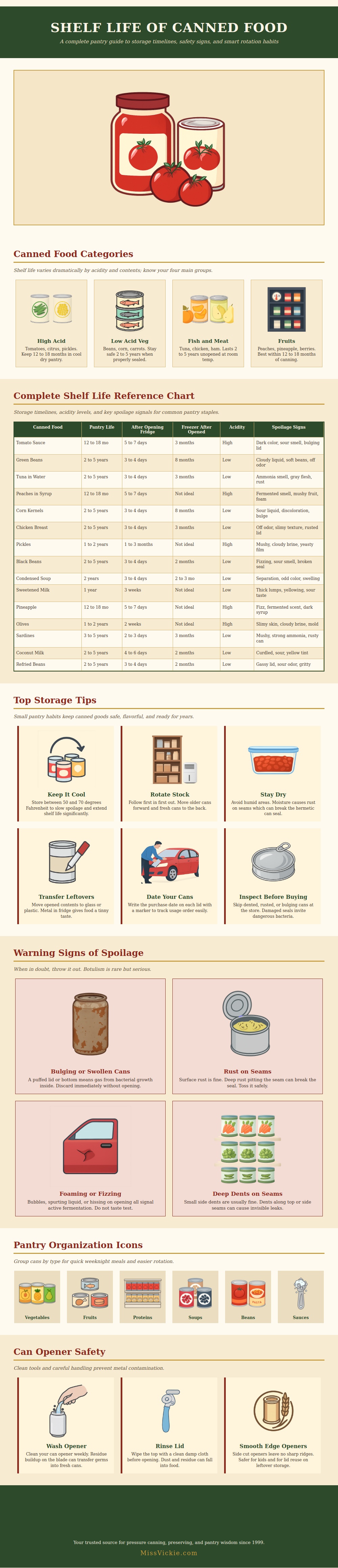
Canned foods allows for the storage of nutrition for long periods of time. In order to ensure that the canned foods remain safe to eat, however, people must manage them correct. One of the factors to consider is the acidity of the foods that will be canned.
Foods that are high in acidity, such as tomatoes and pickles, will naturaly prevent bacteria from form within the cans, but will lose their flavor after approximately one year of storage. Foods that is low in acidity, such as meats, vegetables, and fruits packed in syrup will last more longer in the pantry. Thus, the cook should group canned foods according to type to manage their shelf life.
How to Store Canned Foods Safely
The shelf life of canned foods are related to the storage conditions of the cans. One of the factors related to shelf life is the storage temperature of the cans. You should store the cans in areas between 50 and 70 degrees Fahrenheit.
If the cans are stored near heat source (such as a stove) or in areas exposed to direct sunlight, the heat will reduce the shelf life of the canned goods. Additionally, moisture in the storage areas can lead to the cans rust. Rusting of the cans can lead to the vacuum seal break, allowing bacteria to enters the cans.
To avoid these issue, the cans should be rotated so that the oldest cans are at the front of the shelf rather then the back. There are additional way to identify if the canned foods have spoiled beyond reading the “best by” dates. If the lid of the can are bulging, this indicates that there is bacteria within the can that is producing gas, and you should throw the food away.
Additionally, if there are deep dents or pits in the cans, this can allow bacteria to enter the cans, and the food should be threw away. If any food is opened, the contents should be inspected for any unusual odors, any cloudiness of the liquid in the cans, or any mushiness of the food. These factors can also indicate spoilage of the food.
Additionally, because botulism is a risk of canned foods yet does not have an identifiable smell or color, individuals should be cautious in disposing of any canned foods that may show sign of spoilage. When purchasing canned foods, individuals should inspect the cans for any damage prior to purchase. Any cans that have dent may have developed leaks into the cans, allowing bacteria to enter the foods.
The can opener should also be clean after purchasing the foods to avoid the introduction of bacteria to the cans. Additionally, the lid of the cans can be rinsed prior to purchasing the cans to avoid the introduction of dust into the cans. If there are leftovers in the cans, they should be transferred to a glass container rather than leaving the food in the metal can, as the metal may impart a metallic taste into the food if stored in the can in the refrigerator.
Finally, the “best by” dates for the canned foods are not indicators of safety, but indicate the length of time that the foods will retain their best quality. By storing canned foods prior to the “best by” dates, they will taste most best.