
Sometimes you’ll taste some guacamole that’s just okay, then your tongue starts to burn. What? You didn’t even bite into a habanero. You probably bit down on a serrano pepper. It is small enough to be confused for a miniature jalapeño but it is hot enough to take you by surprise.
Where does this chile fall on the spiciness scale? This is the guide to help you find out. It’s a solid point of reference for when someone asks whether they should expect a mild or miserable salsa. Knowing how this pepper fit in with others can make cooking more confident different than remorseful.
A Guide to Serrano Peppers
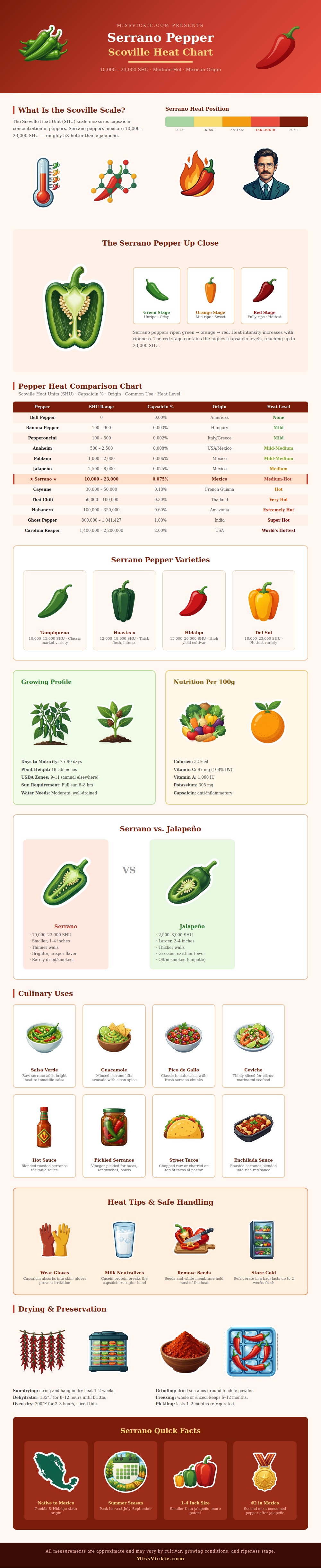
At 10,000. 23,000 SHU on the Scoville Scale, the serrano fall squarely into the medium-hot range. For reference, it’s about five times hotter then an ordinary jalapeño. That is where “five” becomes important. It is why you see chefs use serranos when they want crispness and brightness but do not want smoke or earthy flavors to dominate there dishes. Thinner-walled than its bigger kin, the serrano are generally only one-fourth to one-half inch across (again, depending on ripeness), which translates to quick and clean delivery of heat. It is not a blunt object; it’s a precision instrument.
Another important detail besides their color is that ripeness is everything. Green serranos has a tanginess and a nice crunch, which makes them best-suited for uncooked dishes such as ceviches or pico de gallo. When they start going from green to orange (and then ultimately red), however, the amount of capsaicin increase a lot. At its ripest stage, fully red, the pepper could of been at the higher end of that spectrum without any problem. For those with tender tongues, stick to the green variety. For those who want fire, keep them hanging from the vine till they reaches full color. Not only does this increase the heat; flavor also changes, becoming more complex and sweet as the sugar comes online along with the burn.
If you purchase them at a specialty market (or grow your own), there are several types worth mentioning. Most grocery stores carry standard variety called Tampiqueno, which is reliable and medium-hot. Huasteco is fatter-fleshed and keeps its shape well when sauteed or roasted, so it is less likely to get mushy. Del Sol is on the hotter side for anyone seeking intense chile flavor. If you know what cultivar you’re dealing with, you can eliminate the guessing game from any recipe you plan to make. Not only does this affects heat, but also yield and even texture.
Be careful when handling these peppers, they aren’t like poblanos or even bell peppers. Most of the capsaicin oils is within the placenta (white pith) within the fruit. Scraping that membrane and removing the seeds will greatly reduce the heat while maintaining the taste. If left intact, be ready for a very hot bite. Are you chopping up a lot of them? Put on some gloves; the capsaicin binds to proteins in our skin and washing your hands won’t necessarily do the trick. Milk acts as a counteragent to neutralize the burning later on, it break down the oil receptors through its casein.
Cooking-wise, serranos are amazingly flexible. You can use them in fresh salsas (where their heat contrasts nicely with tomatoes or tomatillos, and their bright green shows off), roast them into enchilada sauces, pickle them for use on tacos, or dehydrate them as a seasoning for future meals. Late summer is peak time for these peppers to grow (coinciding with the bounty of fresh corn and ripe avocados). Serranos come from states such as Hidalgo and Puebla, where heat are almost culturally expected.
The bottom line is: The serrano’s where hot meets not-too-hot. If you treat it with respect, it’ll show you some; if you don’t, well, too bad. Next time you pick up a chile, remember that spectrum and do what suits you best. Your mouth will thank you for being one step ahead.