
Probably you began with the jalapeño, moving to the serrano if your tolerance has allowed. But then came those super-hots, the ones that make a real line between spicy eating and pain. That’s when a pepper like the Trinidad Moruga Scorpion comes along, when what was once merely hot is now an ordeal of endurance.
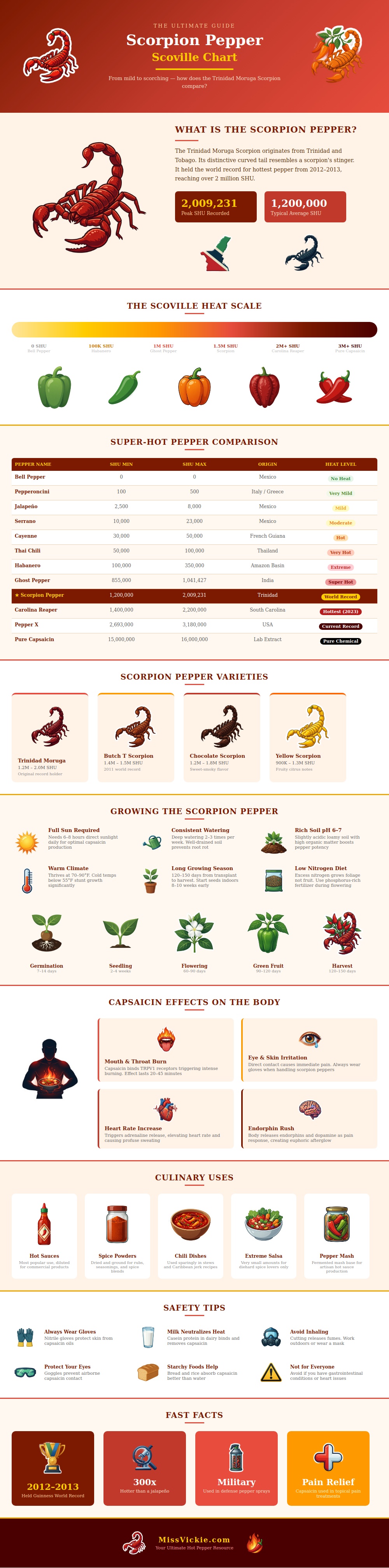
But what’s the chemistry? Beyond marketing, you have to look closer. In an infographic, the Scorpion is depicted floating over a peak sample of more than two million Scoville units. Until you see that a bell pepper scores zero, it feels like nothing but numbers. But those numbers matter when you’re eating a concentrated crystal of capsaicin encased in delicate skin.
How to Grow and Eat Hot Peppers
According to the chart, the scorpion dwarfs both the ghost pepper and the habanero, which is why many of us fail to expect initial hit. The Scorpion is roughly twenty times spicier then your average habanero, and that difference grow more than you’d think.
As hot as they are, the story of these peppers is equally spicy. The Moruga Scorpion hails from Trinidad and Tobago. It was once the world’s hottest pepper before even hotter ones (like the Carolina Reaper) come along. It is named for its spider-like curled tail that looks like a scorpion’s stinger.
But not all super-hots is created equal. Some, like the Yellow Scorpion with more citrusy brightness, or Chocolate Scorpion with their sweet smokiness, look different than each other. And while heat’s just one part of the flavor equation, if you can take the heat, those flavors translates well into more complex sauces.
These are fussy plants, asking for full sun, a steady temperature in the eighties, and a minimum of frost (meaning if your climate plunges beneath fifty-five, the plant won’t be happy). It also want rich soil with a pH near neutral, plus plenty of patience because you are looking at five months from seed to harvest.
Many people treat them to high-nitrogen fertilizer, but again: it is a mistake, as too much N encourages lots of green growth… Leaves, but not fruit. To increase capsaicin production, plants needs phosphorus when they flower; this produce actualy heat rather than just looking pretty.
It’s pretty easy to see why someone would of get hooked on it. When you bite down on one, the capsaicin binds to heat-pain receptors, which are supposed to alert your brain to potential heat harm. Your brain interpret this as fiery-mouth pain and releases a flood of dopamine and endorphins, leading many people right back around again for another dose; even if it hurts.
There is only one warning: be careful, as the oil will stay on your skin for several hours. Don’t touch your face or rub your eyes with bare hands, it won’t end well. Use nitrile gloves. Have some milk handy, as the casein protein can binds to capsaicin more effective than water. And for goodness’ sake, don’t touch your eyes.
Respect the pepper: Overcoming these chiles is exhilarating, but be careful. You don’t want to get burned. Begin by using very small quantities, included in spice blends or hot sauces in which you can manage your own exposure. As chart indicates, you’ve got lots of runway left before you reach pure capsaicin (sixteen million units), so take it slow.
And remember the gloves. And a gallon of milk, before you start.