Lean trim, added fat, water, binder, and cooked yield math
Sausage Meat to Fat Ratio Calculator
Calculate the lean meat and added fat needed for breakfast sausage, Italian links, bratwurst, kielbasa, chorizo, venison blends, poultry sausage, and smoked links.
Load a common sausage build, then adjust target fat, lean trim fat, fat source, moisture, binder, batch basis, and cooked yield.
Batch Breakdown
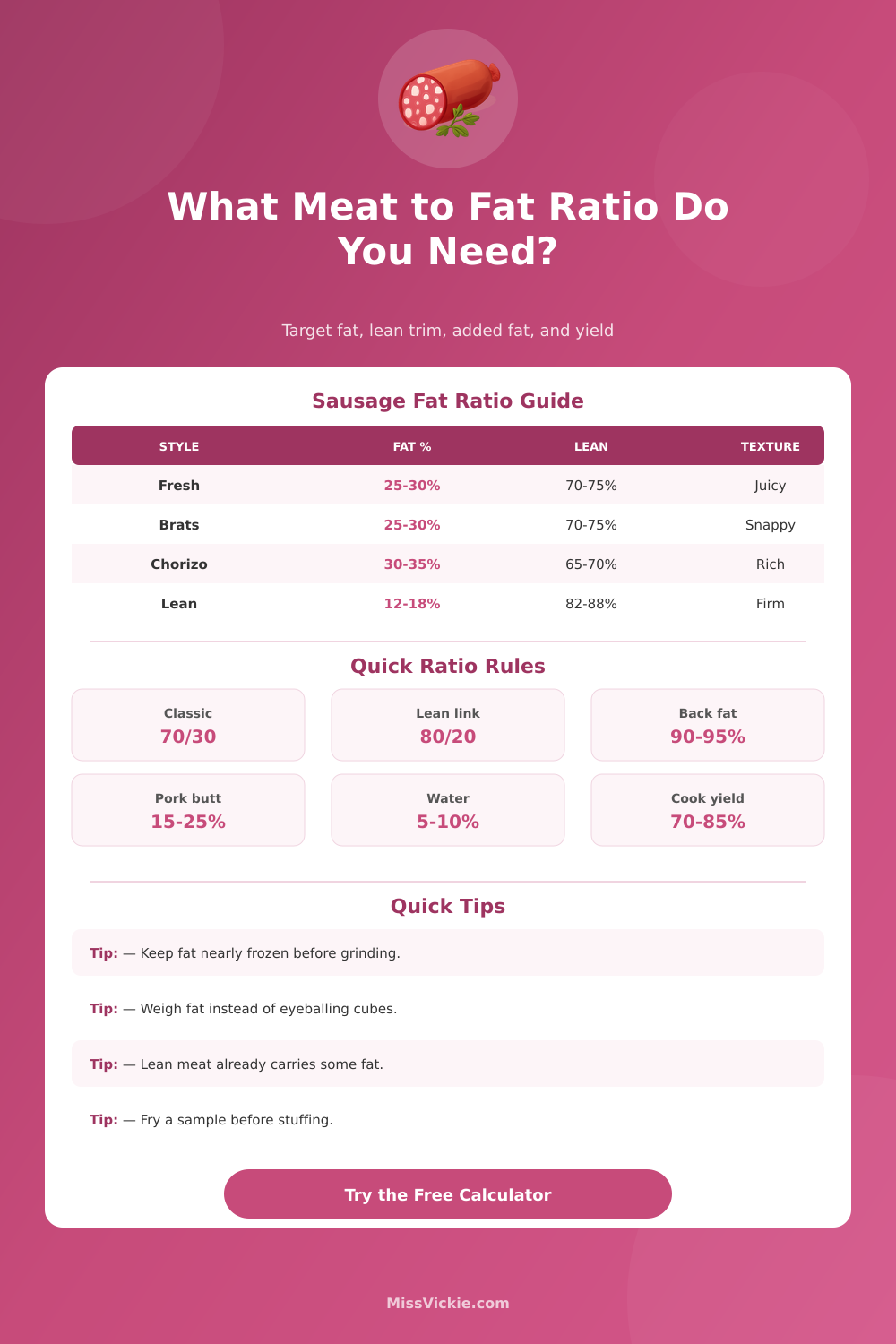
| Use case | Target fat | Lean to fat ratio | Best texture |
|---|---|---|---|
| Lean poultry or game sausage | 12% to 18% | 88:12 to 82:18 | Firm, needs moisture and binder |
| Breakfast patties | 22% to 28% | 78:22 to 72:28 | Browned edges, juicy center |
| Classic fresh pork links | 25% to 32% | 75:25 to 68:32 | Plump, snappy, and forgiving |
| Smoked kielbasa or andouille | 28% to 35% | 72:28 to 65:35 | Rich enough to survive drying |
| Fresh chorizo | 30% to 38% | 70:30 to 62:38 | Loose, saucy, paprika-rich |
| Emulsified brat or bologna style | 22% to 30% | 78:22 to 70:30 | Smooth slice, strong bind |
| Lean meat or trim | Typical fat | Ratio note | When to adjust |
|---|---|---|---|
| Pork shoulder trim | 15% to 25% | Often needs only modest back fat | Trimmed supermarket shoulder may be leaner |
| Pork loin or leg trim | 5% to 12% | Needs added fat for most links | Use back fat for cleaner pork flavor |
| Beef chuck trim | 12% to 20% | Works well in smoked sausage | Remove hard sinew before grinding |
| Venison or game | 1% to 5% | Almost always needs pork fat | Keep fat separate and cold while grinding |
| Chicken thigh meat | 6% to 12% | Needs skin or pork fat for links | Use binder if stuffing into casings |
| Lamb shoulder trim | 15% to 25% | Can hit merguez ratios with little added fat | Cut stronger fat if flavor is too heavy |
| Fat source | Typical fat | Best use | Calculator note |
|---|---|---|---|
| Pork back fat or leaf fat | 90% to 95% | Clean fresh sausage, venison blends | Use 92% as a practical default |
| Pork belly trim | 45% to 65% | Fresh links when belly is already on hand | Requires more weight than back fat |
| Pork jowl trim | 65% to 80% | Rich smoked sausage and country sausage | Good flavor, slightly softer fat |
| Beef suet or hard beef fat | 85% to 95% | Beef summer sausage or snack sticks | Can taste waxy if overused |
| Duck skin and fat | 65% to 80% | Poultry sausage and confit-style links | Chill hard before grinding |
| Bacon ends or fatty cured trim | 35% to 55% | Smoky breakfast or beans-style sausage | Also adds salt, smoke, and cure |
| Style | Moisture | Binder | Cooked yield |
|---|---|---|---|
| Fresh pork links | 4% to 8% | 0% to 2% | 76% to 84% |
| Bratwurst or emulsified links | 8% to 12% | 1% to 3% | 78% to 86% |
| Smoked kielbasa or andouille | 4% to 7% | 0.5% to 2% | 65% to 78% |
| Fresh chorizo | 5% to 9% | 0% to 1% | 72% to 80% |
| Poultry sausage | 6% to 10% | 1% to 3% | 78% to 86% |
| Summer sausage | 3% to 5% | 2% to 4% | 62% to 72% |
The fat content in a sausages mix can determine many aspects of the sausage that is produced. The fat content in the sausage can determine how the sausage behave in a pan and how the sausage will retain it’s texture after smoking. Many recipes use a fixed number for the fat content.
However, calculating the fat content is more difficult because the lean trim contain fat, and the fat that is added to the sausage can have varying degree of purity. Additionally, adding liquid and a binder to the lean meat will change the total percentage of each component of the sausage mix. These variables means that a calculator will be of great use when formulating a sausage mix.
Use a Calculator to Get the Right Fat in Sausage
A calculator will allow a person to adjust each component of the sausage mix independent. One of the benefits of using a calculator is that it can account for the fat content that is already in the lean sausage cuts. For instance, lean shoulder trim contains fifteen percent fat.
Venison, however, contains only three percent fat. The calculator allows a person to set the desired fat content for the sausage. The calculator will account for the fat content in the lean cuts that is used and calculate how much back fat or belly fat must be added to reach the target fat content percentage.
If a person does not use the calculator to account for the fat in the lean trim, the person may add too much fat to the sausage mix. This will result in the sausage having too much fat to be healthy and may make it greasy when consume. Another factor that will change the fat percentage is the type of fat that is added to the sausage mix.
Some types of fat contains more fat than others. Back fat contains nearly ninety percent of the fat that is needed to increase the fat content of the sausage mix. Belly trim and bacon ends contains more lean meat and water than back fat.
The calculator will account for this by allowing a person to choose the type of fat that will be used in the sausage mix. Additionally, the calculator will account for the basis of the batch of sausage that will be produced. A person may want to know the total weight of the batch of sausage or the weight of the extra fat to be added to the lean trim.
The moisture and binder percentages will change the final product of the sausage mix. These percentages change the yield of the sausage that is produced. For instance, it is common to add six or eight percent of liquid to the cut meat by weight.
This adds to the total weight of the sausage mix but also changes the weight of the sausage after it is cooked. For instance, the liquid will weigh less than the raw meat. A calculator will show the total raw weight of the sausage after the addition of the liquid.
Additionally, the calculator will account for the yield of the raw sausage mix so that a person can determine the weight of the cooked sausage. This final weight can be what is labeled on the sausage. The type of sausage that will be produced will affect the fat content and the binder content of the sausage mix.
For instance, breakfast sausage mixes will usually be leaner because the sausages cook very quickly and lose most of there fat during the cooking process. Smoked sausages will require a higher fat percentage because the smoking process takes place over a longer period and will dry the sausage. Poultry sausage will require both the fat and binder percentages to be thought out very careful because the meat is lean and behaves differently when cooked.
A calculator will have a setting for each of these sausage styles so that a person does not have to guess at the percentages required to produce the desired sausage. One common mistake in sausage making is assuming that the lean trim will have no fat. Even cuts of pork leg will contain intramuscular fat.
This fat will affect the fat percentage of the sausage. If a person does not account for this fat in the lean trim, the person will have to add too much fat to the sausage mix. Another common mistake is adding fat by volume rather than weight.
The fat that is diced will not weigh the same as the solid fat. Therefore, measuring the weight of the fat that will be used in the sausage mix is the only way to ensure the fat percentage is correct. The fat percentage and the temperature at which the sausage is prepared are also important.
If the fat is kept cold, it will remain in distinct pieces throughout the grinding process. This will allow the fat to maintain the desired texture of the sausage. If the fat is too warm, the fat will smear throughout the lean trim.
This will lead to a mealy texture when the sausage is cooked. Keeping the ingredients near freezing will ensure that the fat will not separate during the cooking process. The cooking method will also determine the yield of the sausage.
Pan-fried sausages will weigh eighty percent of the raw weight of the sausage mix. Smoked sausages will lose more of their water content during the smoking process and may weigh only sixty-five percent of the raw weight. A calculator will account for this so that a person can set the cooked weight of the sausage.
The calculator allows a person to adjust the yield percentage of the sausage mix. Without a calculator, a person may add all of the ingredients together and discover that the cooked sausage will weigh less than expected. Using a calculator will allow a person to see the trade-offs between the different ingredients.
For instance, using a fatty trim will require less added fat to reach the target fat percentage. However, increasing the fat percentage will also change the amount of moisture that can be included in the sausage mix. Using more binder will help increase the yield of the sausage mixture, especially if the sausage mixture is poultry sausage.
However, using too much binder will alter the flavor of the sausage and could make the sausage texture feel rubbery. Using a calculator will allow a person to see the effects of each ingredient on the others. This will allow a person to make more informed choices when preparing the sausage.
If the ratios of the ingredients are correct, the sausage mix will have a greater chance of having the correct texture after the sausage is ground, mixed, stuffed, and cooked.