Sauerkraut Salt Calculator
Calculate salt by cabbage weight, shredded or chunk packing, brine coverage, jar volume, headspace, fermentation temperature, kraut additions, batch yield, and salinity check.
Use a real batch size, then adjust the salt percent, jar, cut style, additions, and measured salinity before packing.
Fermentation Breakdown
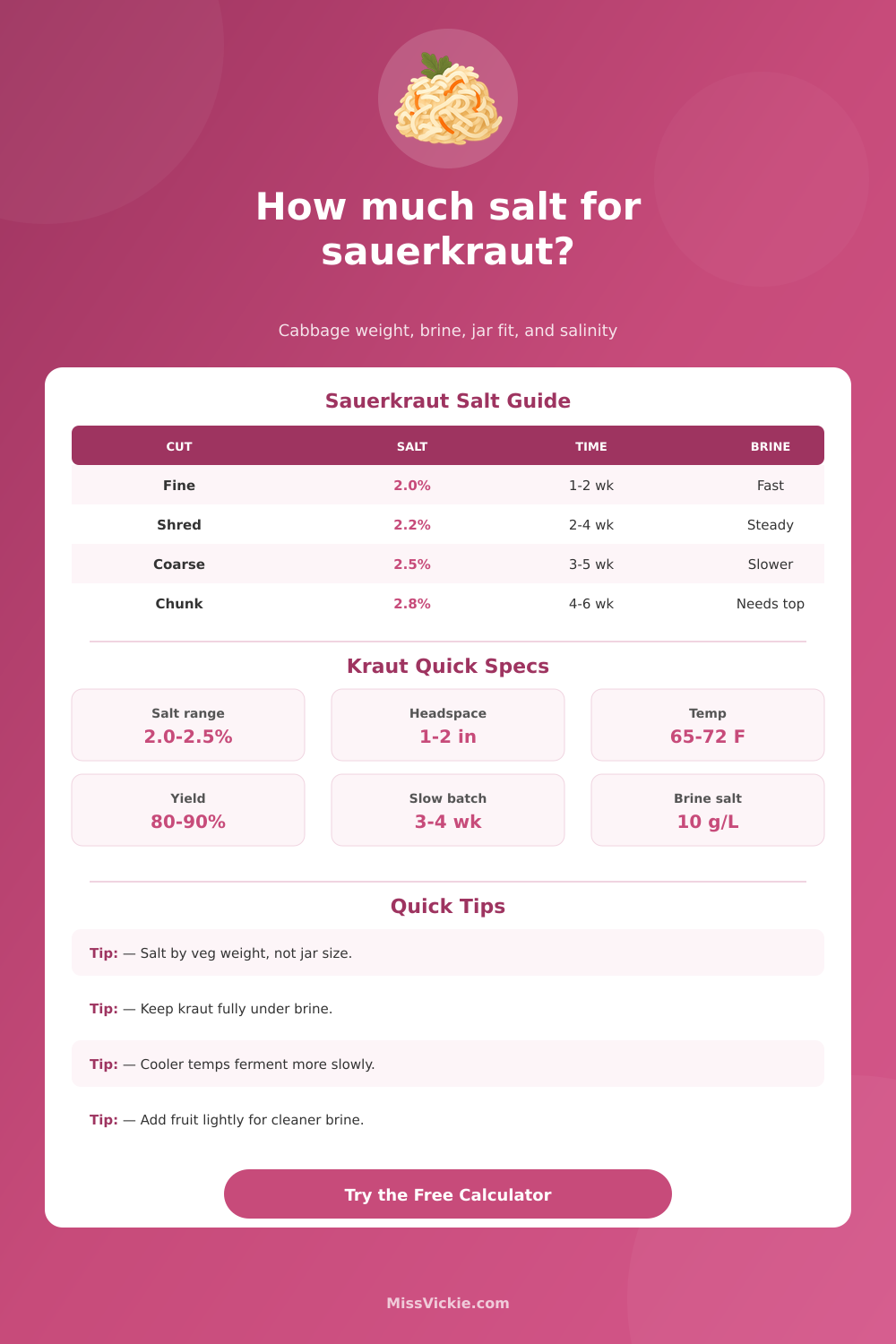
| Cabbage Cut | Useful Salt Range | Brine Behavior | Best Use |
|---|---|---|---|
| Fine shred | 2.0% to 2.2% | Releases liquid quickly and packs tightly. | Fast quart jars, softer classic kraut. |
| Regular shred | 2.0% to 2.5% | Balanced brine release and crunch. | Most countertop sauerkraut batches. |
| Coarse shred | 2.3% to 2.7% | Takes longer to soften and cover. | Firmer kraut, larger crocks, longer ferments. |
| Chunked cabbage | 2.5% to 3.0% | Needs more packing weight or added brine. | Chunk-style cabbage ferments and mixed jars. |
| Container | Typical Cabbage | Headspace | Coverage Target |
|---|---|---|---|
| 1 quart jar | 1.75 to 2.25 lb shredded | 1 to 1.5 inches | At least 0.5 inch brine above kraut. |
| 2 quart jar | 3.5 to 4.5 lb shredded | 1.25 to 2 inches | Use a weight and check after 12 hours. |
| Half gallon jar | 3.75 to 5 lb shredded | 1.5 to 2 inches | Leave room for bubbling brine lift. |
| 1 gallon crock | 8 to 10 lb shredded | 2 to 3 inches | Cover fully under plate, weight, or crock stones. |
| Condition | Expected Result | Calculator Adjustment | Kitchen Check |
|---|---|---|---|
| 60 F to 64 F | Slower, cleaner acidity | Adds days to the fermentation window. | Taste weekly and keep brine topped. |
| 65 F to 72 F | Balanced classic kraut | Uses the standard time estimate. | Check aroma, bubbles, and texture. |
| 73 F to 78 F | Faster souring | Shortens the estimated window. | Inspect daily and prevent overflow. |
| Salinity under target | Soft or risky texture | Flags a low brine reading. | Add measured 2% brine if needed. |
There’s not a lot to making your own sauerkraut besides the salt. Use too little and it will be mushy and questionably edible, use too much and it will have an overly harsh taste for weeks. The amount depends on several factors: the size and weight of vegetables, the style of cut, and how watery the cabbage becomes when cut.
If you can get that part, math is simple and repeatable. When you do this with cabbage, vegetable itself provides some brine. To make up for that, just plug in your trimmed weight as well as salt amount into calculator (above). The most important thing is that salt percent goes by weight of the vegetables, not by the size of their container. The larger the jar, the more headspace or coverage there is. Total salt amount stays the same which prevents you from accidentally undersalting a big batch due to empty space inside canning jar.
How to Use the Sauerkraut Calculator
The style of the cuts also matters. Fine shreds pack tightly, lose their liquid quickly and cook in no time. Chunky pieces holds onto liquid longer, requiring more care to keep them submerged and take longer to get ready. The tool reflects this by taking into account which type of cut you’re making and letting you know if you’ll require a little bit of additional brine to ensure full coverage. That result then shows whether your cabbage is playing nicely or if you’d better plan on topping her up during Day One.
Speed and taste also depend on temperature. In cooler rooms, the process is slow and clean but warmer places speed it up while risking more sharp acids unless monitored. This calculator takes your cut and temperature into account to help you determine a range during which to begin sampling for readiness. Week-by-week check-ins remain the gold standard here, but at least now, you have an idea how soon things should of change.
Some additions, such as onion, carrot, or apple, will alter both your finished product and amount of brine you produce. It also alters the end result: Is it still going to be crunchy? Or soft? If you choose an addition like carrot, apple, or onion, the calculator updates the totals including showing if the batch will still fit in jar with proper headspace to prevent overflowing during fermentation.
And too much room means some of those vegetable are exposed to air. Practical things like headspace and jar fit matter to both quality and safety. Too small a space, and in the first week the brine could force itself out. Too large an air gap and when the softened cabbage does finally let go it might rise above the brine surface. That’s where the calculator comes in. It will ask how much headspace you want and what percentage of jar you’d like covered. It then calculates how full your jars actualy were, taking into account the space they took up. Finally, it tells you if you’re good or if you should be tweaking weight or size of the jar.
Once the brine forms, that’s when you get a second check point in form of measured salinity. Add a little measured brine at this stage if your number is significantly different than the desired percentage. The calculator compares the number you enter with its own calculated number and flags them as mismatched if they do not align. Occasionaly the cabbage releases more or less liquid than expected, and that step will catch it.
Any good sauerkraut calculator eliminates all of the guesswork on Day 1, which is why I find them so valuable. Yes, you have to monitor your jar; yes, you have to keep tasting the kraut; yes, you may have to tweak things if anything doesn’t look right. But having some idea where you started; of size of your jars, how much salt, how much cabbage, is going to result in less tweaking down the line and more consistant batches.